Self-healing coatings represent one of the most transformative advances in surface finishing technology. Inspired by biological systems that naturally repair damage, these coatings incorporate mechanisms that autonomously detect and mend scratches, micro-cracks, and surface defects without human intervention. The concept has moved from academic curiosity to commercial reality, with powder coating formulations now entering pilot production for demanding automotive and aerospace applications.
Innovation
Smart Coatings and Self-Healing Technology: The Future of Powder Coating Durability
Sundial Powder Coating·April 22, 2026·12 min
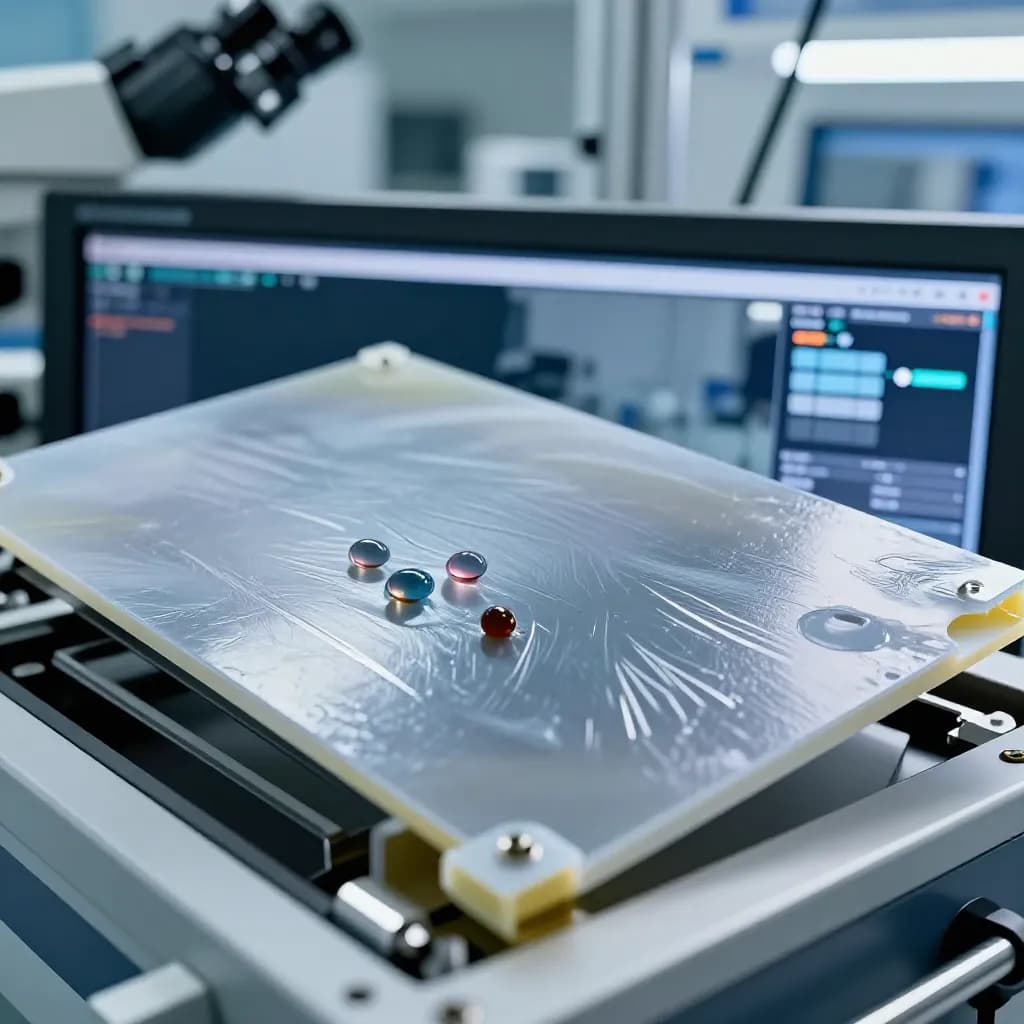
The driving force behind self-healing coating development is the enormous cost of corrosion and surface degradation. Global corrosion costs exceed trillions of dollars annually, and a significant portion of that expense stems from coating failures that expose substrates to environmental attack. A coating that can repair itself after minor damage extends the protective barrier's functional life, delays maintenance cycles, and reduces the total cost of ownership for coated assets.
Ready to Start Your Project?
From one-off customs to 15,000-part production runs — get precise pricing in 24 hours.
On This Page
The Rise of Self-Healing Coatings in Powder Technology
Powder coating is a particularly attractive platform for self-healing technology because the solvent-free formulation process and thermal curing cycle are compatible with the encapsulation and activation mechanisms that self-healing systems require. Unlike liquid paint, where solvents can destabilize healing agents during application, powder coatings allow precise incorporation of functional additives that remain dormant until damage triggers their release. This compatibility positions powder coating at the forefront of smart coating development.
Microcapsule-Based Self-Healing Mechanisms
The most widely studied self-healing approach in powder coatings involves microencapsulation. In this system, liquid healing agents — typically reactive monomers or corrosion inhibitors — are enclosed within polymer or silica microcapsules ranging from 1 to 200 microns in diameter. These capsules are dispersed throughout the powder coating matrix during formulation. When a scratch or crack propagates through the cured film, it ruptures nearby capsules, releasing the healing agent into the damage zone.
Once released, the healing agent flows into the crack through capillary action and undergoes a chemical reaction — either polymerization triggered by a catalyst embedded in the coating matrix, or oxidative curing upon exposure to atmospheric oxygen. The result is a solid polymer plug that bridges the crack, restoring the coating's barrier properties and preventing moisture and corrosive species from reaching the substrate.
The engineering challenge lies in capsule design. Capsules must be robust enough to survive the powder manufacturing process — including extrusion, grinding, and electrostatic application — as well as the thermal curing cycle, which typically reaches 180-200°C. Yet they must be fragile enough to rupture under the mechanical stress of a scratch. Recent advances in urea-formaldehyde, melamine-formaldehyde, and polyurethane shell chemistries have produced capsules that meet both requirements, with shell thickness and wall composition tuned to specific rupture thresholds. Capsule loading levels of 5-15% by weight have shown effective healing without significantly compromising the coating's mechanical properties or appearance.
Shape-Memory Polymers for Scratch Recovery
Shape-memory polymers offer an alternative self-healing pathway that does not rely on encapsulated liquids. Instead, these materials exploit the thermomechanical properties of certain polymer networks that can return to their original shape when heated above a characteristic transition temperature. In a powder coating context, a scratch deforms the polymer chains locally, but the coating retains a memory of its original, undamaged configuration.
When the damaged area is exposed to moderate heat — from sunlight, an infrared lamp, or even the warmth of a hand on a vehicle panel — the polymer chains mobilize and flow back toward their equilibrium positions, physically closing the scratch. This mechanism is particularly effective for shallow scratches and swirl marks that do not penetrate the full film thickness, making it well-suited to automotive clear coat applications where cosmetic appearance is paramount.
Researchers have demonstrated shape-memory self-healing in polyester and polyurethane powder coating systems by incorporating specific crosslinker chemistries that create a dual-network structure. The first network provides the coating's mechanical strength and chemical resistance, while the second, more labile network enables chain mobility above the trigger temperature. Trigger temperatures in the range of 60-80°C are achievable, which is within the range of solar heating on dark-colored vehicle surfaces. The healing efficiency — defined as the percentage of scratch depth recovered — can exceed 80% for scratches up to 10 microns deep, with multiple healing cycles possible from the same damage site.
Corrosion-Inhibiting Self-Healing Systems
Beyond cosmetic scratch repair, self-healing powder coatings can incorporate active corrosion inhibition. In these systems, corrosion-inhibiting compounds such as cerium salts, benzotriazole derivatives, or mercaptobenzothiazole are encapsulated or adsorbed onto nanocontainers — including halloysite nanotubes, layered double hydroxides, or mesoporous silica nanoparticles. These nanocontainers are dispersed within the powder coating formulation and release their payload in response to specific triggers associated with corrosion onset.
The triggers can be pH-sensitive, responding to the local alkaline or acidic conditions that develop at anodic and cathodic corrosion sites. Alternatively, they can be ion-exchange mechanisms, where aggressive chloride ions displace inhibitor molecules from the nanocontainer surface. This responsive release ensures that inhibitor delivery is targeted precisely where corrosion is initiating, rather than being uniformly distributed throughout the film where most of it would serve no protective function.
Salt spray testing of self-healing anticorrosive powder coatings has demonstrated dramatic improvements in corrosion resistance. Scribed panels coated with inhibitor-loaded nanocontainer systems have shown two to five times longer protection compared to conventional powder coatings in accelerated corrosion tests. The combination of physical barrier restoration through microcapsules and active corrosion inhibition through nanocontainers creates a multi-layered defense strategy that significantly extends the service life of coated metal components in aggressive environments such as marine, industrial, and de-icing salt exposure.
Automotive Applications and OEM Interest
The automotive industry is the primary commercial driver for self-healing powder coating technology. Vehicle manufacturers face constant pressure to improve paint durability and customer satisfaction while reducing warranty claims related to cosmetic defects. Self-healing clear coats that can recover from car wash scratches, shopping cart dings, and minor abrasion represent a compelling value proposition for premium vehicle segments.
Several automotive OEMs have invested in self-healing coating research programs, with some having already introduced liquid-based self-healing clear coats on production vehicles. The transition to powder-based self-healing systems is motivated by the environmental advantages of powder coating — zero VOC emissions, near-complete material utilization, and elimination of solvent handling infrastructure. As automotive manufacturers face increasingly stringent environmental regulations and carbon reduction targets, powder-based self-healing coatings offer a path to improved performance with a smaller environmental footprint.
The technical challenges for automotive adoption include achieving the high gloss and appearance standards required for Class A surfaces, ensuring compatibility with existing electrocoat and primer systems in multi-layer automotive coating stacks, and demonstrating long-term healing performance over the vehicle's expected 10-15 year service life. Accelerated weathering studies combining UV exposure, thermal cycling, and mechanical damage are underway at multiple research institutions to validate that healing functionality persists after years of real-world exposure. Early results are encouraging, with healing efficiency remaining above 60% after 2,000 hours of accelerated weathering.
Aerospace and Defense Applications
Aerospace represents another high-value application for self-healing powder coatings, where the consequences of coating failure are severe and maintenance access is often limited. Aircraft skins, helicopter rotor components, satellite structures, and military vehicles all operate in environments that combine UV radiation, temperature extremes, erosion from rain and particulates, and chemical exposure from fuels, hydraulic fluids, and de-icing agents.
Self-healing coatings for aerospace applications focus primarily on corrosion protection rather than cosmetic repair. The ability to autonomously seal micro-cracks that develop from fatigue cycling, thermal stress, or foreign object damage can prevent the initiation of corrosion that would otherwise require costly inspection, stripping, and recoating operations. For military assets, where operational availability is critical, self-healing coatings can extend maintenance intervals and reduce the logistical burden of field repairs.
The aerospace sector also drives development of self-healing coatings that function across extreme temperature ranges. Standard microcapsule systems designed for ambient-temperature healing may not perform adequately at the sub-zero temperatures encountered at cruising altitude or the elevated temperatures near engine components. Research into dual-trigger systems — combining thermal activation with mechanical rupture — aims to ensure healing functionality across the full operational envelope. Additionally, aerospace qualification requirements demand extensive testing for adhesion, flexibility, fluid resistance, and fungal resistance, creating a rigorous validation pathway that, once completed, provides strong confidence in coating performance.
Manufacturing Challenges and Scale-Up
Translating self-healing powder coatings from laboratory demonstrations to industrial-scale production presents several manufacturing challenges. The extrusion process used in powder coating manufacture subjects raw materials to high shear forces and temperatures of 90-120°C, which can rupture microcapsules or degrade sensitive healing agents. Formulators must design capsules with sufficient thermal and mechanical stability to survive extrusion while remaining responsive to damage-induced triggers in the cured film.
Grinding is another critical process step. After extrusion, the cooled coating chips are ground to a particle size distribution typically centered around 30-50 microns. If microcapsules are larger than the target powder particle size, they will be destroyed during grinding. This constraint has driven the development of sub-10-micron capsules that can be incorporated within individual powder particles, though smaller capsules carry less healing agent and may provide less effective repair for larger damage events.
Quality control for self-healing powder coatings requires new testing methodologies beyond standard film property measurements. Manufacturers must verify capsule integrity after processing, confirm healing agent activity, and quantify healing efficiency using standardized scratch-and-recover protocols. The development of these test methods is an active area of standardization work, with industry bodies and research consortia working to establish accepted procedures that will enable specification and quality assurance of self-healing coating products.
Future Outlook: Toward Autonomous Coating Systems
The trajectory of self-healing coating technology points toward increasingly autonomous and intelligent coating systems. Current research extends beyond single-event healing to coatings capable of multiple repair cycles, coatings that report damage through color change or fluorescence, and coatings that combine self-healing with other smart functionalities such as self-cleaning, anti-icing, or thermal regulation.
The integration of self-healing coatings with sensor technology and the Internet of Things opens possibilities for predictive maintenance systems. Coatings embedded with micro-sensors could monitor their own condition, detect damage events, confirm healing activation, and transmit status data to maintenance management systems. This would transform coatings from passive protective barriers into active participants in asset management, providing real-time information about the condition of coated structures and components.
From a materials science perspective, the next frontier is intrinsic self-healing — polymer networks that can reform broken chemical bonds without the need for encapsulated healing agents. Dynamic covalent chemistries, including Diels-Alder reactions, disulfide exchange, and transesterification, offer pathways to coatings that can heal repeatedly at the molecular level. While these chemistries are still primarily in the research phase for powder coating applications, they represent the ultimate goal: a coating that maintains its protective and aesthetic properties indefinitely through continuous self-renewal. The convergence of smart materials, digital monitoring, and advanced polymer chemistry is creating a future where coating failure becomes a managed, rather than inevitable, outcome.
Frequently Asked Questions
How do self-healing powder coatings repair scratches?
Self-healing powder coatings use two primary mechanisms. Microcapsule systems contain liquid healing agents that are released when a scratch ruptures the capsules, filling and sealing the damage. Shape-memory polymer systems use heat activation to allow deformed polymer chains to return to their original positions, physically closing shallow scratches. Some advanced systems combine both approaches for multi-level repair capability.
Can self-healing coatings repair themselves more than once?
Microcapsule-based systems are generally single-use at each damage site because the healing agent is consumed during repair. However, shape-memory polymer systems can heal the same location multiple times because the mechanism relies on reversible chain mobility rather than consumable agents. Research into intrinsic self-healing chemistries with dynamic covalent bonds aims to enable unlimited repair cycles.
Are self-healing powder coatings available commercially?
Self-healing powder coatings are transitioning from advanced research to early commercial availability. Several coating manufacturers have pilot-scale products for automotive and industrial applications, with broader commercial launch expected as manufacturing processes mature and costs decrease. Liquid-based self-healing clear coats are already in production on some premium vehicles.
Do self-healing additives affect the appearance of powder coatings?
At optimized loading levels of 5-15% by weight, microcapsules and nanocontainers can be incorporated without significant impact on gloss, color, or surface smoothness. However, higher loading levels or poorly dispersed capsules can cause surface defects or haze. Formulators carefully balance healing performance against appearance requirements, particularly for automotive Class A surface applications.
What industries will benefit most from self-healing coatings?
Automotive, aerospace, and defense are the primary target industries due to the high value of their coated assets and the significant costs of coating maintenance and repair. Marine, infrastructure, and oil and gas industries also stand to benefit from extended corrosion protection. Any application where coating failure leads to expensive downtime or safety concerns is a strong candidate for self-healing technology.
Ready to Start Your Project?
From one-off customs to 15,000-part production runs — get precise pricing in 24 hours.