Research and development in powder coating technology is driven by a combination of market demands, regulatory pressures, and scientific curiosity. The industry's R&D efforts span the full technology spectrum — from fundamental polymer chemistry to applied process engineering — and involve a diverse ecosystem of corporate research laboratories, university research groups, government-funded institutes, and collaborative industry programs.
Innovation
Powder Coating Research and Development Trends: Current Focus Areas and Future Directions
Sundial Powder Coating·April 23, 2026·11 min
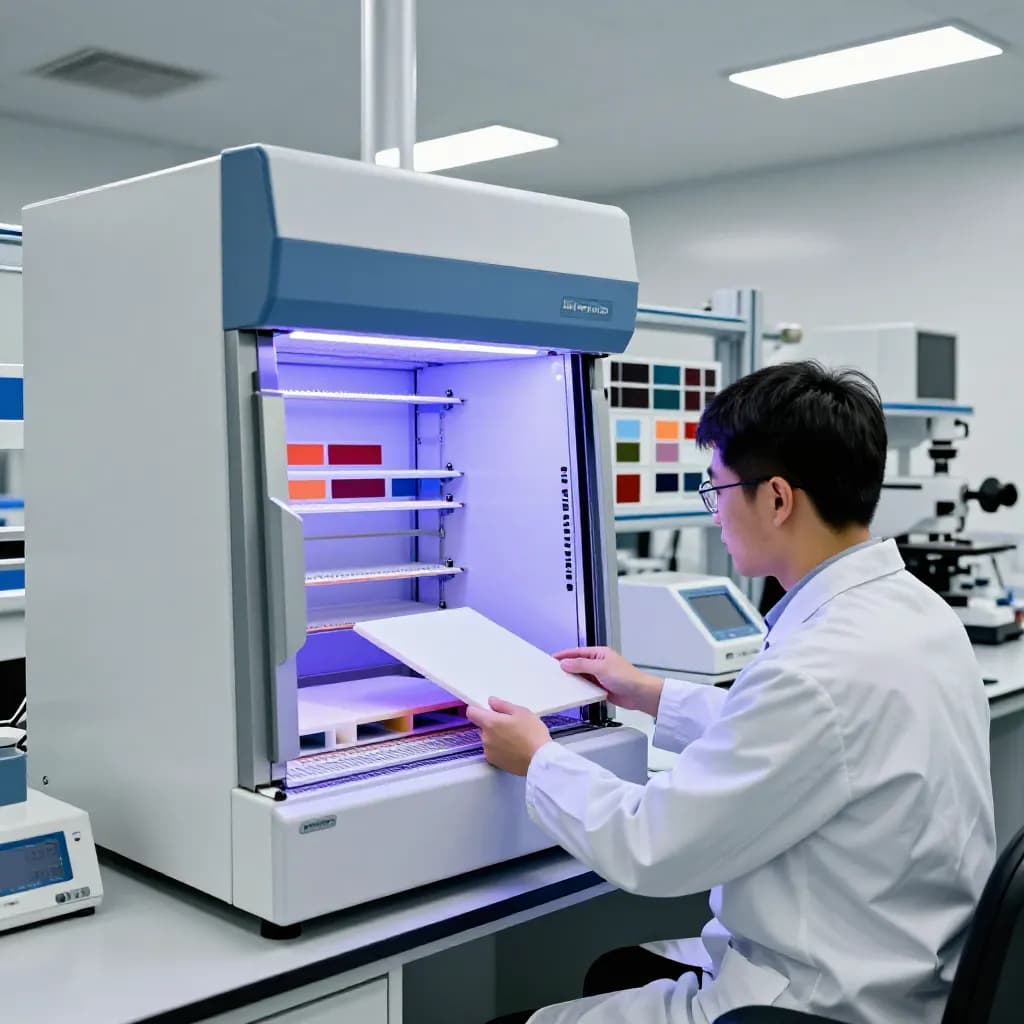
The current R&D landscape is shaped by several overarching themes. Sustainability is the dominant driver, pushing research toward bio-based raw materials, reduced energy consumption, and circular economy solutions. Performance expansion — developing powder coatings that can serve applications currently dominated by liquid paint — motivates work on thin-film technology, low-temperature cure, and improved appearance quality. And functional enhancement — creating coatings that do more than protect and decorate — is opening new markets for powder coatings with antimicrobial, self-cleaning, thermal management, and sensing capabilities.
Ready to Start Your Project?
From one-off customs to 15,000-part production runs — get precise pricing in 24 hours.
On This Page
The R&D Landscape in Powder Coating
Corporate R&D investment in powder coating is concentrated among the major global manufacturers — AkzoNobel, Sherwin-Williams, Axalta, PPG, Jotun, Tiger Coatings, and others — who maintain dedicated research facilities and employ teams of polymer chemists, formulation scientists, and application engineers. These companies typically invest 2-5% of revenue in R&D, with powder coating receiving a growing share of total coating R&D budgets as the technology's market importance increases.
University research contributes fundamental knowledge that underpins industrial innovation. Academic groups in polymer chemistry, surface science, materials engineering, and environmental science investigate the basic phenomena that govern coating performance — adhesion mechanisms, degradation pathways, crosslinking kinetics, and particle physics — generating insights that inform practical product development.
Government-funded research programs, particularly in Europe and Asia, support pre-competitive research in areas such as sustainable materials, energy efficiency, and environmental protection. These programs often involve consortia of industrial partners and academic institutions working together on challenges that are too large or too fundamental for any single company to address alone.
Bio-Based and Sustainable Raw Materials
The development of powder coatings based on renewable, bio-sourced raw materials is one of the most active and commercially significant areas of current R&D. The goal is to replace petroleum-derived resins, crosslinkers, and additives with alternatives derived from plant oils, sugars, lignin, and other biomass feedstocks — without compromising the performance properties that make powder coatings valuable.
Bio-based polyester resins are the most advanced category of sustainable powder coating raw materials. Researchers have developed polyester resins using bio-sourced monomers including isosorbide (derived from corn starch), succinic acid (produced by fermentation), 1,3-propanediol (from corn sugar), and sebacic acid (from castor oil). These bio-based polyesters can achieve properties comparable to their petroleum-derived counterparts, including glass transition temperatures, molecular weights, and functionality levels suitable for powder coating applications.
Bio-based epoxy resins derived from plant oils, lignin, and other natural sources are under active development. Epoxidized soybean oil and epoxidized linseed oil have been investigated as partial replacements for bisphenol-A based epoxy resins, though achieving equivalent performance — particularly in terms of glass transition temperature and mechanical properties — remains challenging. Lignin-based epoxy systems, which leverage the aromatic structure of lignin to provide rigidity and thermal stability, show particular promise.
Bio-based crosslinkers and curing agents are also being researched. Citric acid and other naturally occurring polycarboxylic acids have been evaluated as crosslinkers for hydroxyl-functional resins. Bio-based blocked isocyanates derived from plant-sourced diisocyanates are being developed for polyurethane powder coating systems.
The challenge of bio-based powder coatings is achieving cost competitiveness with petroleum-derived alternatives while maintaining the full range of performance properties required by demanding applications. Current bio-based raw materials are often more expensive than their petrochemical equivalents, and some bio-based formulations show compromises in properties such as weathering resistance, chemical resistance, or storage stability.
Life cycle assessment (LCA) studies are being conducted to quantify the environmental benefits of bio-based powder coatings compared to conventional formulations. These studies consider the full environmental impact — from raw material cultivation and processing through manufacturing, application, service life, and end-of-life disposal — to determine whether bio-based alternatives genuinely deliver net environmental benefits.
Low-Temperature and UV-Cure Technology
Reducing the energy required to cure powder coatings — and expanding the range of substrates that can be powder coated — are twin objectives driving intensive R&D in low-temperature and UV-cure technology.
Low-temperature cure powder coatings that achieve full crosslinking at 120-150°C, compared to the traditional 180-200°C range, are progressing from laboratory development toward commercial reality. These formulations use highly reactive resin-crosslinker systems, often with catalysts that accelerate the curing reaction at lower temperatures. The challenge is achieving low cure temperature without sacrificing storage stability — the powder must remain stable as a free-flowing powder at ambient temperature while being reactive enough to cure rapidly at moderately elevated temperatures.
Recent advances in encapsulated catalyst technology have helped address this stability-reactivity dilemma. By encapsulating reactive catalysts in thermally responsive shells that release the catalyst only at the target cure temperature, researchers have achieved formulations that are stable during storage and transport but cure rapidly when heated. This approach decouples storage stability from cure reactivity, enabling lower cure temperatures without compromising shelf life.
UV-curable powder coatings continue to advance, with improvements in photoinitiator chemistry, resin design, and process technology bringing the technology closer to broad commercial adoption. Current UV-cure powder systems typically use a two-step process: thermal melting and flow at 100-130°C, followed by UV exposure to initiate crosslinking. This approach achieves good film appearance through the thermal melt step while enabling rapid, low-energy cure through UV crosslinking.
The development of LED-based UV curing systems is particularly significant for UV-cure powder technology. LED UV sources offer longer lamp life, lower energy consumption, instant on-off capability, and narrower wavelength output compared to traditional mercury arc lamps. These advantages improve the economics and practicality of UV-cure powder coating operations.
Electron beam (EB) curing is being explored as an alternative to UV curing for powder coatings. EB curing uses high-energy electrons rather than photons to initiate crosslinking, offering the advantage of curing through pigmented and opaque coatings that would block UV light. While EB curing equipment is more expensive than UV systems, the ability to cure any color — including blacks and dark metallics — without photoinitiators is a significant advantage.
The ultimate goal of this research is to enable powder coating of heat-sensitive substrates — plastics, wood, MDF, pre-assembled components, and temperature-sensitive metals — that cannot withstand conventional oven curing temperatures. Achieving this goal would dramatically expand powder coating's addressable market and accelerate the displacement of liquid coatings in applications where heat sensitivity has been the primary barrier to powder adoption.
Nano-Technology and Advanced Materials
Nanotechnology is opening new possibilities for powder coating performance by enabling the incorporation of nano-scale materials that enhance properties at very low loading levels. Research in this area spans multiple application domains, from improved mechanical properties to novel functional capabilities.
Nano-silica particles (5-50 nm diameter) are being investigated as additives to improve scratch resistance, hardness, and abrasion resistance of powder coatings. At loading levels of 1-5% by weight, nano-silica can significantly enhance surface hardness without compromising flexibility or impact resistance — a combination that is difficult to achieve with conventional additives. The challenge is achieving uniform dispersion of nano-particles in the powder coating matrix, as agglomeration can negate the benefits of nano-scale dimensions.
Nano-zinc oxide and nano-titanium dioxide are being studied for their UV-absorbing and photocatalytic properties. Nano-scale UV absorbers can provide more effective UV protection at lower loading levels than conventional UV absorbers, potentially improving the weathering resistance of exterior powder coatings. Nano-TiO₂ with controlled photocatalytic activity can enable self-cleaning properties while minimizing binder degradation.
Carbon nanotubes and graphene nano-platelets are being explored as additives to create electrically conductive or thermally conductive powder coatings. These nano-carbon materials can achieve percolation thresholds — the minimum loading needed for continuous conductive pathways — at very low concentrations (0.5-2% by weight), enabling conductive coatings that maintain the appearance and mechanical properties of conventional powder coatings.
Nano-clay additives (montmorillonite, halloysite) are being investigated for their ability to improve barrier properties, flame retardancy, and mechanical strength of powder coatings. The layered structure of nano-clays creates tortuous diffusion paths that reduce the permeation of water, oxygen, and corrosive species through the coating, potentially improving corrosion protection without increasing film thickness.
Halloysite nanotubes — naturally occurring tubular clay minerals — have attracted particular interest as carriers for corrosion inhibitors and self-healing agents. By loading the hollow interior of halloysite tubes with inhibitive compounds, researchers have created nano-containers that release their contents when the coating is damaged, providing localized corrosion protection at the site of damage. This self-healing concept could significantly extend the service life of powder coatings in corrosive environments.
The commercialization of nano-enhanced powder coatings faces challenges related to nano-particle handling safety, dispersion technology, cost, and regulatory classification. However, the performance benefits demonstrated in laboratory research are compelling, and several nano-enhanced powder coating products have already reached the commercial market.
Smart and Functional Coatings
The concept of smart coatings — coatings that sense, respond to, or interact with their environment — represents a frontier of powder coating R&D that could fundamentally expand the role of coatings from passive protection to active functionality.
Self-healing powder coatings incorporate mechanisms that automatically repair damage to the coating film, restoring barrier protection and preventing corrosion at damage sites. Research approaches include microencapsulated healing agents that release when the coating is cracked, reversible crosslink chemistries that can reform broken bonds, and shape-memory polymers that close cracks through thermal activation. While fully autonomous self-healing remains a research goal, partially self-healing systems that respond to moderate heating or moisture exposure are approaching commercial viability.
Corrosion-sensing coatings that change color or fluorescence in response to the onset of corrosion at the coating-substrate interface are being developed for early detection of coating failure. These coatings incorporate pH-sensitive or ion-sensitive indicators that respond to the chemical changes associated with corrosion initiation, providing a visual warning before visible coating damage occurs. This capability could enable condition-based maintenance strategies that replace time-based recoating schedules.
Anti-icing powder coatings with superhydrophobic or ice-phobic surface properties are being researched for applications in aviation, power transmission, and transportation infrastructure. These coatings use micro- and nano-scale surface texturing combined with low-surface-energy chemistry to prevent ice adhesion or facilitate ice removal. The challenge is achieving durable anti-icing performance that survives the mechanical abrasion and UV exposure of outdoor service.
Energy-harvesting coatings that convert ambient energy — solar radiation, thermal gradients, or mechanical vibration — into electrical energy are in the early research phase. While the power output of coating-based energy harvesters is currently very small, the concept of coatings that generate electricity while protecting the substrate is intriguing for applications such as remote sensors, IoT devices, and building-integrated energy systems.
Thermochromic powder coatings that change color in response to temperature are being developed for applications ranging from safety indicators (warning of hot surfaces) to aesthetic effects (color-changing architectural panels). The challenge is achieving thermochromic effects that are reversible, durable, and compatible with the high processing temperatures of powder coating manufacturing and curing.
University Research and Industry Collaboration
University research groups around the world are contributing fundamental knowledge and innovative concepts to the advancement of powder coating technology. The most productive research programs combine deep scientific expertise with close industry connections that ensure research relevance and facilitate technology transfer.
The University of Akron's School of Polymer Science and Polymer Engineering has a long history of coatings research, including work on powder coating formulation, crosslinking chemistry, and weathering degradation mechanisms. The university's industry-sponsored research programs provide companies with access to advanced analytical capabilities and fundamental research expertise.
North Dakota State University's Coatings and Polymeric Materials Department conducts research on coating formulation, application, and performance that includes significant powder coating content. NDSU's research on bio-based coating materials, corrosion protection mechanisms, and accelerated weathering methodology has contributed to the advancement of powder coating technology.
European universities including TU Eindhoven (Netherlands), KTH Royal Institute of Technology (Sweden), and the University of Stuttgart (Germany) conduct research on polymer chemistry, surface science, and coating technology that is relevant to powder coating. European research programs funded by the EU Framework Programme and Horizon Europe have supported collaborative projects on sustainable coatings, functional surfaces, and advanced manufacturing.
In Asia, universities in China (Tongji University, Fudan University), Japan (Tokyo Institute of Technology), and South Korea (KAIST) are conducting research on advanced coating materials, nano-technology, and functional surfaces that contributes to powder coating innovation. The rapid growth of the Asian powder coating market is driving increased research investment in the region.
Industry-university collaboration takes many forms: sponsored research projects, joint publications, student internships and co-op programs, advisory board participation, and technology licensing. The most effective collaborations involve long-term relationships where the university develops deep understanding of industry needs and the company provides sustained support for fundamental research.
Pre-competitive research consortia — where multiple companies jointly fund research on shared challenges — are an efficient model for advancing powder coating technology. Organizations such as the Powder Coating Research Group (PCRG) and various national coating research associations facilitate these collaborative programs, enabling companies to share the cost and risk of fundamental research while maintaining competitive differentiation in product development.
Digital Innovation and Industry 4.0 Research
The integration of digital technology with powder coating processes is an emerging research area that promises to transform how coatings are formulated, manufactured, applied, and monitored. Industry 4.0 concepts — including artificial intelligence, machine learning, digital twins, and the Internet of Things — are being applied to powder coating with increasing sophistication.
AI-assisted formulation is one of the most promising applications of digital technology in powder coating R&D. Machine learning algorithms trained on large datasets of formulation-property relationships can predict the performance of new formulations without physical testing, dramatically accelerating the product development cycle. These tools can explore vast formulation spaces that would be impractical to investigate through traditional trial-and-error methods, potentially discovering novel combinations that human formulators would not consider.
Digital twin technology creates virtual models of powder coating processes — spray booths, curing ovens, pretreatment systems — that can be used to optimize process parameters, predict quality outcomes, and diagnose problems without disrupting production. By combining physics-based models with real-time sensor data, digital twins can simulate the effects of parameter changes before they are implemented, reducing the risk and cost of process optimization.
Computer vision and machine learning are being applied to automated quality inspection of powder-coated products. These systems use cameras and image processing algorithms to detect coating defects — orange peel, craters, inclusions, color variations, and thickness anomalies — at production line speeds, providing 100% inspection coverage that is impossible with manual visual inspection.
Predictive maintenance systems that monitor the condition of powder coating equipment — spray guns, pumps, ovens, conveyors — and predict failures before they occur are reducing unplanned downtime and maintenance costs. These systems use vibration sensors, temperature monitors, and electrical current analysis to detect the early signs of equipment degradation, enabling maintenance to be scheduled during planned downtime rather than in response to unexpected failures.
Blockchain technology is being explored for coating traceability and quality documentation. By recording coating material batch data, application parameters, cure conditions, and quality test results on an immutable distributed ledger, blockchain could provide end-to-end traceability that supports quality assurance, warranty management, and regulatory compliance.
The convergence of digital technology with powder coating science is creating new career opportunities and research directions that did not exist a decade ago. Professionals who combine coating technology expertise with data science, software engineering, or digital systems knowledge are increasingly valuable in an industry that is embracing digital transformation.
Frequently Asked Questions
What are the main R&D focus areas in powder coating?
Current R&D priorities include bio-based and sustainable raw materials, low-temperature and UV-cure technology, nano-technology for enhanced properties, smart and functional coatings (self-healing, sensing, anti-icing), and digital innovation including AI-assisted formulation and Industry 4.0 process optimization.
How close are bio-based powder coatings to commercialization?
Bio-based polyester resins using monomers like isosorbide and succinic acid are the most advanced, with some achieving properties comparable to petroleum-derived equivalents. However, cost competitiveness and full performance parity remain challenges. Several partially bio-based powder coatings are commercially available, with fully bio-based systems still in development.
What is the status of UV-curable powder coating technology?
UV-cure powder technology is advancing toward broader commercial adoption. Current systems use a two-step process: thermal melting at 100-130°C followed by UV crosslinking. LED-based UV curing is improving economics. The technology could enable powder coating of heat-sensitive substrates like plastics and wood, dramatically expanding the addressable market.
How is AI being used in powder coating R&D?
AI and machine learning are being applied to formulation prediction (predicting coating properties from ingredient compositions), process optimization (digital twins of coating lines), automated quality inspection (computer vision for defect detection), and predictive maintenance (monitoring equipment condition to prevent failures).
What universities are leading powder coating research?
Key institutions include the University of Akron and North Dakota State University in the US, TU Eindhoven and KTH Royal Institute of Technology in Europe, and Tongji University and Tokyo Institute of Technology in Asia. These universities conduct research on polymer chemistry, surface science, bio-based materials, and coating performance that advances powder coating technology.
Ready to Start Your Project?
From one-off customs to 15,000-part production runs — get precise pricing in 24 hours.