The powder coating industry has historically been defined by its decorative and protective functions — providing color, gloss, and corrosion resistance to metal substrates. While these remain the dominant applications, a growing segment of the market is focused on functional powder coatings that deliver specific engineering performance beyond aesthetics. These coatings are designed to modify the surface properties of components in ways that enhance their operational performance, extend their service life, or enable new design possibilities.
Innovation
Functional Powder Coatings Beyond Decoration: Thermal, Friction, Insulation, and Chemical Resistance
Sundial Powder Coating·April 22, 2026·12 min
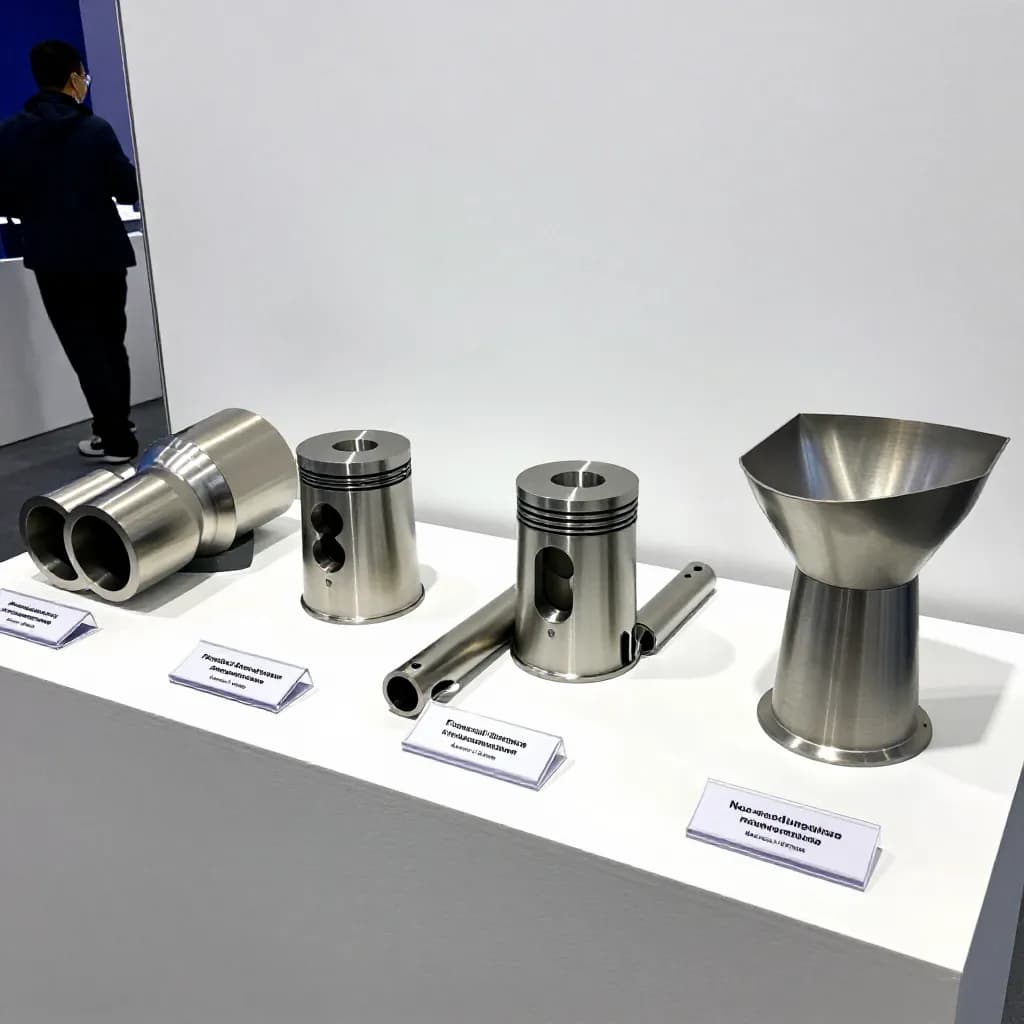
Functional powder coatings achieve their specialized properties through deliberate formulation with performance-enhancing additives, specialized resin chemistries, and engineered filler systems. A thermal barrier coating incorporates low-conductivity fillers that impede heat transfer. A low-friction coating uses solid lubricant additives that reduce the coefficient of friction. An electrically insulating coating employs high-dielectric-strength resin systems that prevent current flow. Each functional coating is engineered to deliver a specific performance characteristic while maintaining the processability and application advantages of powder coating technology.
Ready to Start Your Project?
From one-off customs to 15,000-part production runs — get precise pricing in 24 hours.
On This Page
Powder Coatings as Engineered Functional Surfaces
The market for functional powder coatings is expanding as engineers and designers recognize that surface coatings can replace more expensive or complex solutions for managing heat, friction, electrical isolation, and chemical exposure. A powder coating that provides thermal insulation may eliminate the need for a separate insulation component. A low-friction coating may replace a mechanical bearing or lubricant system. This functional integration — combining surface protection with engineering performance in a single coating layer — creates value that extends well beyond the traditional decorative role of powder coatings.
Thermal Barrier Powder Coatings
Thermal barrier powder coatings are formulated to reduce heat transfer between a component and its environment, providing thermal insulation, heat management, or temperature regulation functions. These coatings incorporate low-thermal-conductivity fillers — including hollow ceramic microspheres, aerogel particles, and expanded perlite — into the powder coating matrix to create a film with significantly lower thermal conductivity than the metal substrate it protects.
The thermal insulation effect depends on the coating thickness, the thermal conductivity of the formulation, and the temperature differential across the coating. At typical powder coating thicknesses of 100-300 microns, thermal barrier coatings can reduce surface temperature by 10-30°C compared to uncoated or conventionally coated surfaces under solar radiation. For thicker applications of 500-1000 microns, achievable through multiple coats or fluidized bed application, the temperature reduction can be substantially greater.
Applications for thermal barrier powder coatings span multiple industries. Automotive exhaust components coated with thermal barrier formulations reduce under-hood temperatures, protecting adjacent heat-sensitive components and improving cabin comfort. Industrial oven and furnace exteriors benefit from thermal barrier coatings that reduce surface temperatures for worker safety and energy conservation. Electronic enclosures in outdoor environments use thermal barrier coatings to reduce solar heat gain, lowering internal temperatures and extending the life of electronic components. Pipeline insulation, HVAC equipment, and solar thermal collectors are additional applications where thermal barrier powder coatings provide functional value.
Low-Friction and Anti-Stick Powder Coatings
Low-friction powder coatings reduce the coefficient of friction between coated surfaces and contacting materials, enabling smoother sliding, reduced wear, and lower energy consumption in mechanical systems. These coatings incorporate solid lubricant additives — including polytetrafluoroethylene, molybdenum disulfide, graphite, and boron nitride — into the powder coating matrix to create a self-lubricating surface.
PTFE-modified powder coatings are the most widely used low-friction formulations, achieving coefficients of friction as low as 0.05-0.15 compared to 0.3-0.6 for uncoated metal surfaces. The PTFE particles migrate to the coating surface during curing, creating a lubricant-rich surface layer that provides dry lubrication without the need for liquid lubricants or greases. This is particularly valuable in applications where liquid lubricants are undesirable — food processing equipment, textile machinery, medical devices, and cleanroom environments.
Anti-stick or release coatings are a related category that prevents materials from adhering to the coated surface. These coatings are essential in food processing, baking, confectionery, and packaging industries where product release from molds, conveyors, and processing surfaces must be reliable and consistent. Powder coating formulations combining fluoropolymer and silicone additives achieve excellent release properties with the durability and food-contact compliance needed for these demanding applications. The advantage of powder-coated release surfaces over spray-applied liquid release coatings is their permanence — the release function is built into the coating rather than requiring repeated reapplication.
Electrical Insulation Powder Coatings
Electrical insulation is one of the oldest and most established functional applications for powder coatings. Epoxy powder coatings have been used for decades to insulate electrical busbars, motor stators, transformer windings, and electronic components, providing dielectric strength, arc resistance, and thermal endurance in a solvent-free, single-coat application.
The dielectric strength of electrical insulation powder coatings — the maximum electric field the coating can withstand before breakdown — typically ranges from 15 to 25 kilovolts per millimeter, depending on the resin system and film thickness. At a typical application thickness of 300-500 microns, this provides insulation capability of 5-12 kilovolts, sufficient for most low and medium-voltage electrical applications. For higher voltage requirements, thicker coatings applied by fluidized bed dipping can achieve insulation ratings of 20 kilovolts or more.
Modern electrical insulation powder coatings go beyond basic dielectric performance to address the thermal, mechanical, and environmental demands of contemporary electrical equipment. High-temperature insulation formulations based on silicone-modified or polyimide resins maintain their dielectric properties at continuous operating temperatures of 180-250°C, meeting the requirements of Class H and Class N insulation systems. Flame-retardant formulations achieve UL 94 V-0 ratings for applications requiring fire resistance. Tracking-resistant formulations resist the formation of conductive carbon tracks on the coating surface under electrical stress and contamination, preventing surface flashover in polluted or humid environments.
Chemical Resistance and Containment Coatings
Chemical resistance powder coatings protect substrates from degradation by acids, alkalis, solvents, fuels, and other aggressive chemical environments. While all powder coatings provide some degree of chemical resistance, specialized formulations are engineered to withstand continuous or intermittent exposure to specific chemicals at elevated temperatures and concentrations that would rapidly degrade standard decorative coatings.
Novolac epoxy powder coatings represent the highest tier of chemical resistance in the powder coating family. The dense, highly crosslinked novolac network provides exceptional resistance to a broad range of acids, alkalis, and solvents, with continuous service temperature capability up to 200°C. These coatings are used for internal lining of chemical storage tanks, process vessels, pipes, and valves in the chemical processing, oil and gas, water treatment, and pharmaceutical industries.
Fusion-bonded epoxy powder coatings are the standard protective coating for steel pipelines transporting oil, gas, water, and slurry. Applied at 300-500 microns by electrostatic spray or fluidized bed, FBE coatings provide corrosion protection, chemical resistance, and cathodic disbondment resistance that enables pipeline service lives of 30-50 years. The powder coating application process — solvent-free, single-coat, and fast-curing — is ideally suited to the high-throughput pipeline coating operations where thousands of pipe joints are coated daily. Dual-layer and three-layer pipeline coating systems, combining FBE with adhesive and polyethylene or polypropylene outer layers, provide enhanced mechanical protection for buried and offshore pipelines.
Multi-Functional Coating Design
The frontier of functional powder coating development is multi-functional coatings that combine two or more functional properties in a single coating layer. Rather than applying separate coatings for corrosion protection, thermal management, and friction reduction, a multi-functional formulation delivers all three properties simultaneously, simplifying the coating process and reducing total film thickness and cost.
Designing multi-functional powder coatings requires careful management of potential conflicts between functional additives. PTFE particles that reduce friction may also reduce adhesion to the substrate. Hollow microspheres that provide thermal insulation may reduce the coating's mechanical strength. Conductive fillers for EMI shielding may compromise electrical insulation properties. The formulator must balance these interactions through additive selection, loading optimization, and resin system design to achieve acceptable performance across all target functions.
Examples of commercially successful multi-functional powder coatings include corrosion-resistant plus low-friction coatings for fasteners and mechanical components, thermal barrier plus decorative coatings for automotive and appliance applications, and antimicrobial plus chemical-resistant coatings for food processing equipment. The development of multi-functional coatings is accelerating as computational formulation tools and high-throughput screening methods enable faster exploration of complex additive combinations. The ability to deliver multiple engineering functions in a single powder coating application represents a significant value proposition that differentiates powder coating from competing surface treatment technologies.
Testing and Specification of Functional Properties
Specifying and testing functional powder coatings requires performance criteria and test methods specific to each functional property, in addition to the standard coating quality tests for adhesion, hardness, flexibility, and appearance. The functional specification must define the performance level required, the test method to be used, and the acceptance criteria for each functional property.
Thermal barrier performance is characterized by thermal conductivity measurement per ASTM E1530 or ISO 8302, and by surface temperature reduction under standardized heat exposure conditions. Friction coefficient is measured using pin-on-disk or block-on-ring tribometers per ASTM G99 or ASTM D1894, with the test conditions — load, speed, temperature, and counterface material — specified to match the intended application. Electrical insulation properties are tested per IEC 60243 for dielectric strength, IEC 60112 for tracking resistance, and IEC 60085 for thermal endurance classification.
Chemical resistance testing follows ASTM D1308 for spot testing with specific chemicals, ASTM C868 for immersion testing, and application-specific standards such as ISO 21809 for pipeline coatings. For multi-functional coatings, all relevant functional properties must be tested independently and, where applicable, in combination — for example, friction coefficient after chemical exposure, or dielectric strength at elevated temperature. The specification should also define the durability of functional properties over time, requiring accelerated aging tests that simulate the service environment and confirm that functional performance is maintained throughout the intended service life.
Market Growth and Emerging Functional Applications
The functional powder coating market is growing faster than the decorative segment, driven by increasing recognition of the value that engineered surface properties bring to manufactured products. Industry analysts estimate that functional applications account for a growing share of total powder coating consumption, with particularly strong growth in automotive, electronics, energy, and industrial equipment sectors.
Emerging functional applications include radar-transparent powder coatings for autonomous vehicle sensor housings, where the coating must be invisible to lidar and radar frequencies while providing protection and aesthetics. Ice-phobic powder coatings for wind turbine blades, power transmission lines, and aircraft surfaces use low-surface-energy formulations to prevent ice accumulation. Sound-damping powder coatings incorporating viscoelastic fillers reduce vibration and noise transmission in automotive, appliance, and HVAC applications.
Bio-functional powder coatings that promote or inhibit biological interactions are another emerging category. Coatings that promote bone cell adhesion for orthopedic implants, coatings that resist marine biofouling for ship hulls and offshore structures, and coatings that support beneficial microbial communities for wastewater treatment equipment represent the expanding frontier of functional powder coating technology. As the understanding of surface-function relationships deepens and formulation tools become more sophisticated, the range of engineering problems that can be addressed through functional powder coatings will continue to expand.
Frequently Asked Questions
What functional properties can powder coatings provide beyond decoration?
Functional powder coatings can provide thermal insulation, friction reduction, electrical insulation, chemical resistance, antimicrobial activity, EMI shielding, sound damping, ice resistance, and anti-stick release properties. Multi-functional formulations can combine two or more of these properties in a single coating layer.
How much can thermal barrier powder coatings reduce surface temperature?
At typical thicknesses of 100-300 microns, thermal barrier powder coatings can reduce surface temperature by 10-30°C under solar radiation compared to uncoated surfaces. Thicker applications of 500-1000 microns can achieve greater temperature reductions. The actual performance depends on the formulation, thickness, and environmental conditions.
Are low-friction powder coatings food-safe?
Many PTFE-modified and silicone-modified low-friction powder coatings are formulated for food-contact compliance under FDA 21 CFR or EU Regulation 1935/2004. However, food-contact suitability must be verified for each specific formulation, as not all low-friction additives are food-safe. Always request food-contact compliance documentation from the coating manufacturer.
Can functional powder coatings replace separate insulation or lubrication systems?
In many applications, yes. Thermal barrier coatings can replace thin insulation layers, low-friction coatings can eliminate the need for liquid lubricants, and electrical insulation coatings can replace tape or sleeve insulation. The feasibility depends on the performance level required — functional coatings may not match the performance of dedicated insulation or lubrication systems in the most demanding applications.
How are functional powder coating properties tested?
Each functional property has specific test standards: thermal conductivity per ASTM E1530, friction coefficient per ASTM G99, dielectric strength per IEC 60243, and chemical resistance per ASTM D1308. Functional specifications should define the test method, conditions, and acceptance criteria for each required property, along with durability requirements after accelerated aging.
Ready to Start Your Project?
From one-off customs to 15,000-part production runs — get precise pricing in 24 hours.