Water quality is one of the most overlooked yet critically important factors in powder coating quality. Every stage of chemical pretreatment — cleaning, rinsing, conversion coating, and final sealing — depends on water as the process medium. The dissolved minerals, organic contaminants, and biological organisms present in the water supply directly affect pretreatment chemistry, conversion coating quality, and ultimately the adhesion and corrosion resistance of the powder coating.
Technical
Powder Coating Water Treatment and Pretreatment: DI Water, RO Systems, and Rinse Quality Control
Sundial Powder Coating·April 23, 2026·13 min
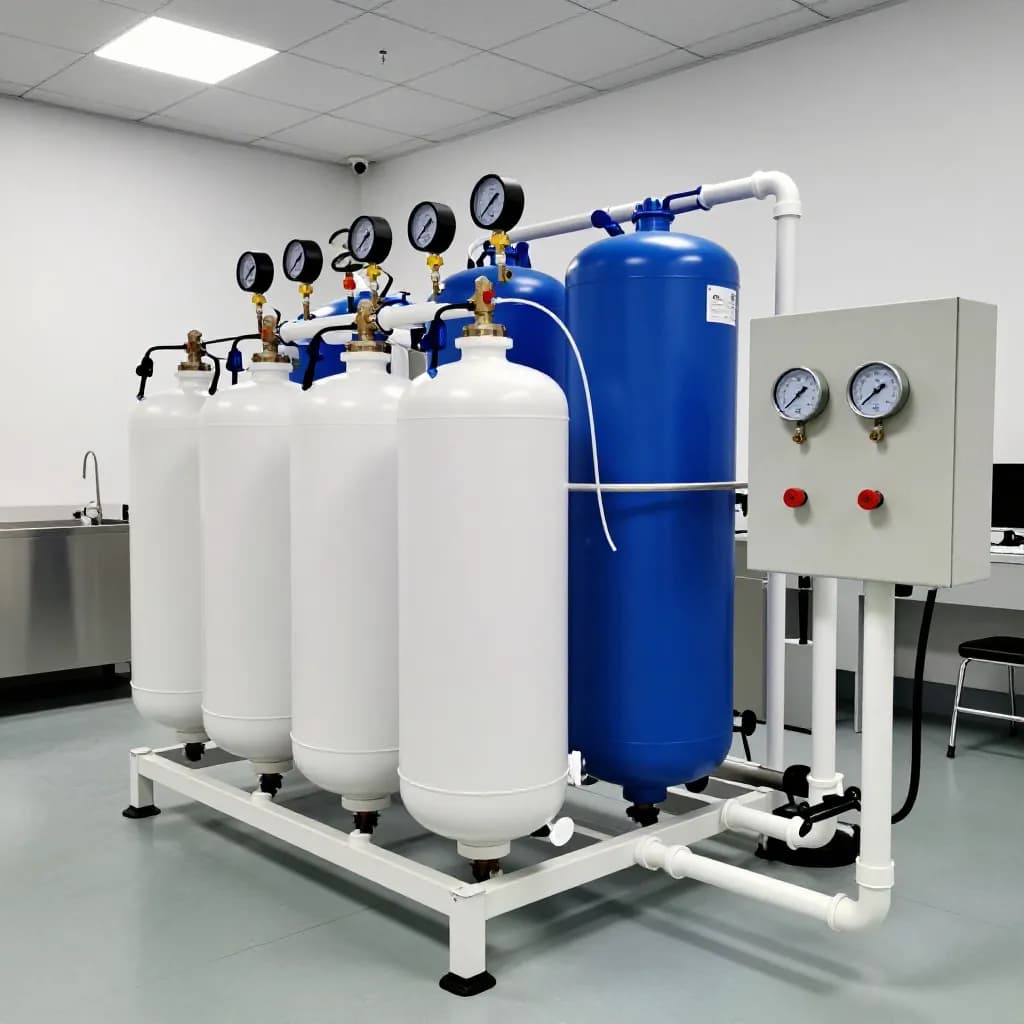
Municipal water supplies vary enormously in quality depending on the source and treatment. Total dissolved solids (TDS) can range from 50 ppm in soft-water regions to over 500 ppm in hard-water areas. These dissolved solids — primarily calcium, magnesium, sodium, chloride, sulfate, and silica — interfere with pretreatment chemistry in multiple ways. Calcium and magnesium form insoluble deposits on part surfaces and in spray nozzles. Chlorides accelerate corrosion of pretreatment equipment and can become trapped under the powder coating, initiating filiform corrosion. Silica forms tenacious deposits that resist chemical cleaning and interfere with conversion coating formation.
Ready to Start Your Project?
From one-off customs to 15,000-part production runs — get precise pricing in 24 hours.
On This Page
The Critical Role of Water Quality in Powder Coating Pretreatment
The final rinse stage is particularly sensitive to water quality. Any dissolved solids remaining on the part surface after the final rinse will be trapped under the powder coating, potentially causing adhesion failures, blistering, and corrosion. For this reason, the final rinse in a high-quality pretreatment system uses deionized (DI) or reverse osmosis (RO) purified water with conductivity below 20 microsiemens per centimeter (µS/cm), and preferably below 5 µS/cm for critical applications.
Deionized Water Systems: Ion Exchange Technology
Deionization (DI) removes dissolved minerals from water by passing it through ion exchange resin beds. Cation exchange resins replace positively charged ions (calcium, magnesium, sodium, iron) with hydrogen ions, while anion exchange resins replace negatively charged ions (chloride, sulfate, bicarbonate, silica) with hydroxyl ions. The hydrogen and hydroxyl ions combine to form pure water, producing an effluent with conductivity as low as 0.05 µS/cm — essentially mineral-free.
DI systems for powder coating pretreatment are available in several configurations. Two-bed systems use separate cation and anion vessels in series, producing water quality of 1–5 µS/cm suitable for most industrial pretreatment applications. Mixed-bed systems combine cation and anion resins in a single vessel, producing higher purity water (0.05–1.0 µS/cm) suitable for critical applications. Service deionization uses portable exchange tanks that are delivered full and exchanged when exhausted, eliminating the need for on-site regeneration chemicals and equipment.
Resin capacity is measured in grains of dissolved solids removed per cubic foot of resin. A typical two-bed DI system with 10 cubic feet of resin per vessel can treat 50,000–150,000 gallons of water between regenerations, depending on the incoming water TDS. Regeneration uses hydrochloric or sulfuric acid for cation resin and sodium hydroxide for anion resin — chemicals that require proper storage, handling, and waste neutralization. Conductivity monitoring at the DI system outlet provides real-time indication of resin exhaustion; when outlet conductivity rises above the setpoint (typically 1–5 µS/cm), the system switches to a standby vessel and the exhausted vessel is regenerated or exchanged.
Reverse Osmosis: Membrane-Based Purification
Reverse osmosis (RO) uses semi-permeable membranes to remove dissolved solids from water by applying pressure to force water molecules through the membrane while rejecting dissolved ions, organic molecules, and particulate matter. RO systems typically remove 95–99% of dissolved solids, producing permeate water with conductivity of 5–50 µS/cm from typical municipal water supplies.
RO systems for powder coating pretreatment consist of a prefilter (5-micron sediment filter to protect the membranes), a high-pressure pump (typically 10–15 bar), the membrane array (spiral-wound thin-film composite membranes), and a permeate storage tank. The system produces two streams: permeate (purified water, typically 75–85% of the feed volume) and concentrate (rejected water containing the removed contaminants, 15–25% of the feed volume). The concentrate stream is typically discharged to drain, though some facilities recycle it for non-critical uses such as initial rinse stages or cooling tower makeup.
RO offers several advantages over DI for pretreatment water supply. It removes organic contaminants and bacteria in addition to dissolved minerals, it does not require hazardous regeneration chemicals, and it produces consistent water quality regardless of incoming water variability. The primary disadvantage is the water waste inherent in the process — the 15–25% concentrate stream represents a significant water consumption increase. RO membranes also require periodic cleaning (typically every 3–6 months) to remove fouling deposits, and membrane replacement every 3–5 years. Many facilities use RO as a pretreatment for DI, reducing the dissolved solids load on the DI resin and extending resin life by 5–10 times — a configuration known as RO-DI that produces the highest quality water with the lowest operating cost.
Conductivity Monitoring and Rinse Quality Control
Conductivity measurement is the primary tool for monitoring water quality and rinse effectiveness in powder coating pretreatment. Conductivity — measured in microsiemens per centimeter (µS/cm) — is directly proportional to the concentration of dissolved ions in the water. Higher conductivity means more dissolved solids, which means more potential contaminants on the part surface.
Conductivity targets vary by rinse stage and application quality level. For general industrial powder coating, the final rinse conductivity should be below 50 µS/cm. For automotive and architectural applications, below 20 µS/cm is standard. For the most demanding applications (aerospace, medical devices), below 5 µS/cm may be specified. These targets apply to the rinse water as it contacts the part — not the incoming water supply, which may be higher due to dragout from previous stages.
Conductivity monitoring should be installed at multiple points in the pretreatment system: at the water treatment system outlet (to verify DI or RO performance), at each rinse stage overflow (to monitor rinse water quality), and at the final rinse stage (to verify that parts are leaving the pretreatment system with acceptable surface cleanliness). Continuous conductivity monitoring with alarm setpoints provides real-time quality assurance and alerts operators when rinse water quality degrades below acceptable levels. The most common cause of rising rinse conductivity is insufficient fresh water makeup — as parts carry chemical dragout into the rinse stage, the rinse water conductivity rises unless diluted by fresh purified water. Cascade rinsing, where fresh water enters the final rinse and overflows backward through preceding rinse stages, maximizes rinse efficiency and minimizes purified water consumption.
Wastewater Treatment and Discharge Compliance
Powder coating pretreatment systems generate wastewater that must be treated before discharge to comply with local, state, and federal environmental regulations. The primary contaminants in pretreatment wastewater include dissolved metals (iron, zinc, aluminum, manganese from the conversion coating process), phosphates (from iron and zinc phosphate chemistries), surfactants and oils (from the cleaning stages), and acids or alkalis (from pH adjustment and chemical dragout).
Wastewater treatment for pretreatment systems typically involves pH adjustment, chemical precipitation, flocculation, and solids separation. Metals are removed by raising the pH to 8.5–9.5 with sodium hydroxide or lime, which precipitates the dissolved metals as insoluble hydroxides. A flocculant (typically an anionic polymer) is added to aggregate the fine precipitate particles into larger flocs that settle or float for removal. Clarification is performed by gravity settling in a clarifier tank, dissolved air flotation (DAF), or filter press dewatering.
The treated effluent must meet discharge limits specified in the facility's wastewater discharge permit, which is based on federal pretreatment standards (40 CFR Part 433 for metal finishing) and local sewer authority requirements. Typical discharge limits include pH 6.0–9.0, total suspended solids below 60 mg/L, zinc below 2.6 mg/L, iron below 7.0 mg/L, and phosphorus below 2.0–10.0 mg/L depending on the receiving water body. Continuous pH monitoring and periodic laboratory analysis of the treated effluent verify compliance. The sludge generated by the treatment process — a mixture of metal hydroxides, phosphate precipitates, and organic matter — must be characterized and disposed of according to RCRA regulations, typically as non-hazardous industrial waste unless it contains regulated concentrations of heavy metals.
Water Conservation and Recycling Strategies
Water conservation is increasingly important for powder coating operations as water costs rise and discharge regulations tighten. A typical multi-stage pretreatment system consumes 500–2,000 gallons per hour of fresh water for rinse stages, representing a significant operating cost and environmental impact. Several strategies can reduce water consumption by 50–80% without compromising pretreatment quality.
Cascade (counter-flow) rinsing is the most fundamental water conservation technique. Instead of supplying fresh water to each rinse stage independently, fresh purified water enters only the final rinse and overflows backward through preceding rinse stages. Each stage receives progressively cleaner water, and the total fresh water consumption is determined by the flow rate to the final rinse rather than the sum of all rinse stages. A three-stage cascade rinse system can achieve the same rinse quality as three independent rinse stages while using one-third the water.
Closed-loop rinse water recycling uses a combination of filtration, ion exchange, and reverse osmosis to continuously purify and recirculate rinse water rather than discharging it. The recycling system removes dissolved metals, phosphates, and surfactants that accumulate in the rinse water, maintaining conductivity below the target level without fresh water addition. Closed-loop systems can reduce fresh water consumption by 80–95% and virtually eliminate wastewater discharge, though they require capital investment in recycling equipment and ongoing maintenance of membranes and resins. Conductivity-controlled rinse water makeup — where fresh water is added only when conductivity exceeds the setpoint rather than at a constant flow rate — provides a simple, low-cost conservation measure that typically reduces water consumption by 20–40% compared to constant-flow operation.
System Design, Sizing, and Maintenance Best Practices
Designing a water treatment system for powder coating pretreatment requires matching the treatment technology to the incoming water quality, the required output quality, the flow rate demand, and the facility's waste discharge capabilities. The design process begins with a comprehensive water analysis of the incoming supply, testing for TDS, hardness, alkalinity, chloride, sulfate, silica, iron, manganese, pH, and bacterial count. This analysis determines the treatment technology selection and sizing.
For facilities with incoming TDS below 200 ppm, a DI system alone may be sufficient and cost-effective. For TDS above 200 ppm, an RO-DI combination reduces operating costs by removing the bulk of dissolved solids with RO before polishing with DI. For facilities with very high TDS (above 500 ppm) or specific contaminants such as silica or iron, additional pretreatment steps (water softening, iron removal, or multimedia filtration) may be required upstream of the RO system.
Maintenance of water treatment systems is essential for consistent performance. RO membranes require monitoring of permeate flow rate, rejection rate, and differential pressure — declining performance indicates fouling that requires chemical cleaning. DI resin requires monitoring of outlet conductivity and regeneration or exchange when exhausted. Conductivity sensors require periodic calibration against standard solutions (typically monthly) to maintain measurement accuracy. Prefilters, carbon filters, and UV sterilizers (if installed) require element replacement on manufacturer-recommended schedules. A comprehensive maintenance log that tracks system performance metrics, chemical consumption, and component replacements provides the data needed to optimize system operation and predict maintenance needs before quality is affected.
Frequently Asked Questions
What conductivity should the final rinse water be for powder coating?
For general industrial powder coating, final rinse conductivity should be below 50 µS/cm. Automotive and architectural applications typically require below 20 µS/cm. Critical applications (aerospace, medical) may specify below 5 µS/cm. These targets ensure minimal dissolved solids remain on the part surface under the coating.
Is reverse osmosis or deionization better for pretreatment water?
The best approach is often a combination (RO-DI). RO removes 95–99% of dissolved solids plus organics and bacteria, while DI polishes the water to the lowest possible conductivity. RO-DI extends DI resin life by 5–10 times compared to DI alone, reducing operating costs for facilities with moderate to high TDS water.
How much water does a powder coating pretreatment system use?
A typical multi-stage pretreatment system consumes 500–2,000 gallons per hour for rinse stages. Cascade rinsing can reduce this by two-thirds, and closed-loop recycling can reduce consumption by 80–95%. Conductivity-controlled makeup provides 20–40% savings with minimal investment.
What contaminants must be removed from pretreatment wastewater?
Primary contaminants include dissolved metals (iron, zinc, aluminum), phosphates from conversion coatings, surfactants and oils from cleaning stages, and acids or alkalis from chemical dragout. Treatment involves pH adjustment, chemical precipitation, flocculation, and solids separation to meet discharge permit limits.
Why does hard water cause problems in powder coating pretreatment?
Hard water contains calcium and magnesium ions that form insoluble deposits on part surfaces and in spray nozzles, interfere with surfactant cleaning effectiveness, and disrupt conversion coating chemistry. These deposits can cause adhesion failures and corrosion under the powder coating if not removed by proper rinsing with purified water.
Ready to Start Your Project?
From one-off customs to 15,000-part production runs — get precise pricing in 24 hours.