Every powder coating begins as a carefully formulated blend of raw materials, each contributing specific properties to the final coating. Understanding these ingredients is essential to appreciating the complexity and precision of the manufacturing process.
Technical
How Powder Coating Powder Is Manufactured: From Raw Materials to Finished Product
Sundial Powder Coating·April 23, 2026·12 min
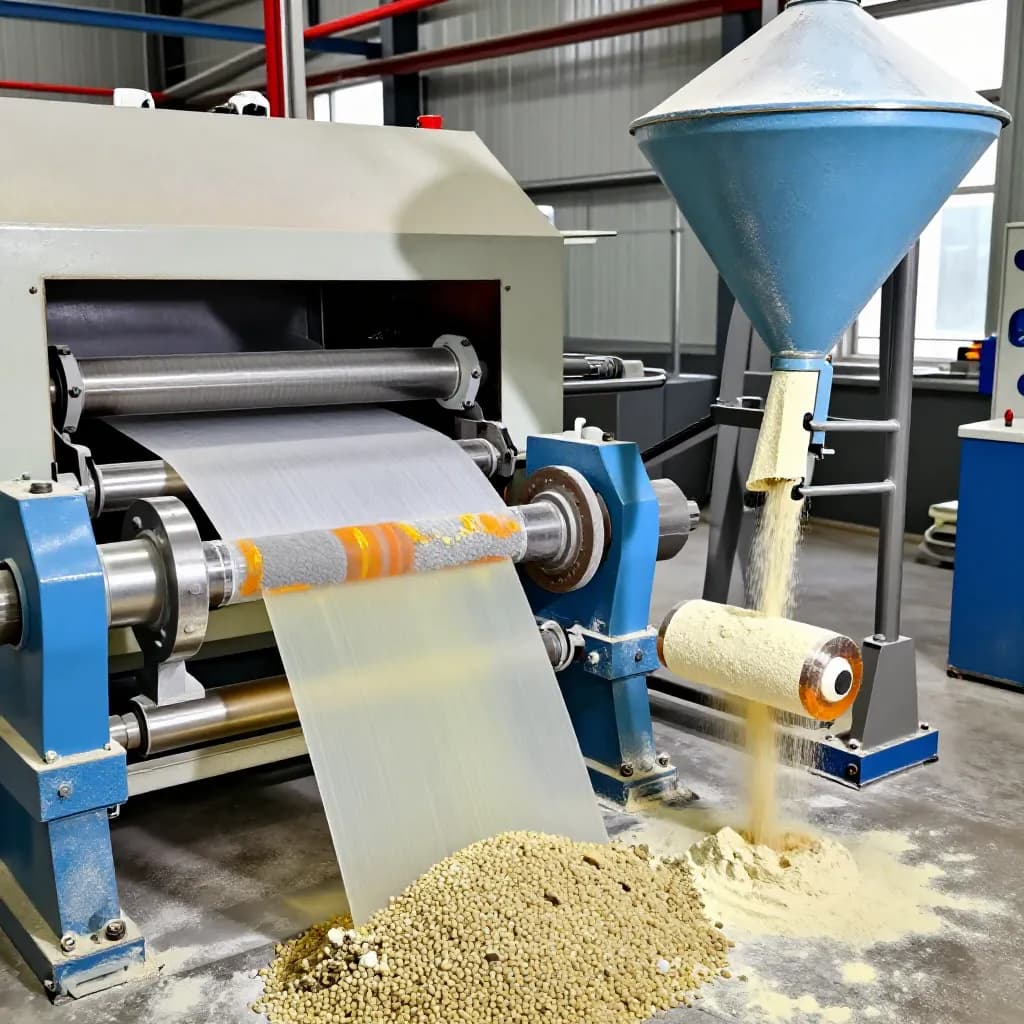
Resins form the backbone of any powder coating formulation, typically comprising 50-70% of the total weight. The resin determines the fundamental properties of the cured coating — its hardness, flexibility, chemical resistance, weathering performance, and adhesion characteristics. Common resin types include polyester, epoxy, polyester-epoxy hybrids, polyurethane, and acrylic. Each resin chemistry offers a distinct balance of properties suited to specific applications. Polyester resins dominate architectural and exterior applications due to their excellent UV resistance, while epoxy resins are preferred for functional coatings requiring maximum chemical and corrosion resistance.
Ready to Start Your Project?
From one-off customs to 15,000-part production runs — get precise pricing in 24 hours.
On This Page
Raw Materials: The Building Blocks of Powder Coatings
Crosslinking agents, or hardeners, react with the resin during curing to create the three-dimensional polymer network that gives thermoset powder coatings their durability. Common crosslinkers include TGIC (triglycidylisocyanurate), HAA (hydroxyalkylamide), blocked isocyanates, and dicyandiamide, depending on the resin system. The ratio of resin to crosslinker is critical — too little crosslinker results in an under-cured, soft coating, while too much produces a brittle film.
Pigments provide color and opacity. Inorganic pigments such as titanium dioxide (white), iron oxides (reds, yellows, browns), and carbon black are valued for their excellent lightfastness and heat stability. Organic pigments offer brighter, more saturated colors but may have lower heat stability and lightfastness. Metallic pigments — aluminum flakes, mica particles, and interference pigments — create metallic and pearlescent effects.
Additives round out the formulation, each serving a specific function. Flow agents improve the smoothness and leveling of the cured film. Degassing agents prevent pinholing caused by trapped air or moisture. UV stabilizers and antioxidants extend the coating's outdoor durability. Texturing agents create structured surface effects. Waxes improve scratch resistance and slip properties.
Formulation and Premixing
The manufacturing process begins with formulation — the precise specification of raw material types and quantities needed to achieve the desired coating properties. Formulation is both a science and an art, requiring deep knowledge of polymer chemistry, pigment technology, and the interactions between ingredients. Powder coating formulators use a combination of theoretical knowledge, empirical data, and iterative testing to develop formulations that meet performance specifications.
Once a formulation is established, the raw materials are weighed according to the recipe with high precision. Even small deviations in ingredient ratios can affect the color, gloss, flow, reactivity, and mechanical properties of the finished powder. Modern manufacturing facilities use automated weighing systems with digital controls to ensure accuracy and traceability.
The weighed ingredients are then combined in a premixing step, typically using a high-speed mixer or tumble blender. The purpose of premixing is to create a homogeneous dry blend of all ingredients before they enter the extrusion process. Thorough premixing ensures that the resin, crosslinker, pigments, and additives are evenly distributed throughout the blend, which is critical for achieving consistent color and properties in the final product.
Premixing times and speeds are carefully controlled. Insufficient mixing results in poor ingredient distribution and inconsistent coating properties. Excessive mixing can generate heat through friction, potentially causing premature reaction of the resin and crosslinker — a condition known as pre-gelling that would compromise the quality of the finished powder.
The premixed blend has the appearance of a dry, free-flowing powder with a speckled or mottled color, as the individual pigment particles have not yet been fully dispersed into the resin matrix. True color development occurs during the subsequent extrusion step, where heat and mechanical shear force the pigments into intimate contact with the molten resin.
Extrusion: The Heart of the Manufacturing Process
Extrusion is the most critical step in powder coating manufacturing — the process where raw materials are transformed from a dry premix into a homogeneous, fully compounded coating material. The extruder subjects the premixed ingredients to controlled heat and intense mechanical shear, melting the resin and dispersing the pigments, crosslinker, and additives uniformly throughout the molten mass.
Most powder coating manufacturers use twin-screw extruders, which consist of two intermeshing screws rotating inside a heated barrel. The premixed raw materials are fed into one end of the extruder, where they are conveyed forward by the rotating screws. As the material moves through the barrel, it encounters progressively higher temperatures and shear forces. The resin melts, the pigments are wetted and dispersed, and the crosslinker and additives are incorporated into the molten resin matrix.
Temperature control during extrusion is critical. The barrel temperature must be high enough to melt the resin and achieve good pigment dispersion, but low enough to prevent premature crosslinking of the resin-hardener system. Typical extrusion temperatures range from 80°C to 130°C, depending on the resin system. The residence time in the extruder is kept short — typically 15-30 seconds — to minimize the risk of pre-reaction.
The extruded material emerges from the die as a continuous ribbon or sheet of molten compound, which is immediately cooled on chilled rollers or a cooling belt. Rapid cooling is essential to halt any chemical reaction that may have begun during extrusion and to solidify the material for subsequent processing. The cooled material is brittle and glassy, breaking easily into irregular chips or flakes.
The quality of extrusion directly determines the quality of the finished powder coating. Poor pigment dispersion results in color inconsistency, specks, and reduced hiding power. Insufficient compounding leads to uneven crosslinker distribution and inconsistent cure behavior. Over-processing causes pre-gelling and reduced flow during application. Achieving the optimal balance requires precise control of screw speed, barrel temperature, feed rate, and cooling conditions.
Grinding and Particle Size Reduction
After extrusion and cooling, the compounded material exists as irregular chips that must be reduced to a fine, controlled powder suitable for electrostatic spray application. This particle size reduction is accomplished through grinding — a mechanical process that fractures the brittle extrudate into particles of the desired size distribution.
The grinding process typically uses an air classifying mill (ACM), which combines impact grinding with integrated air classification in a single machine. The extrudate chips are fed into the grinding chamber, where they are struck by high-speed rotating hammers or pins that shatter them into progressively smaller particles. Simultaneously, a stream of air carries the ground particles upward through a classifier wheel that separates particles by size.
Particle size distribution is one of the most critical quality parameters in powder coating manufacturing. The target median particle size (D50) for most electrostatic spray applications is 30-45 microns, with a controlled distribution ranging from approximately 10 to 100 microns. Particles that are too large (over 100 microns) cause rough, orange-peel texture in the cured film. Particles that are too fine (under 10 microns) create application problems — they are difficult to charge electrostatically, tend to accumulate in reclaim systems, and can cause Faraday cage effects in recessed areas.
The classifier wheel speed controls the cut point — the maximum particle size allowed to pass through. Higher classifier speeds produce finer powders; lower speeds produce coarser powders. The grinding and classification parameters are adjusted based on the specific formulation, as different resin systems have different fracture characteristics and optimal particle size ranges.
For specialty applications such as thin-film powder coatings, tighter particle size distributions with lower median sizes (20-30 microns) are required. Achieving these fine distributions requires additional classification steps or specialized grinding equipment. Conversely, fluidized bed application powders may have larger median particle sizes (60-100 microns) optimized for that specific application method.
The grinding process generates heat through friction, which must be managed to prevent softening or agglomeration of the powder particles. Cooling air is circulated through the grinding chamber, and the temperature of the ground powder is monitored continuously.
Classification and Post-Processing
After primary grinding, the powder undergoes additional classification and post-processing steps to achieve the final product specifications. These steps refine the particle size distribution, incorporate any additives that cannot survive the extrusion process, and prepare the powder for packaging and shipment.
Sieving is a standard post-grinding step that removes any oversized particles or agglomerates that escaped the classifier during grinding. Vibrating screens with mesh sizes typically ranging from 120 to 200 mesh (125 to 75 microns) ensure that no particles above the specified maximum size are present in the finished product. Sieving also removes any foreign contaminants — fiber fragments, metal particles, or other debris — that could cause defects in the applied coating.
For metallic powder coatings, a critical post-processing step is the bonding of metallic effect pigments to the surface of the powder particles. This is accomplished using a specialized bonding process where metallic flakes (aluminum, mica, or other effect pigments) are mixed with the base powder under controlled heat and mechanical action. The heat softens the surface of the powder particles just enough for the metallic flakes to adhere, creating a composite particle with metallic pigment firmly attached to its surface.
Bonding is preferred over simple dry-blending of metallic pigments because it prevents separation of the metallic and base powder components during application and reclaim. Unbonded metallic powders tend to segregate in the spray booth, with the lighter metallic flakes behaving differently from the heavier base powder particles, resulting in inconsistent metallic appearance.
Dry-flow additives — typically fumed silica or alumina — may be added in small quantities (0.1-0.5% by weight) to improve the powder's flowability and resistance to caking during storage. These additives coat the surface of the powder particles, reducing inter-particle adhesion and ensuring consistent fluidization and spray behavior.
The finished powder is then transferred to packaging — typically polyethylene-lined boxes or bags — with careful attention to preventing contamination. Even trace amounts of foreign powder or debris can cause visible defects in the applied coating, making cleanliness a paramount concern throughout the post-processing and packaging stages.
Quality Control Throughout Manufacturing
Quality control in powder coating manufacturing is a continuous process that begins with incoming raw material inspection and extends through every stage of production to final product release testing. The consequences of quality failures are significant — a batch of defective powder can result in thousands of rejected coated parts, production line shutdowns, and costly rework.
Incoming raw materials are tested against specifications before being accepted into production. Resins are checked for molecular weight, functionality, glass transition temperature, and melt viscosity. Pigments are tested for color strength, particle size, and purity. Crosslinkers are verified for purity and reactivity. These incoming inspections ensure that the starting materials will produce a powder coating that meets the target specifications.
During extrusion, process parameters — barrel temperatures, screw speed, feed rate, and torque — are monitored continuously and recorded for traceability. Samples of the extrudate are taken at regular intervals and tested for color, gloss, and gel time (a measure of reactivity). Any deviation from specification triggers investigation and corrective action before the affected material proceeds to grinding.
After grinding, the particle size distribution is measured using laser diffraction analysis, which provides a detailed profile of particle sizes in the batch. Key parameters include D10 (the size below which 10% of particles fall), D50 (median particle size), D90 (the size below which 90% of particles fall), and the span (a measure of distribution width). These parameters must fall within specified ranges for the powder to perform correctly during application.
Final product testing includes color measurement using a spectrophotometer (reported as CIE Lab* values and Delta E color difference from the standard), gloss measurement at 60° angle, film thickness verification on test panels, adhesion testing (cross-cut or pull-off), flexibility testing (mandrel bend or impact), hardness testing (pencil or Buchholz), and accelerated weathering for exterior-grade products. Only batches that pass all quality gates are released for shipment.
Manufacturing Scale and Efficiency
Modern powder coating manufacturing facilities are highly automated operations capable of producing thousands of tons of powder per year. The scale and efficiency of these operations have improved dramatically over the past three decades, driven by advances in equipment technology, process control, and lean manufacturing principles.
A typical production line can process 500-2000 kilograms of powder per hour, depending on the formulation complexity and the size of the extrusion and grinding equipment. Large-scale manufacturers operate multiple parallel production lines, enabling simultaneous production of different products and rapid changeover between colors and formulations.
Color changeover is one of the most significant operational challenges in powder coating manufacturing. Because even trace contamination from a previous color can cause visible defects in the next batch, thorough cleaning of all equipment — premixer, extruder, cooling belt, grinder, sieve, and packaging equipment — is required between colors. This cleaning process can take 30-60 minutes or more, representing significant downtime in a production schedule.
Manufacturers minimize changeover losses through careful production scheduling, grouping similar colors together and progressing from light to dark colors within a production sequence. Some facilities maintain dedicated production lines for high-volume colors, eliminating changeover entirely for their most popular products.
Waste generation in powder coating manufacturing is relatively low compared to liquid paint production. There are no solvent emissions, no wastewater from coating operations, and minimal solid waste. Off-specification powder can often be reworked by re-extruding and re-grinding, recovering the raw material value. Dust collection systems capture airborne particles throughout the facility, maintaining air quality and recovering usable material.
Energy consumption is concentrated in the extrusion and grinding steps, with additional energy required for cooling, air handling, and facility operations. Manufacturers are increasingly investing in energy-efficient equipment, heat recovery systems, and renewable energy sources to reduce the carbon footprint of powder coating production.
Emerging Manufacturing Technologies
The powder coating manufacturing process, while well-established, continues to evolve as new technologies and market demands drive innovation. Several emerging manufacturing technologies have the potential to significantly change how powder coatings are produced in the coming years.
Superfine grinding technology is enabling the production of powder coatings with median particle sizes below 25 microns, compared to the traditional 35-45 micron range. These ultra-fine powders produce smoother, thinner films that are competitive with liquid paint in applications where surface appearance is critical. However, superfine powders present challenges in handling, fluidization, and electrostatic charging that require specialized application equipment.
Cryogenic grinding, which uses liquid nitrogen to cool the powder during grinding, is being explored as a method to achieve tighter particle size distributions and reduce the heat-related degradation that can occur during conventional grinding. The extremely low temperatures make the extrudate more brittle and easier to fracture into uniform particles, potentially improving both the efficiency and quality of the grinding process.
Continuous manufacturing processes, as opposed to traditional batch production, are being developed to improve efficiency and reduce changeover waste. In a continuous process, raw materials are fed, extruded, cooled, ground, and classified in a single uninterrupted flow, eliminating the batch-to-batch variability and downtime associated with conventional production.
Digital formulation tools using artificial intelligence and machine learning are accelerating the development of new powder coating formulations. These tools can predict the properties of a formulation based on its ingredient composition, reducing the number of physical trials required to develop a new product. Some manufacturers are using digital twins of their production processes to optimize extrusion and grinding parameters virtually before implementing changes on the production floor.
Sustainable manufacturing practices are gaining importance, with manufacturers investing in bio-based raw materials, recycled content, energy-efficient equipment, and closed-loop waste management systems. The goal is to reduce the environmental footprint of powder coating production itself, complementing the inherent environmental advantages of powder coating as an application technology.
Frequently Asked Questions
What are the main raw materials in powder coating?
The main raw materials are resins (50-70% by weight, providing the coating's fundamental properties), crosslinking agents (hardeners that create the cured polymer network), pigments (for color and opacity), and additives (flow agents, UV stabilizers, degassing agents, texturing agents, and waxes for specific performance properties).
What is the extrusion process in powder coating manufacturing?
Extrusion is the critical step where premixed raw materials are fed into a twin-screw extruder that applies controlled heat (80-130°C) and intense mechanical shear. This melts the resin, disperses pigments uniformly, and incorporates all additives into a homogeneous molten compound. The material is then rapidly cooled into brittle chips for grinding.
What particle size is ideal for powder coating?
The target median particle size (D50) for most electrostatic spray applications is 30-45 microns, with a distribution ranging from approximately 10 to 100 microns. Particles over 100 microns cause rough texture, while particles under 10 microns create charging and application problems. Specialty thin-film powders may target 20-30 micron medians.
How are metallic powder coatings made?
Metallic powder coatings use a bonding process where metallic effect pigments (aluminum flakes, mica particles) are mixed with the base powder under controlled heat and mechanical action. The heat softens particle surfaces just enough for metallic flakes to adhere, creating composite particles that prevent separation during application and reclaim.
What quality tests are performed on powder coatings?
Quality testing includes particle size distribution by laser diffraction, color measurement via spectrophotometer (CIE L*a*b* and Delta E), gloss measurement at 60°, film thickness verification, adhesion testing (cross-cut), flexibility testing (mandrel bend), hardness testing (pencil or Buchholz), and accelerated weathering for exterior products.
How much powder can a manufacturing line produce?
A typical production line processes 500-2000 kilograms of powder per hour, depending on formulation complexity and equipment size. Large manufacturers operate multiple parallel lines for simultaneous production of different products. Color changeover cleaning between batches typically requires 30-60 minutes.
Ready to Start Your Project?
From one-off customs to 15,000-part production runs — get precise pricing in 24 hours.