Adhesion — the bond between a powder coating and its substrate — is the single most critical factor determining the long-term performance of any coated product. A powder coating with outstanding hardness, chemical resistance, and weathering durability will fail catastrophically if it does not adhere properly to the underlying metal. Delamination, peeling, flaking, and blistering are all manifestations of adhesion failure, and they represent the most common and most costly category of powder coating defects.
Technical
Powder Coating Adhesion Science Explained: Bonding Mechanisms, Surface Energy, and Wetting Theory
Sundial Powder Coating·April 23, 2026·11 min
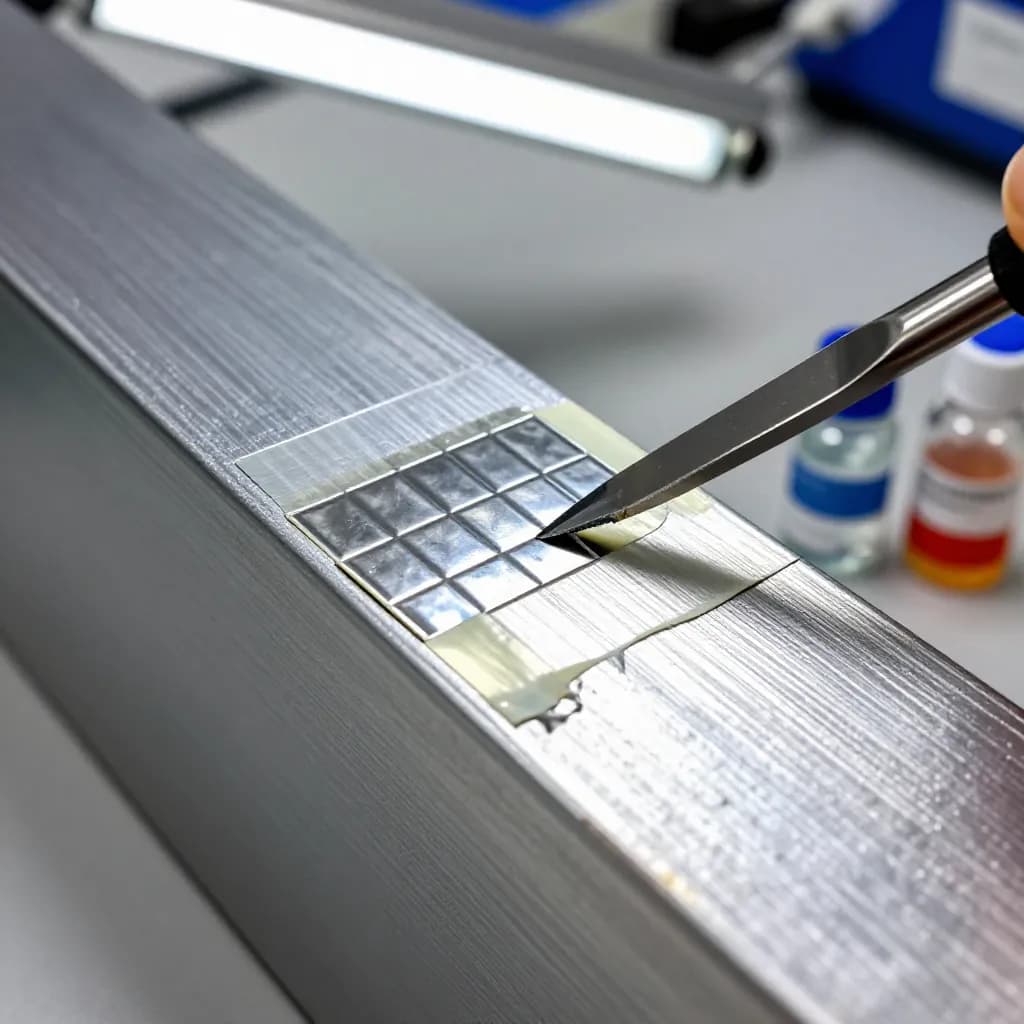
The science of adhesion is a multidisciplinary field that draws on surface chemistry, polymer physics, materials science, and mechanical engineering. Understanding the mechanisms by which powder coatings bond to metal substrates — and the factors that can compromise those bonds — is essential for specifying effective pretreatment processes, selecting appropriate coating systems, and troubleshooting adhesion failures when they occur.
Ready to Start Your Project?
From one-off customs to 15,000-part production runs — get precise pricing in 24 hours.
On This Page
Why Adhesion Matters in Powder Coating
Adhesion in powder coating systems operates through multiple mechanisms simultaneously. Mechanical interlocking, chemical bonding, electrostatic attraction, and diffusion all contribute to the overall bond strength between coating and substrate. The relative importance of each mechanism depends on the substrate material, the surface preparation method, the coating chemistry, and the curing conditions.
In practice, adhesion is not a single property but a system property that depends on the entire coating system — substrate, pretreatment, primer (if used), and topcoat — working together. A change in any component can affect adhesion, which is why coating system qualification involves testing the complete system rather than individual components in isolation.
The consequences of adhesion failure extend beyond aesthetics. Loss of coating adhesion exposes the substrate to corrosion, eliminates the barrier protection that prevents environmental degradation, and can create safety hazards when coating fragments detach from structural or functional components. In critical applications such as automotive, aerospace, and infrastructure, adhesion failure can have serious safety and liability implications.
Mechanical Interlocking
Mechanical interlocking is the most intuitive adhesion mechanism — the physical anchoring of the coating into the microscopic topography of the substrate surface. When a metal surface has a rough, textured profile, the molten powder coating flows into the valleys, pores, and undercuts of the surface during curing, creating a mechanical bond that resists separation.
The effectiveness of mechanical interlocking depends on the surface roughness profile, the flow characteristics of the molten powder, and the geometry of the surface features. Surfaces with deep, angular profiles and undercut features provide the strongest mechanical interlocking because the cured coating is physically trapped in the surface geometry. Smooth, polished surfaces offer minimal mechanical interlocking and rely more heavily on chemical bonding mechanisms.
Abrasive blasting is the most common method for creating surface profiles optimized for mechanical interlocking. Steel grit, aluminum oxide, or garnet abrasives propelled at high velocity against the metal surface create a pattern of peaks and valleys with controlled depth and spacing. The resulting surface profile is characterized by parameters such as Ra (arithmetic average roughness), Rz (average peak-to-valley height), and Rpc (peak count per unit length).
For powder coating adhesion, the optimal surface profile typically has an Ra of 2-5 micrometers and an Rz of 15-40 micrometers. Profiles that are too smooth provide insufficient mechanical interlocking, while profiles that are too rough can create stress concentrations at the coating-substrate interface and may not be fully wetted by the molten powder, leaving voids that act as initiation points for adhesion failure.
Mechanical interlocking is particularly important for thick, rigid coatings that develop significant internal stress during curing and cooling. These stresses tend to pull the coating away from the substrate, and mechanical interlocking provides the physical resistance needed to maintain the bond. For thin, flexible coatings, chemical bonding mechanisms may be more important than mechanical interlocking.
It is worth noting that mechanical interlocking alone is generally insufficient for long-term adhesion in aggressive environments. Water can penetrate along the coating-substrate interface by capillary action, undermining the mechanical bond. This is why mechanical interlocking is most effective when combined with chemical bonding through proper pretreatment.
Chemical Bonding and Interfacial Chemistry
Chemical bonding between the powder coating and the substrate surface provides the strongest and most durable adhesion mechanism. Unlike mechanical interlocking, which relies on physical geometry, chemical bonding involves the formation of actual chemical bonds — covalent, ionic, or hydrogen bonds — between the coating molecules and the substrate surface or its conversion coating layer.
On bare metal surfaces, chemical bonding occurs primarily through the interaction of polar functional groups in the coating resin with the metal oxide layer that naturally forms on most metals. Epoxy resins, with their hydroxyl and ether groups, form particularly strong bonds with metal oxides through hydrogen bonding and coordination with metal atoms. Polyester resins bond through their carboxyl and hydroxyl groups. The strength of these interactions depends on the density of functional groups at the interface and the chemical compatibility between the coating and the substrate.
Conversion coatings — zinc phosphate, iron phosphate, chromate, or zirconium-based treatments — dramatically enhance chemical bonding by creating a chemically active surface layer that bridges between the metal substrate and the organic coating. The conversion coating provides a high density of reactive sites (hydroxyl groups, phosphate groups, or metal oxide sites) that form strong chemical bonds with the coating resin during curing.
The curing process itself plays a critical role in chemical bond formation. As the powder melts and flows onto the pretreated surface, the reactive functional groups in the resin come into intimate contact with the conversion coating surface. At curing temperatures (typically 160-200°C), these groups have sufficient thermal energy to overcome activation barriers and form stable chemical bonds. This is why proper curing is essential for adhesion — under-cured coatings may not develop their full chemical bonding potential.
Silane coupling agents represent a specialized approach to enhancing chemical bonding. These bifunctional molecules have one end that bonds to the metal or metal oxide surface (through silanol groups) and another end that bonds to the organic coating (through reactive organic groups such as epoxy, amino, or vinyl). Silane treatments create a molecular bridge between the inorganic substrate and the organic coating, providing exceptionally strong and hydrolytically stable adhesion.
The durability of chemical bonds at the coating-substrate interface is a critical consideration for long-term performance. Some chemical bonds — particularly hydrogen bonds — are susceptible to displacement by water molecules, which can lead to adhesion loss in wet environments. This is why hydrolytically stable bonding mechanisms (covalent bonds, silane bridges) are preferred for coatings that will be exposed to moisture.
Surface Energy and Wetting Theory
Surface energy is a fundamental concept in adhesion science that determines whether a liquid coating will spread across and wet a substrate surface or bead up and resist contact. For a powder coating to achieve good adhesion, the molten powder must thoroughly wet the substrate surface during the melt-flow phase of curing, displacing air and establishing intimate molecular contact across the entire interface.
Surface energy, measured in millinewtons per meter (mN/m) or equivalently millijoules per square meter (mJ/m²), quantifies the energy associated with the surface of a material. High-energy surfaces — such as clean metals and metal oxides — have strong intermolecular forces at their surface and are readily wetted by most liquids. Low-energy surfaces — such as polyethylene, PTFE, and silicone — have weak surface forces and resist wetting.
The fundamental rule of wetting is that a liquid will spontaneously spread on a surface only if the surface energy of the substrate is higher than the surface tension of the liquid. Clean metal surfaces typically have surface energies of 500-3000 mN/m, while molten powder coatings have surface tensions of 25-45 mN/m. This large difference ensures excellent wetting of clean metal surfaces by powder coatings.
However, contamination can dramatically reduce the effective surface energy of a metal substrate. Oils, greases, fingerprints, and other organic contaminants form low-energy films on the metal surface, reducing its effective surface energy to 20-40 mN/m — close to or below the surface tension of the molten powder. When this happens, the powder cannot wet the contaminated surface properly, resulting in poor adhesion, fisheyes, craters, or complete coating rejection.
This is the scientific basis for the critical importance of surface cleaning in powder coating. The purpose of alkaline cleaning, solvent wiping, or other degreasing processes is to remove low-energy contaminants and restore the high surface energy of the bare metal, ensuring complete wetting by the molten powder during curing.
Contact angle measurement provides a practical method for assessing surface energy and wetting behavior. A drop of water or a reference liquid is placed on the surface, and the angle between the drop edge and the surface is measured. Low contact angles (below 30°) indicate high surface energy and good wettability. High contact angles (above 90°) indicate low surface energy and poor wettability. Water break tests — observing whether a water film sheets uniformly across the surface or breaks into droplets — provide a quick qualitative assessment of surface cleanliness and wettability.
Factors That Compromise Adhesion
Understanding the factors that compromise powder coating adhesion is as important as understanding the mechanisms that promote it. Adhesion failures in the field are almost always traceable to one or more of these factors, and preventing them requires systematic quality control throughout the coating process.
Surface contamination is the most common cause of adhesion failure. Oils, greases, metalworking fluids, fingerprints, silicone residues, and other organic contaminants prevent the coating from wetting and bonding to the metal surface. Even trace amounts of silicone — from lubricants, release agents, or personal care products — can cause severe adhesion problems because silicone has extremely low surface energy and is difficult to remove completely.
Inadequate surface preparation — insufficient cleaning, improper conversion coating, or incorrect blast profile — leaves the substrate in a condition that cannot support strong, durable adhesion. Residual mill scale, rust, or previous coating layers create weak boundary layers that fail under stress. Conversion coatings that are too thin, too thick, or improperly formed provide suboptimal bonding surfaces.
Moisture at the coating-substrate interface is a particularly insidious cause of adhesion failure. Water molecules can displace chemical bonds between the coating and the substrate, particularly hydrogen bonds, leading to progressive adhesion loss over time. This mechanism, known as wet adhesion loss, is accelerated by elevated temperature and is the primary mode of adhesion failure in humid and marine environments.
Improper curing — either under-cure or over-cure — can compromise adhesion. Under-cured coatings have not developed their full chemical bonding potential and may have residual internal stresses that promote delamination. Over-cured coatings may have degraded polymer chains at the interface that reduce bond strength, and excessive thermal stress during cooling can create interfacial stresses that exceed the bond strength.
Thermal expansion mismatch between the coating and the substrate generates mechanical stress at the interface during temperature cycling. If the coating and substrate have significantly different coefficients of thermal expansion, repeated heating and cooling cycles can fatigue the interfacial bond and eventually cause delamination. This is a particular concern for thick coatings on substrates with high thermal expansion coefficients.
Internal stress in the cured coating — arising from shrinkage during crosslinking, thermal contraction during cooling, or moisture absorption — acts to pull the coating away from the substrate. If the internal stress exceeds the adhesion strength, the coating will delaminate. Thicker coatings generally develop higher internal stresses, which is why adhesion testing is particularly important for thick-film applications.
Adhesion Testing Methods
Quantitative adhesion testing is essential for verifying that powder coating systems meet performance requirements and for diagnosing adhesion problems when they occur. Several standardized test methods are used in the powder coating industry, each measuring adhesion in a different way and providing different types of information.
The cross-cut adhesion test (ISO 2409, ASTM D3359 Method B) is the most widely used adhesion test in routine quality control. A grid pattern of cuts is made through the coating to the substrate using a multi-blade cutting tool, and adhesive tape is applied over the grid and pulled off. The amount of coating removed by the tape is evaluated against a photographic reference scale ranging from 0 (no removal, best adhesion) to 5 (more than 65% removal, worst adhesion). Most powder coating specifications require a rating of 0 or 1.
The pull-off adhesion test (ISO 4624, ASTM D4541) provides a quantitative measurement of adhesion strength in megapascals (MPa). A metal dolly is bonded to the coating surface with a structural adhesive, and a calibrated pulling device applies a tensile force perpendicular to the surface until failure occurs. The failure load divided by the dolly area gives the adhesion strength, and the failure mode (adhesive failure at the coating-substrate interface, cohesive failure within the coating, or failure within the adhesive) provides diagnostic information about the weakest link in the system.
Typical pull-off adhesion values for well-prepared and properly cured powder coatings range from 5 to 15 MPa, depending on the coating system and substrate. Values below 3-5 MPa generally indicate inadequate adhesion that may lead to field failures.
The bend test (ISO 1519, ASTM D522) evaluates adhesion under deformation by bending a coated panel around a cylindrical mandrel of specified diameter. The coating is examined for cracking, flaking, or delamination after bending. This test is particularly relevant for coatings on parts that will be formed or flexed in service.
Wet adhesion testing evaluates the durability of adhesion after exposure to moisture. Coated panels are immersed in water at elevated temperature (typically 40°C) for a specified period (24-240 hours), then immediately subjected to cross-cut or pull-off testing while still wet. The comparison between dry and wet adhesion values reveals the susceptibility of the coating system to moisture-induced adhesion loss — a critical parameter for coatings intended for exterior or humid environments.
Accelerated adhesion testing using boiling water immersion, autoclave exposure, or cathodic disbondment testing provides more aggressive evaluation of adhesion durability for demanding applications such as pipeline coatings, automotive underbody protection, and marine structures.
Optimizing Adhesion in Practice
Achieving optimal adhesion in powder coating operations requires attention to every step of the process, from substrate selection through surface preparation, coating application, and curing. The following principles, grounded in the adhesion science discussed in this article, provide a practical framework for maximizing adhesion performance.
Substrate quality begins with the metal itself. Substrates should be free of mill scale, heavy rust, weld spatter, and surface defects that can trap contaminants or create stress concentrations. For critical applications, specifying the substrate surface condition (such as hot-rolled versus cold-rolled steel, or specific aluminum alloy tempers) ensures a consistent starting point for the coating process.
Surface cleaning must be thorough and appropriate for the type of contamination present. Alkaline cleaning is effective for removing oils, greases, and water-soluble contaminants. Solvent cleaning may be needed for heavy organic contamination. The cleanliness of the surface after cleaning should be verified using water break tests, contact angle measurement, or surface energy measurement before proceeding to conversion coating.
Conversion coating selection and process control are critical for chemical bonding. The conversion coating must be appropriate for the substrate material (zinc phosphate or iron phosphate for steel, chromate or zirconium for aluminum), applied at the correct weight and crystal structure, and thoroughly rinsed to remove residual chemicals. Process parameters — concentration, temperature, pH, contact time, and rinse water quality — must be monitored and controlled within specified ranges.
The time between surface preparation and coating application should be minimized to prevent re-contamination or oxidation of the prepared surface. In humid environments, flash rusting of steel surfaces can occur within minutes of cleaning, compromising adhesion. Many coating specifications limit the maximum time between preparation and coating to 4-8 hours.
Curing must achieve the specified metal temperature for the specified time to ensure complete crosslinking and full development of chemical bonds at the interface. Temperature profiling of representative parts should be performed regularly to verify cure adequacy, particularly when part geometry, line speed, or oven conditions change.
Ongoing adhesion monitoring through regular cross-cut or pull-off testing of production parts provides early warning of adhesion problems before they result in field failures. Statistical tracking of adhesion test results over time can reveal trends that indicate process drift, enabling corrective action before adhesion falls below specification limits.
Frequently Asked Questions
What are the main adhesion mechanisms in powder coating?
Powder coating adhesion operates through multiple mechanisms: mechanical interlocking (physical anchoring into surface roughness), chemical bonding (covalent, ionic, and hydrogen bonds between coating and substrate), and to a lesser extent, electrostatic attraction and diffusion. The strongest, most durable adhesion combines mechanical interlocking with chemical bonding through proper pretreatment.
What is surface energy and why does it matter for adhesion?
Surface energy quantifies the intermolecular forces at a material's surface. For good adhesion, the substrate surface energy must be higher than the coating's surface tension so the molten powder wets the surface completely. Clean metals have high surface energy (500-3000 mN/m), but contamination can reduce it below the coating's surface tension (25-45 mN/m), causing adhesion failure.
How is powder coating adhesion tested?
Common tests include cross-cut adhesion (ISO 2409/ASTM D3359) where a grid is cut and tape-pulled, rated 0-5; pull-off adhesion (ISO 4624/ASTM D4541) measuring tensile bond strength in MPa; and bend testing over mandrels. Wet adhesion testing after water immersion evaluates durability in humid environments.
What causes powder coating adhesion failure?
Common causes include surface contamination (oils, silicone, fingerprints), inadequate surface preparation, moisture at the coating-substrate interface, improper curing (under-cure or over-cure), thermal expansion mismatch, and excessive internal stress in thick coatings. Most field adhesion failures trace back to surface preparation deficiencies.
What surface roughness is optimal for powder coating adhesion?
For powder coating, the optimal surface profile typically has an Ra (arithmetic average roughness) of 2-5 micrometers and an Rz (peak-to-valley height) of 15-40 micrometers. Profiles that are too smooth provide insufficient mechanical interlocking, while excessively rough profiles may not be fully wetted by the molten powder.
Ready to Start Your Project?
From one-off customs to 15,000-part production runs — get precise pricing in 24 hours.