Polyurethane paint is a high-performance liquid coating system that forms its film through a chemical reaction between polyol resins and isocyanate hardeners. This reaction creates a urethane linkage — a molecular bond that gives polyurethane coatings their characteristic combination of hardness, flexibility, and chemical resistance. Polyurethane paints are available in both two-component systems, where the resin and hardener are mixed before application, and single-component moisture-cure systems that react with atmospheric humidity.
Comparison
Powder Coating vs Polyurethane Paint: Flexibility, Chemical Resistance, and Performance
Sundial Powder Coating·April 22, 2026·11 min
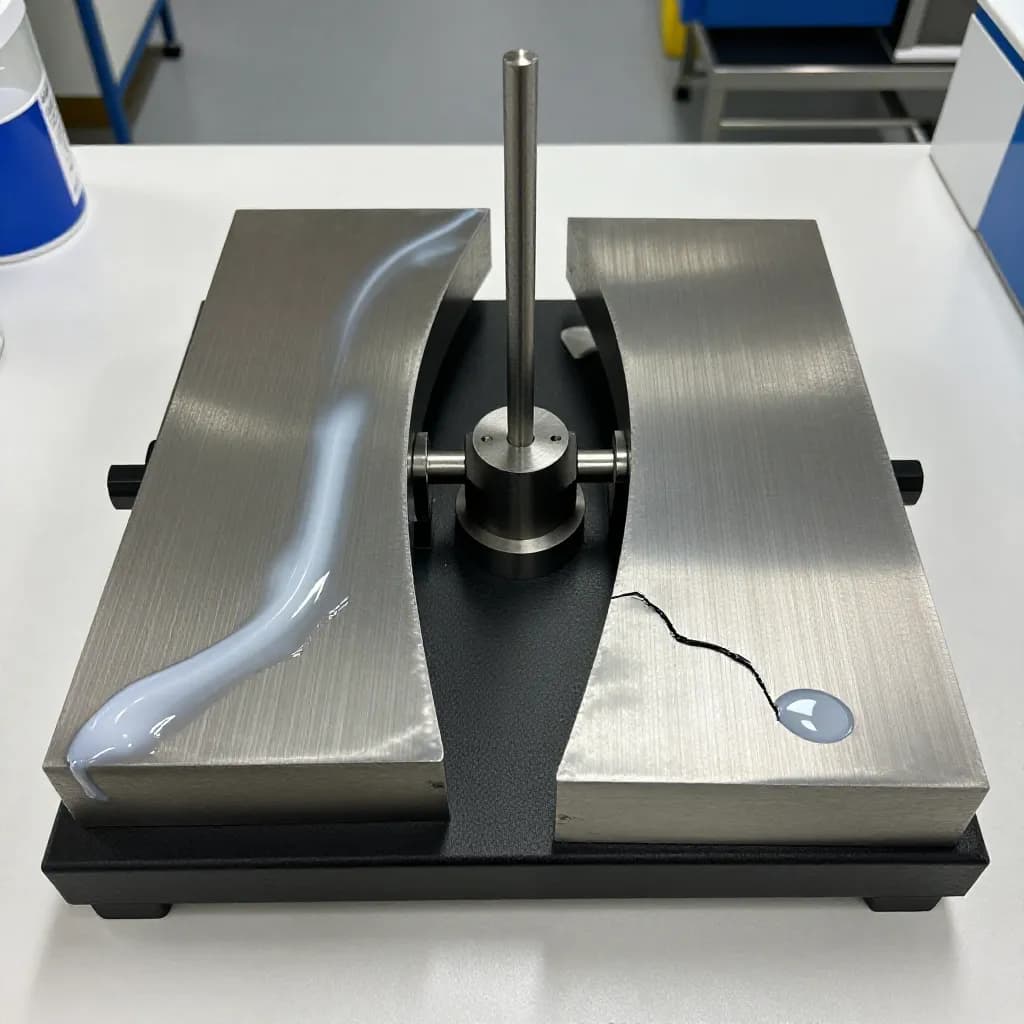
Two-component polyurethane paints are the industry standard for high-performance applications. They are widely used in automotive refinishing, aerospace, marine, and industrial maintenance coating where the finish must withstand UV exposure, chemical contact, abrasion, and extreme weather conditions. The automotive refinish industry relies heavily on polyurethane clear coats as the final protective layer in basecoat-clearcoat paint systems, where the polyurethane provides the gloss, depth, and durability that define a quality automotive finish.
Ready to Start Your Project?
From one-off customs to 15,000-part production runs — get precise pricing in 24 hours.
On This Page
What Is Polyurethane Paint?
Polyurethane paints offer several genuine advantages that have made them a dominant technology in liquid coating applications. Their flexibility allows them to accommodate substrate movement without cracking, their UV resistance is excellent when formulated with aliphatic isocyanates, and their chemical resistance is broad. However, polyurethane paints also carry significant health and safety concerns related to isocyanate exposure, and their solvent content contributes to VOC emissions — factors that increasingly favor powder coating alternatives.
Powder Coating Technology and Chemistry Options
Powder coating encompasses multiple resin chemistries, each offering different performance characteristics that can be matched to specific application requirements. Polyester powder coatings are the most widely used, offering excellent UV resistance, color retention, and weathering performance for exterior applications. Epoxy powder coatings provide superior chemical and corrosion resistance for interior and concealed applications. Hybrid epoxy-polyester powders balance the properties of both for interior decorative use.
Polyurethane powder coatings also exist, using blocked isocyanate curing agents that react with hydroxyl-functional polyester resins during heat curing. These polyurethane powder coatings offer a combination of properties that closely mirrors liquid polyurethane paint — excellent flexibility, chemical resistance, UV stability, and a smooth, high-gloss finish. They are used in applications where the performance characteristics of polyurethane chemistry are needed but the environmental and safety advantages of powder coating are also desired.
The availability of polyurethane powder coating means that the comparison between powder coating and polyurethane paint is not simply a comparison of different chemistries — it is a comparison of application technologies. Both can deliver polyurethane-level performance, but powder coating does so without solvents, without isocyanate exposure during application, and with dramatically higher material efficiency. This makes the choice between the two primarily a question of substrate compatibility, part size, and production requirements rather than achievable performance.
Flexibility and Mechanical Performance
Flexibility is one of polyurethane paint's most celebrated properties, and it is an area where the comparison with powder coating requires nuance. Liquid polyurethane paints can be formulated to achieve exceptional elongation — some flexible polyurethane coatings can stretch 200 to 400 percent before failure, making them suitable for substrates that experience significant thermal expansion, vibration, or mechanical flexing. This flexibility is why polyurethane is the coating of choice for aircraft, where the skin flexes during flight, and for automotive bumpers and flexible body components.
Standard polyester powder coatings offer good flexibility but typically cannot match the extreme elongation of specialized flexible polyurethane paints. However, polyurethane powder coatings and flexible polyester powder formulations have been developed specifically to address this gap. These flexible powder coatings achieve elongation values of 100 to 200 percent, which is sufficient for most industrial applications including automotive components, agricultural equipment, and architectural panels that experience thermal cycling.
Impact resistance is an area where powder coating often outperforms liquid polyurethane paint. The thicker film build of powder coating — typically 60 to 120 microns versus 30 to 75 microns for liquid polyurethane — provides a more substantial cushion against impact damage. Powder-coated surfaces resist chipping from stone impacts, tool drops, and handling damage better than thinner liquid polyurethane films. For applications where impact resistance is more important than extreme flexibility, powder coating is the better choice.
Chemical and UV Resistance
Chemical resistance is strong for both polyurethane paint and powder coating, though the specific resistance profile depends on the formulation. Liquid polyurethane paints offer excellent resistance to fuels, hydraulic fluids, solvents, and a broad range of industrial chemicals. Their cross-linked urethane film structure creates an effective barrier against chemical penetration, which is why polyurethane coatings are specified for chemical processing equipment, fuel storage tanks, and industrial maintenance applications.
Polyester powder coatings provide good general chemical resistance that is adequate for most architectural and consumer product applications. For more demanding chemical environments, epoxy powder coatings offer resistance comparable to or exceeding liquid polyurethane paints. Polyurethane powder coatings provide chemical resistance that closely matches their liquid counterparts, making them suitable for the same demanding applications without the associated solvent emissions and isocyanate exposure.
UV resistance is excellent for both aliphatic polyurethane paints and polyester powder coatings. Both technologies can maintain color and gloss through years of outdoor exposure when properly formulated. Superdurable polyester powder coatings, formulated with UV-resistant monomers, achieve weathering performance that meets the most demanding architectural specifications including AAMA 2605 and Qualicoat Class 3. Aliphatic polyurethane paints achieve similar performance, though the specific formulation and film thickness influence the comparison. For most exterior applications, both technologies deliver acceptable UV performance, with powder coating offering the additional advantages of thicker film build and zero VOC emissions.
Health, Safety, and Isocyanate Concerns
Health and safety considerations represent one of the most significant differences between polyurethane paint and powder coating. Isocyanates — the hardener component in two-component polyurethane paints — are potent respiratory sensitizers that can cause occupational asthma, a serious and potentially permanent condition. Once sensitized, a worker may react to extremely low concentrations of isocyanate, effectively ending their ability to work with polyurethane coatings. Isocyanate exposure is one of the leading causes of occupational asthma in industrialized countries.
Working with liquid polyurethane paints requires extensive safety measures including supplied-air respirators, full-body protective clothing, engineering controls such as downdraft spray booths with adequate ventilation, and regular medical surveillance including lung function testing. These requirements add significant cost and complexity to polyurethane paint operations and create ongoing compliance obligations under occupational health regulations.
Powder coating eliminates isocyanate exposure during application entirely. Even polyurethane powder coatings, which contain blocked isocyanate curing agents, do not release free isocyanate during the spraying process because the blocking agent prevents the isocyanate from becoming reactive until it reaches curing temperature in the oven. This means workers applying polyurethane powder coating are not exposed to the respiratory sensitization risk that makes liquid polyurethane paint operations so hazardous. Standard dust management practices — extraction ventilation and dust masks — are sufficient for powder coating operations, representing a dramatically simpler and safer working environment.
Application Versatility and Limitations
Liquid polyurethane paint offers broader application versatility than powder coating in terms of substrate compatibility and field application capability. Polyurethane paint can be applied to metal, wood, concrete, fiberglass, and plastic substrates at ambient temperature, making it suitable for on-site application to installed structures, large assemblies, and heat-sensitive materials. This versatility is essential for applications such as bridge maintenance, marine vessel coating, aircraft refinishing, and architectural maintenance where oven curing is not possible.
Powder coating is limited to substrates that can withstand oven curing at 160 to 200 degrees Celsius and that are electrically conductive or can be made conductive for electrostatic application. This effectively limits standard powder coating to metal substrates that can be processed through a coating line. While UV-cure and low-temperature cure powder coatings are expanding the range of compatible substrates, liquid polyurethane paint remains more versatile for non-standard substrates and field applications.
However, for metal components manufactured in a factory environment — which represents the majority of industrial coating applications — powder coating's limitations are irrelevant. The parts are metal, they can be oven-cured, and they can be processed through an efficient coating line. In this context, powder coating's advantages in material efficiency, environmental performance, worker safety, and finish consistency make it the clearly superior choice over liquid polyurethane paint.
Making the Right Choice for Your Project
Choose powder coating when you are finishing metal components in a manufacturing or shop environment where parts can be oven-cured. Powder coating delivers equivalent or superior performance to liquid polyurethane paint for most applications while eliminating VOC emissions, isocyanate exposure, and solvent waste. Polyester powder coatings handle the vast majority of exterior applications, while polyurethane and epoxy powder coatings are available for applications requiring specific chemical resistance or flexibility characteristics.
Choose liquid polyurethane paint when the application requires field application to installed structures, coating of non-metallic substrates, extreme flexibility for substrates that flex significantly during service, or when the specific performance characteristics of a specialized polyurethane formulation are required and no equivalent powder coating is available. Automotive body refinishing, aircraft coating, marine applications, and large structural steel maintenance are areas where liquid polyurethane paint remains the practical choice.
For operations currently using liquid polyurethane paint on metal components in a factory setting, converting to powder coating offers compelling benefits — reduced environmental compliance costs, elimination of isocyanate health risks, higher material utilization, and often improved finish consistency. The capital investment in powder coating equipment is typically recovered through reduced material waste, lower regulatory compliance costs, and elimination of solvent purchasing and disposal expenses. The trend across industries is clearly toward powder coating wherever the application allows it.
Frequently Asked Questions
Is powder coating as flexible as polyurethane paint?
Standard polyester powder coatings offer good flexibility but cannot match the extreme elongation of specialized flexible polyurethane paints. However, polyurethane powder coatings and flexible polyester formulations achieve 100-200% elongation, which is sufficient for most industrial applications. For extreme flexibility requirements, liquid polyurethane may still be preferred.
Does powder coating eliminate isocyanate exposure risks?
Yes. Even polyurethane powder coatings use blocked isocyanates that do not release free isocyanate during spraying — the blocking agent only releases at curing oven temperatures. This eliminates the respiratory sensitization risk that makes liquid polyurethane paint operations hazardous and simplifies worker safety requirements significantly.
Can polyurethane powder coating match liquid polyurethane paint performance?
Polyurethane powder coatings closely match the chemical resistance, flexibility, UV stability, and gloss of liquid polyurethane paints. They deliver polyurethane-level performance without solvents, isocyanate exposure, or pot life limitations. For most applications on metal substrates, polyurethane powder coating is a direct performance equivalent.
Why is liquid polyurethane paint still used if powder coating is better?
Liquid polyurethane paint is still needed for field applications on installed structures, non-metallic substrates, very large assemblies that cannot be oven-cured, and specialized applications like automotive body refinishing and aircraft coating. Powder coating requires oven curing and conductive substrates, which limits its use to factory-processed metal components.
Which is more environmentally friendly, powder coating or polyurethane paint?
Powder coating is significantly more environmentally friendly. It produces zero VOC emissions, achieves 95-98% material utilization, and generates minimal non-hazardous waste. Liquid polyurethane paint contains solvents that release VOCs, achieves lower transfer efficiency, and produces hazardous waste requiring specialized disposal.
Ready to Start Your Project?
From one-off customs to 15,000-part production runs — get precise pricing in 24 hours.