Choosing a powder coating manufacturer is one of the most consequential decisions in any coating specification. The brand of powder determines not only the initial appearance of the finished product but also its long-term durability, color consistency, and the level of technical support available when problems arise. Yet many specifiers and applicators make this decision based on habit, availability, or relationships rather than a systematic evaluation of what each manufacturer offers.
Comparison
How to Compare Powder Coating Brands: Certification, Support, Availability, and What Matters
Sundial Powder Coating·April 22, 2026·14 min
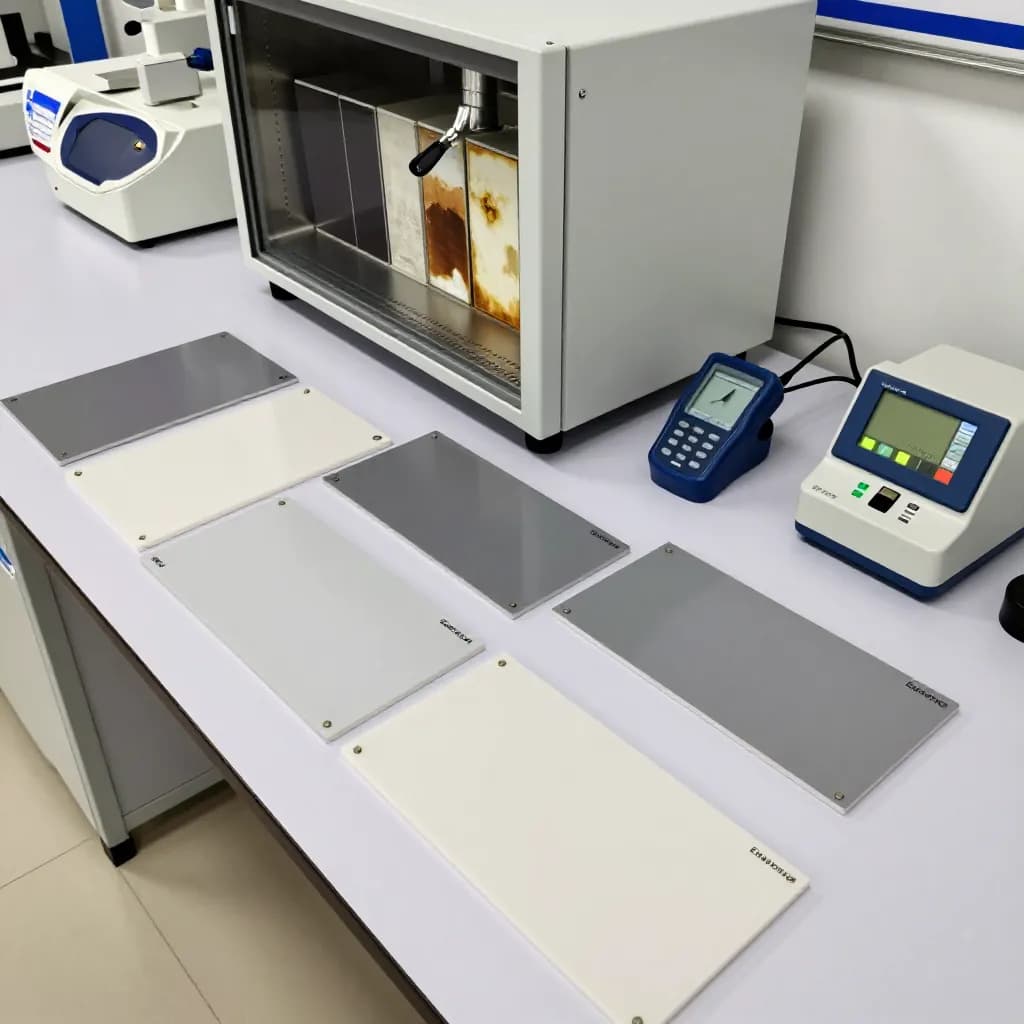
The global powder coating market includes several major manufacturers — AkzoNobel (Interpon), Tiger Coatings (Drylac), Axalta (Alesta), Sherwin-Williams (Powdura), PPG (Envirocron), Jotun, IGP, and Pulverit among others — each with distinct strengths, product ranges, and market positions. No single manufacturer is best for every application, and the right choice depends on the specific requirements of the project, the applicator's capabilities, and the supply chain considerations of the region.
Ready to Start Your Project?
From one-off customs to 15,000-part production runs — get precise pricing in 24 hours.
On This Page
Why Brand Selection Matters in Powder Coating
This guide provides a framework for comparing powder coating manufacturers across the factors that matter most: product performance and certification, color range and consistency, technical support, supply chain reliability, and sustainability credentials. By evaluating manufacturers systematically against these criteria, specifiers and applicators can make informed decisions that optimize coating performance and project outcomes.
The goal is not to rank manufacturers but to help readers understand what to look for and what questions to ask when evaluating powder coating brands for their specific needs.
Certification and Performance Standards
Third-party certification is the most objective basis for comparing powder coating manufacturers. Certifications from organizations like Qualicoat, GSB International, and AAMA provide independent verification that a manufacturer's products meet defined performance standards, removing the need to rely solely on manufacturer claims.
Qualicoat is the leading European quality label for powder-coated aluminum, with Class 1 (standard) and Class 2 (super-durable) performance tiers. When comparing manufacturers, check which specific products hold Qualicoat approval by consulting the Qualicoat approved products register. Not all products from a certified manufacturer are necessarily Qualicoat approved — the approval applies to specific product codes, not to the manufacturer's entire range.
GSB International provides an alternative European quality mark, with Standard, Premium, and Master tiers. GSB Master represents the highest performance level and requires more stringent weathering performance than standard GSB certification. Some manufacturers hold both Qualicoat and GSB certifications, while others focus on one system. The choice between Qualicoat and GSB often depends on regional preference — GSB is more common in German-speaking markets, while Qualicoat is more widely used elsewhere in Europe.
In North America, AAMA specifications define performance tiers: AAMA 2603 (general), AAMA 2604 (high performance), and AAMA 2605 (superior performance). AAMA 2605 is the most demanding specification, requiring 10 years of actual South Florida exposure testing. Not all manufacturers offer AAMA 2605-compliant powder coatings, so this specification effectively narrows the field for the most demanding architectural projects.
Beyond architectural certifications, compare manufacturers on the industrial and specialty certifications relevant to your application — food contact approvals, drinking water certifications, fire classifications, and automotive OEM approvals. The breadth and depth of a manufacturer's certification portfolio indicates their commitment to quality verification and their experience in specific market segments.
Color Range, Consistency, and Custom Capabilities
Color capability is a critical differentiator between powder coating manufacturers. While most major manufacturers can produce any RAL Classic color, they differ significantly in the breadth of their standard color ranges, the quality of their metallic and special-effect finishes, and their custom color development capabilities.
Standard color range size varies considerably between manufacturers. Some offer hundreds of standard colors in stock, while others maintain smaller standard ranges and rely more heavily on custom color production. A larger standard range means shorter lead times and lower minimum order quantities for commonly requested colors, which is particularly valuable for applicators serving diverse customer bases.
Color consistency — the ability to produce the same color identically across different production batches and manufacturing facilities — is perhaps more important than range size. Ask manufacturers about their color tolerances and quality control procedures. Premium manufacturers like IGP maintain tighter color tolerances than industry norms, while others may accept wider tolerances that could result in visible batch-to-batch variation on large projects.
Metallic and special-effect finishes are an area where manufacturer capabilities diverge significantly. Bonded metallic technology — where effect pigments are thermally bonded to powder particles — produces more consistent results than dry-blended metallics. Compare manufacturers on their bonded metallic capabilities, the range of metallic effects available, and their experience with complex special-effect finishes.
Custom color development services vary in speed, minimum order quantities, and accuracy. Some manufacturers can produce custom colors in small batches with short lead times, while others require larger minimums and longer development periods. For projects requiring unique colors, evaluate manufacturers on their custom color turnaround time, minimum order quantity, and the accuracy of their color matching process.
Technical Support and Applicator Services
The level of technical support a manufacturer provides can significantly impact coating quality and applicator productivity. Compare manufacturers on the breadth and accessibility of their technical support services, including field technical representatives, application technology centers, training programs, and digital support tools.
Field technical representatives who visit applicator facilities to provide on-site support are one of the most valuable services a manufacturer can offer. These representatives can help optimize application parameters, troubleshoot finish quality issues, evaluate pretreatment processes, and assist with quality certification audits. Compare manufacturers on the availability and responsiveness of their field technical teams in your region.
Application technology centers — facilities where applicators can conduct trials with the manufacturer's products on their specific substrates and equipment — reduce the risk of production issues when adopting new products or tackling unfamiliar applications. Not all manufacturers operate these centers, and their locations may not be convenient for all applicators. Evaluate whether the manufacturer's trial facilities are accessible and adequately equipped for your needs.
Training programs for applicator personnel vary in scope and delivery format. Some manufacturers offer comprehensive training curricula covering everything from basic spray technique to advanced quality management, while others provide more limited training focused on their specific products. Consider whether the manufacturer's training offerings match your team's development needs.
Digital tools — including online product selectors, technical data sheet libraries, color visualization tools, and specification writing assistance — are increasingly important support resources. Compare manufacturers on the quality and accessibility of their digital platforms, particularly if your team relies on online resources for day-to-day product selection and specification support.
Responsiveness matters as much as capability. A manufacturer with excellent technical resources is of limited value if those resources are difficult to access or slow to respond. Ask for references from other applicators in your region to gauge the manufacturer's actual support responsiveness.
Supply Chain Reliability and Regional Availability
Supply chain reliability is a practical consideration that can override technical preferences. A technically superior product that is frequently out of stock, subject to long lead times, or available only from distant manufacturing facilities may be less practical than a good product with reliable local supply.
Manufacturing footprint matters. Manufacturers with production facilities in your region can typically offer shorter lead times, lower freight costs, and more responsive supply than those shipping from distant locations. Compare manufacturers on the proximity of their manufacturing facilities to your operation and the typical lead times for standard and custom products.
Distribution network coverage varies significantly between manufacturers. Some operate extensive distribution networks with local warehousing and delivery capabilities, while others rely on direct shipment from manufacturing facilities. For applicators who need rapid access to a wide range of colors and products, a manufacturer with strong local distribution may be more practical than one with a broader product range but limited local availability.
Inventory management support is an increasingly important service. Some manufacturers offer vendor-managed inventory programs, consignment stock arrangements, or just-in-time delivery services that help applicators reduce inventory carrying costs while maintaining product availability. These services are particularly valuable for high-volume applicators with diverse product requirements.
Supply chain resilience — the ability to maintain supply during disruptions such as raw material shortages, logistics disruptions, or manufacturing issues — has become a critical evaluation criterion. Manufacturers with multiple production facilities, diversified raw material sourcing, and robust logistics networks are better positioned to maintain supply during disruptions than those dependent on single facilities or supply chains.
Consider also the manufacturer's financial stability and long-term market commitment. Powder coating is a long-term specification — buildings coated today will be in service for decades. Choosing a manufacturer with strong financial health and a demonstrated commitment to the powder coating market reduces the risk of product discontinuation or support withdrawal during the coating's service life.
Sustainability Credentials and Environmental Performance
Sustainability is an increasingly important factor in powder coating manufacturer selection, driven by green building certification requirements, corporate sustainability commitments, and regulatory pressure to reduce environmental impact. While all powder coatings share fundamental environmental advantages over liquid paint — zero VOC emissions and high material utilization — manufacturers differ in their broader sustainability performance and the documentation they provide.
Environmental Product Declarations provide standardized lifecycle assessment data that enables objective comparison of environmental impact between products and manufacturers. Not all manufacturers publish EPDs for their powder coating products, and the scope and methodology of available EPDs may vary. For projects targeting green building certifications, the availability of EPDs can be a deciding factor in manufacturer selection.
Manufacturing sustainability varies between companies. Compare manufacturers on their use of renewable energy, waste reduction programs, water conservation measures, and carbon reduction commitments. Some manufacturers publish detailed sustainability reports with quantified environmental performance data, while others provide only general sustainability statements.
Product-level sustainability innovations — such as low-temperature cure formulations, thin-film technology, and bio-based raw materials — differ between manufacturers. These innovations can reduce the environmental footprint of the coating application process and contribute to green building certification credits. Evaluate which manufacturers are investing in these technologies and whether their sustainable product offerings meet your performance requirements.
Supply chain sustainability is an emerging consideration. Some manufacturers are working with raw material suppliers to improve the environmental profile of powder coating ingredients, including sourcing bio-based materials and reducing the carbon intensity of key supply chains. While this area is still developing, it indicates a manufacturer's depth of commitment to sustainability beyond their own operations.
Documentation support for green building certifications varies between manufacturers. Some provide comprehensive documentation packages including EPDs, VOC certifications, material ingredient disclosures, and recycled content statements, while others offer more limited documentation. For projects pursuing LEED, BREEAM, or other certifications, evaluate the manufacturer's ability to provide the specific documentation your certification submission requires.
Making the Decision: A Practical Framework
Selecting a powder coating manufacturer should be a structured decision based on the specific requirements of your application, your operational needs, and your supply chain context. The following framework provides a practical approach to manufacturer evaluation and selection.
Start with performance requirements. Identify the certification level needed for your application — Qualicoat Class 1 or 2, GSB Standard or Master, AAMA 2603, 2604, or 2605 — and eliminate manufacturers that do not offer certified products at the required level. This immediately narrows the field and ensures that all remaining candidates meet the minimum performance threshold.
Next, evaluate color and finish capabilities against your specific needs. If your projects typically require standard RAL colors in smooth finishes, most major manufacturers will serve you well. If you regularly need metallic effects, special textures, or custom colors in small quantities, the field narrows to manufacturers with strong capabilities in these areas.
Assess supply chain fit by evaluating manufacturing proximity, distribution coverage, lead times, and inventory support services. The best product in the world is of limited value if it cannot be reliably supplied when you need it.
Evaluate technical support by speaking with other applicators in your region who use the manufacturer's products. Ask about the responsiveness of technical representatives, the quality of training programs, and the manufacturer's willingness to help solve problems when they arise.
Finally, consider the relationship. Powder coating manufacturer relationships are typically long-term partnerships. The manufacturer's culture, communication style, and commitment to your success matter as much as their product specifications. Request trial quantities, visit their facilities if possible, and evaluate how they treat you during the evaluation process — it is likely indicative of how they will treat you as a customer.
Frequently Asked Questions
What is the most important factor when comparing powder coating brands?
Third-party certification is the most objective comparison basis. Check which specific products hold Qualicoat, GSB, or AAMA approvals by consulting the relevant approved products registers. Certification provides independent performance verification that removes reliance on manufacturer claims alone.
Are all powder coatings from a certified manufacturer automatically certified?
No. Certifications like Qualicoat and GSB apply to specific product codes, not to a manufacturer's entire range. Always verify that the specific product being supplied holds the required certification by checking the approved products register, not just the manufacturer's general certification status.
How important is local manufacturing when choosing a powder coating brand?
Local manufacturing provides shorter lead times, lower freight costs, and more responsive supply. For standard products, local manufacturing is a significant practical advantage. For specialty or custom products that may only be produced at specific facilities, manufacturing location is less relevant than product capability.
Should I choose the same powder coating brand for all applications?
Not necessarily. Different manufacturers excel in different areas — one may be strongest in architectural super-durables while another leads in automotive or special effects. Many applicators work with two or three manufacturers to access the best products for each application type while maintaining manageable supplier relationships.
How do I evaluate color consistency between powder coating manufacturers?
Ask manufacturers about their color tolerances (measured in Delta E values), quality control procedures for color verification, and their global color management systems. Request sample panels from different production batches to evaluate batch-to-batch consistency. Premium manufacturers maintain tighter tolerances than industry norms.
What sustainability documentation should I expect from powder coating manufacturers?
For green building projects, look for Environmental Product Declarations, VOC content certifications, and material ingredient disclosures. Not all manufacturers publish EPDs for powder coatings. Also evaluate manufacturing sustainability practices including renewable energy use, waste reduction programs, and carbon reduction commitments.
Ready to Start Your Project?
From one-off customs to 15,000-part production runs — get precise pricing in 24 hours.