Acrylic paint in the industrial and automotive context refers to coatings based on acrylic polymer resins — specifically polymethyl methacrylate and related acrylic monomers — that produce clear, hard, glossy films with excellent optical clarity. Industrial acrylic coatings are distinct from the water-based acrylic craft paints found in art supply stores. They are high-performance formulations available as thermoplastic acrylic lacquers, thermosetting acrylic enamels, and acrylic urethane systems, each offering different performance levels.
Comparison
Powder Coating vs Acrylic Paint: Automotive Clear Coats, Weathering, and DOI
Sundial Powder Coating·April 22, 2026·10 min
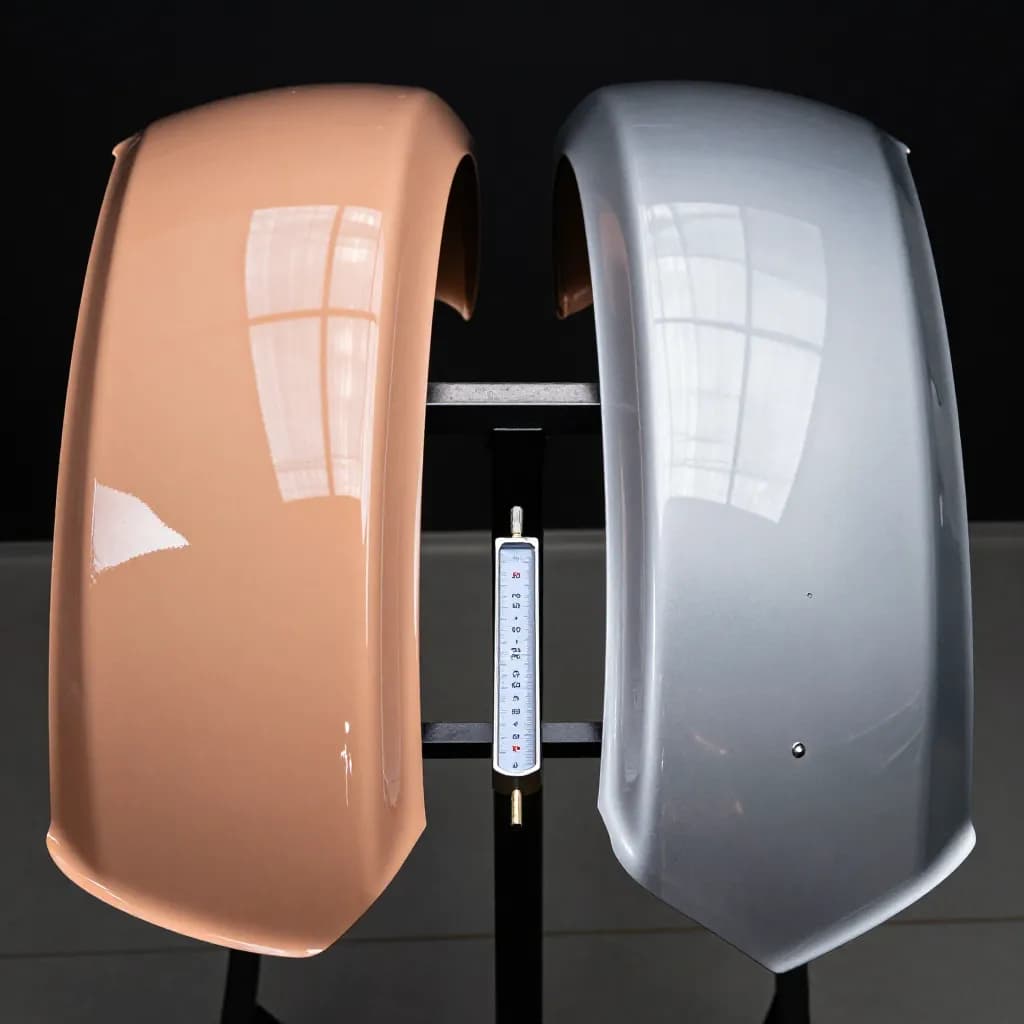
Thermoplastic acrylic lacquer was the dominant automotive finish from the 1950s through the 1980s, valued for its exceptional clarity, depth of image, and ease of repair. However, its poor durability, high VOC content, and inability to match the performance of modern cross-linked systems led to its replacement by acrylic urethane and polyurethane basecoat-clearcoat systems in automotive applications. Thermosetting acrylic enamels, which cross-link during baking, offer better durability and are still used in some appliance and industrial applications.
Ready to Start Your Project?
From one-off customs to 15,000-part production runs — get precise pricing in 24 hours.
On This Page
What Is Acrylic Paint in Industrial Context?
Acrylic coatings are also used in architectural applications, particularly as water-based acrylic latex paints for exterior walls and as acrylic-modified coatings for metal roofing and cladding. In these applications, acrylic resins provide good UV resistance, color retention, and flexibility. The comparison with powder coating is most relevant in automotive component finishing, architectural metal coating, and industrial applications where both technologies compete for the same substrates.
Distinctness of Image and Optical Quality
Distinctness of Image, or DOI, is a critical appearance metric in automotive and high-end decorative finishing that measures how sharply a coating reflects images. A high DOI value indicates a mirror-like surface that reflects objects with crisp, undistorted edges, while a low DOI indicates a surface with micro-texture that blurs reflections. DOI is measured on a scale of 0 to 100, with premium automotive finishes targeting values above 80.
Acrylic coatings, particularly acrylic urethane clear coats, can achieve exceptional DOI values because they are applied as thin, wet films that flow and level before curing, producing extremely smooth surfaces. The liquid application process allows the coating to self-level under surface tension, filling in micro-irregularities and creating the flat, uniform surface needed for high DOI. This is why liquid acrylic and polyurethane clear coats remain the standard for automotive body finishing where appearance is paramount.
Powder coatings have historically lagged behind liquid acrylics in DOI performance due to the melt-flow-cure process, which can leave a slight orange peel texture. However, modern powder coating formulations have made significant progress. Ultra-smooth powder coatings using fine particle sizes and optimized flow additives now achieve DOI values of 70 to 85, which is acceptable for many automotive components and high-end consumer products. For automotive wheels, trim components, and accessories, powder coating's DOI is more than adequate, though liquid clear coats still hold an edge for full vehicle body panels where the highest DOI is expected.
Weathering and UV Resistance
Weathering resistance is an area where powder coating matches or exceeds acrylic paint performance, depending on the specific formulations compared. Superdurable polyester powder coatings are engineered for maximum UV resistance using specialized monomers that resist photodegradation. These formulations maintain color and gloss through years of outdoor exposure and are certified to the most demanding architectural weathering standards including AAMA 2605, which requires 10 years of South Florida exposure testing.
Acrylic coatings offer good inherent UV resistance due to the stability of the acrylic polymer backbone. Water-based acrylic latex paints are the standard exterior coating for residential and commercial buildings precisely because of their UV stability, flexibility, and breathability. However, acrylic coatings applied at typical liquid film thicknesses of 25 to 50 microns provide less UV barrier protection than powder coatings applied at 60 to 120 microns. The thicker powder coating film means more material between the UV radiation and the substrate, extending the time before UV degradation reaches the coating-substrate interface.
In accelerated weathering tests comparing acrylic paint and polyester powder coating at their respective standard film thicknesses, powder coating consistently demonstrates superior gloss retention and color stability. After 3000 hours of xenon arc weathering, polyester powder coatings typically retain 70 to 90 percent of their original gloss, while standard acrylic paints at thinner film builds may retain only 40 to 60 percent. This performance advantage translates to longer service life and reduced maintenance frequency for powder-coated exterior surfaces.
Application Methods and Efficiency
The application methods for acrylic paint and powder coating differ fundamentally, with significant implications for efficiency and environmental impact. Acrylic paints are applied as wet coatings using spray guns — conventional air spray, HVLP, or electrostatic spray — and require careful control of spray parameters, ambient conditions, and flash-off times between coats. Multi-coat systems are common, with primer, basecoat, and clear coat each requiring separate application and drying steps.
Powder coating is applied in a single electrostatic spray operation and cured in one pass through the oven. This single-coat process eliminates the multiple application and drying steps required for liquid acrylic systems, reducing total processing time and floor space requirements. The electrostatic application process also provides more uniform coverage on complex geometries, with charged powder particles wrapping around edges and into recesses more effectively than liquid spray.
Material efficiency is dramatically different. Powder coating achieves 95 to 98 percent material utilization through overspray reclamation, while acrylic paint spray operations typically achieve 40 to 65 percent transfer efficiency. The remaining 35 to 60 percent of liquid acrylic paint is lost as overspray waste. For high-volume manufacturing operations, this efficiency difference translates to substantial material cost savings and waste reduction. Combined with zero VOC emissions and elimination of solvent purchasing and disposal costs, powder coating offers a compelling economic and environmental advantage over liquid acrylic paint systems.
Durability and Mechanical Properties
Powder coating's thicker film build provides superior mechanical durability compared to acrylic paint in most practical applications. The 60 to 120 micron film of a standard powder coating resists chipping, scratching, and impact damage more effectively than the 25 to 50 micron film of a typical acrylic paint system. This difference is particularly significant for products that experience handling, shipping, and operational wear during their service life.
Chip resistance is a critical performance metric for automotive wheels, outdoor furniture, and industrial equipment. Powder-coated surfaces consistently outperform acrylic-painted surfaces in chip resistance testing because the thicker, more flexible powder coating film absorbs impact energy that would fracture a thinner acrylic film. This is why powder coating has become the dominant finish for automotive aftermarket wheels, where stone chip resistance is essential for maintaining appearance.
Hardness and scratch resistance are comparable between well-formulated acrylic paints and powder coatings, with both achieving pencil hardness values in the H to 3H range depending on the specific formulation. However, powder coating's thicker film means that surface scratches are less likely to penetrate through to the substrate, providing better long-term protection even when surface damage occurs. For applications where mechanical durability is a priority, powder coating's combination of thickness, flexibility, and hardness provides a more robust protective system than acrylic paint.
When to Choose Each Finish
Choose powder coating for metal components where durability, efficiency, and environmental performance are priorities. Automotive wheels, architectural aluminum, outdoor furniture, industrial equipment, consumer electronics housings, and any metal product that requires a long-lasting, attractive finish will benefit from powder coating's superior film build, material efficiency, and zero VOC emissions. Modern powder coatings achieve appearance quality that satisfies all but the most demanding DOI requirements.
Choose acrylic paint when the application requires the highest possible DOI and optical clarity — specifically for automotive body panels where mirror-like reflections are expected. Acrylic urethane clear coats in basecoat-clearcoat systems remain the standard for full vehicle body finishing because they achieve DOI values that powder coating has not yet consistently matched at production scale. Acrylic paint is also the practical choice for non-metallic substrates, field applications, and touch-up repairs where oven curing is not possible.
For the growing number of applications where powder coating's appearance quality meets requirements — and that includes most applications outside of full vehicle body panels — the combination of superior durability, environmental performance, and manufacturing efficiency makes powder coating the better overall choice. The technology continues to advance, with each generation of powder coating formulations closing the remaining appearance gap with liquid acrylic systems.
Frequently Asked Questions
Can powder coating match the DOI of acrylic clear coat?
Modern ultra-smooth powder coatings achieve DOI values of 70-85, which is acceptable for automotive components and high-end consumer products. However, liquid acrylic urethane clear coats can achieve DOI values above 90, maintaining an edge for full vehicle body panels where the highest optical quality is required.
Which weathers better, powder coating or acrylic paint?
Polyester powder coatings generally outperform acrylic paints in weathering tests due to their thicker film build (60-120 microns vs 25-50 microns). After 3000 hours of accelerated weathering, powder coatings typically retain 70-90% of original gloss compared to 40-60% for standard acrylic paints at typical film thicknesses.
Is acrylic paint still used in automotive finishing?
Thermoplastic acrylic lacquer has been largely replaced by acrylic urethane and polyurethane systems in automotive finishing. Acrylic urethane clear coats are still used in basecoat-clearcoat systems for vehicle bodies. Powder coating has become the standard for automotive wheels, trim, and underbody components.
Why is powder coating more efficient than acrylic paint?
Powder coating achieves 95-98% material utilization through overspray reclamation, while acrylic paint spray operations achieve only 40-65% transfer efficiency. Powder coating also eliminates solvent costs, VOC emissions, and multi-coat processing steps, making it significantly more efficient for manufacturing operations.
Ready to Start Your Project?
From one-off customs to 15,000-part production runs — get precise pricing in 24 hours.