The term powder coating encompasses a family of chemically distinct coating types, each with unique performance characteristics suited to different applications. The three most widely used thermosetting powder coating chemistries — epoxy, polyester, and epoxy-polyester hybrid — account for the vast majority of powder coatings applied worldwide. Understanding the chemistry, strengths, and limitations of each type is essential for selecting the right powder coating for any given application.
Comparison
Epoxy vs Polyester vs Hybrid Powder Coatings: Chemistry and Selection Guide
Sundial Powder Coating·April 22, 2026·14 min
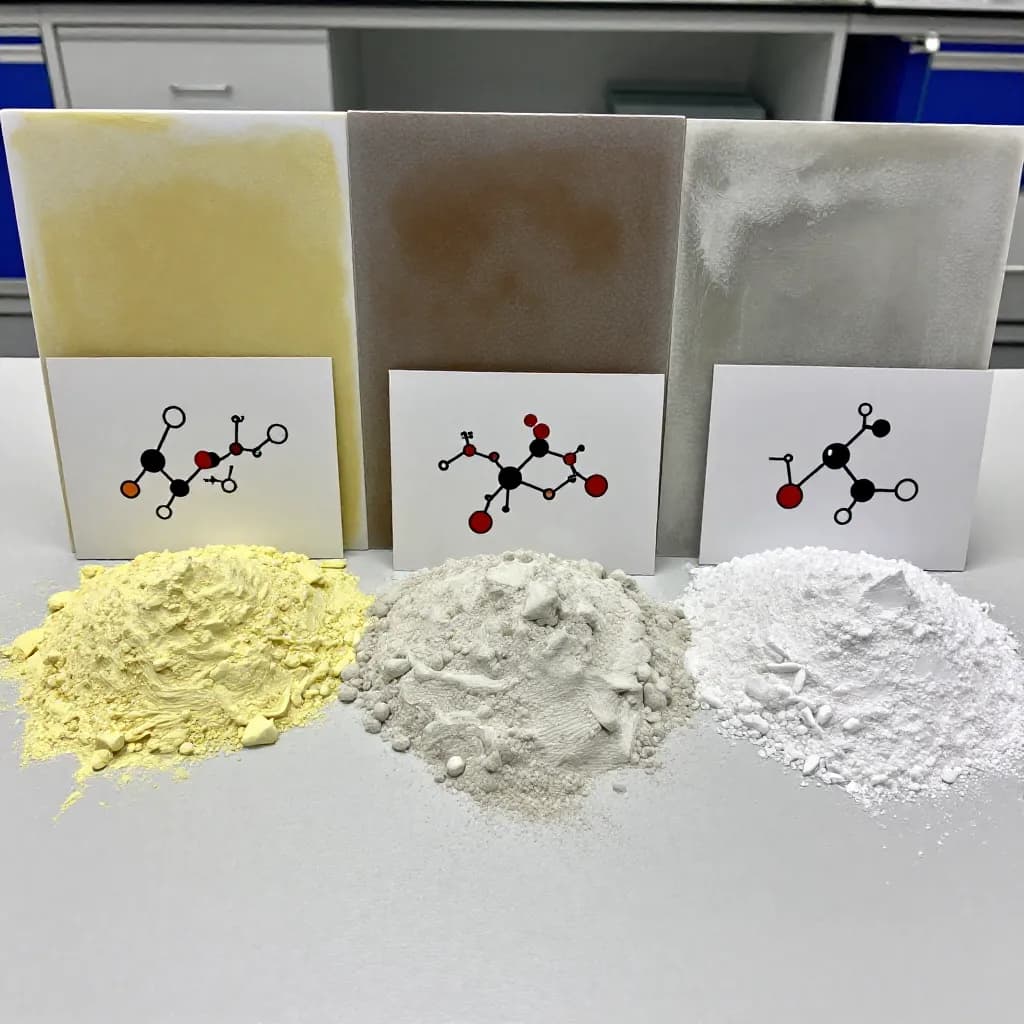
All three chemistries share the same basic application process: electrostatic spray application of dry powder particles followed by oven curing at 160-200°C. During curing, the powder melts, flows into a continuous film, and undergoes irreversible chemical crosslinking to form a tough, durable thermoset coating. The differences lie in the resin chemistry — the specific polymers and crosslinkers that form the backbone of the cured film — and the performance properties that result from that chemistry.
Ready to Start Your Project?
From one-off customs to 15,000-part production runs — get precise pricing in 24 hours.
On This Page
Understanding Powder Coating Chemistry Families
Epoxy powder coatings are based on bisphenol A epoxy resins crosslinked with dicyandiamide (DICY), phenolic hardeners, or amine adducts. The epoxy resin backbone provides exceptional adhesion, chemical resistance, and mechanical toughness, but the aromatic ether linkages in the epoxy structure are susceptible to UV-induced chain scission, causing rapid chalking and degradation in sunlight.
Polyester powder coatings use carboxyl-functional or hydroxyl-functional saturated polyester resins crosslinked with triglycidyl isocyanurate (TGIC), hydroxyalkylamide (HAA, marketed as Primid), or isocyanate (for polyurethane powder coatings). The saturated polyester backbone provides excellent UV resistance and weathering performance, making polyester the standard chemistry for exterior applications.
Hybrid powder coatings (also called epoxy-polyester or polyester-epoxy) combine both resin types, typically in ratios ranging from 50:50 to 70:30 polyester-to-epoxy. The epoxy component serves as the crosslinker for the carboxyl-functional polyester resin, creating a coating that balances the strengths of both chemistries. Hybrids offer better UV resistance than pure epoxy and better chemical resistance than pure polyester, making them versatile general-purpose coatings.
Epoxy Powder Coatings: Maximum Chemical Resistance
Epoxy powder coatings are the workhorses of industrial and functional coating applications where chemical resistance, adhesion, and mechanical toughness are the primary requirements. The epoxy resin's molecular structure — featuring reactive epoxide groups, hydroxyl groups, and aromatic rings — creates a densely crosslinked network with exceptional resistance to a wide range of chemicals, solvents, acids, and alkalis.
Chemical resistance is epoxy's defining strength. Cured epoxy powder coatings resist prolonged exposure to hydraulic fluids, motor oils, fuels, cleaning solvents, dilute acids and alkalis, and many industrial chemicals that would soften or dissolve polyester coatings. This makes epoxy the standard choice for pipeline coatings (fusion-bonded epoxy, or FBE, is the dominant pipeline coating worldwide), chemical processing equipment, laboratory furniture, industrial valve and pump housings, and any application where chemical exposure is a primary concern.
Adhesion to metal substrates is another epoxy strength. The polar hydroxyl groups formed during epoxy crosslinking create strong chemical bonds with metal oxide surfaces, providing adhesion that is difficult to match with other powder coating chemistries. This superior adhesion makes epoxy an excellent primer — many two-coat powder coating systems use an epoxy primer for adhesion and corrosion resistance, topped with a polyester topcoat for UV resistance and aesthetics.
Mechanical properties of epoxy powder coatings include high hardness (typically 3H-5H pencil hardness), excellent impact resistance, and good flexibility. The combination of hardness and flexibility makes epoxy coatings resistant to chipping, cracking, and delamination under mechanical stress. Edge coverage is typically excellent due to the resin's good flow and wetting characteristics.
The critical limitation of epoxy powder coatings is UV sensitivity. When exposed to sunlight, the aromatic ether bonds in the epoxy backbone absorb UV radiation and undergo photodegradation, causing the coating surface to chalk (develop a white, powdery surface layer) and lose gloss rapidly. In direct sunlight, an epoxy powder coating can show visible chalking within weeks to months, with significant color change and gloss loss within the first year. This UV sensitivity absolutely disqualifies epoxy powder coatings for any exterior application where appearance must be maintained. Epoxy coatings are strictly interior-use or concealed-application products when appearance matters.
Polyester Powder Coatings: The Exterior Standard
Polyester powder coatings are the dominant chemistry for exterior applications, architectural finishing, and any application where UV resistance and long-term weathering performance are required. The saturated polyester resin backbone — free of the UV-sensitive aromatic ether linkages found in epoxy — provides inherent resistance to photodegradation, maintaining color and gloss through years of direct sunlight exposure.
The two main crosslinking systems for polyester powder coatings are TGIC (triglycidyl isocyanurate) and HAA (hydroxyalkylamide, marketed as Primid). TGIC-crosslinked polyesters have been the industry standard for decades, offering excellent weathering performance, chemical resistance, and mechanical properties. However, TGIC is classified as a mutagen (Category 2) under EU CLP regulations, leading to restrictions on its use in some markets and driving adoption of HAA-crosslinked alternatives. HAA-crosslinked polyesters provide comparable weathering performance with a more favorable toxicological profile, though they can be slightly more sensitive to overbake yellowing and may have marginally lower chemical resistance than TGIC systems.
Superdurable polyester formulations represent the premium tier of polyester powder coating technology. These coatings use specially selected polyester resins with enhanced UV stability, combined with high-performance UV absorbers (benzotriazole or triazine types) and hindered amine light stabilizers (HALS). Superdurable polyesters meet Qualicoat Class 2 requirements and, for the best formulations, approach Qualicoat Class 3 performance — maintaining color within Delta E 4.0 and gloss above 50% of original after 3,000 hours of accelerated weathering. These formulations are the standard for architectural facades, curtain walls, and fenestration systems where 20-25 year coating life is expected.
Standard polyester powder coatings (non-superdurable) provide good UV resistance suitable for applications with moderate exterior exposure — outdoor furniture, agricultural equipment, automotive accessories, and general industrial products. These formulations meet Qualicoat Class 1 requirements and provide 5-10 years of acceptable exterior appearance, depending on the severity of the exposure environment.
The trade-off for polyester's UV resistance is somewhat lower chemical resistance compared to epoxy. Standard polyester coatings can be softened or damaged by prolonged exposure to strong solvents, concentrated acids, and aggressive industrial chemicals. For applications requiring both exterior durability and chemical resistance, polyurethane powder coatings (hydroxyl-functional polyester crosslinked with blocked isocyanate) offer an excellent compromise, though at higher material cost.
Hybrid Powder Coatings: The Versatile Middle Ground
Hybrid powder coatings — combining epoxy and polyester resins in a single formulation — occupy the middle ground between the chemical resistance of epoxy and the UV resistance of polyester. In a typical hybrid formulation, carboxyl-functional polyester resin is crosslinked with epoxy resin, with the ratio typically ranging from 50:50 to 70:30 polyester-to-epoxy. The epoxy component acts as the crosslinker, reacting with the carboxyl groups on the polyester to form the crosslinked network.
The performance profile of hybrid coatings reflects their dual-resin composition. Chemical resistance is better than pure polyester but not as good as pure epoxy — hybrids resist common chemicals, cleaning agents, and mild solvents but may be affected by aggressive industrial chemicals that pure epoxy would withstand. UV resistance is better than pure epoxy but not as good as pure polyester — hybrids can tolerate limited exterior exposure (1-3 years) without severe degradation, but they are not suitable for long-term exterior applications where appearance must be maintained.
This intermediate performance profile makes hybrids the most versatile general-purpose powder coating chemistry. They are widely used for indoor applications that may receive incidental UV exposure — office furniture, retail fixtures, electrical enclosures, appliance interiors, and indoor architectural elements near windows. The combination of good adhesion (from the epoxy component), reasonable chemical resistance, good mechanical properties, and acceptable short-term UV tolerance makes hybrids suitable for a broad range of applications where neither extreme chemical resistance nor extreme UV resistance is required.
Hybrid coatings also offer practical advantages in application. They tend to have excellent flow and leveling characteristics, producing smooth, attractive finishes with good hiding power. The cure window is typically broad and forgiving — hybrids are less sensitive to overbake than pure polyester formulations, reducing the risk of yellowing or property degradation from oven temperature variations. This forgiving nature makes hybrids popular with powder coating applicators, particularly job shops that process a variety of parts with different thermal masses.
The cost of hybrid powder coatings is typically lower than pure polyester or pure epoxy formulations, reflecting the use of standard-grade resins and the large production volumes of hybrid products. This cost advantage, combined with versatile performance, makes hybrids the highest-volume powder coating chemistry worldwide — they account for the largest share of total powder coating consumption in many markets.
Specialty Chemistries: Polyurethane, Fluoropolymer, and Acrylic
Beyond the three main chemistries, several specialty powder coating types serve specific performance niches. Polyurethane powder coatings use hydroxyl-functional polyester resins crosslinked with blocked isocyanate crosslinkers. The isocyanate crosslinks provide a combination of excellent UV resistance, superior chemical resistance, and outstanding mechanical properties — particularly flexibility and impact resistance. Polyurethane powder coatings are used for automotive wheels, exterior furniture, and applications requiring both weathering performance and chemical resistance. The blocked isocyanate crosslinker releases a blocking agent (typically caprolactam or MEKO) during curing, which must be managed through proper oven ventilation.
Fluoropolymer powder coatings based on FEVE (fluoroethylene vinyl ether) resin represent the highest weathering performance available in powder form. The carbon-fluorine bonds in the FEVE backbone provide UV stability approaching that of PVDF liquid coatings, making FEVE powder coatings suitable for the most demanding architectural applications. FEVE powder coatings are pursuing AAMA 2605 certification and are increasingly specified for premium architectural facades where fluoropolymer-level weathering is required with the environmental benefits of powder application.
Acrylic powder coatings — based on glycidyl methacrylate (GMA) acrylic resins — offer excellent clarity, UV resistance, and automotive-quality appearance. They are used primarily as clearcoats in automotive and decorative applications where exceptional gloss, depth of image, and weathering performance are required. Acrylic powder coatings are more expensive than polyester and require careful application to avoid contamination issues (acrylic and polyester powders are incompatible and must not be mixed).
Silicone powder coatings are formulated for high-temperature applications, withstanding continuous temperatures of 400-600°C. They are used for exhaust systems, barbecue grills, wood-burning stoves, and industrial equipment operating at elevated temperatures. Silicone powder coatings sacrifice some mechanical properties and color range compared to standard chemistries but provide thermal resistance that no other powder coating chemistry can match.
Each specialty chemistry addresses a specific performance gap that the three main chemistries cannot fill. The selection of a specialty chemistry is driven by the specific performance requirement — extreme weathering (FEVE), combined weathering and chemical resistance (polyurethane), automotive appearance (acrylic), or high temperature (silicone) — that the application demands.
Performance Comparison Table and Selection Criteria
Selecting the right powder coating chemistry requires matching the coating's performance profile to the application's specific requirements. The key performance dimensions to evaluate are UV resistance, chemical resistance, mechanical properties, adhesion, and application characteristics.
For UV resistance and exterior weathering, the ranking from best to worst is: FEVE fluoropolymer, superdurable polyester, standard polyester, polyurethane, hybrid, and epoxy. Any application with significant exterior UV exposure should use polyester or better — epoxy and hybrid are strictly interior chemistries for appearance-critical applications.
For chemical resistance, the ranking reverses: epoxy provides the best chemical resistance, followed by polyurethane, hybrid, and standard polyester. Applications involving exposure to solvents, fuels, acids, or industrial chemicals should specify epoxy or polyurethane chemistry.
For adhesion to metal substrates, epoxy leads due to its polar hydroxyl groups that bond strongly to metal oxides. Hybrids benefit from their epoxy component for adhesion. Polyester adhesion is good but relies more heavily on pretreatment quality. For applications where adhesion is critical — pipeline coatings, rebar coatings, primer layers — epoxy is the preferred chemistry.
For flexibility and impact resistance, polyurethane leads, followed by hybrid, polyester, and epoxy. Applications subject to bending, forming, or impact — automotive components, flexible substrates, and parts that may be deformed in service — benefit from polyurethane or hybrid chemistry.
For application ease and forgiveness, hybrids are the most forgiving — broad cure windows, good flow, and tolerance of process variations. Polyester requires more precise cure control to avoid overbake yellowing. Epoxy is relatively forgiving but limited to interior use. Specialty chemistries (acrylic, FEVE) require the most careful application and process control.
The selection process should begin with the application environment: if the part will be exposed to sunlight, eliminate epoxy and hybrid from consideration. If the part will be exposed to chemicals, eliminate standard polyester. If both UV and chemical resistance are needed, specify polyurethane or FEVE. If the application is interior-only with moderate chemical exposure, hybrid provides the best balance of performance and economy.
Practical Selection Guide by Application
To simplify the chemistry selection process, here are recommended powder coating chemistries for common application categories, based on the performance requirements of each.
For architectural facades, curtain walls, and fenestration (exterior, 20-25 year life): superdurable polyester (Qualicoat Class 2 or 3) or FEVE fluoropolymer for premium specifications. These applications demand the highest UV resistance and weathering performance available.
For outdoor furniture, fencing, and recreational equipment (exterior, 10-15 year life): standard or superdurable polyester. Good UV resistance with adequate mechanical properties for the expected service conditions.
For automotive wheels and underbody components (exterior, chemical exposure): polyurethane polyester. The combination of UV resistance and chemical resistance (brake dust, road salt, cleaning agents) makes polyurethane ideal for the demanding wheel environment.
For indoor furniture, shelving, and retail fixtures (interior, moderate chemical exposure): hybrid (epoxy-polyester). The versatile performance profile and cost-effectiveness of hybrids make them the standard for interior commercial applications.
For electrical enclosures, switchgear, and control panels (interior, functional): epoxy or hybrid. Excellent adhesion, chemical resistance, and electrical insulation properties serve these functional applications well.
For pipeline coatings and rebar protection (buried/immersed, extreme chemical exposure): fusion-bonded epoxy (FBE). The combination of adhesion, chemical resistance, and cathodic disbondment resistance makes epoxy the only appropriate chemistry for these critical infrastructure applications.
For appliances and white goods (interior and exterior surfaces): hybrid for interior surfaces, polyester for exterior surfaces. Many appliance manufacturers use both chemistries — hybrid for the interior cavity and polyester for the exterior panels.
For high-temperature applications (exhaust, stoves, industrial equipment above 200°C): silicone powder coating. No other powder coating chemistry can withstand continuous temperatures above 200°C.
This guide provides starting points — specific applications may have unique requirements that modify the chemistry selection. Consulting with powder coating manufacturers and testing candidate coatings under simulated service conditions is always recommended for critical applications.
Frequently Asked Questions
Can epoxy powder coating be used outdoors?
No, not for appearance-critical applications. Epoxy powder coatings chalk and degrade rapidly in sunlight due to UV-sensitive aromatic ether bonds. Visible chalking can occur within weeks of exterior exposure. Epoxy is strictly an interior or concealed-application chemistry. Use polyester or superdurable polyester for exterior applications.
What is the difference between hybrid and polyester powder coating?
Hybrid powder coatings combine epoxy and polyester resins, offering better chemical resistance than pure polyester but worse UV resistance. Hybrids are ideal for interior applications with moderate chemical exposure. Polyester powder coatings provide superior UV resistance for exterior applications but have lower chemical resistance than hybrids.
Which powder coating chemistry is best for chemical resistance?
Epoxy provides the best chemical resistance among standard powder coating chemistries, withstanding solvents, fuels, acids, and alkalis that would damage polyester coatings. For applications requiring both chemical resistance and UV resistance, polyurethane powder coatings offer the best compromise.
What is superdurable polyester powder coating?
Superdurable polyester is a premium polyester formulation using specially selected resins, UV absorbers, and light stabilizers for maximum weathering performance. It meets Qualicoat Class 2 or 3 requirements, maintaining color and gloss for 20-25+ years in exterior exposure. It is the standard for architectural facades and high-performance exterior applications.
Is TGIC or HAA crosslinker better for polyester powder coating?
Both provide excellent weathering performance. TGIC has a longer track record and slightly better chemical resistance. HAA (Primid) has a more favorable toxicological profile and is preferred in markets with TGIC restrictions. HAA can be slightly more sensitive to overbake yellowing. For most applications, both crosslinkers deliver comparable long-term performance.
What powder coating should I use for wheels?
Polyurethane polyester powder coating is ideal for wheels. It combines good UV resistance (for exterior exposure) with superior chemical resistance (for brake dust, road salt, and wheel cleaners). Standard polyester works for moderate use, but polyurethane provides the best overall performance for the demanding wheel environment.
Ready to Start Your Project?
From one-off customs to 15,000-part production runs — get precise pricing in 24 hours.