The industrial coatings landscape has been undergoing a fundamental shift for decades, with powder coatings steadily gaining market share at the expense of solvent-based liquid paints. This transition, driven by environmental regulation, economic advantages, and technological progress, represents one of the most significant long-term trends in the surface finishing industry.
Reference
Powder Coating vs Liquid Paint: Market Share, Adoption Rates, and Conversion Trends
Sundial Powder Coating·April 23, 2026·11 min
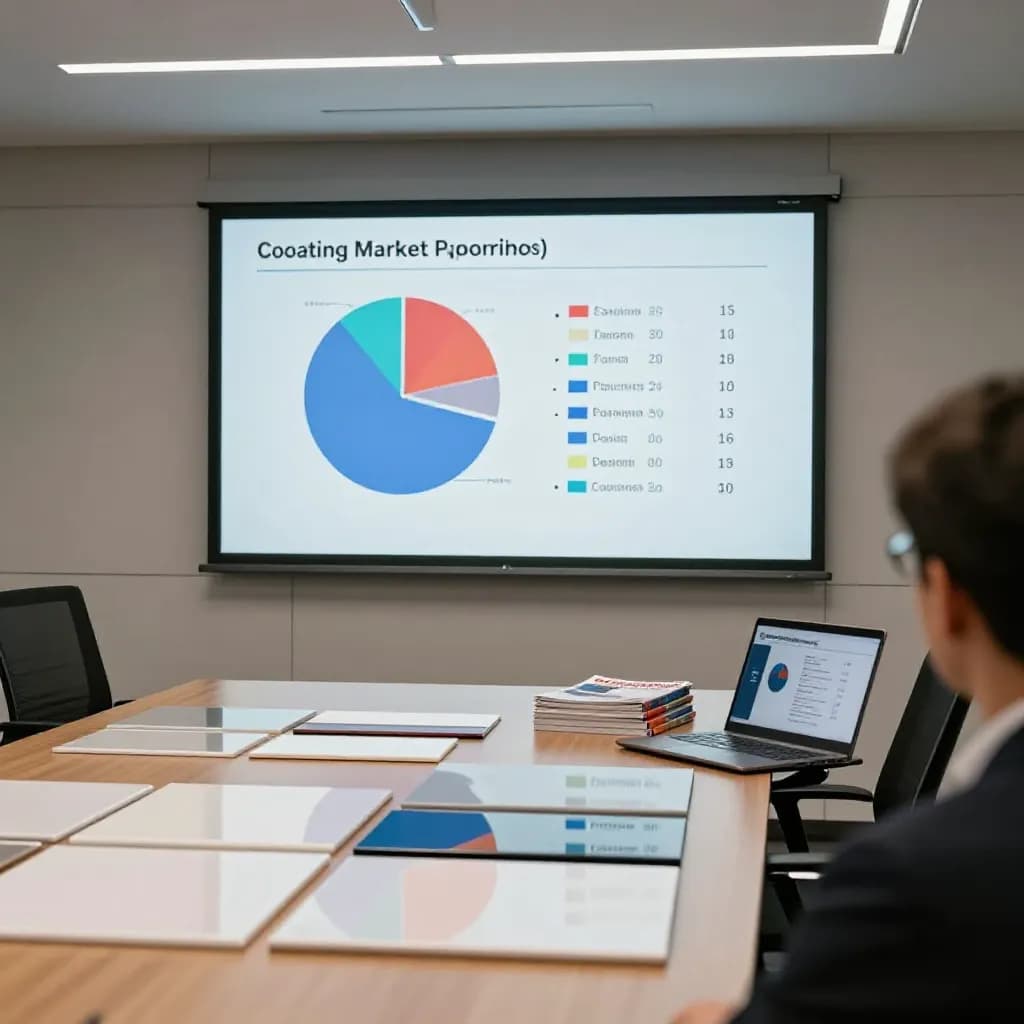
As of the mid-2020s, powder coatings account for approximately 15% of the total global industrial coatings market by volume. While this may seem modest, the figure masks dramatically higher penetration rates in specific segments. In architectural aluminum finishing, powder coating commands over 90% market share in Europe and is approaching similar levels in other developed markets. In appliance manufacturing, powder coating has become the dominant finishing technology for metal components. And in general industrial applications, the conversion from liquid to powder continues at a steady pace.
Ready to Start Your Project?
From one-off customs to 15,000-part production runs — get precise pricing in 24 hours.
On This Page
The Shifting Balance Between Powder and Liquid Coatings
The remaining 85% of the industrial coatings market is divided among solvent-based liquid paints, waterborne liquid coatings, radiation-curable coatings, and other technologies. Waterborne coatings have also gained share as a lower-VOC alternative to solvent-based systems, but they still require significant amounts of energy for water evaporation and do not match powder coating's material efficiency or zero-VOC profile.
Understanding the dynamics of this market share shift — where powder coating has already won, where it is actively gaining ground, and where liquid paint retains advantages — provides valuable insight into the future direction of the surface finishing industry.
Segments Where Powder Coating Dominates
Several major industrial segments have already completed or nearly completed the transition from liquid paint to powder coating. These segments demonstrate the end state of the conversion process and illustrate the conditions under which powder coating achieves market dominance.
Architectural aluminum finishing is the most fully converted segment. In Europe, powder coating accounts for over 95% of aluminum window, door, and curtain wall finishing, with liquid paint relegated to niche applications such as on-site touch-up and repair. The combination of Qualicoat and GSB quality certification, zero-VOC compliance, superior durability, and design flexibility has made powder coating the default specification for architectural aluminum across virtually all European markets. North America and Asia-Pacific are following the same trajectory, with powder coating penetration in architectural aluminum exceeding 80% in most developed markets.
Metal furniture manufacturing has similarly embraced powder coating as the standard finishing technology. Office furniture, shelving systems, storage units, and outdoor furniture are overwhelmingly powder coated, with liquid paint used only for specialized applications or very small production runs where the capital investment in powder coating equipment cannot be justified.
Appliance manufacturing represents another highly converted segment. The exterior panels, internal components, and structural elements of refrigerators, washing machines, dryers, and dishwashers are predominantly powder coated. Major appliance manufacturers converted their finishing lines from liquid to powder over the course of the 1990s and 2000s, driven by material efficiency gains, environmental compliance requirements, and the superior scratch and chemical resistance of powder coatings.
Electrical enclosures, switchgear housings, and distribution equipment are almost exclusively powder coated, reflecting the technology's excellent electrical insulation properties, corrosion resistance, and suitability for the standardized production runs typical of this segment.
Segments in Active Conversion
Several large industrial segments are currently in the process of converting from liquid paint to powder coating, representing significant growth opportunities for the powder coating industry. These segments have overcome initial technical barriers and are now transitioning at varying rates depending on regional factors, capital investment cycles, and application-specific requirements.
The automotive industry is perhaps the most commercially significant segment in active conversion. While automotive primer and clear coat applications have used powder coating for decades, the adoption of powder for basecoat and topcoat applications on vehicle bodies has been slower due to the demanding requirements for film smoothness, color matching, and appearance consistency. However, advances in ultra-thin film powder technology and improved flow and leveling characteristics are making powder increasingly competitive for automotive body applications. Several major OEMs have installed powder basecoat lines, and the trend is expected to accelerate as the industry pursues sustainability targets.
Agricultural and construction equipment manufacturers are converting from liquid to powder at an accelerating pace. These heavy-duty applications require thick, durable coatings with excellent corrosion and impact resistance — properties where powder coating excels. The large size of many agricultural and construction equipment components initially posed challenges for powder coating, but advances in booth design, gun technology, and curing oven capacity have addressed these limitations.
The coil coating industry, which applies coatings to continuous steel and aluminum coil for subsequent forming into building panels, appliance housings, and other products, is gradually adopting powder coating alongside its traditional liquid coating processes. Powder coil coating offers zero-VOC operation and eliminates the need for solvent incineration equipment, but requires specialized application and curing technology adapted to the high line speeds of coil coating operations.
Pipeline and rebar coating for infrastructure applications continues to grow as governments invest in water, energy, and transportation infrastructure. Fusion-bonded epoxy powder coating has been the standard for pipeline corrosion protection for decades, and its use is expanding to new infrastructure categories.
Segments Where Liquid Paint Retains Advantages
Despite powder coating's many advantages, liquid paint retains significant market share in several segments where its specific properties offer genuine technical or economic advantages. Understanding these segments helps define the realistic boundaries of powder coating's addressable market.
Automotive refinish — the repair and repainting of vehicle body panels after collision damage — remains almost exclusively a liquid paint application. The need to match existing paint colors precisely, apply coatings to localized areas without masking entire vehicles, and cure coatings at ambient or low temperatures makes liquid paint the practical choice for body shop operations. While some aftermarket wheel and component refinishing uses powder coating, vehicle body refinish is unlikely to convert to powder in the foreseeable future.
Marine and protective coatings for ships, offshore structures, bridges, and large infrastructure represent another segment where liquid paint dominates. The enormous size of these structures, the need for on-site application in uncontrolled environments, and the requirement for specialized coating systems (zinc-rich primers, high-build intermediates, antifouling topcoats) make liquid paint the only practical option. Powder coating requires controlled application conditions and oven curing that cannot be replicated in field conditions.
Wood finishing for furniture, cabinetry, and millwork remains predominantly liquid-based, although powder coating of MDF and engineered wood products is a growing niche. The heat sensitivity of wood substrates, the desire for natural wood grain visibility, and the established infrastructure of wood finishing operations all favor liquid coatings in this segment.
Aerospace coatings for aircraft exteriors require specialized properties — flexibility at extreme temperatures, resistance to hydraulic fluids and de-icing chemicals, and the ability to be applied and repaired in maintenance facilities — that currently favor liquid coating systems. However, powder coating is used for some interior and component applications in aerospace.
Conversion Economics and Decision Factors
The decision to convert from liquid paint to powder coating involves a complex evaluation of capital costs, operating economics, product quality requirements, and strategic considerations. Understanding these factors explains why conversion rates vary significantly across industries and regions.
Capital investment is often the primary barrier to conversion. A complete powder coating line — including pretreatment, dry-off oven, powder application booth with reclaim system, curing oven, and conveyor — represents a significant capital expenditure. For manufacturers already operating functional liquid paint lines, the incremental investment required to switch to powder must be justified by operating cost savings, quality improvements, or regulatory compliance requirements.
Operating cost advantages typically favor powder coating once the capital investment has been made. Material utilization rates of 95-98% for powder versus 30-70% for liquid paint translate directly into lower material costs per unit of coated surface area. The elimination of solvent purchase, storage, handling, and disposal costs further improves the economic case. Reduced energy consumption for curing (no solvent evaporation energy required) and simplified waste management (no hazardous solvent waste) add additional savings.
Regulatory compliance costs can tip the balance decisively in favor of powder coating. As VOC emission limits tighten, liquid paint operations face increasing costs for solvent abatement equipment (thermal oxidizers, carbon adsorption systems), emission monitoring, and regulatory reporting. These compliance costs can make liquid paint operations economically unviable, forcing conversion to powder or waterborne alternatives.
Product quality considerations also influence conversion decisions. Powder coating's thicker single-coat film build, superior edge coverage, and consistent finish quality can reduce reject rates and warranty claims compared to liquid paint. However, applications requiring very thin films, ultra-smooth surfaces, or precise color matching across multiple coating layers may still favor liquid systems.
Strategic factors — including corporate sustainability commitments, customer requirements for zero-VOC finishes, and competitive positioning — are playing an increasingly important role in conversion decisions, particularly among large manufacturers with public environmental targets.
Regional Conversion Patterns
The pace and pattern of conversion from liquid to powder coating varies significantly across geographic regions, reflecting differences in regulatory environments, industrial structures, and economic development levels.
Europe has been the global leader in liquid-to-powder conversion, driven by the world's most stringent environmental regulations and a well-developed quality certification infrastructure. The European powder coating industry benefits from decades of investment in technology, training, and standards development. Conversion rates in European manufacturing are among the highest globally, with powder coating penetration exceeding 90% in architectural aluminum, appliances, and metal furniture.
North America has followed a similar but somewhat slower conversion trajectory. The US market has seen strong powder coating adoption in appliances, automotive components, and general industrial applications, but architectural aluminum conversion has lagged Europe due to differences in building practices and specification traditions. However, the gap is narrowing as AAMA specifications gain broader adoption and sustainability requirements drive architectural specification toward powder.
China's conversion from liquid to powder has accelerated dramatically since 2015, driven by aggressive government enforcement of environmental regulations. The closure of thousands of polluting liquid paint operations in major manufacturing regions has created a surge in demand for powder coating equipment and materials. China is now the world's largest powder coating market by volume, and its conversion rate is among the fastest globally.
India and Southeast Asia are earlier in the conversion cycle but are following the pattern established by China. As these regions industrialize and environmental regulations tighten, the shift from liquid to powder is expected to accelerate. The availability of affordable powder coating equipment from Chinese manufacturers is lowering the capital barrier to conversion in these emerging markets.
The Middle East and Africa present a mixed picture, with advanced markets like the UAE and Saudi Arabia showing high powder coating adoption in construction and manufacturing, while less developed markets remain predominantly liquid-paint based. Infrastructure investment and industrial diversification programs are expected to drive conversion in these regions over the coming decade.
Future Market Share Projections
Looking ahead, the consensus among industry analysts is that powder coating will continue to gain market share from liquid paint across most industrial segments. The pace of conversion will be influenced by regulatory developments, technology breakthroughs, and macroeconomic conditions, but the structural advantages of powder coating make continued share gains highly probable.
By 2030, powder coatings are projected to account for approximately 18-22% of the total global industrial coatings market by volume, up from approximately 15% today. This growth will come primarily from continued conversion in automotive, general industrial, and construction applications, as well as from the expansion of powder coating into new substrate categories enabled by low-temperature cure technology.
The automotive segment represents the largest single conversion opportunity. If powder coating achieves broad adoption for automotive body topcoats — a transition that several major OEMs are actively pursuing — it could add several percentage points to powder's overall market share. The combination of sustainability pressure, material efficiency advantages, and improving film quality makes this conversion increasingly likely over the next decade.
Technology developments that could accelerate market share gains include UV-curable powder coatings for heat-sensitive substrates, bio-based formulations that appeal to sustainability-focused customers, and digital application systems that improve the economics of short-run and custom-color powder coating. Each of these developments would expand powder coating's addressable market and accelerate conversion from liquid alternatives.
The long-term trajectory points toward a future where powder coating becomes the default industrial finishing technology for metal substrates, with liquid paint retained only for applications where field application, ultra-thin films, or specialized properties are genuinely required. This transition will play out over decades rather than years, but the direction of travel is clear and consistent across all major markets and industrial segments.
Frequently Asked Questions
What percentage of industrial coatings are powder coatings?
Powder coatings account for approximately 15% of the total global industrial coatings market by volume. However, penetration rates are much higher in specific segments — over 90% in architectural aluminum finishing in Europe, and dominant shares in appliance manufacturing and metal furniture.
Why hasn't powder coating replaced liquid paint entirely?
Liquid paint retains advantages in applications requiring field application (marine, infrastructure), ambient-temperature curing (automotive refinish), ultra-thin films, or specialized properties. The need for oven curing and controlled application conditions limits powder coating to factory-based operations on heat-resistant substrates.
Which industry is converting to powder coating fastest?
China's manufacturing sector is converting from liquid to powder at the fastest rate globally, driven by aggressive government enforcement of environmental regulations. The automotive industry represents the largest single conversion opportunity worldwide, with several major OEMs actively installing powder coating lines for body applications.
What is the projected market share for powder coatings by 2030?
Powder coatings are projected to account for approximately 18-22% of the total global industrial coatings market by volume by 2030, up from approximately 15% today. Growth will come from continued conversion in automotive, general industrial, and construction applications.
What are the main barriers to converting from liquid to powder?
The primary barriers include capital investment for new equipment, technical limitations for certain applications (field application, heat-sensitive substrates, ultra-thin films), and the inertia of established liquid paint operations. However, operating cost savings, regulatory pressure, and sustainability commitments are overcoming these barriers across most industrial segments.
Ready to Start Your Project?
From one-off customs to 15,000-part production runs — get precise pricing in 24 hours.