The powder coating industry offers a remarkably diverse range of career opportunities, from hands-on production roles to advanced research positions, from sales and marketing to quality management and environmental compliance. As the industry continues to grow at 6-8% annually — outpacing the broader coatings sector — the demand for skilled professionals across all functions is increasing.
Reference
Powder Coating Career Opportunities: Job Roles, Skills, Career Paths, and Industry Growth
Sundial Powder Coating·April 23, 2026·11 min
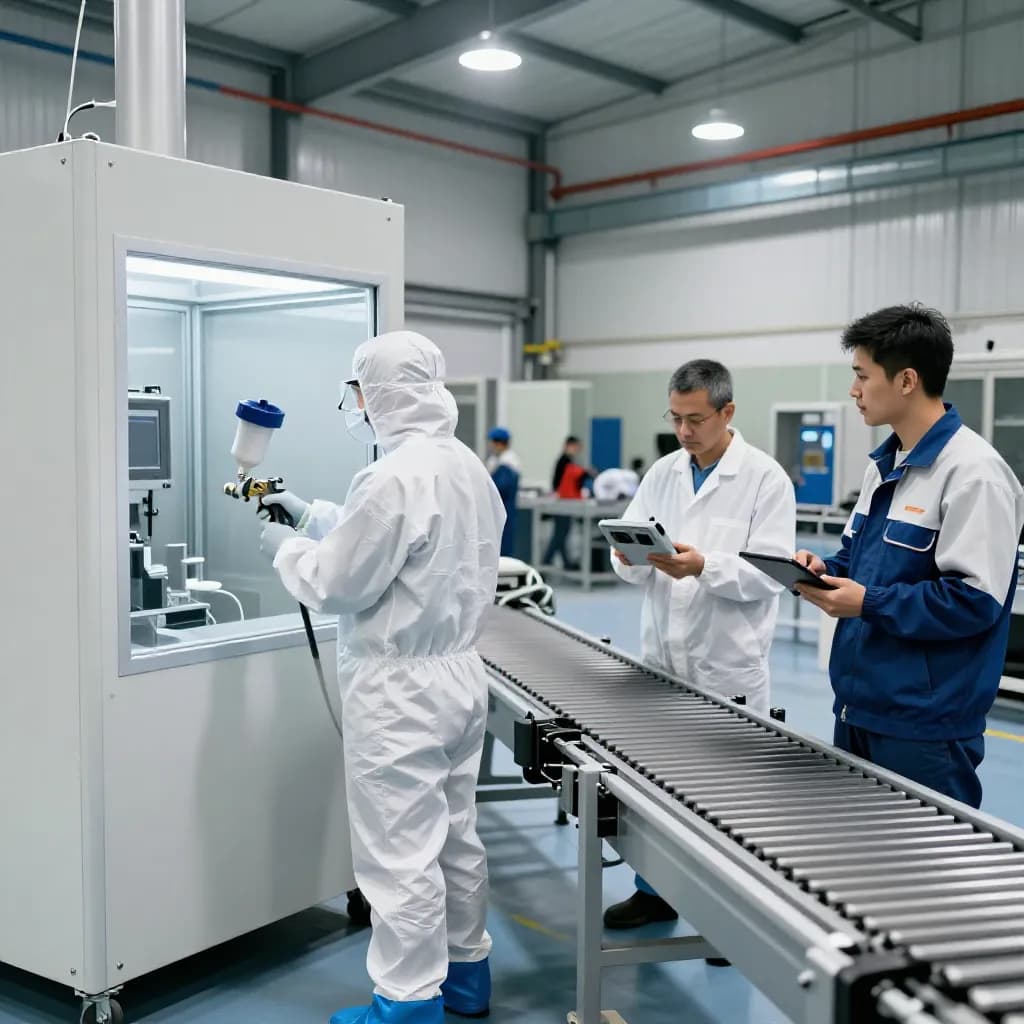
The powder coating value chain encompasses multiple distinct business types, each offering different career environments and skill requirements. Powder coating manufacturers develop and produce the coating materials themselves. Equipment manufacturers design and build the spray guns, booths, ovens, and conveyor systems used in coating operations. Custom coating shops (job shops) provide coating services to customers who do not have in-house capabilities. And OEM manufacturers operate their own powder coating lines as part of their production processes.
Ready to Start Your Project?
From one-off customs to 15,000-part production runs — get precise pricing in 24 hours.
On This Page
A Growing Industry with Diverse Career Opportunities
Beyond these core industry segments, powder coating professionals work in raw material supply companies (resin, pigment, and additive manufacturers), testing and certification organizations, consulting firms, academic institutions, and regulatory agencies. This breadth of employment options means that individuals with powder coating expertise can find roles that match their interests, skills, and career aspirations.
The industry's growth is driven by the same factors that drive market expansion — environmental regulation, sustainability mandates, technological advancement, and the ongoing conversion from liquid to powder coating across manufacturing sectors. Each of these growth drivers creates demand for professionals with specific skill sets, from environmental compliance specialists to process engineers to research chemists.
One of the powder coating industry's most attractive characteristics is its accessibility. While advanced positions require specialized education, many entry-level roles are available to individuals with a high school diploma or equivalent, with opportunities for advancement through on-the-job training, industry certifications, and continuing education. This creates genuine career mobility for motivated individuals regardless of their starting point.
Production and Application Roles
Production and application roles form the operational backbone of the powder coating industry. These positions involve the hands-on work of preparing substrates, applying powder coatings, operating curing ovens, and ensuring that finished products meet quality specifications.
Powder coating operators are responsible for the actual application of powder to workpieces. This role requires understanding of electrostatic principles, gun setup and adjustment, spray technique for different part geometries, and the ability to achieve consistent film thickness and coverage. Experienced operators develop an intuitive feel for the interaction between gun settings, powder behavior, and part geometry that enables them to produce high-quality coatings efficiently.
Pretreatment operators manage the chemical cleaning and conversion coating processes that prepare substrates for powder coating. This role requires knowledge of surface chemistry, process control, chemical handling safety, and the relationship between pretreatment quality and coating performance. Pretreatment is often considered the most critical step in the coating process, and skilled pretreatment operators are highly valued.
Oven operators monitor and control the curing process, ensuring that parts reach the correct temperature for the correct duration. This role involves understanding of heat transfer, temperature profiling, and the relationship between cure conditions and coating properties. In automated lines, oven operators also manage conveyor speeds and oven zone temperatures to accommodate different part types.
Line leaders and shift supervisors coordinate production activities, manage personnel, troubleshoot problems, and ensure that production targets and quality standards are met. These roles require both technical knowledge and leadership skills, and they represent the first step on the management career ladder for production professionals.
Production managers oversee entire coating operations, including staffing, scheduling, equipment maintenance, quality management, and continuous improvement. This role requires broad technical knowledge, business acumen, and the ability to balance production efficiency with quality and safety requirements.
The career progression from entry-level operator to production manager typically spans 5-15 years, depending on the individual's aptitude, education, and the opportunities available within their organization. Industry certifications such as PCI's Powder Coating Technician credential can accelerate advancement by demonstrating validated competence.
Technical and Engineering Roles
Technical and engineering roles in the powder coating industry require deeper scientific knowledge and problem-solving skills. These positions are found in powder coating manufacturers, equipment companies, large OEM operations, and consulting firms.
Formulation chemists develop new powder coating products by selecting and combining resins, crosslinkers, pigments, and additives to achieve target performance properties. This role requires a strong foundation in polymer chemistry, color science, and materials testing, typically gained through a bachelor's or master's degree in chemistry, polymer science, or coatings technology. Formulation chemists work at the intersection of science and commerce, translating customer requirements and market needs into viable coating products.
Application engineers optimize powder coating processes for specific applications, working with customers to select appropriate coating systems, establish application parameters, and resolve technical problems. This role requires broad knowledge of powder coating technology — from pretreatment through application to curing — combined with strong communication skills and the ability to work effectively in customer-facing situations.
Process engineers design and optimize powder coating production lines, including pretreatment systems, application booths, curing ovens, and conveyor systems. This role requires knowledge of mechanical engineering, thermal engineering, fluid dynamics, and electrostatics, along with practical understanding of powder coating operations. Process engineers may work for equipment manufacturers, engineering consultancies, or large coating operations.
Quality engineers develop and manage quality control systems for powder coating operations, including testing protocols, statistical process control, and compliance with industry standards such as Qualicoat, GSB, and AAMA. This role requires knowledge of coating testing methods, statistical analysis, and quality management systems (ISO 9001). PCI's Certified Powder Coating Inspector credential is particularly relevant for this career path.
Research and development scientists work on advancing powder coating technology — developing new resin chemistries, improving application methods, creating functional coatings with novel properties, and exploring emerging technologies such as UV cure and bio-based materials. R&D roles typically require advanced degrees (master's or PhD) in chemistry, materials science, or related fields, and are found primarily in large powder coating manufacturers and academic institutions.
Technical service representatives provide post-sale technical support to customers, helping them resolve coating problems, optimize processes, and implement new products. This role combines technical knowledge with customer relationship skills and often involves significant travel.
Sales, Marketing, and Business Development
The commercial side of the powder coating industry offers career opportunities for individuals who combine technical understanding with business skills. Successful sales and marketing professionals in this industry must be able to communicate the technical advantages of powder coating to diverse audiences — from production managers to architects to procurement professionals.
Technical sales representatives sell powder coating materials, equipment, or services to industrial customers. This role requires sufficient technical knowledge to understand customer applications, recommend appropriate products, and provide basic technical support. Technical sales positions often serve as entry points for individuals transitioning from production or technical roles into commercial careers.
Key account managers handle relationships with major customers, coordinating across multiple product lines and service areas to meet the customer's comprehensive coating needs. This role requires deep industry knowledge, strong relationship management skills, and the ability to develop strategic partnerships that create value for both parties.
Product managers are responsible for the commercial success of specific product lines within a powder coating manufacturer's portfolio. This role involves market analysis, competitive positioning, new product planning, and coordination between R&D, manufacturing, and sales functions. Product managers must understand both the technical capabilities of their products and the market dynamics that drive customer purchasing decisions.
Marketing professionals in the powder coating industry develop brand strategies, create technical marketing content, manage digital marketing programs, and organize participation in trade shows and industry events. The technical nature of the industry means that marketing professionals benefit from understanding coating technology, even if their primary skills are in communications and marketing strategy.
Business development professionals identify and pursue new market opportunities for powder coating technology. This might involve developing new application areas, entering new geographic markets, or creating partnerships with complementary businesses. Business development roles require a combination of technical knowledge, market insight, and entrepreneurial thinking.
Entrepreneurial opportunities also exist in the powder coating industry. Starting a custom powder coating shop requires relatively modest capital investment compared to many manufacturing businesses, and the growing demand for coating services creates opportunities for well-managed new entrants. Successful shop owners combine technical coating expertise with business management skills in areas such as estimating, scheduling, customer service, and financial management.
Environmental, Health, and Safety Roles
Environmental, health, and safety (EHS) roles have become increasingly important in the powder coating industry as regulatory requirements grow more complex and companies place greater emphasis on sustainability and worker welfare.
Environmental compliance specialists ensure that powder coating operations meet all applicable environmental regulations, including air quality permits, waste management requirements, and water discharge standards. While powder coating's zero-VOC profile simplifies air quality compliance compared to liquid paint operations, environmental specialists must still manage issues such as powder waste disposal, pretreatment chemical management, and wastewater treatment.
Sustainability managers develop and implement corporate sustainability strategies that encompass environmental performance, social responsibility, and governance. In the powder coating industry, sustainability roles involve tracking and reducing energy consumption, waste generation, and carbon emissions; developing circular economy initiatives; and communicating sustainability performance to stakeholders. The growing importance of ESG (Environmental, Social, and Governance) reporting is creating demand for professionals who can quantify and communicate the environmental benefits of powder coating.
Occupational health and safety professionals manage workplace safety programs in powder coating facilities. Key safety concerns include combustible dust management (powder coating dust can be explosive in certain concentrations), chemical handling safety for pretreatment chemicals, ergonomic issues related to manual spraying and part handling, and noise exposure from grinding and blasting operations.
Combustible dust safety is a particularly important specialization in the powder coating industry. Powder coating materials are finely divided organic powders that can form explosive dust-air mixtures if not properly managed. Safety professionals must ensure that facilities comply with NFPA 33 (Standard for Spray Application Using Flammable or Combustible Materials) and NFPA 652 (Standard on the Fundamentals of Combustible Dust), including proper housekeeping, ventilation, electrical classification, and explosion protection measures.
Regulatory affairs professionals in powder coating manufacturers manage compliance with chemical regulations such as REACH (EU), TSCA (US), and equivalent regulations in other jurisdictions. This role involves tracking regulatory developments, ensuring product compliance, preparing registration dossiers, and communicating regulatory requirements to customers.
The intersection of environmental regulation and powder coating technology creates a unique career niche for professionals who understand both the regulatory landscape and the technical capabilities of powder coating. These individuals are valuable to coating manufacturers, applicators, and end users who need guidance on regulatory compliance and sustainable coating strategies.
Skills and Qualifications for Success
Success in the powder coating industry requires different skill sets depending on the specific career path, but certain foundational skills and personal qualities are valued across all roles.
Technical aptitude — the ability to understand and work with mechanical, chemical, and electrical systems — is fundamental for most powder coating careers. Even non-technical roles such as sales and marketing benefit from a basic understanding of how powder coating works, why it performs as it does, and what differentiates it from alternative technologies.
Problem-solving ability is highly valued in an industry where process variables interact in complex ways and where coating defects can have multiple potential causes. The ability to systematically analyze problems, identify root causes, and develop effective solutions is essential for technical roles and valuable in all others.
Attention to detail is critical in an industry where small variations in process parameters can produce significant differences in coating quality. Whether measuring film thickness, monitoring pretreatment chemistry, or inspecting finished products, the ability to detect and respond to subtle variations is a key professional skill.
Communication skills — both written and verbal — are important across all career paths. Technical professionals must be able to explain complex concepts to non-technical audiences. Sales professionals must translate customer needs into technical requirements. And managers must communicate effectively with diverse teams and stakeholders.
For production roles, manual dexterity and physical stamina are practical requirements. Powder coating application involves handling spray guns, manipulating parts, and working in environments that may involve standing for extended periods, lifting moderate weights, and wearing personal protective equipment.
For technical and engineering roles, formal education in relevant disciplines — chemistry, materials science, mechanical engineering, or coatings technology — provides the theoretical foundation for career success. Industry certifications such as PCI's PCT and CPCI credentials complement formal education with industry-specific validation.
For management and leadership roles, business skills including financial analysis, project management, lean manufacturing, and people management are essential. Many successful powder coating managers combine technical backgrounds with MBA or management training to develop the full range of skills needed for senior positions.
Language skills are increasingly valuable in a global industry. Professionals who can work effectively in multiple languages have expanded career opportunities with multinational companies and in international markets.
Industry Growth and Future Career Outlook
The career outlook for powder coating professionals is strongly positive, driven by the industry's sustained growth trajectory and the demographic transition as experienced professionals retire. Several trends are shaping the future demand for powder coating talent.
The ongoing conversion from liquid to powder coating across manufacturing sectors is creating demand for professionals who can design, install, and operate powder coating systems. As companies convert their finishing operations, they need application engineers, process engineers, and trained operators who understand powder coating technology. This conversion trend is particularly strong in automotive, general industrial, and construction applications.
The sustainability imperative is elevating the strategic importance of powder coating within manufacturing organizations, creating demand for professionals who can articulate and quantify the environmental benefits of powder technology. Sustainability managers, environmental compliance specialists, and technical sales professionals who can connect powder coating's advantages to corporate ESG goals are in growing demand.
Digitalization and Industry 4.0 are creating new career opportunities at the intersection of powder coating technology and information technology. Data scientists, automation engineers, and digital process specialists who can apply AI, IoT, and machine learning to powder coating operations represent an emerging career category that did not exist a decade ago.
The geographic expansion of the powder coating industry — particularly in Asia, the Middle East, and Africa — is creating international career opportunities for experienced professionals willing to work in emerging markets. Technical expertise combined with cross-cultural competence is particularly valued in these growing regions.
Entrepreneurial opportunities continue to expand as the demand for powder coating services grows. The relatively low capital barrier to entry for custom coating shops, combined with growing demand from manufacturers who outsource their coating operations, creates opportunities for individuals with the technical skills and business acumen to start and grow coating businesses.
The powder coating industry's combination of technological sophistication, environmental responsibility, and sustained growth makes it an attractive career choice for individuals seeking meaningful, stable, and well-compensated professional opportunities. Whether entering the industry at the production level or through a technical degree program, motivated individuals can build rewarding careers in a field that is genuinely making manufacturing more sustainable.
Frequently Asked Questions
What jobs are available in the powder coating industry?
The industry offers diverse roles including powder coating operators, pretreatment technicians, line supervisors, formulation chemists, application engineers, process engineers, quality engineers, R&D scientists, technical sales representatives, product managers, environmental compliance specialists, and sustainability managers. Opportunities exist in manufacturing, equipment companies, job shops, and consulting.
What education is needed for a powder coating career?
Entry-level production roles typically require a high school diploma with on-the-job training. Technical roles benefit from degrees in chemistry, materials science, or coatings technology. PCI certifications (PCT, CPCI) validate industry-specific competence. Management roles often combine technical backgrounds with business training. The industry offers strong career mobility through experience and continuing education.
Is the powder coating industry growing?
Yes. The global powder coating market grows at 6-8% annually, outpacing the broader coatings industry. Growth is driven by environmental regulation, sustainability mandates, and ongoing conversion from liquid to powder coating. This sustained growth, combined with retirements of experienced professionals, creates strong demand for new talent across all career paths.
Can you start a powder coating business?
Yes. Custom powder coating shops (job shops) have relatively modest capital requirements compared to many manufacturing businesses. Success requires technical coating expertise, business management skills, and understanding of local market demand. The growing trend of manufacturers outsourcing coating operations creates opportunities for well-managed new entrants.
What skills are most important for powder coating careers?
Key skills include technical aptitude, problem-solving ability, attention to detail, and communication skills. Production roles require manual dexterity and physical stamina. Technical roles need formal education in relevant sciences. Management roles require business acumen and leadership skills. Language skills are increasingly valuable in this global industry.
Ready to Start Your Project?
From one-off customs to 15,000-part production runs — get precise pricing in 24 hours.