Powder coating is a technology that combines chemistry, physics, engineering, and practical craftsmanship. While it is possible to learn the basics through on-the-job experience, formal training and education provide the theoretical foundation and systematic knowledge that distinguish competent operators from true professionals capable of optimizing processes, troubleshooting complex problems, and driving continuous improvement.
Reference
Powder Coating Education and Training Programs: Certifications, Courses, and Career Development
Sundial Powder Coating·April 23, 2026·11 min
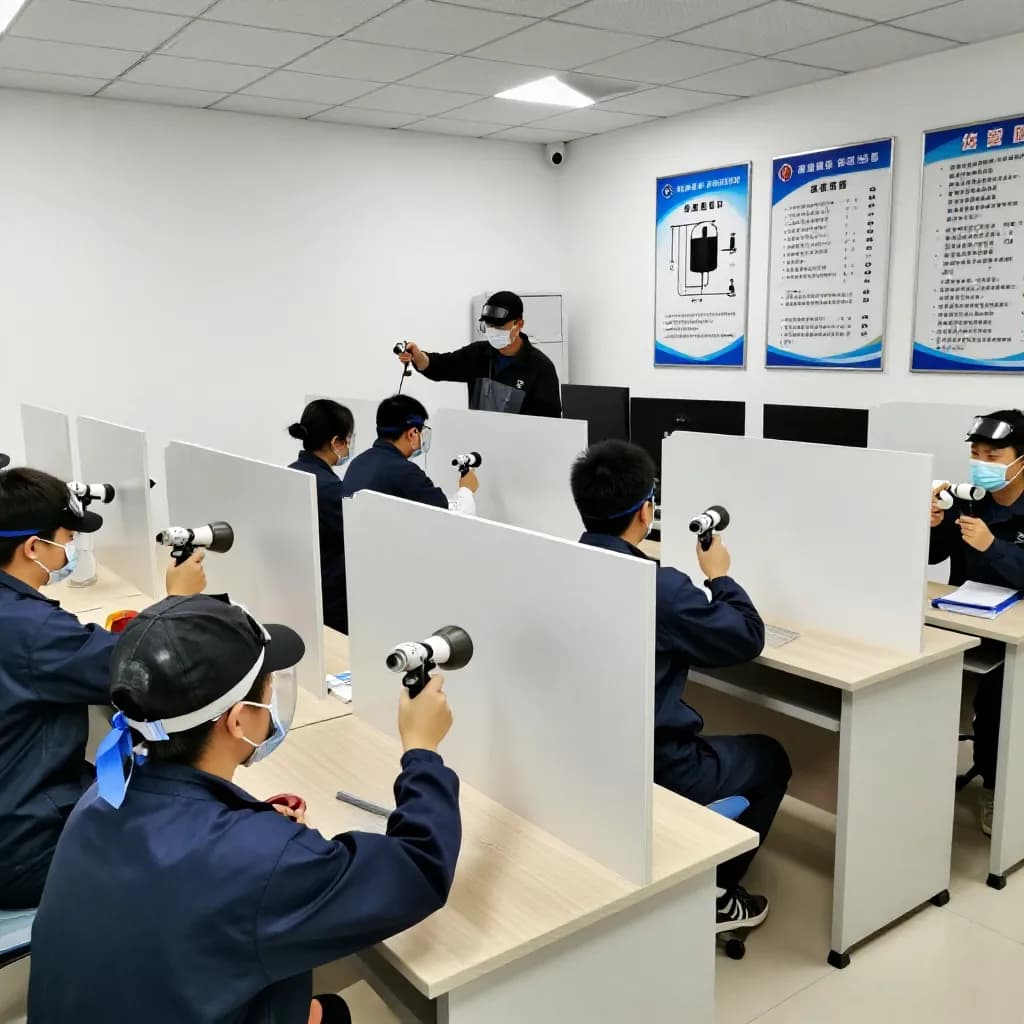
The powder coating industry has historically relied heavily on informal, apprenticeship-style training — new employees learning from experienced colleagues on the production floor. While this approach transfers practical skills effectively, it often fails to convey the underlying science that explains why certain practices work and others do not. Without understanding the principles of electrostatics, polymer chemistry, surface preparation, and curing kinetics, operators may follow procedures correctly but lack the ability to adapt when conditions change or problems arise.
Ready to Start Your Project?
From one-off customs to 15,000-part production runs — get precise pricing in 24 hours.
On This Page
The Importance of Formal Training in Powder Coating
The growing complexity of powder coating technology — with its expanding range of resin chemistries, application methods, curing technologies, and quality requirements — has made formal education increasingly important. Modern powder coating operations use sophisticated equipment, digital process controls, and advanced quality measurement instruments that require trained personnel to operate effectively.
The industry also faces a demographic challenge. As experienced powder coating professionals retire, their accumulated knowledge risks being lost unless it is systematically captured and transferred to the next generation. Formal training programs, certification systems, and educational resources play a critical role in preserving and transmitting this institutional knowledge.
Fortunately, the range of educational opportunities available to powder coating professionals has expanded significantly over the past two decades. From industry-specific certifications to university degree programs, from hands-on workshops to online learning platforms, aspiring and practicing powder coating professionals have more options than ever for developing their knowledge and skills.
PCI Certification Programs
The Powder Coating Institute (PCI), based in the United States, offers the most widely recognized certification programs specifically focused on powder coating technology. PCI certifications validate professional knowledge and competence in powder coating and are increasingly valued by employers as evidence of qualified expertise.
The PCI Powder Coating Technician (PCT) certification is designed for individuals who work directly with powder coating application, curing, and quality control. The certification exam covers powder coating fundamentals, electrostatic application principles, pretreatment processes, curing technology, quality testing methods, troubleshooting, and safety. Candidates must demonstrate both theoretical knowledge and practical understanding of powder coating operations.
The PCI Certified Powder Coating Inspector (CPCI) certification is aimed at quality assurance professionals who inspect and evaluate powder-coated products. This certification covers coating thickness measurement, adhesion testing, color measurement, gloss measurement, cure verification, and defect identification. CPCIs are qualified to perform the quality inspections required by industry standards and customer specifications.
PCI also offers specialized training courses that prepare candidates for certification exams and provide continuing education for certified professionals. These courses are offered in various formats — multi-day classroom sessions, hands-on workshops at powder coating facilities, and online modules — to accommodate different learning preferences and schedules.
The certification process typically involves completing prerequisite training, accumulating a specified amount of professional experience, and passing a comprehensive written examination. Certifications are valid for a defined period (typically three years) and require continuing education credits for renewal, ensuring that certified professionals maintain current knowledge as the technology evolves.
PCI certifications are recognized throughout North America and increasingly in international markets. Many coating applicators, particularly those serving the architectural and automotive sectors, require or prefer PCI-certified personnel for key positions. The certifications also provide a structured career development pathway for individuals seeking to advance in the powder coating industry.
University and College Programs
Several universities and technical colleges worldwide offer degree programs and courses that include significant powder coating content, typically within broader programs in coatings technology, materials science, or surface engineering.
The University of Akron in Ohio offers one of the most comprehensive coatings education programs in the world. Their College of Polymer Science and Polymer Engineering includes courses on coating formulation, application technology, and testing methods that cover powder coating alongside liquid coatings. The university's close relationships with major coating manufacturers provide students with access to industry-standard equipment and real-world project experience.
North Dakota State University (NDSU) has a long-established coatings and polymeric materials program that includes powder coating technology within its curriculum. NDSU's program is known for its strong industry connections and its graduates are well-represented in leadership positions throughout the coatings industry.
Eastern Michigan University offers a polymers and coatings technology program that provides both bachelor's and master's degree options with coursework covering powder coating formulation, application, and testing. The program emphasizes hands-on laboratory experience alongside theoretical instruction.
In Europe, several institutions offer relevant programs. The University of Applied Sciences in Stuttgart, Germany, includes coatings technology in its materials science curriculum. The Paint Research Association (PRA) in the United Kingdom offers diploma and certificate programs in coatings technology that include powder coating modules. And various technical universities across Italy, a major center of powder coating manufacturing, offer relevant coursework.
These university programs provide the deepest level of education in coating science, covering polymer chemistry, surface chemistry, formulation science, application physics, and analytical methods at a level of detail that industry-specific training programs cannot match. Graduates of these programs are well-prepared for careers in powder coating research and development, technical service, quality management, and manufacturing leadership.
For professionals already working in the industry, many universities offer part-time, evening, or online options that allow continued employment while pursuing formal education. Some employers support employee education through tuition reimbursement programs, recognizing the value of advanced training for their operations.
Industry Workshops and Hands-On Training
Hands-on workshops and practical training courses provide the experiential learning that complements theoretical education. These programs, offered by equipment manufacturers, powder coating suppliers, and industry organizations, give participants the opportunity to work with actual coating equipment, materials, and testing instruments under expert guidance.
Equipment manufacturers including Nordson, Gema (Graco), and Wagner offer training programs focused on the operation, maintenance, and optimization of their specific equipment lines. These manufacturer-specific courses cover gun setup and adjustment, booth operation and maintenance, powder feed system optimization, reclaim system management, and troubleshooting common equipment-related problems. While focused on specific equipment brands, the principles taught are broadly applicable.
Powder coating material suppliers including AkzoNobel (Interpon), Sherwin-Williams, Axalta, PPG, Tiger Coatings, and others offer technical training for their customers. These programs cover powder selection for specific applications, application parameter optimization, curing schedule development, color matching, and troubleshooting coating defects. Supplier training is particularly valuable because it combines material-specific knowledge with practical application guidance.
The Powder Coating Institute organizes hands-on workshops at various locations throughout North America, often in conjunction with its annual conference and trade show. These workshops provide participants with the opportunity to practice powder coating application, pretreatment, curing, and testing under the supervision of experienced instructors. The workshops are designed for both newcomers to the industry and experienced professionals seeking to update their skills.
Qualicoat and GSB International, the European architectural coating quality organizations, offer training programs for applicators seeking or maintaining quality certification. These programs cover the specific requirements of the Qualicoat and GSB quality marks, including pretreatment standards, application parameters, curing verification, and quality testing procedures.
Some powder coating job shops and custom coaters offer informal training opportunities for new employees or customers who want to understand the coating process. These on-site training sessions provide practical exposure to real production environments and the specific challenges of commercial powder coating operations.
The value of hands-on training cannot be overstated. Powder coating involves physical skills — gun handling, spray technique, visual assessment of coating quality — that can only be developed through practice. Even the most thorough theoretical education must be supplemented with practical experience to produce a fully competent powder coating professional.
Online Learning and Digital Resources
The digital revolution has expanded access to powder coating education through online courses, webinars, video tutorials, and digital reference materials. These resources make it possible for professionals anywhere in the world to access high-quality training content at their own pace and on their own schedule.
PCI offers online learning modules that cover fundamental powder coating topics including electrostatic application, pretreatment, curing, quality testing, and troubleshooting. These modules can be used as standalone learning resources or as preparation for PCI certification exams. The online format allows learners to progress at their own pace and revisit material as needed.
SSPC (The Society for Protective Coatings) offers online courses and webinars that cover protective coating topics including surface preparation, coating inspection, and corrosion protection. While not exclusively focused on powder coating, these programs provide valuable knowledge for professionals working with powder coatings in protective and industrial applications.
Coating industry publications — including Powder Coating Magazine, European Coatings Journal, and Paint & Coatings Industry — maintain extensive online archives of technical articles, case studies, and application guides that serve as valuable educational resources. Many of these publications also host webinars featuring industry experts discussing current topics in powder coating technology.
YouTube and other video platforms host a growing library of powder coating educational content, ranging from basic how-to videos for hobbyists to detailed technical presentations by industry experts. While the quality and accuracy of this content varies widely, the best channels provide accessible introductions to powder coating concepts and techniques.
Equipment and material manufacturers maintain technical resource libraries on their websites, including application guides, troubleshooting manuals, technical data sheets, and safety data sheets. These resources provide product-specific information that is essential for operators working with particular equipment or materials.
Online forums and communities — including dedicated powder coating forums, Reddit communities, and LinkedIn groups — provide platforms for knowledge exchange among practitioners. While not formal education, these communities allow professionals to ask questions, share experiences, and learn from peers facing similar challenges.
The limitation of online learning is the absence of hands-on practice. While digital resources excel at conveying theoretical knowledge and visual demonstrations, they cannot replace the tactile experience of handling a spray gun, adjusting application parameters, and evaluating coating quality in person. The most effective educational approach combines online learning for theory with hands-on training for practical skills.
Apprenticeships and On-the-Job Training
Apprenticeship programs and structured on-the-job training remain important pathways into the powder coating profession, particularly for individuals who prefer learning by doing and for employers who want to develop employees with skills tailored to their specific operations.
In Germany and other European countries with strong vocational training traditions, formal apprenticeship programs for surface coating technicians (Oberflächenbeschichter) provide a structured multi-year training pathway that combines classroom instruction with supervised practical work. These apprenticeships cover all aspects of surface coating technology, including powder coating, and lead to recognized professional qualifications.
In North America, formal apprenticeship programs specifically for powder coating are less common, but many employers have developed structured on-the-job training programs that progressively build employee skills from basic operations to advanced troubleshooting and process optimization. These programs typically include a combination of supervised practical work, classroom sessions, and self-study materials.
A well-designed on-the-job training program for powder coating typically progresses through several stages. New employees begin with basic safety training, equipment familiarization, and simple tasks such as racking parts and operating the conveyor system. They then advance to pretreatment operations, learning the chemistry and process control of cleaning and conversion coating. Powder application training follows, starting with simple flat parts and progressing to complex geometries. Quality testing, troubleshooting, and process optimization are taught at more advanced stages.
Mentorship is a critical component of effective on-the-job training. Pairing new employees with experienced professionals who can demonstrate techniques, explain the reasoning behind procedures, and provide feedback on performance accelerates skill development and helps transfer the tacit knowledge that cannot be captured in written procedures.
The challenge of on-the-job training is ensuring consistency and completeness. Without a structured curriculum, training may be haphazard — covering whatever issues arise on the production floor rather than systematically building a comprehensive skill set. Employers who invest in developing formal training curricula, skill assessment checklists, and progression milestones achieve better outcomes than those who rely on informal, unstructured learning.
Cross-training — exposing employees to multiple aspects of the powder coating operation rather than specializing them in a single task — builds versatility and deeper understanding. An operator who understands pretreatment chemistry, application physics, and curing kinetics is better equipped to identify and solve problems than one who knows only their specific station on the production line.
Continuing Education and Professional Development
The powder coating industry evolves continuously, with new materials, equipment, processes, and quality requirements emerging regularly. Continuing education and professional development are essential for keeping skills and knowledge current throughout a career in powder coating.
Industry conferences and trade shows provide concentrated learning opportunities through technical presentations, panel discussions, and equipment demonstrations. The PCI Annual Conference, European Coatings Show, FABTECH, and regional coating conferences offer multi-day programs with dozens of technical sessions covering the latest developments in powder coating technology. Attending these events also provides networking opportunities that can lead to knowledge exchange, career advancement, and business relationships.
Technical committees and standards organizations offer professional development opportunities for individuals who want to contribute to the advancement of the industry. Participating in ASTM, ISO, Qualicoat, or AAMA technical committees provides exposure to cutting-edge technical discussions and the opportunity to influence the standards that govern the industry.
Professional associations — including PCI, SSPC, NACE International (now AMPP), and national coating associations — offer continuing education programs, technical publications, and networking events that support ongoing professional development. Membership in these organizations signals professional commitment and provides access to resources that are not available to non-members.
Specialized short courses on advanced topics — such as color science, corrosion engineering, polymer chemistry, or statistical process control — provide deep dives into specific knowledge areas that complement broader powder coating training. These courses are offered by universities, professional associations, and private training providers.
For professionals aspiring to leadership roles, management and business skills training complements technical expertise. Understanding production planning, cost analysis, quality management systems (ISO 9001), environmental management (ISO 14001), and occupational health and safety (ISO 45001) prepares technical professionals for supervisory and management positions.
The most successful powder coating professionals adopt a mindset of lifelong learning, continuously seeking new knowledge and skills throughout their careers. The industry rewards this commitment with career advancement opportunities, professional recognition, and the satisfaction of mastering a technology that combines science, engineering, and craftsmanship in a uniquely rewarding way.
Frequently Asked Questions
What is PCI certification for powder coating?
The Powder Coating Institute offers two main certifications: Powder Coating Technician (PCT) for application professionals, and Certified Powder Coating Inspector (CPCI) for quality assurance personnel. Both require training, professional experience, and passing a comprehensive exam. Certifications are valid for three years and require continuing education for renewal.
Which universities offer powder coating education?
Leading programs include the University of Akron (polymer science and engineering), North Dakota State University (coatings and polymeric materials), and Eastern Michigan University (polymers and coatings technology). European institutions in Germany, the UK (PRA), and Italy also offer relevant programs. Many offer part-time and online options for working professionals.
Are there online powder coating courses available?
Yes. PCI offers online learning modules covering fundamentals through advanced topics. SSPC provides online protective coatings courses. Equipment and material manufacturers offer digital training resources. Industry publications host webinars, and platforms like YouTube have educational content ranging from basic tutorials to expert technical presentations.
How do powder coating apprenticeships work?
In Europe, formal apprenticeships for surface coating technicians combine classroom instruction with supervised practical work over multiple years, leading to recognized qualifications. In North America, structured on-the-job training programs progressively build skills from basic operations through application, quality testing, and troubleshooting, often supplemented with mentorship.
What continuing education is available for powder coating professionals?
Options include industry conferences (PCI Annual Conference, FABTECH, European Coatings Show), technical committee participation (ASTM, ISO, Qualicoat), professional association programs, specialized short courses on topics like color science or corrosion engineering, and management training for those pursuing leadership roles.
Ready to Start Your Project?
From one-off customs to 15,000-part production runs — get precise pricing in 24 hours.