Powder coating and anodizing represent the two most widely specified finishing technologies for aluminum components across architecture, automotive, consumer electronics, and industrial manufacturing. While both deliver excellent protection and aesthetics, they achieve their results through fundamentally different mechanisms — and understanding those mechanisms is essential for making the right specification decision.
Comparison
Powder Coating vs Anodizing: The Complete Comparison Guide
Sundial Powder Coating·April 22, 2026·14 min
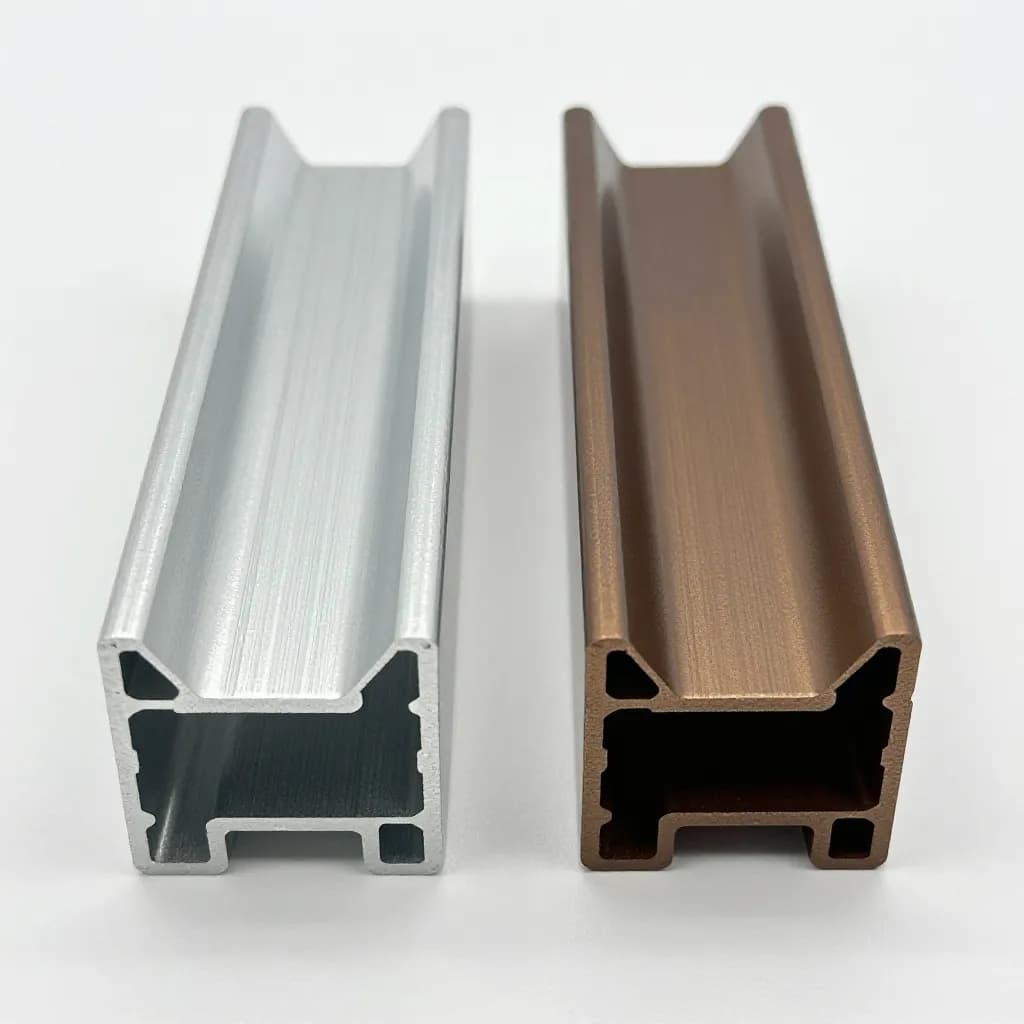
Anodizing is an electrochemical conversion process. The aluminum workpiece is immersed in an acid electrolyte bath, typically sulfuric acid at concentrations of 15-20% by weight, and an electrical current is passed through the solution. This causes oxygen ions to combine with aluminum atoms at the surface, growing a layer of aluminum oxide (Al₂O₃) directly from the substrate. The resulting oxide is not a coating applied on top of the metal — it is a transformation of the metal itself. This integral bond means anodized layers cannot peel, chip, or delaminate in the way that applied coatings can.
Ready to Start Your Project?
From one-off customs to 15,000-part production runs — get precise pricing in 24 hours.
On This Page
Understanding the Two Dominant Aluminum Finishing Technologies
Powder coating, by contrast, is an applied finish. Finely ground particles of thermosetting resin and pigment — typically 20-50 microns in diameter — are electrostatically charged and sprayed onto a grounded metal substrate. The charged particles adhere uniformly to the surface, and the part is then cured in an oven at 160-200°C for 10-20 minutes. During curing, the powder melts, flows into a continuous film, and undergoes irreversible chemical crosslinking to form a tough, durable barrier coating. The bond to the substrate depends on proper pretreatment — typically a multi-stage process involving alkaline cleaning, acid etching, and conversion coating with chromate or chrome-free chemistry.
Both technologies have matured significantly over the past several decades. Anodizing benefits from over 100 years of industrial development, while powder coating has evolved rapidly since its commercial introduction in the 1960s. Today, both are supported by rigorous international quality standards — Qualanod for anodizing, Qualicoat and GSB for powder coating — that ensure consistent, certified performance for demanding applications.
Film Thickness and Build: A Critical Differentiator
Film thickness is one of the most consequential differences between powder coating and anodizing, and it directly influences protection level, appearance, and application suitability. Architectural anodizing typically produces an oxide layer of 15-25 microns, with hard anodizing (Type III) capable of reaching 25-150 microns for specialized wear applications. Decorative anodizing for consumer products may be as thin as 5-10 microns. The Qualanod specification requires a minimum of 15 microns for exterior architectural applications, with 20 microns recommended for coastal or industrial environments.
Powder coating delivers substantially greater film thickness in a single application. Standard architectural powder coatings are applied at 60-120 microns, with some textured and specialty finishes reaching 150 microns or more. This three-to-six-fold thickness advantage over architectural anodizing provides a more robust physical barrier against environmental attack, impact damage, and chemical exposure.
The thickness difference has practical implications for dimensional tolerance. Anodizing grows approximately 50% of its thickness outward from the original surface and 50% inward, meaning a 20-micron anodic layer adds only about 10 microns to external dimensions. This minimal dimensional change makes anodizing preferred for precision-machined components, threaded fasteners, and tight-tolerance assemblies where even small dimensional changes are unacceptable. Powder coating adds its full thickness on top of the substrate, which must be accounted for in design — particularly for mating surfaces, press fits, and assemblies with close tolerances.
For applications where maximum barrier protection is the priority — outdoor furniture, industrial equipment, agricultural machinery, and general architectural cladding — powder coating's thicker film provides a clear advantage. For applications where dimensional precision, surface hardness, and a thin protective layer are paramount — aerospace components, optical equipment, precision instruments — anodizing is the better choice.
Color Range, Aesthetics, and Design Flexibility
The aesthetic capabilities of powder coating and anodizing differ dramatically, and this difference often drives the specification decision for design-led projects. Anodizing produces a distinctive translucent finish that preserves the underlying metallic character of the aluminum. The natural grain, texture, and luster of the metal remain visible through the oxide layer, creating a depth and material authenticity that no applied coating can replicate. This metallic transparency is anodizing's greatest aesthetic strength — and its greatest limitation.
Anodizing's color palette is constrained by the physics of the process. Natural anodizing produces silver-gray tones that vary with alloy composition. Electrolytic coloring — depositing metal salts (typically tin or nickel) into the porous oxide layer — extends the range to include light bronze, medium bronze, dark bronze, champagne, and black. Organic dye coloring can produce blues, reds, greens, and golds, but dyed colors are less lightfast than electrolytic colors and may fade under prolonged UV exposure, limiting their suitability for exterior architectural applications.
Powder coating offers virtually unlimited color and finish options. Any color from the RAL Classic (over 200 colors), RAL Design (1,825 colors), NCS, Pantone, or custom color systems can be matched with precision. Beyond solid colors, powder coatings are available in metallic, pearlescent, textured, wrinkle, hammer-tone, matte, satin, semi-gloss, and high-gloss finishes. Sublimation transfer technology enables photorealistic wood-grain, stone, and custom graphic effects on powder-coated surfaces. This breadth of options makes powder coating the only viable choice when projects require specific brand colors, bold design statements, multi-color schemes, or decorative effects.
For architects and designers, the choice often comes down to intent: if the design celebrates aluminum as a material, anodizing's metallic transparency is unmatched. If the design requires color, texture, or finish variety, powder coating is the clear winner. Many high-end projects use both — anodized mullions paired with powder-coated spandrel panels, for example — to leverage the strengths of each technology.
Corrosion Resistance and Environmental Performance
Both powder coating and anodizing provide excellent corrosion protection for aluminum, but they achieve it through different mechanisms and perform differently across environmental conditions. Anodizing creates a dense, chemically stable aluminum oxide barrier that is inherently resistant to atmospheric corrosion. The oxide layer is amphoteric, meaning it resists both mildly acidic and mildly alkaline conditions, but it is vulnerable to strong alkalis — contact with wet cement, mortar, lime, or aggressive alkaline cleaning agents can dissolve the oxide layer and cause irreversible damage. Anodized aluminum performs well in neutral to mildly acidic environments and in clean marine atmospheres, but requires careful protection during construction phases where alkaline materials are present.
Powder coating provides corrosion protection through a thick organic barrier that physically isolates the aluminum substrate from the environment. This barrier approach is effective across a wider pH range than anodizing and provides superior protection in industrial environments where sulfur dioxide, nitrogen oxides, and other acidic pollutants are present. In salt spray testing (ASTM B117), properly pretreated and powder-coated aluminum panels routinely achieve 1,000-3,000 hours of resistance, depending on the pretreatment system and powder chemistry. Anodized panels typically achieve 336-1,000 hours depending on oxide thickness and sealing quality.
The pretreatment system is critical for powder coating's corrosion performance. Modern chrome-free pretreatments based on zirconium, titanium, or silane chemistry have largely replaced hexavalent chromium conversion coatings, driven by environmental regulations including REACH and RoHS. These chrome-free systems deliver corrosion performance approaching that of traditional chromate pretreatments while eliminating the health and environmental hazards associated with hexavalent chromium compounds.
For coastal and marine environments, powder coating is generally the preferred choice due to its thicker barrier film and superior resistance to chloride-induced corrosion. Qualicoat Seaside certification specifically addresses coastal performance requirements for powder-coated aluminum. Anodizing can perform adequately in coastal environments when specified to a minimum of 20 microns with high-quality sealing, but powder coating provides a greater margin of safety.
Repairability, Maintenance, and Lifecycle Considerations
Repairability is an area where powder coating holds a significant practical advantage over anodizing. Damaged powder coating can be repaired in the field using touch-up paints, liquid repair coatings, or localized re-spraying. While field repairs may not perfectly match the original factory finish, they can restore both protection and acceptable appearance without removing the component from the building or structure. For larger areas of damage, components can be stripped and re-powder-coated, returning them to as-new condition.
Anodized finishes are far more difficult to repair. Because the anodic oxide layer is an integral part of the metal surface, localized damage cannot be patched or touched up in any meaningful way. Scratches that penetrate the oxide layer expose bare aluminum, and there is no field-applicable method to regrow the oxide in a damaged area. The only true repair for damaged anodizing is to strip the entire component (chemically dissolving the oxide layer) and re-anodize it — a process that requires specialized facilities and removes the component from service. Clear lacquers or wax treatments can temporarily protect minor scratches but do not restore the anodic layer.
Maintenance requirements differ as well. Both finishes benefit from regular cleaning to remove accumulated dirt, pollutants, and biological growth. Powder-coated surfaces are generally cleaned with mild detergent and water, and their smooth, dense film resists dirt adhesion effectively. Anodized surfaces require similar cleaning but are more sensitive to cleaning agent chemistry — alkaline cleaners must be avoided, and only pH-neutral or mildly acidic cleaning solutions should be used.
From a lifecycle perspective, powder coating's easier repairability and broader recoating options contribute to lower total maintenance costs over a building's service life. When a powder-coated facade reaches the end of its coating life after 20-25 years, it can be stripped and recoated on-site or in a workshop, extending the life of the aluminum substrate indefinitely. Anodized components can also be stripped and re-anodized, but the process is more complex, more expensive, and carries a greater risk of dimensional change or surface quality degradation.
Environmental Impact and Sustainability Comparison
Environmental considerations increasingly influence finishing technology selection, and both powder coating and anodizing have distinct environmental profiles. Powder coating's primary environmental advantage is the complete absence of volatile organic compound emissions. Because powder coatings are 100% solids with no solvents, the application and curing process produces zero VOC emissions, eliminating a major source of air pollution and removing the need for solvent abatement equipment such as thermal oxidizers or carbon adsorption systems.
Powder coating also achieves exceptional material efficiency. Overspray powder is collected in the spray booth, typically using cyclone separators and cartridge filters, and reclaimed for reuse. Modern reclaim systems achieve 95-98% material utilization, meaning virtually all powder purchased is converted into finished coating. This contrasts sharply with liquid paint operations, where transfer efficiencies of 30-65% are typical, with the remainder lost as waste requiring disposal or destruction.
Anodizing's environmental profile is more complex. The process itself produces no VOC emissions, which is a significant advantage over liquid painting. However, anodizing generates acidic wastewater from the electrolyte baths, rinse stages, and sealing operations that requires treatment before discharge. The sulfuric acid electrolyte must be periodically replaced and the spent acid disposed of or recycled. Nickel-based sealing processes generate nickel-containing wastewater that requires careful treatment to meet discharge limits. Chrome-based sealing, once common, has been largely phased out due to hexavalent chromium concerns.
Energy consumption differs between the two processes. Powder coating requires significant thermal energy for curing — ovens typically operate at 160-200°C — but modern infrared and convection hybrid ovens have improved energy efficiency substantially. Anodizing is an energy-intensive electrochemical process that requires both electrical energy for the anodizing current and thermal energy for maintaining electrolyte temperature and sealing bath temperature. On a per-square-meter basis, energy consumption is broadly comparable, though specific figures depend heavily on line configuration, throughput, and local energy sources.
For projects targeting green building certifications, powder coating's zero-VOC profile and high material efficiency provide straightforward contributions to LEED, BREEAM, and DGNB credits. Both technologies support the recyclability of aluminum at end of life — neither coating type prevents aluminum from being recycled, though the coatings are destroyed during the melting process.
Application-Specific Recommendations
Choosing between powder coating and anodizing ultimately depends on the specific application requirements, design intent, and performance priorities. For architectural facades and curtain walls where a natural metallic aluminum aesthetic is desired, anodizing remains the premium choice. Its translucent oxide layer reveals the metal's inherent beauty in a way that no applied coating can match, and its extreme surface hardness resists the scratching and wear that high-traffic architectural surfaces endure.
For architectural applications requiring specific colors, bold design statements, or decorative effects, powder coating is the definitive choice. Its virtually unlimited color palette, combined with metallic, textured, matte, and wood-grain finish options, gives architects complete design freedom. Powder coating is also preferred for projects in aggressive coastal or industrial environments where its thicker barrier film provides superior corrosion protection.
In the automotive aftermarket, powder coating dominates for wheels, chassis components, engine bay parts, and accessories where color variety, impact resistance, and chemical resistance to brake dust and road salt are priorities. Anodizing is preferred for precision-machined components, suspension parts, and accessories where dimensional accuracy and surface hardness are critical.
For consumer electronics and premium consumer products, anodizing's thin, hard, dimensionally precise finish is ideal for smartphone housings, laptop enclosures, and audio equipment where a sophisticated metallic appearance and scratch resistance are valued. Powder coating serves the broader consumer goods market — appliances, furniture, sporting goods, and tools — where color variety, impact resistance, and cost-effectiveness are the primary drivers.
In industrial applications, the choice often comes down to operating environment. Anodizing excels in clean, controlled environments where surface hardness and wear resistance are paramount — semiconductor equipment, medical devices, and optical instruments. Powder coating excels in harsh, uncontrolled environments — agricultural equipment, construction machinery, outdoor infrastructure — where thick barrier protection against corrosion, impact, and UV degradation is essential.
The most sophisticated specifications recognize that powder coating and anodizing are complementary rather than competing technologies. By understanding the strengths and limitations of each, engineers and designers can select the optimal finish for each component within a project, achieving the best possible combination of aesthetics, performance, and value.
Frequently Asked Questions
Is powder coating thicker than anodizing?
Yes, significantly. Powder coating is typically applied at 60-120 microns, while architectural anodizing produces an oxide layer of 15-25 microns. This thickness difference gives powder coating superior barrier protection against corrosion, impact, and chemical exposure, while anodizing's thinner profile is advantageous for precision components with tight dimensional tolerances.
Which has more color options, powder coating or anodizing?
Powder coating offers vastly more color options. Any color from RAL, NCS, Pantone, or custom systems can be matched, with finishes including metallic, textured, matte, gloss, and wood-grain effects. Anodizing is limited to natural silver, bronze tones, champagne, black, and a narrow range of dyed colors that may fade in exterior applications.
Can you repair powder coating more easily than anodizing?
Yes. Damaged powder coating can be touched up with repair paints or locally re-sprayed in the field. Damaged anodizing cannot be repaired locally — the only true fix is to strip and re-anodize the entire component in a specialized facility, which is more costly and time-consuming.
Which is better for saltwater and coastal environments?
Powder coating is generally preferred for coastal environments due to its thicker barrier film and superior resistance to chloride-induced corrosion. Qualicoat Seaside certification specifically addresses coastal performance. Anodizing can perform adequately at 20+ micron thickness with quality sealing, but powder coating provides a greater safety margin.
Is anodizing or powder coating more environmentally friendly?
Both have environmental advantages over liquid paint. Powder coating produces zero VOC emissions and achieves 95-98% material utilization. Anodizing produces no VOCs but generates acidic wastewater requiring treatment. Overall, powder coating has a simpler environmental compliance profile, while anodizing's impact depends heavily on wastewater treatment effectiveness.
Can powder coating and anodizing be used on the same project?
Absolutely. Many architectural projects combine anodized components (for natural metallic aesthetics and scratch resistance) with powder-coated components (for color variety and enhanced corrosion protection). This complementary approach leverages the strengths of each technology for different building elements.
Ready to Start Your Project?
From one-off customs to 15,000-part production runs — get precise pricing in 24 hours.