In an industry where the quality of a coating is invisible until it fails — sometimes years after application — certifications provide the independent verification that buyers, specifiers, and architects need to make confident decisions. A certification is not a marketing claim; it is a documented, audited confirmation that a coating applicator or powder manufacturer meets specific, measurable standards for process control, material quality, and finished product performance.
Technical
Powder Coating Quality Certifications Explained: ISO, Qualicoat, GSB, and AAMA
Sundial Powder Coating·April 22, 2026·13 min
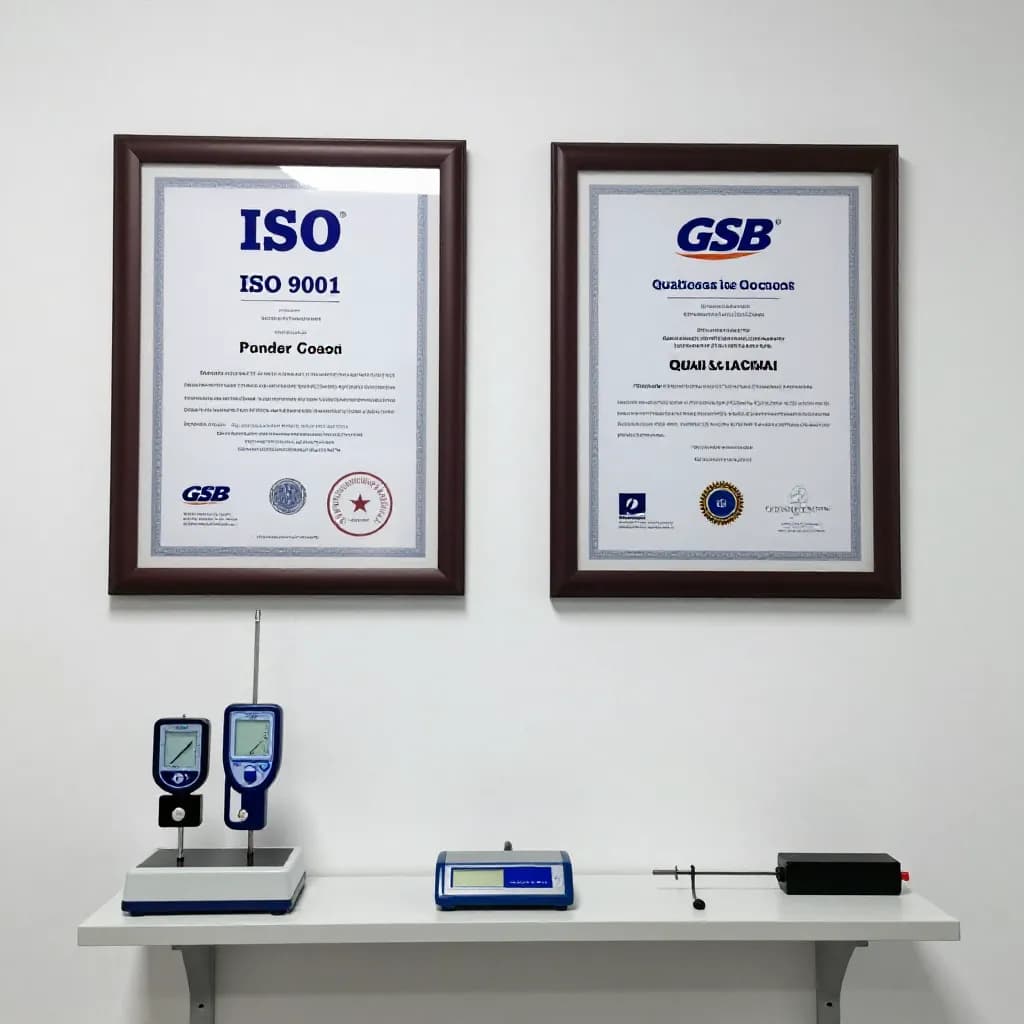
The powder coating industry is served by several certification systems, each with a different scope and focus. Some, like ISO 9001, address general quality management practices. Others, like Qualicoat, GSB, and AAMA, are industry-specific standards that define detailed technical requirements for architectural coating quality. Understanding what each certification covers — and what it does not — is essential for writing effective specifications and evaluating suppliers.
Ready to Start Your Project?
From one-off customs to 15,000-part production runs — get precise pricing in 24 hours.
On This Page
Why Certifications Matter in Powder Coating
This guide explains the major certification systems relevant to powder coating, describes what each one requires, and provides practical guidance on how to verify certifications and use them in your procurement and specification processes. Whether you are an architect specifying facade finishes, a procurement manager evaluating suppliers, or an engineer writing coating specifications, understanding these certifications will help you make better-informed decisions.
ISO 9001: Quality Management System Certification
ISO 9001 is the world's most widely recognized quality management system standard. It provides a framework for organizations to demonstrate their ability to consistently provide products and services that meet customer and regulatory requirements. For powder coating suppliers, ISO 9001 certification means they have documented processes for order handling, production planning, process control, inspection, corrective action, and continuous improvement.
However, it is important to understand what ISO 9001 does not do. It does not define specific technical requirements for powder coating quality — it does not specify film thickness ranges, adhesion standards, or weathering performance. An ISO 9001-certified coater could theoretically produce poor-quality coatings consistently, as long as they follow their documented procedures. This is why ISO 9001 should be considered a baseline requirement rather than a sufficient quality guarantee for powder coating.
To verify ISO 9001 certification, request a copy of the certificate and check the accreditation body's logo. Legitimate certificates are issued by accredited certification bodies that are themselves overseen by national accreditation authorities (such as UKAS in the UK, DAkkS in Germany, or ANAB in the US). You can verify the certification body's accreditation through the International Accreditation Forum's database. Be cautious of certificates from unaccredited bodies, which may not represent a rigorous audit process.
Qualicoat: The European Architectural Quality Label
Qualicoat is the premier quality label for powder-coated (and liquid-painted) architectural aluminum in Europe and increasingly worldwide. Administered by the Zurich-based Qualicoat Association, it sets comprehensive requirements for every stage of the coating process — from pretreatment through application to final testing — and enforces compliance through regular announced and unannounced audits of licensed applicators.
Qualicoat defines three performance classes for powder coatings. Class 1 is the standard level, suitable for most architectural applications with moderate weathering exposure. Class 2 requires enhanced weathering resistance, using superdurable polyester powders that maintain color and gloss retention over extended exposure periods. Class 3 is the highest tier, requiring fluoropolymer-based coatings (typically PVDF or FEVE) for the most demanding applications where maximum long-term weathering performance is required.
The Qualicoat specification covers pretreatment requirements in detail, mandating specific conversion coating types and weights, rinse water quality, and process control parameters. It defines film thickness requirements (minimum 60 microns for standard applications), adhesion testing protocols, hardness requirements, and accelerated weathering test durations for each class. Qualicoat also certifies powder manufacturers, ensuring that only approved powder products are used by licensed applicators. The Qualicoat Seaside label adds additional requirements for coatings intended for use within 500 meters of the coastline, where salt-laden atmospheres impose extreme demands on coating durability.
GSB International: German Quality Standards
GSB International (Gütegemeinschaft für die Stückbeschichtung von Bauteilen) is a German-based quality association that certifies powder coating applicators and powder manufacturers for architectural applications. While Qualicoat has broader international recognition, GSB is particularly strong in German-speaking countries and is widely specified for high-quality architectural projects throughout Central Europe.
GSB operates a three-tier certification system. GSB Standard is the entry level, covering basic quality requirements for architectural coatings. GSB Premium imposes more demanding requirements for weathering resistance, color stability, and process control. GSB Master is the highest tier, requiring the most stringent performance levels and the most rigorous audit regime. Each tier builds on the previous one, with progressively tighter tolerances and more extensive testing requirements.
One distinctive feature of GSB certification is its emphasis on initial type testing and ongoing surveillance. Powder manufacturers must submit their products for comprehensive laboratory testing before they can be approved for use by GSB-certified applicators. This testing covers mechanical properties, chemical resistance, weathering performance, and compatibility with specified pretreatment systems. Applicators are subject to regular audits that include unannounced visits, production sampling, and laboratory testing of samples taken from actual production. This dual certification of both powder products and applicators provides a robust quality assurance chain from raw material to finished coating.
AAMA Specifications: North American Performance Standards
The American Architectural Manufacturers Association (AAMA) publishes performance specifications for architectural coatings that are widely used in North America and increasingly referenced internationally. Unlike Qualicoat and GSB, which are certification schemes with licensed applicators, AAMA specifications are performance standards that define test methods and acceptance criteria without a formal applicator licensing program.
The three main AAMA specifications for powder coatings are AAMA 2603, 2604, and 2605, each representing a different performance tier. AAMA 2603 is the basic level, suitable for interior applications and protected exterior locations. It requires one year of South Florida weathering exposure with defined limits for color change, chalk, gloss loss, and erosion. AAMA 2604 is the intermediate level, requiring five years of South Florida exposure and tighter performance limits. AAMA 2605 is the premium level, requiring ten years of South Florida exposure and the most demanding performance criteria — it is typically met only by fluoropolymer or high-performance polyester coatings.
The use of actual South Florida weathering exposure as a performance benchmark is a distinctive feature of the AAMA system. South Florida's combination of intense UV radiation, high humidity, salt air, and temperature cycling provides one of the most aggressive natural weathering environments in the world. Coatings that survive ten years of South Florida exposure have demonstrated real-world durability that accelerated laboratory tests can only approximate. When specifying AAMA compliance, always reference the specific specification number and verify that the powder manufacturer can provide test data demonstrating compliance.
How to Verify and Validate Certifications
Certification claims should always be verified independently rather than taken at face value. Each certification body maintains a public register of licensed or certified organizations that can be checked online or by direct enquiry. Qualicoat publishes a directory of licensed applicators and approved powder manufacturers on its website, searchable by country and company name. GSB International maintains a similar directory of certified members. ISO 9001 certificates can be verified through the certification body that issued them or through national accreditation body databases.
When evaluating a supplier's certification, check several key details. Verify that the certificate is current — certifications have defined validity periods and must be renewed through surveillance audits. Confirm that the scope of certification covers the specific activities relevant to your requirements — a company may be ISO 9001 certified for one division but not another, or Qualicoat licensed for one production line but not all. Check the certification class or tier to ensure it matches your specification requirements.
Be aware of common misrepresentations. Some companies claim to work 'in accordance with' or 'to the standards of' Qualicoat or GSB without actually holding a license — this is not the same as being certified. Others may display expired certificates or certificates with a scope that does not cover powder coating. If in doubt, contact the certification body directly to confirm the supplier's current status and scope. For critical projects, consider requesting copies of recent audit reports or surveillance visit summaries as additional evidence of ongoing compliance.
Choosing the Right Certification for Your Project
The appropriate certification depends on the application, the geographic market, and the performance requirements of the project. For architectural projects in Europe, Qualicoat or GSB certification is the standard expectation, with the specific class determined by the severity of the exposure environment and the required service life. Class 1 or GSB Standard is appropriate for most urban and suburban locations, while Class 2 or GSB Premium is recommended for exposed or coastal sites, and Class 3 or GSB Master for the most demanding applications.
For North American projects, AAMA specifications are the primary reference. AAMA 2603 is suitable for interior and sheltered exterior applications, AAMA 2604 for standard exterior exposure, and AAMA 2605 for premium exterior applications where maximum long-term performance is required. Some international projects reference both European and North American standards, particularly for global building programs where consistency across regions is important.
For industrial (non-architectural) applications, ISO 9001 certification of the coating applicator combined with a clear performance specification is often sufficient, as Qualicoat, GSB, and AAMA are specifically focused on architectural coatings. However, some industrial sectors have their own certification requirements — automotive (IATF 16949), aerospace (AS9100 or Nadcap), and medical devices (ISO 13485) each impose sector-specific quality system requirements that go beyond general ISO 9001 certification.
The Future of Coating Quality Certification
Coating quality certification systems are evolving to address new challenges and expectations. Environmental sustainability is becoming an increasingly important dimension of quality certification. Qualicoat has introduced requirements for chrome-free pretreatment alternatives, reflecting regulatory pressure to eliminate hexavalent chromium from coating processes. Both Qualicoat and GSB are developing frameworks for assessing the environmental footprint of coating operations, including energy consumption, waste generation, and carbon emissions.
Digital traceability is another emerging trend. Future certification systems may require digital records that link every coated component to its specific pretreatment parameters, powder batch, application settings, and cure profile — creating a complete digital twin of the coating process. This level of traceability would enable rapid root cause analysis of any field failures and provide building owners with verified coating provenance data for their asset management systems.
The harmonization of international standards is also progressing. While Qualicoat, GSB, and AAMA currently operate as separate systems with different test methods and acceptance criteria, there is growing recognition of the need for mutual recognition or alignment to simplify specification for global projects. Industry associations and standards bodies are working toward greater consistency, though full harmonization remains a long-term goal. For now, specifiers working on international projects should understand the differences between systems and specify the appropriate standard for each market.
Frequently Asked Questions
What is the difference between Qualicoat Class 1 and Class 2?
Qualicoat Class 1 is the standard performance level suitable for most architectural applications. Class 2 requires superdurable polyester powders with enhanced UV resistance, providing better color and gloss retention over extended weathering exposure. Class 2 is recommended for buildings in exposed locations or where extended maintenance-free performance is required.
Is ISO 9001 sufficient for architectural powder coating?
No. ISO 9001 certifies the quality management system but does not define technical coating performance requirements. For architectural applications, you should require Qualicoat or GSB certification (in Europe) or AAMA specification compliance (in North America) in addition to ISO 9001.
How can I verify if a coating supplier is genuinely Qualicoat certified?
Check the Qualicoat Association's online directory of licensed applicators at qualicoat.net. The directory lists all current license holders by country, including their license number and scope. You can also contact Qualicoat directly to confirm a supplier's current certification status.
What does AAMA 2605 require that AAMA 2604 does not?
AAMA 2605 requires ten years of South Florida weathering exposure (versus five years for AAMA 2604) with tighter limits on color change, chalk, gloss loss, and film erosion. It also imposes more demanding requirements for chemical resistance and humidity exposure. AAMA 2605 is typically met only by fluoropolymer or premium polyester coatings.
Do certifications guarantee that every coated part will be perfect?
No certification can guarantee zero defects. What certifications do guarantee is that the applicator operates a controlled process with defined quality standards, regular testing, and independent auditing. This dramatically reduces the risk of quality problems compared to working with uncertified suppliers, but incoming inspection and quality agreements remain important.
Ready to Start Your Project?
From one-off customs to 15,000-part production runs — get precise pricing in 24 hours.