Magnesium is the lightest structural metal in commercial use, with a density of just 1.74 g/cm³ — roughly two-thirds that of aluminum and one-quarter that of steel. This exceptional strength-to-weight ratio has made magnesium alloys increasingly important in aerospace, automotive, electronics, and sporting goods applications where every gram of weight reduction translates to improved performance, fuel efficiency, or user comfort. Common magnesium alloys include AZ91 (9% aluminum, 1% zinc) for die casting, AZ31 for sheet and extrusion, and WE43 (containing yttrium and rare earths) for high-temperature aerospace applications.
Technical
Powder Coating Magnesium Alloys: Aerospace, Automotive, and Lightweight Applications
Sundial Powder Coating·April 22, 2026·14 min
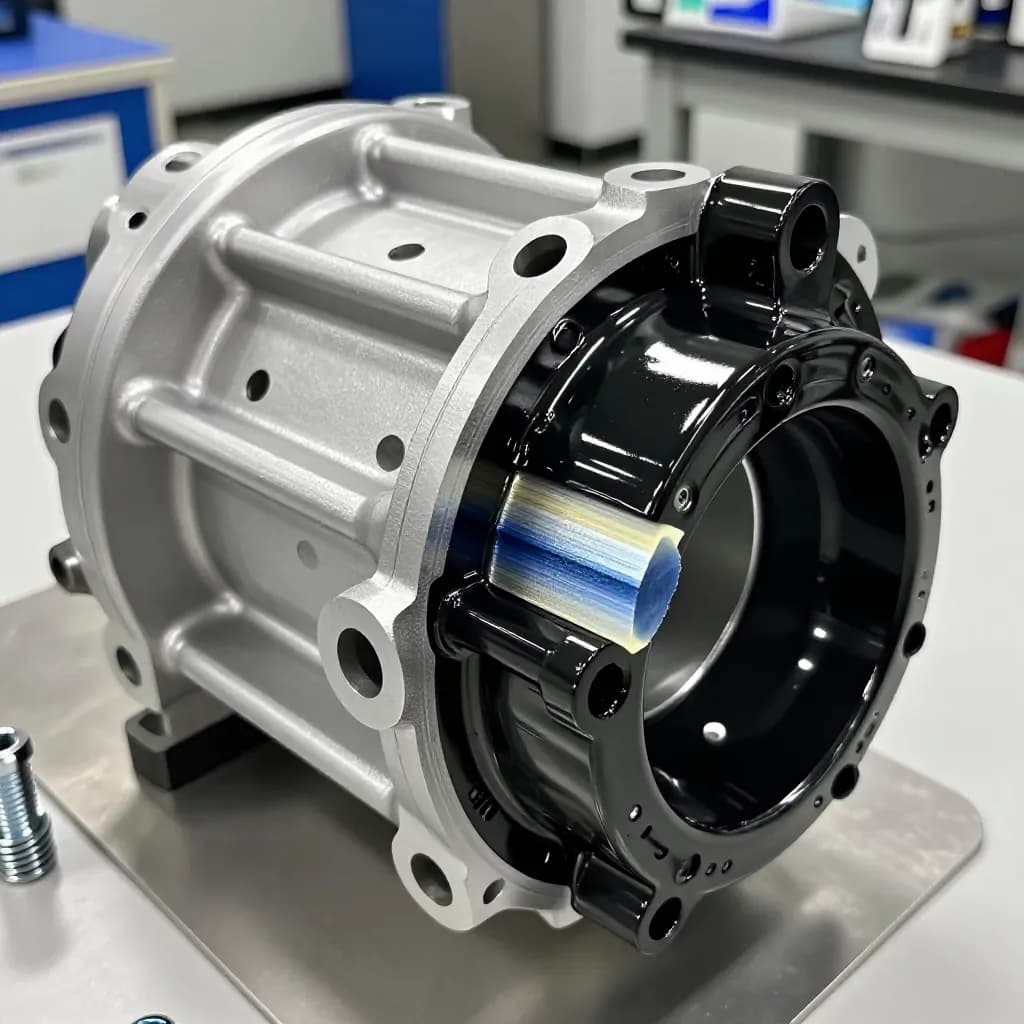
However, magnesium's reactivity presents significant challenges for surface finishing. Magnesium is highly electrochemically active — it sits near the anodic end of the galvanic series, meaning it corrodes rapidly when coupled with most other metals or exposed to aggressive environments. Unprotected magnesium alloys corrode quickly in salt-laden, humid, or industrial atmospheres, producing white magnesium hydroxide and magnesium carbonate corrosion products that undermine structural integrity and aesthetic appearance.
Ready to Start Your Project?
From one-off customs to 15,000-part production runs — get precise pricing in 24 hours.
On This Page
Magnesium Alloys: The Lightest Structural Metal
Powder coating provides an effective barrier against corrosion while adding color, texture, and mechanical protection to magnesium components. The challenge lies in achieving reliable adhesion to a substrate that forms a loosely adherent oxide layer, is sensitive to chemical attack during pretreatment, and presents fire safety concerns during processing. Successfully powder coating magnesium requires specialized knowledge of the alloy's behavior and a carefully engineered pretreatment and application process that accounts for its unique properties.
Flammability and Safety Considerations
Magnesium's flammability is the most critical safety consideration in any powder coating operation handling this metal. Solid magnesium alloy components are not easily ignited — they require temperatures above 450°C to ignite in bulk form, well above standard powder coating cure temperatures of 180-200°C. However, magnesium dust, chips, and fine particles generated during machining, grinding, or blasting operations are extremely flammable and can ignite explosively when suspended in air at concentrations above the lower explosive limit of approximately 30 g/m³.
Blast cleaning of magnesium creates fine magnesium particles that pose a fire and explosion risk if not properly managed. Dedicated blast equipment with explosion-proof electrical components, spark-free media (never use steel grit), and wet dust collection systems are mandatory. Dry dust collectors with standard filter media are prohibited for magnesium dust because a spark from static discharge or mechanical friction can ignite the collected dust with catastrophic results. Wet collection systems suppress ignition by keeping the dust saturated with water, but the collected sludge must be handled carefully because wet magnesium fines can generate hydrogen gas.
Chemical pretreatment of magnesium also requires safety awareness. Magnesium reacts vigorously with strong acids, generating hydrogen gas and heat. Acid pickling solutions must be carefully formulated with inhibitors to control the reaction rate, and adequate ventilation must be provided to prevent hydrogen accumulation. Alkaline cleaning solutions are generally safer for magnesium but must be monitored for pH and temperature to prevent excessive surface attack. All personnel involved in magnesium processing should receive specific training on magnesium fire hazards, and Class D fire extinguishers (dry powder type suitable for metal fires) must be readily available. Water, CO₂, and standard dry chemical extinguishers are ineffective or dangerous on magnesium fires.
Chrome-Free Pretreatment Systems
Historically, chromate conversion coatings — particularly those based on hexavalent chromium (Cr⁶⁺) — were the standard pretreatment for magnesium alloys, providing excellent corrosion resistance and coating adhesion. However, hexavalent chromium is a known carcinogen, and regulations including the EU REACH directive and US EPA restrictions have driven the industry toward chrome-free alternatives. Modern magnesium pretreatment systems must deliver equivalent performance without the toxicity and environmental burden of chromate chemistry.
The most successful chrome-free pretreatment systems for magnesium include permanganate-based conversion coatings, which deposit a manganese oxide layer on the magnesium surface that provides corrosion resistance and adhesion promotion comparable to chromate. Permanganate coatings are typically applied by immersion at 20-40°C for 5-15 minutes and produce a golden to dark brown conversion layer weighing 1-3 g/m². Fluoride-based conversion coatings using potassium fluoride or magnesium fluoride solutions create a stable, insoluble magnesium fluoride layer that resists corrosion and provides good adhesion for organic coatings.
Silane and organosilane pretreatments represent the newest generation of chrome-free technology for magnesium. These systems deposit an ultra-thin (50-200 nanometer) organosilicon layer that bonds chemically to both the metal surface and the organic coating, creating a molecular bridge that enhances adhesion. Silane pretreatments are applied by dip, spray, or flow-coat at ambient temperature, making them energy-efficient and easy to integrate into existing pretreatment lines. Zirconium and titanium-based conversion coatings are also gaining acceptance, depositing nano-ceramic layers that provide corrosion resistance through barrier protection rather than the sacrificial mechanism of chromate coatings. Each of these alternatives has been validated for aerospace and automotive applications through extensive testing programs, though qualification requirements vary by end-use specification.
Powder Selection and Cure Parameters for Magnesium
Powder selection for magnesium alloys must account for the substrate's relatively low melting point and thermal sensitivity. Magnesium alloys have solidus temperatures ranging from 420°C (AZ91) to 540°C (WE43), which provides adequate margin above standard cure temperatures of 180-200°C. However, prolonged exposure to elevated temperatures can cause microstructural changes in some alloys, particularly precipitation-hardened grades where over-aging can reduce mechanical properties. Cure schedules should be validated not only for coating performance but also for their effect on substrate mechanical properties, especially for structural aerospace and automotive components.
Polyester and epoxy-polyester hybrid powders are the most commonly used chemistries for magnesium alloy applications. Polyester powders provide excellent UV resistance for exterior automotive and architectural applications, while hybrids offer superior chemical resistance for under-hood and industrial environments. Epoxy primers are frequently specified as a first coat in multi-layer systems, providing maximum adhesion and corrosion resistance at the critical coating-metal interface, with a polyester topcoat for UV protection and aesthetics.
Low-cure powder formulations curing at 150-160°C are advantageous for magnesium because they reduce thermal exposure and minimize the risk of substrate property degradation. These formulations use accelerated crosslinking chemistry to achieve full cure at temperatures 20-40°C below standard powders. The lower cure temperature also reduces energy consumption and allows faster throughput, which is particularly beneficial for high-volume automotive production. Film thickness targets for magnesium are typically 60-100 micrometers for single-coat applications and 120-180 micrometers for primer-plus-topcoat systems, providing adequate barrier protection against the aggressive corrosion tendency of the substrate.
Aerospace Applications and Specifications
The aerospace industry is a major user of powder-coated magnesium alloy components, driven by the relentless pursuit of weight reduction in aircraft structures and systems. Magnesium alloy castings and machined components are used in gearbox housings, actuator bodies, instrument panels, seat frames, and helicopter transmission cases, where weight savings of 30-40% compared to aluminum equivalents translate directly to improved fuel efficiency and payload capacity.
Aerospace powder coating of magnesium must comply with stringent specifications that define every aspect of the process from incoming material inspection through final acceptance testing. Key specifications include SAE AMS-C-27725 (formerly MIL-PRF-27725) for powder coating of aerospace components, which defines pretreatment requirements, powder chemistry restrictions, cure parameters, and acceptance criteria for adhesion, flexibility, impact resistance, and corrosion resistance. Boeing (BAC 5710), Airbus (AIMS), and other OEM specifications add manufacturer-specific requirements that may exceed the baseline military specifications.
Corrosion testing requirements for aerospace magnesium coatings are particularly demanding. Salt spray testing per ASTM B117 typically requires 336-1000 hours without blistering, scribe creep, or substrate corrosion, depending on the specification and service environment. Filiform corrosion testing, cyclic corrosion testing (GM 9540P or SAE J2334), and outdoor exposure testing in marine environments supplement accelerated laboratory testing. The qualification process for a new powder coating system on aerospace magnesium can take 12-24 months and require extensive documentation of process parameters, material traceability, and test results. Once qualified, any change to the pretreatment chemistry, powder formulation, or cure parameters requires requalification.
Automotive Magnesium Coating Challenges
The automotive industry's adoption of magnesium alloys has accelerated as manufacturers pursue aggressive weight reduction targets to meet fuel efficiency and emissions regulations. Magnesium die castings are used for steering wheel armatures, instrument panel beams, seat frames, engine cradles, and transmission cases, with some vehicles incorporating 20-40 kg of magnesium components. Powder coating these parts for corrosion protection and aesthetics presents challenges specific to the automotive production environment.
High-volume automotive production demands fast cycle times, consistent quality, and robust processes that tolerate normal variation in incoming material quality. Magnesium die castings from different suppliers or production runs can vary in porosity, surface chemistry, and alloy composition, all of which affect coating adhesion and outgassing behavior. Automotive coating specifications must be robust enough to accommodate this variation while still delivering consistent corrosion protection and appearance. Statistical process control (SPC) of pretreatment parameters, powder application settings, and cure conditions is essential for maintaining quality at automotive production rates.
Galvanic corrosion is a particular concern for automotive magnesium components because they are frequently assembled with steel fasteners, aluminum brackets, and other dissimilar metals. The powder coating must provide a continuous, defect-free barrier at all interfaces where magnesium contacts other metals, and design features such as isolating washers, sealants, and drainage provisions must complement the coating system. Edge coverage is critical — any exposed magnesium at cut edges, drill holes, or assembly contact points becomes an initiation site for galvanic corrosion. Automotive specifications typically require minimum edge film thickness of 40-50 micrometers and may mandate additional edge sealing with liquid touch-up coatings at assembly points.
Quality Control and Corrosion Testing
Quality control for powder-coated magnesium alloys must be more rigorous than for steel or aluminum substrates because the consequences of coating failure are more severe — magnesium corrodes rapidly once the protective barrier is breached. Incoming inspection of raw castings should include visual examination for porosity, surface defects, and contamination, along with alloy verification using X-ray fluorescence (XRF) or optical emission spectroscopy (OES) to confirm that the correct alloy grade has been supplied.
Pretreatment quality is monitored through conversion coating weight measurement (typically by gravimetric analysis of test panels processed alongside production parts), pH and concentration checks of chemical baths, and adhesion testing of coated test panels. The conversion coating weight should fall within the specified range — too light indicates insufficient coverage, while too heavy suggests over-processing that can produce a powdery, poorly adherent layer. Process bath chemistry should be checked at least once per shift, with automatic dosing systems maintaining concentration within specified limits.
Finished coating quality control includes film thickness measurement (magnetic or eddy current gauges per ISO 2360), cross-hatch adhesion testing per ISO 2409 (target classification 0), gloss measurement per ISO 2813, and visual inspection for defects. Corrosion resistance testing should be performed on production-representative test panels at defined intervals — typically weekly for high-volume production. Salt spray testing per ASTM B117 is the baseline, but cyclic corrosion tests such as SAE J2334 or VDA 233-102 provide more realistic simulation of automotive service environments that include wet-dry cycling, temperature variation, and UV exposure. Electrochemical impedance spectroscopy (EIS) is an advanced technique that can detect coating degradation before visible defects appear, enabling proactive process adjustment.
Frequently Asked Questions
Is it safe to powder coat magnesium alloys?
Yes, solid magnesium alloy parts can be safely powder coated at standard cure temperatures of 180-200°C, well below magnesium's ignition point of 450°C+. The primary safety concern is magnesium dust generated during blasting or grinding, which is extremely flammable. Dedicated blast equipment with wet dust collection, explosion-proof electrics, and Class D fire extinguishers are mandatory.
What pretreatment replaces chromate on magnesium?
Chrome-free alternatives include permanganate conversion coatings, fluoride-based conversion coatings, silane/organosilane pretreatments, and zirconium or titanium nano-ceramic coatings. Permanganate systems are the most widely adopted, providing corrosion resistance and adhesion comparable to chromate. These alternatives have been validated for aerospace and automotive applications through extensive testing programs.
Why is magnesium so difficult to powder coat?
Magnesium is challenging because it forms a loosely adherent oxide layer that impairs adhesion, is highly susceptible to galvanic corrosion when coupled with other metals, reacts vigorously with acids during pretreatment, and generates flammable dust during mechanical preparation. Success requires specialized pretreatment chemistry, careful process control, and strict safety protocols.
Can low-cure powders be used on magnesium?
Yes, low-cure powders curing at 150-160°C are advantageous for magnesium because they reduce thermal exposure, minimizing the risk of microstructural changes in heat-sensitive alloys. Lower cure temperatures also reduce energy consumption and allow faster production throughput, making them particularly beneficial for high-volume automotive applications.
How do you prevent galvanic corrosion on coated magnesium assemblies?
The powder coating must provide a continuous, defect-free barrier at all dissimilar metal interfaces. Design measures include isolating washers between magnesium and steel fasteners, sealants at assembly joints, drainage provisions to prevent moisture trapping, and minimum edge film thickness of 40-50 micrometers. Any exposed magnesium at cut edges or contact points must be sealed.
Ready to Start Your Project?
From one-off customs to 15,000-part production runs — get precise pricing in 24 hours.