ISO 14001:2015 is the international standard for environmental management systems (EMS), providing a framework for organizations to manage their environmental responsibilities systematically. For powder coating operations — whether independent job shops, in-house finishing departments, or powder coating manufacturers — ISO 14001 certification demonstrates a structured commitment to environmental performance that is increasingly valued by customers, regulators, and stakeholders. The standard is applicable to organizations of any size and sector, and its flexible, risk-based approach makes it well-suited to the diverse range of powder coating operations worldwide.
Environmental
ISO 14001 Environmental Management Systems for Powder Coating Operations
Sundial Powder Coating·April 22, 2026·11 min
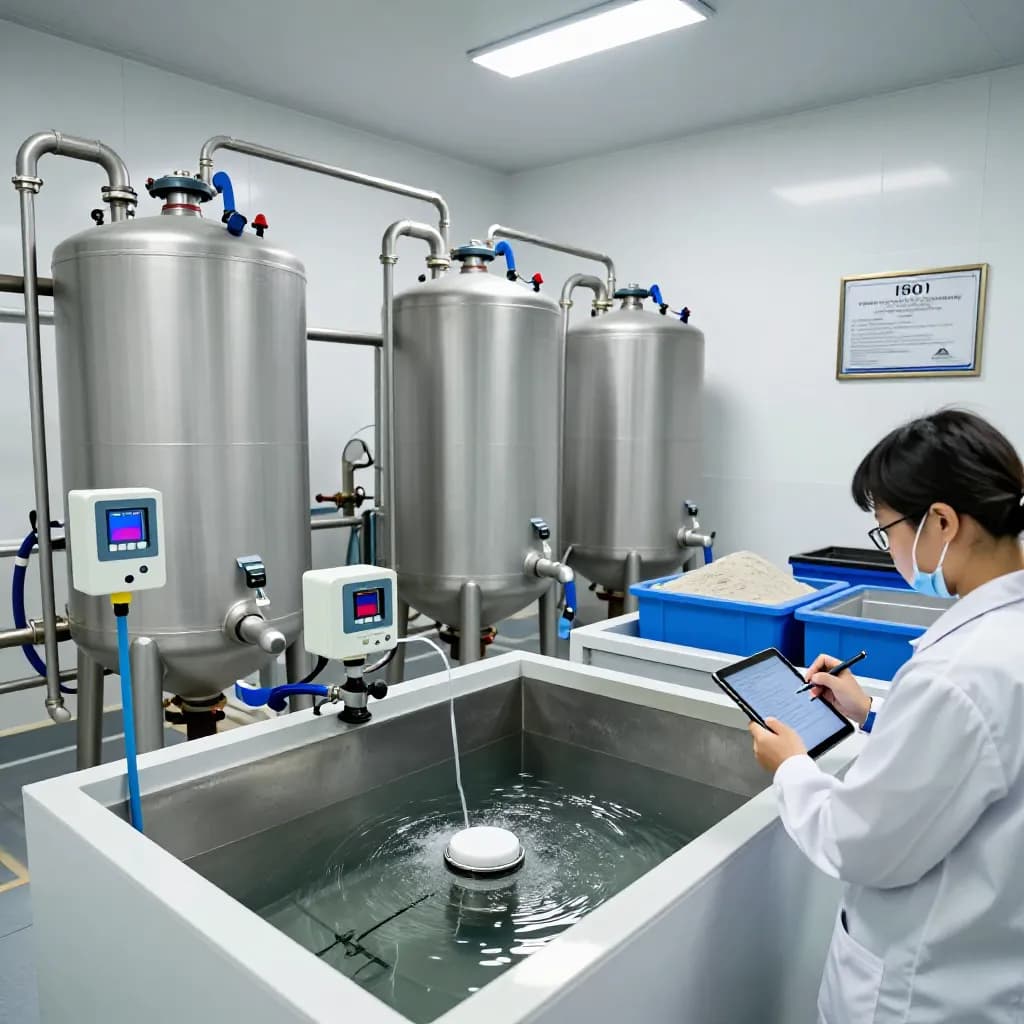
The business case for ISO 14001 in powder coating extends beyond environmental stewardship. Many major customers in automotive, aerospace, construction, and consumer goods sectors require or prefer suppliers with ISO 14001 certification as part of their supply chain qualification criteria. BREEAM certification awards credits for products from ISO 14001-certified manufacturers. Regulatory authorities in some jurisdictions offer reduced inspection frequency or simplified permitting for ISO 14001-certified facilities. Insurance carriers may offer premium reductions for certified operations that demonstrate systematic risk management.
Ready to Start Your Project?
From one-off customs to 15,000-part production runs — get precise pricing in 24 hours.
On This Page
ISO 14001 and the Powder Coating Industry
ISO 14001:2015 follows the High Level Structure (HLS) common to all ISO management system standards, facilitating integration with ISO 9001 (quality management) and ISO 45001 (occupational health and safety management). For powder coating operations that already hold ISO 9001 certification — which is common in the industry — extending the management system to include ISO 14001 leverages existing processes and documentation, reducing the incremental effort required for environmental certification.
Context of the Organization and Leadership
ISO 14001:2015 begins with understanding the context of the organization — the internal and external issues that affect its ability to achieve the intended outcomes of the EMS. For a powder coating operation, external context includes environmental regulations (air emissions, wastewater discharge, waste management), customer environmental requirements, community expectations regarding noise, odor, and visual impact, and the availability and cost of natural resources such as water and energy. Internal context includes the organization's environmental values, technical capabilities, workforce competence, and financial resources for environmental investment.
The standard requires identification of interested parties (stakeholders) and their relevant needs and expectations. For powder coating operations, key interested parties typically include regulatory authorities (compliance with permits and regulations), customers (environmental performance requirements, certifications), employees (safe and healthy working environment), neighbors and local communities (pollution prevention, noise control), and shareholders or owners (environmental risk management, reputation protection). Understanding these expectations shapes the scope and priorities of the EMS.
Leadership commitment is a cornerstone of ISO 14001:2015, with top management required to demonstrate leadership by establishing an environmental policy, ensuring integration of EMS requirements into business processes, ensuring resources are available, and promoting continual improvement. The environmental policy must include commitments to protection of the environment, compliance with legal requirements, and continual improvement of environmental performance. For powder coating operations, the policy should reflect the specific environmental context — such as commitments to minimize waste, conserve energy and water, prevent pollution, and reduce the environmental impact of products and services.
Environmental Aspects and Impacts Assessment
The identification and evaluation of environmental aspects — elements of an organization's activities, products, or services that interact with the environment — is the analytical foundation of the EMS. For powder coating operations, a comprehensive aspects assessment should cover all operational stages: raw material receipt and storage, pretreatment, powder application, curing, quality inspection, packaging and dispatch, and support activities including maintenance, waste management, and facility operations.
Typical environmental aspects for a powder coating operation include energy consumption (natural gas for ovens, electricity for equipment and facilities), water consumption (pretreatment rinse water), air emissions (particulate from booths, combustion products from ovens), wastewater discharge (pretreatment effluent), solid waste generation (non-reclaimable powder, packaging, pretreatment sludge), chemical storage and handling (powder coatings, pretreatment chemicals, cleaning agents), noise generation (compressors, ventilation fans, shot blasting equipment), and land use impacts (stormwater management, soil contamination prevention).
Each aspect must be evaluated to determine its environmental impact significance using defined criteria. Common evaluation criteria include the scale and severity of the impact, the probability of occurrence, the duration and reversibility of the impact, regulatory requirements, and stakeholder concerns. Significant environmental aspects become the focus of the EMS, driving the establishment of objectives, targets, and operational controls. The aspects assessment should be reviewed and updated whenever operations change, new processes are introduced, or new regulatory requirements emerge, ensuring that the EMS remains aligned with the organization's actual environmental profile.
Legal and Other Requirements
ISO 14001 requires organizations to identify, access, and maintain awareness of the legal and other requirements related to their environmental aspects. For powder coating operations, the legal framework typically includes air emission permits and regulations, wastewater discharge permits, hazardous waste management regulations, chemical storage and handling requirements (REACH, CLP, GHS), occupational health and safety regulations related to environmental hazards, noise regulations, and planning and land use conditions.
Maintaining a legal register — a documented inventory of all applicable environmental legal requirements — is the standard approach to managing this obligation. The register should identify each requirement, the environmental aspect it relates to, the specific obligations it imposes, the compliance status, and the responsible person. The register must be kept current as regulations change, and compliance must be periodically evaluated. Many organizations conduct formal compliance evaluations at least annually, with more frequent checks for high-risk requirements.
'Other requirements' beyond legal obligations may include customer environmental specifications, industry codes of practice (such as Qualicoat or GSB environmental requirements), voluntary commitments (such as carbon reduction pledges or industry sustainability charters), and corporate environmental policies for operations that are part of larger organizations. These requirements, while not legally binding in the same way as regulations, represent commitments that the organization has chosen to adopt and must therefore manage within the EMS. The integration of legal and voluntary requirements into a single management framework ensures consistent compliance and avoids the risk of overlooking obligations.
Objectives, Targets, and Environmental Programs
Environmental objectives and targets translate the EMS policy commitments and significant aspects assessment into measurable performance goals. ISO 14001:2015 requires that objectives are consistent with the environmental policy, measurable where practicable, monitored, communicated, and updated as appropriate. For powder coating operations, objectives should address the most significant environmental aspects identified in the assessment and reflect both regulatory requirements and stakeholder expectations.
Typical environmental objectives for a powder coating operation might include reducing energy consumption per unit of production by a specified percentage over a defined period, reducing water consumption in pretreatment by implementing closed-loop recycling, achieving zero waste to landfill through improved reclaim efficiency and waste segregation, reducing greenhouse gas emissions through renewable energy procurement and efficiency improvements, and maintaining full compliance with all air emission and wastewater discharge permit conditions.
Each objective should be supported by an environmental program (action plan) that specifies the actions to be taken, the resources required, the responsible persons, the timeline for completion, and the method for evaluating results. For example, an objective to reduce energy consumption might be supported by a program that includes an energy audit, installation of heat recovery equipment, optimization of oven scheduling, and employee awareness training. Progress against objectives should be reviewed at regular management review meetings, with corrective actions taken when progress is insufficient. The cycle of setting objectives, implementing programs, monitoring results, and adjusting plans embodies the continual improvement principle that is central to ISO 14001.
Operational Control and Emergency Preparedness
Operational controls are the procedures, work instructions, and physical controls that ensure environmental aspects are managed effectively during routine operations. For powder coating operations, key operational controls include pretreatment chemical management procedures (bath maintenance, chemical dosing, rinse water quality control), powder application procedures (reclaim system operation, color change procedures, waste powder handling), curing oven operation procedures (temperature control, exhaust management, energy optimization), waste management procedures (segregation, storage, labeling, disposal), and chemical storage procedures (spill containment, incompatible material separation, inventory management).
Operational controls should be documented to the extent necessary to ensure consistent implementation, particularly for activities performed by multiple operators or across multiple shifts. The level of documentation should be proportionate to the complexity and risk of the activity — simple tasks may require only brief work instructions, while complex or high-risk activities may need detailed standard operating procedures with checklists and verification steps.
Emergency preparedness and response planning addresses potential environmental emergencies such as chemical spills, fire, equipment failures resulting in uncontrolled emissions, and natural disasters. The emergency plan should identify potential emergency scenarios, define response procedures for each, assign responsibilities, specify communication protocols (including notification of regulatory authorities where required), and establish procedures for post-incident investigation and corrective action. Emergency response equipment — including spill containment kits, fire extinguishers, and personal protective equipment — must be maintained in accessible locations. Regular emergency drills test the effectiveness of response procedures and identify areas for improvement.
Monitoring, Measurement, and Continual Improvement
ISO 14001 requires organizations to monitor, measure, analyze, and evaluate their environmental performance against established objectives and operational criteria. For powder coating operations, the monitoring program should cover energy consumption (gas and electricity metered by process area where feasible), water consumption (metered at pretreatment stages), waste generation (weighed and categorized by type), air emissions (periodic stack testing and continuous monitoring where required), wastewater quality (regular sampling and analysis against permit limits), and material utilization (powder reclaim rates, transfer efficiency).
The management review process, conducted at planned intervals by top management, evaluates the overall performance and continuing suitability of the EMS. Management review inputs include monitoring and measurement results, compliance evaluation results, audit findings, progress against objectives, status of corrective actions, changes in external and internal issues, and opportunities for improvement. Management review outputs include decisions on the continuing suitability and effectiveness of the EMS, opportunities for improvement, resource needs, and any changes needed to the EMS.
Continual improvement is the fundamental purpose of the EMS, and ISO 14001 requires organizations to continually improve the suitability, adequacy, and effectiveness of the environmental management system to enhance environmental performance. For powder coating operations, continual improvement may manifest as progressive reductions in energy and water consumption per unit of production, decreasing waste generation rates, improved compliance records, adoption of cleaner technologies, and enhanced environmental awareness throughout the workforce. The Plan-Do-Check-Act (PDCA) cycle embedded in ISO 14001's structure provides the systematic framework for driving this improvement over time.
Frequently Asked Questions
Why should powder coating operations pursue ISO 14001 certification?
ISO 14001 certification demonstrates systematic environmental management to customers, regulators, and stakeholders. Many automotive, aerospace, and construction customers require it for supplier qualification. It also supports BREEAM credits, may reduce regulatory inspection frequency, and provides a framework for continual environmental performance improvement.
What are the main environmental aspects of powder coating operations?
Key aspects include energy consumption (curing ovens, compressed air), water consumption (pretreatment), air emissions (particulate, combustion products), wastewater discharge, solid waste (non-reclaimable powder, sludge, packaging), chemical storage and handling, and noise generation. Each must be evaluated for significance and managed through the EMS.
How does ISO 14001 integrate with ISO 9001?
Both standards use the same High Level Structure (HLS), sharing common elements including context analysis, leadership, planning, support, operation, performance evaluation, and improvement. Organizations with ISO 9001 can extend their existing management system to include ISO 14001 requirements, leveraging shared processes for document control, internal audit, management review, and corrective action.
How long does ISO 14001 certification take?
Implementation typically takes 6-12 months depending on the organization's size, complexity, and existing management system maturity. Organizations with ISO 9001 certification can often achieve ISO 14001 in 6-9 months. The certification audit is conducted by an accredited certification body and includes Stage 1 (documentation review) and Stage 2 (implementation audit).
What is continual improvement under ISO 14001?
Continual improvement means progressively enhancing environmental performance through the Plan-Do-Check-Act cycle. For powder coating operations, this includes setting measurable objectives, implementing improvement programs, monitoring results, and adjusting plans. Examples include reducing energy per unit produced, improving reclaim rates, and decreasing waste generation.
Ready to Start Your Project?
From one-off customs to 15,000-part production runs — get precise pricing in 24 hours.