Lead has a long history in the coatings industry, valued for its contributions to corrosion resistance, color vibrancy, and film durability. In powder coatings specifically, lead appeared in several forms: lead chromate pigments provided bright, lightfast yellow, orange, and red colors; lead-based stabilizers improved the thermal stability of certain resin systems during processing; and lead-containing anti-corrosive pigments such as red lead and basic lead silicochromate provided exceptional corrosion protection in primer formulations.
Environmental
Lead-Free Powder Coatings: Regulations, Testing, and Compliance for Children's Products
Sundial Powder Coating·April 22, 2026·11 min
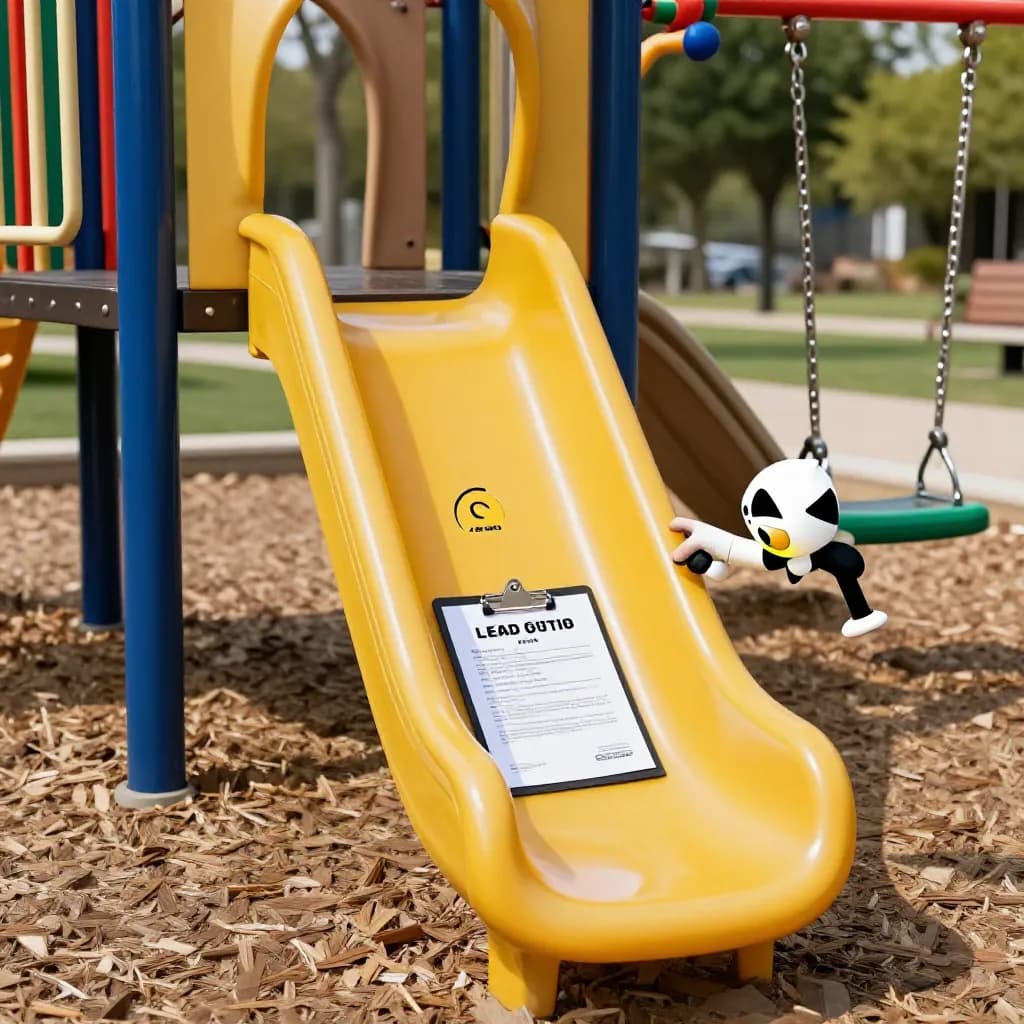
The toxicity of lead has been recognized for centuries, but regulatory action to restrict its use in coatings accelerated in the late 20th century. The US Consumer Product Safety Commission banned lead paint for residential use in 1978, and subsequent regulations progressively tightened lead limits in coatings for consumer products, toys, and children's articles. The European Union restricted lead in consumer products through multiple directives, and similar regulations emerged across Asia, Latin America, and other regions.
Ready to Start Your Project?
From one-off customs to 15,000-part production runs — get precise pricing in 24 hours.
On This Page
Historical Use of Lead in Powder Coatings
The powder coating industry responded to these regulatory pressures by developing lead-free formulations that could match the performance of lead-containing products. Lead chromate pigments were replaced by organic pigments and complex inorganic color pigments (CICPs) such as bismuth vanadate and cerium sulfide. Lead-based anti-corrosive primers were replaced by zinc-rich primers, zinc phosphate systems, and other non-lead corrosion inhibitors. Today, the vast majority of powder coatings produced globally are lead-free, but legacy formulations, specialty applications, and the risk of trace contamination mean that lead compliance remains an active concern.
Global Regulatory Framework for Lead in Coatings
The regulatory framework for lead in coatings varies by jurisdiction but shows a clear global trend toward lower permissible limits. In the United States, the Consumer Product Safety Improvement Act (CPSIA) of 2008 set a total lead content limit of 90 ppm (0.009%) for paint and surface coatings on children's products and a total lead content limit of 100 ppm for substrate materials in children's products. The EPA's Renovation, Repair, and Painting (RRP) Rule addresses lead-based paint in pre-1978 housing. HUD standards govern lead-safe housing practices.
The European Union restricts lead in consumer products through REACH Annex XVII Entry 63, which limits lead content in articles and accessible parts of articles that can be placed in the mouth by children. The RoHS Directive restricts lead in electrical and electronic equipment to 0.1% (1000 ppm) in homogeneous materials. The EU Toy Safety Directive 2009/48/EC sets migration limits for lead from toy materials, with specific limits depending on the material category (dry, liquid, or scraped-off material).
The Global Alliance to Eliminate Lead Paint, a joint initiative of the World Health Organization (WHO) and the United Nations Environment Programme (UNEP), promotes the adoption of lead paint laws worldwide. As of 2024, over 90 countries have established legally binding controls on lead in paint, with most setting total lead content limits of 90 ppm or 600 ppm. Countries including India (BIS IS 16388), China (GB 18581), South Africa (SANS 1091), and the Philippines (DAO 2013-24) have implemented specific lead limits for coatings. Powder coating companies serving global markets must track and comply with the applicable lead limits in each jurisdiction.
Lead in Children's Products: CPSIA and Toy Safety Requirements
Children's products represent the most stringently regulated category for lead content in coatings. The US CPSIA defines a children's product as one designed or intended primarily for children 12 years of age or younger, and imposes a 90 ppm total lead limit on paint and surface coatings applied to such products. This limit applies to the coating itself, not to the substrate, and is measured as total lead content rather than leachable or bioavailable lead.
The 90 ppm limit is extremely low and requires powder coating manufacturers to exercise rigorous control over raw material quality. Even raw materials that are nominally lead-free may contain trace levels of lead as a natural impurity in mineral-based pigments and fillers. Iron oxide pigments, titanium dioxide, calcium carbonate, and barium sulfate can all contain trace lead depending on the ore source and refining process. Powder coating manufacturers must work with raw material suppliers to obtain certificates of analysis confirming lead content below levels that would cause the finished coating to exceed 90 ppm.
The EU Toy Safety Directive takes a different approach, setting migration limits rather than total content limits. Migration testing measures the amount of lead that leaches from the coating under simulated conditions of use, such as contact with synthetic saliva or sweat. The migration limit for lead from scraped-off coating material is 23 mg/kg under EN 71-3. While migration limits and total content limits are conceptually different, in practice a powder coating with very low total lead content will also meet migration requirements. Companies serving both US and EU toy markets should formulate to meet the more restrictive standard and test using both methodologies.
Testing Methods for Lead in Powder Coatings
Accurate lead testing is essential for compliance verification, and several analytical methods are available depending on the required sensitivity and the regulatory context. X-ray fluorescence (XRF) spectroscopy is the most widely used screening method, providing rapid, non-destructive elemental analysis of coating samples. Handheld XRF analyzers can detect lead at concentrations well below 90 ppm, making them suitable for incoming material inspection and production quality control. However, XRF results should be confirmed by wet chemical methods for regulatory compliance purposes.
Inductively coupled plasma optical emission spectroscopy (ICP-OES) and inductively coupled plasma mass spectrometry (ICP-MS) are the reference methods for quantitative lead determination in coatings. These techniques require sample dissolution in acid (typically a mixture of nitric and hydrochloric acids) followed by analysis of the resulting solution. ICP-MS offers the lowest detection limits, capable of quantifying lead at single-digit ppb levels, making it the method of choice for verifying compliance with the 90 ppm CPSIA limit. ASTM E1645 provides a standard practice for the preparation of dried paint samples for subsequent lead analysis.
For migration testing under the EU Toy Safety Directive, EN 71-3 specifies the extraction procedure using dilute hydrochloric acid to simulate gastric conditions. The extract is then analyzed by ICP-OES or ICP-MS to determine the migrated lead concentration. CPSC-CH-E1003-09.1 is the US CPSC's standard operating procedure for determining lead in paint and similar surface coatings. Powder coating companies should ensure that their testing laboratories are accredited to the relevant methods and participate in proficiency testing programs to maintain analytical accuracy.
Raw Material Control and Supply Chain Management
Achieving and maintaining lead-free compliance in powder coatings requires systematic raw material control throughout the supply chain. The starting point is a comprehensive specification system that defines maximum permissible lead content for each raw material category. Pigments, being the most likely source of lead contamination, should have the tightest specifications — typically requiring lead content below 10-20 ppm to provide adequate margin for the 90 ppm finished product limit when pigment loading is considered.
Supplier qualification should include review of the supplier's own lead control measures, including ore source management, refining processes, and quality control testing. Certificates of analysis (CoA) should be required for each batch of raw material, with lead content reported from testing by an accredited laboratory. Some powder coating manufacturers implement a dual-testing approach, conducting their own incoming material testing in addition to reviewing supplier CoAs, to provide an independent verification layer.
Production segregation may be necessary in facilities that produce both lead-free and lead-containing products (where lead-containing products are still permitted for non-children's applications). Dedicated production lines, or at minimum rigorous cleaning procedures between production runs, prevent cross-contamination that could cause lead-free products to exceed compliance limits. Batch traceability systems that link finished products to specific raw material batches enable rapid investigation and response if a compliance issue is identified. Regular auditing of the entire lead control system, from raw material procurement through production to finished product testing, ensures that compliance is maintained consistently over time.
Third-Party Certification and Market Access
Third-party certification provides independent verification of lead-free compliance and is increasingly required for market access in children's product and consumer goods sectors. In the United States, the CPSIA requires that children's products be tested by a CPSC-accepted laboratory and that manufacturers issue a Children's Product Certificate (CPC) based on the test results. The certificate must reference the specific CPSC-accepted laboratory and the applicable standards, and must be available to retailers and consumers upon request.
Several voluntary certification programs provide additional assurance of lead-free compliance. The GREENGUARD Certification program, administered by UL, tests products for chemical emissions including heavy metals. The Cradle to Cradle Certified program evaluates material health, including the absence of lead and other hazardous substances. The OEKO-TEX Standard 100, while primarily associated with textiles, is also applied to coated materials and includes lead limits.
For powder coating manufacturers, obtaining and maintaining third-party certifications requires ongoing investment in testing, documentation, and quality management systems. However, these certifications provide tangible market access benefits, particularly in the children's furniture, playground equipment, and consumer electronics sectors where brand owners and retailers increasingly require certified materials throughout their supply chains. The cost of certification is typically modest compared to the market access it enables, and the discipline of maintaining certification drives continuous improvement in lead control practices.
Emerging Trends and Future Regulatory Direction
The global trend toward stricter lead regulation in coatings shows no signs of slowing. The WHO and UNEP continue to advocate for universal adoption of 90 ppm total lead limits in all paints, and the number of countries with legally binding lead paint laws continues to grow. Countries that currently have higher limits (such as 600 ppm) are expected to progressively align with the 90 ppm standard as analytical capabilities and alternative technologies become more widely available.
The EU's Chemicals Strategy for Sustainability includes provisions for further restricting lead in consumer products, potentially extending restrictions to additional product categories and lowering existing limits. The revision of the EU Toy Safety Directive may introduce stricter migration limits for lead and other heavy metals. In the US, advocacy groups continue to push for lower lead limits and broader product coverage, and state-level regulations in California, Washington, and other states may set requirements beyond federal standards.
For the powder coating industry, the path forward is clear: lead-free formulation should be the default for all new product development, and remaining lead-containing products should be systematically reformulated or discontinued. The technical challenges of lead-free formulation have been largely solved — high-performance lead-free pigments, corrosion inhibitors, and stabilizers are commercially available and proven in service. The remaining challenge is primarily one of supply chain discipline: ensuring that trace lead contamination from raw materials is controlled to levels that maintain compliance with the most stringent global standards. Companies that achieve this level of control position themselves for unrestricted global market access as lead regulations continue to tighten.
Frequently Asked Questions
What is the lead limit for powder coatings on children's products in the US?
The US CPSIA sets a total lead content limit of 90 ppm (0.009%) for paint and surface coatings on children's products designed for children 12 years or younger. This is measured as total lead content in the coating, not leachable lead, and requires rigorous raw material control to achieve.
How is lead tested in powder coatings?
Screening is typically done with XRF spectroscopy for rapid detection. Quantitative confirmation uses ICP-OES or ICP-MS after acid digestion of the coating sample per ASTM E1645 or CPSC-CH-E1003-09.1. For EU toy safety compliance, migration testing per EN 71-3 measures leachable lead under simulated use conditions.
Can trace lead in raw materials cause compliance failures?
Yes. Mineral-based pigments and fillers such as iron oxides, titanium dioxide, and calcium carbonate can contain trace lead as a natural impurity. Even at low concentrations in individual raw materials, the cumulative effect in a finished coating can exceed the 90 ppm limit. Rigorous raw material specifications and testing are essential.
Are all powder coatings lead-free today?
The vast majority of powder coatings produced globally are lead-free. However, some specialty formulations for industrial applications where lead is not restricted may still contain lead-based pigments or additives. Companies should verify lead-free status for any coating intended for consumer products, children's articles, or markets with lead restrictions.
What certifications verify lead-free compliance?
Key certifications include CPSC-accepted laboratory testing with Children's Product Certificate (CPC) for US market access, GREENGUARD Certification by UL, Cradle to Cradle Certified, and compliance with EN 71-3 for EU toy safety. These provide independent verification valued by brand owners and retailers.
Ready to Start Your Project?
From one-off customs to 15,000-part production runs — get precise pricing in 24 hours.