Isocyanates are highly reactive chemical compounds containing the -NCO functional group, widely used as crosslinkers in polyurethane powder coatings. In powder coating formulations, blocked isocyanates — typically based on isophorone diisocyanate (IPDI) or hexamethylene diisocyanate (HDI) — are combined with hydroxyl-functional polyester or acrylic resins to produce coatings with excellent chemical resistance, flexibility, weatherability, and surface appearance. The blocking agent prevents premature reaction during storage and application, releasing the isocyanate functionality only at elevated curing temperatures.
Environmental
Isocyanate-Free Powder Coatings: Health Concerns, Alternative Chemistries, and Regulatory Pressure
Sundial Powder Coating·April 22, 2026·11 min
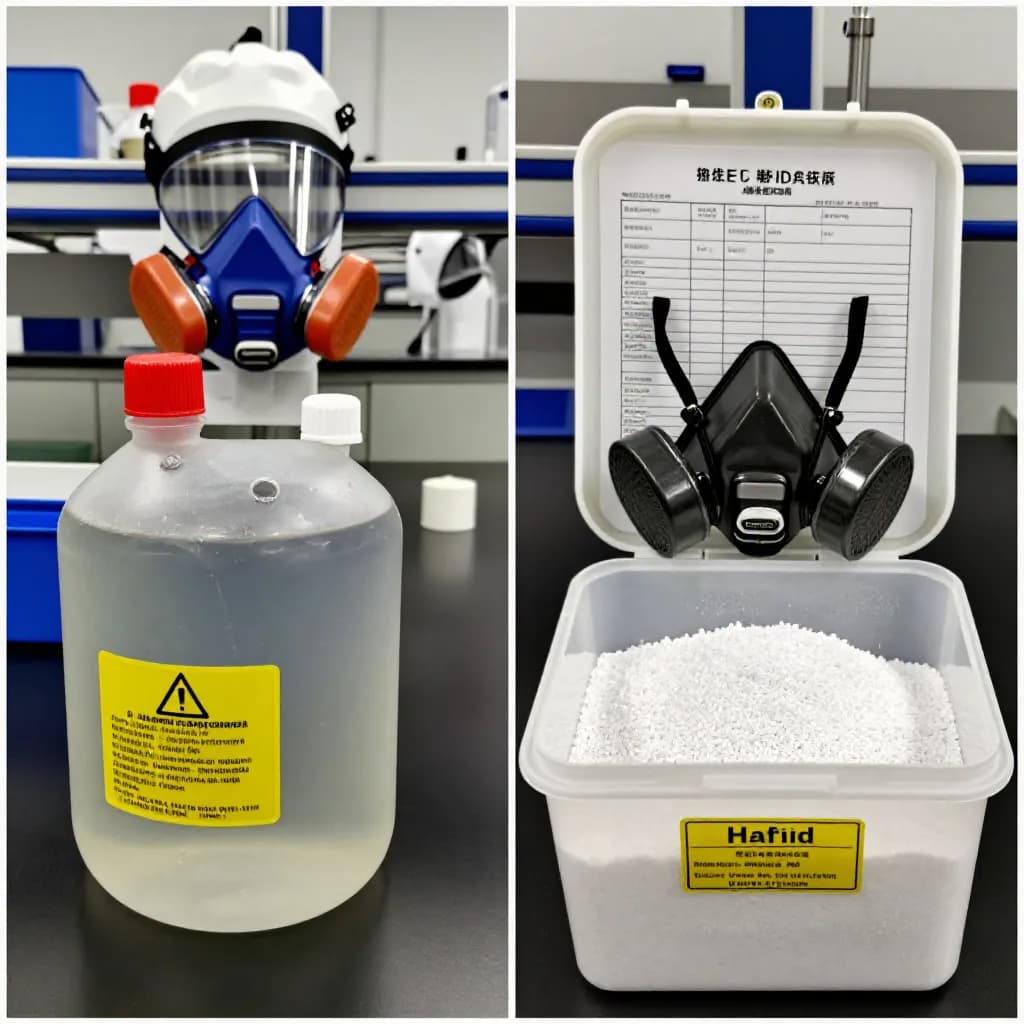
The health concerns associated with isocyanates are well documented and significant. Isocyanates are potent respiratory sensitizers capable of causing occupational asthma, a condition that can develop after repeated low-level exposure and may become permanent even after exposure ceases. The European Agency for Safety and Health at Work identifies isocyanates as one of the leading causes of occupational asthma in industrialized countries. Skin contact can also cause sensitization, and once an individual becomes sensitized, even trace exposures can trigger severe asthmatic reactions.
Ready to Start Your Project?
From one-off customs to 15,000-part production runs — get precise pricing in 24 hours.
On This Page
Isocyanates in Powder Coatings: Uses and Concerns
In powder coating operations, the primary exposure risk occurs during the curing process, when blocked isocyanates release their blocking agents and free isocyanate groups become temporarily available before reacting with the co-reactant resin. Oven exhaust gases may contain both free isocyanates and blocking agent vapors. While exposure levels in well-ventilated powder coating operations are typically lower than in liquid polyurethane spray applications, the potential for sensitization at very low concentrations means that any isocyanate exposure warrants careful management.
Regulatory Framework for Isocyanates
The regulatory landscape for isocyanates has tightened significantly in recent years, with the EU leading the way. EU Regulation 2020/1149, amending REACH Annex XVII, introduced a restriction on diisocyanates that took full effect on August 24, 2023. This restriction requires that all industrial and professional users of products containing diisocyanates at concentrations above 0.1% complete specific training before use. The training must cover safe handling, risk management measures, and emergency procedures, and must be renewed periodically.
The EU restriction applies to powder coatings containing blocked isocyanate crosslinkers, as the diisocyanate content in the formulation typically exceeds the 0.1% threshold. Powder coating manufacturers must ensure that their products are labeled with the statement that training is required, and downstream users — including powder coating applicators — must ensure that all workers handling these products have completed the mandated training. This creates an administrative and cost burden that adds to the total cost of using isocyanate-containing powder coatings.
In the United States, OSHA's permissible exposure limit (PEL) for isocyanates is set at 0.02 ppm as a ceiling concentration for many common isocyanates, with the NIOSH recommended exposure limit (REL) at 0.005 ppm as a time-weighted average. The American Conference of Governmental Industrial Hygienists (ACGIH) has established threshold limit values (TLVs) that are periodically reviewed and may be further reduced. Several US states have additional requirements for isocyanate use, including medical surveillance programs and specific training mandates. The global trend is clearly toward stricter control of isocyanate exposure, increasing the incentive for the powder coating industry to develop and adopt isocyanate-free alternatives.
Non-Isocyanate Polyurethane (NIPU) Technologies
Non-isocyanate polyurethane (NIPU) chemistry represents the most direct approach to replacing isocyanate crosslinkers while maintaining polyurethane-like coating properties. NIPU systems are based on the reaction of cyclic carbonates with amines to form polyhydroxyurethane (PHU) linkages. Unlike conventional polyurethane synthesis, this reaction pathway does not involve isocyanate intermediates at any stage, eliminating the associated health hazards entirely.
The development of NIPU powder coatings has progressed significantly in recent years, with several research groups and coating companies demonstrating viable formulations. Five-membered cyclic carbonates derived from epoxidized vegetable oils or synthesized from CO2 and epoxides offer a particularly attractive feedstock, as they can be produced from renewable resources and utilize carbon dioxide as a raw material. The reaction with polyamines produces coatings with good adhesion, chemical resistance, and mechanical properties, though curing temperatures and times may differ from conventional blocked isocyanate systems.
Challenges remain in bringing NIPU powder coatings to full commercial maturity. The reactivity of cyclic carbonate-amine systems at powder coating processing temperatures requires careful formulation to prevent premature gelation during extrusion while achieving complete cure in the oven. The mechanical properties of PHU coatings, particularly flexibility and impact resistance, are still being optimized to match the performance of conventional polyurethane powder coatings. However, the pace of development is accelerating, driven by both regulatory pressure and growing customer demand for isocyanate-free products.
Alternative Crosslinking Chemistries
Beyond NIPU, several established crosslinking chemistries offer isocyanate-free pathways to high-performance powder coatings. Triglycidyl isocyanurate (TGIC) crosslinked polyester powder coatings have been a mainstay of the industry for decades, providing excellent weathering resistance and mechanical properties without any isocyanate content. However, TGIC itself is classified as a mutagen (Category 2) under EU CLP regulation, which has led to restrictions in some markets and a parallel effort to develop TGIC-free alternatives.
Hydroxyalkylamide (HAA) crosslinkers, particularly beta-hydroxyalkylamide (Primid), provide an isocyanate-free and TGIC-free crosslinking option for polyester powder coatings. HAA-crosslinked systems offer good exterior durability, excellent overbake resistance, and low yellowing, making them suitable for architectural and general industrial applications. The main limitation is somewhat lower chemical and solvent resistance compared to polyurethane systems, which restricts their use in demanding industrial environments.
Glycidyl ester and glycidyl ether crosslinkers offer another isocyanate-free option, reacting with carboxyl-functional polyester resins to produce coatings with good chemical resistance and mechanical properties. Epoxy-polyester hybrid systems, while primarily used for interior applications due to limited UV resistance, provide excellent chemical and corrosion resistance without isocyanates. For applications requiring both exterior durability and chemical resistance, acrylic powder coatings crosslinked with dicarboxylic acids or anhydrides represent a high-performance isocyanate-free option that has been successfully used in automotive clear coats and other demanding applications.
Performance Comparison: Isocyanate vs. Isocyanate-Free Systems
A fair comparison between isocyanate-containing and isocyanate-free powder coatings must consider the specific performance requirements of each application. For general industrial finishing where moderate chemical resistance and good mechanical properties are sufficient, HAA-crosslinked polyester and epoxy-polyester hybrid systems provide fully adequate performance without isocyanates. These systems have been proven over decades of commercial use and represent mature, reliable technologies.
For applications demanding high chemical resistance — such as agricultural equipment, industrial machinery, and chemical processing environments — the performance gap between polyurethane and isocyanate-free alternatives is more significant. Polyurethane powder coatings offer superior resistance to solvents, fuels, hydraulic fluids, and cleaning chemicals compared to most polyester-based systems. However, epoxy novolac powder coatings can match or exceed polyurethane chemical resistance for many specific chemical environments, and ongoing development of NIPU and advanced polyester systems is progressively narrowing the gap.
Weathering performance is another key comparison point. Super-durable polyester powder coatings crosslinked with TGIC or HAA can achieve exterior durability comparable to polyurethane systems for most architectural and outdoor applications. The specific advantage of polyurethane coatings in terms of combined flexibility, chemical resistance, and weatherability is most apparent in demanding applications such as automotive wheels, agricultural equipment, and outdoor furniture exposed to both UV radiation and chemical contact. For these applications, the development of NIPU technology and advanced polyester formulations is particularly important as a pathway to isocyanate-free performance equivalence.
Implementing Isocyanate-Free Transitions
Transitioning from isocyanate-containing to isocyanate-free powder coatings requires careful planning across formulation, production, and customer management dimensions. The first step is a thorough assessment of the current product portfolio to identify which products contain isocyanate crosslinkers and which applications they serve. This assessment should include an evaluation of whether the specific performance attributes provided by isocyanate chemistry are actually required for each application or whether existing isocyanate-free technologies can meet the functional requirements.
Production considerations include potential changes to extrusion parameters, as different crosslinking chemistries may require different processing temperatures and screw speeds. Curing schedules may also change, with some isocyanate-free systems requiring higher temperatures or longer cure times than blocked isocyanate systems. Equipment cleaning procedures between isocyanate and non-isocyanate production runs must be thorough to prevent cross-contamination, particularly if the facility continues to produce both types during a transition period.
Customer qualification is often the most time-consuming element of the transition. End users who have qualified their products and processes with isocyanate-containing coatings may need to requalify with alternative formulations, a process that can take months or years depending on the industry and application. Automotive and aerospace customers, in particular, have lengthy qualification processes. Starting customer discussions early, providing comprehensive test data, and offering trial quantities for evaluation are essential steps in managing a smooth transition that maintains customer confidence and business continuity.
Future Outlook for Isocyanate-Free Powder Coatings
The trajectory toward isocyanate-free powder coatings is driven by converging regulatory, health, and market forces that are unlikely to reverse. The EU's diisocyanate restriction has already increased the cost and complexity of using isocyanate-containing products, and further regulatory tightening is anticipated. The European Commission's Chemicals Strategy for Sustainability signals a broader move toward eliminating hazardous substances from consumer and professional products, and isocyanates — as recognized respiratory sensitizers — are clearly within scope of this policy direction.
Research investment in isocyanate-free coating technologies is at an all-time high. Academic institutions, resin manufacturers, and coating companies are collaborating on NIPU development, advanced polyester crosslinking systems, bio-based alternatives, and novel curing mechanisms that could provide polyurethane-equivalent performance without isocyanate chemistry. The emergence of CO2-derived cyclic carbonates as NIPU building blocks adds a sustainability dimension that aligns with broader decarbonization goals.
For powder coating manufacturers and applicators, the strategic imperative is clear: invest in isocyanate-free capability development now, while isocyanate-containing products remain available, rather than waiting for regulatory deadlines to force rapid and potentially disruptive transitions. Companies that can offer high-performance isocyanate-free alternatives will have a competitive advantage in markets where health and safety considerations increasingly influence specification decisions. The powder coating industry's history of successful chemistry transitions — from TGIC to HAA, from chromate to chrome-free pretreatments — demonstrates that performance-driven reformulation is achievable when the industry commits to the challenge.
Frequently Asked Questions
Why are isocyanates a health concern in powder coatings?
Isocyanates are potent respiratory sensitizers that can cause occupational asthma, even at very low exposure levels. In powder coating operations, exposure can occur during curing when blocked isocyanates release free isocyanate groups. Once sensitized, workers may experience severe reactions to trace exposures, and the condition can be permanent.
What EU regulations affect isocyanate use in powder coatings?
EU Regulation 2020/1149 restricts diisocyanates under REACH Annex XVII, requiring all industrial and professional users of products containing diisocyanates above 0.1% to complete specific training. This applies to powder coatings with blocked isocyanate crosslinkers and took full effect on August 24, 2023.
What are the main isocyanate-free alternatives for powder coatings?
Key alternatives include HAA (hydroxyalkylamide) crosslinked polyester, TGIC crosslinked polyester, epoxy-polyester hybrids, acrylic systems, and emerging non-isocyanate polyurethane (NIPU) technology based on cyclic carbonate-amine chemistry. Each offers different performance profiles suited to specific applications.
Can isocyanate-free coatings match polyurethane performance?
For general industrial applications, existing isocyanate-free technologies provide fully adequate performance. For demanding applications requiring combined chemical resistance, flexibility, and weatherability, a performance gap remains, though NIPU and advanced polyester technologies are progressively closing it.
What is NIPU technology?
Non-isocyanate polyurethane (NIPU) technology produces polyurethane-like coatings through the reaction of cyclic carbonates with amines, forming polyhydroxyurethane linkages without using isocyanate intermediates. This eliminates isocyanate health hazards while targeting similar performance properties.
Ready to Start Your Project?
From one-off customs to 15,000-part production runs — get precise pricing in 24 hours.