Powder coating is widely recognized as one of the most environmentally friendly industrial finishing technologies available. Its environmental advantages stem from three fundamental characteristics: zero volatile organic compound emissions, exceptionally high material utilization through powder reclaim, and the absence of hazardous waste streams that plague liquid paint operations.
Environmental
Is Powder Coating Environmentally Friendly? A Complete Sustainability Analysis
Sundial Powder Coating·April 22, 2026·12 min
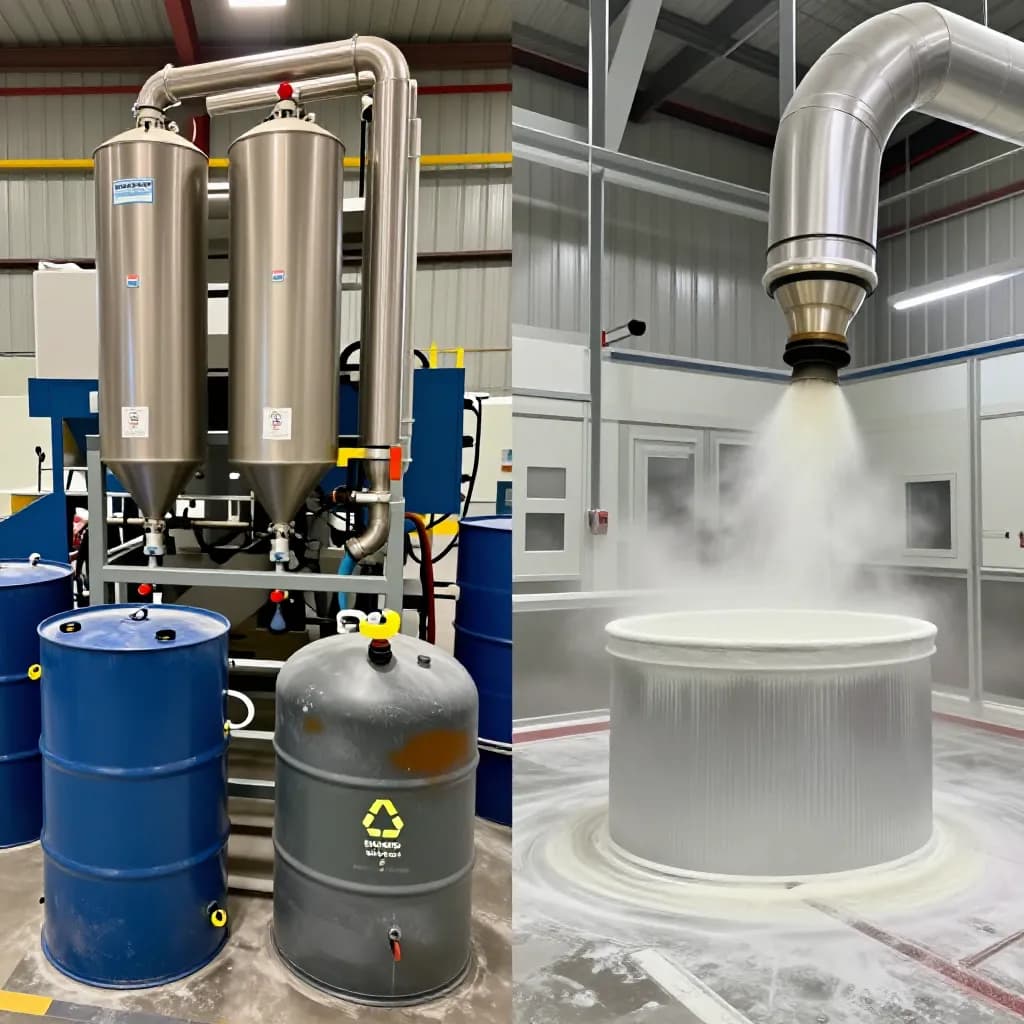
Unlike liquid paints that rely on organic solvents to dissolve resins and control application properties, powder coatings are applied as a dry, solvent-free powder. This single difference eliminates the largest environmental impact associated with conventional painting — the release of VOCs into the atmosphere. VOCs contribute to ground-level ozone formation, smog, and a range of ecological and human health effects that have driven increasingly strict environmental regulations worldwide.
Ready to Start Your Project?
From one-off customs to 15,000-part production runs — get precise pricing in 24 hours.
On This Page
Yes, Powder Coating Is One of the Greenest Finishing Technologies
Beyond the VOC advantage, powder coating's ability to reclaim and reuse overspray powder means that 95 to 98 percent of the coating material ends up on the finished product rather than in a waste stream. Liquid paint operations typically achieve only 30 to 70 percent transfer efficiency, with the remainder lost as hazardous waste requiring specialized treatment and disposal.
These environmental credentials have made powder coating the preferred finishing technology for manufacturers pursuing sustainability certifications, green building credits, and corporate environmental responsibility goals. As environmental regulations continue to tighten globally, the inherent advantages of powder coating position it as the finishing technology most aligned with a sustainable industrial future.
Zero VOC Emissions: The Core Environmental Advantage
The zero-VOC characteristic of powder coating is its most significant environmental benefit and the feature that most clearly distinguishes it from liquid paint. Volatile organic compounds are a major category of air pollutant, and the coatings industry has historically been one of the largest industrial sources of VOC emissions. Liquid paints release solvents during application, flash-off, and curing, contributing to photochemical smog, ground-level ozone, and regional air quality degradation.
Powder coatings eliminate this emission source entirely. Because the coating material contains no solvents, there are no VOCs to release at any stage of the application or curing process. A powder coating line operating at full production capacity produces the same VOC emissions as one that is completely idle — zero. This is not a reduction or a mitigation; it is a complete elimination of an entire pollutant category.
The regulatory implications are substantial. In many jurisdictions, coating operations that exceed VOC emission thresholds must obtain air quality permits, install emission control equipment such as thermal oxidizers or regenerative thermal oxidizers, and conduct ongoing monitoring and reporting. Powder coating operations typically fall below all VOC reporting thresholds, eliminating these regulatory requirements and their associated costs.
For manufacturers comparing the environmental footprint of their finishing options, the VOC difference alone often makes the case for powder coating. When a single liquid paint line can emit tens of thousands of kilograms of VOCs annually, switching to powder coating represents one of the most impactful environmental improvements a manufacturing facility can make.
Powder Reclaim: 95-98% Material Efficiency
The powder reclaim system is a defining feature of powder coating technology and a major contributor to its environmental superiority. During electrostatic spray application, not all powder particles adhere to the workpiece on the first pass. This overspray powder is captured by the booth's recovery system — typically a cyclone separator followed by cartridge or bag filters — and returned to the feed hopper for reuse.
Modern reclaim systems achieve material utilization rates of 95 to 98 percent, meaning that virtually all of the powder purchased ends up as a finished coating on a product. The small percentage that cannot be reclaimed consists of ultra-fine particles that are captured by final filters and color-change waste that occurs when switching between different powder colors.
This efficiency stands in stark contrast to liquid paint operations. Conventional air spray painting achieves transfer efficiencies of only 30 to 50 percent, with the majority of the paint lost as overspray. Even high-efficiency liquid application methods such as electrostatic spray or high-volume low-pressure systems typically achieve only 50 to 70 percent transfer efficiency. The lost paint becomes hazardous waste containing solvents, heavy metals, and other regulated substances that require expensive treatment and disposal.
The environmental mathematics are compelling. For every 100 kilograms of coating material purchased, a powder coating operation puts 95 to 98 kilograms on products and generates 2 to 5 kilograms of non-hazardous waste. A liquid paint operation using conventional spray puts 30 to 50 kilograms on products and generates 50 to 70 kilograms of hazardous waste. This difference in material efficiency translates directly into reduced resource consumption, lower waste generation, and a smaller environmental footprint per coated part.
Energy Consumption: A Balanced Assessment
The energy profile of powder coating requires an honest and balanced assessment. Powder coating does require energy for the curing process, as parts must be heated to temperatures typically between 160 and 200 degrees Celsius for 10 to 20 minutes to achieve full cross-linking of the coating film. This thermal energy requirement is often cited as a potential environmental disadvantage of powder coating.
However, a fair comparison must account for the total energy consumption of the alternative. Liquid paint operations require energy for spray booth ventilation, flash-off zones, baking ovens for thermoset paints, solvent recovery or destruction equipment, and waste treatment systems. When all of these energy inputs are summed, the total energy consumption of a liquid paint line is often comparable to or greater than that of a powder coating line producing equivalent output.
The powder coating industry has also made significant progress in reducing cure energy requirements. Low-temperature cure powder formulations are now available that achieve full cross-linking at temperatures as low as 120 to 140 degrees Celsius, reducing oven energy consumption by 20 to 30 percent compared to standard formulations. UV-curable powder coatings offer even more dramatic energy savings by using ultraviolet light rather than thermal energy to initiate cross-linking, enabling cure times measured in seconds rather than minutes.
Infrared curing technology provides another energy efficiency pathway. IR ovens heat the coating and substrate surface directly rather than heating the entire air volume of a convection oven, reducing energy waste and enabling faster line speeds. Combination IR and convection systems optimize energy use by leveraging the strengths of both heating methods.
Waste Reduction and Hazardous Material Elimination
Powder coating dramatically reduces the volume and hazard classification of waste generated by finishing operations. The primary waste stream from a powder coating operation is non-reclaimable overspray powder, which consists of the same resin, pigment, and additive materials used in the coating itself. In most jurisdictions, this waste is classified as non-hazardous solid waste and can be disposed of through standard industrial waste channels.
Liquid paint operations generate multiple hazardous waste streams including unused paint, contaminated solvents from equipment cleaning, paint sludge from water-wash spray booths, spent filters, and contaminated rags and personal protective equipment. These wastes typically contain regulated substances including organic solvents, heavy metals, and in some cases isocyanates or other reactive chemicals. Disposal requires licensed hazardous waste transporters and treatment facilities, with associated costs and regulatory tracking requirements.
The elimination of solvents from the powder coating process also removes the need for solvent cleaning of application equipment. Powder coating guns, hoses, and booths are cleaned using compressed air and simple mechanical methods, generating no liquid waste. Liquid paint operations require regular solvent flushing of spray guns, pumps, lines, and mixing equipment, generating significant volumes of contaminated solvent waste.
Water usage is another area where powder coating offers environmental advantages. Powder coating application is a completely dry process that uses no water. While the pretreatment stage before powder coating does use water for cleaning and conversion coating, the same pretreatment is required before liquid painting. The application process itself adds no water consumption or wastewater generation to the overall finishing operation.
Environmental Impact Compared to Liquid Paint
A comprehensive lifecycle comparison between powder coating and liquid paint consistently favors powder coating across the major environmental impact categories. Carbon footprint analysis shows that the elimination of solvent production, transport, and emission abatement, combined with higher material efficiency, gives powder coating a lower carbon intensity per square meter of coated surface.
Air quality impact is perhaps the most dramatic difference. A medium-sized liquid paint operation can emit 20,000 to 50,000 kilograms of VOCs annually, contributing to ozone formation and regional air quality degradation. The equivalent powder coating operation emits zero VOCs, completely eliminating this impact category. Even when VOC abatement equipment is installed on liquid paint lines, destruction efficiency rarely exceeds 95 to 98 percent, meaning residual emissions still occur.
Water pollution risk is lower for powder coating operations because there are no solvents that could contaminate groundwater or surface water through spills, leaks, or improper waste disposal. The dry application process eliminates the paint sludge and contaminated water that liquid paint spray booths generate, removing a significant source of water pollution potential.
Soil contamination risk follows a similar pattern. Solvent storage tanks, transfer lines, and waste handling areas at liquid paint facilities represent potential sources of soil contamination that can result in expensive remediation obligations. Powder coating facilities store and handle only dry, non-hazardous powder materials, virtually eliminating soil contamination risk from the coating operation itself.
Resource depletion is reduced through powder coating's superior material efficiency. Using 95 to 98 percent of purchased material versus 30 to 70 percent means that fewer raw materials — resins derived from petrochemicals, mineral pigments, and specialty additives — are consumed per unit of coated product.
Green Building and Sustainability Certifications
Powder coating contributes positively to multiple green building certification systems and corporate sustainability frameworks. In LEED certification, powder-coated products can contribute to credits for low-emitting materials, regional materials, recycled content, and innovation in design. The zero-VOC characteristic is particularly valuable for interior applications where indoor air quality credits are pursued.
BREEAM, the leading European green building assessment method, similarly rewards the specification of low-emission finishing materials. Powder-coated architectural components contribute to credits in the Health and Wellbeing, Materials, and Pollution categories. The absence of hazardous substances in the manufacturing process also supports credits related to responsible sourcing and supply chain management.
Corporate sustainability reporting frameworks including the Global Reporting Initiative and CDP increasingly require companies to disclose their environmental performance across metrics where powder coating excels. VOC emissions, hazardous waste generation, material efficiency, and energy intensity are all standard reporting metrics where switching from liquid paint to powder coating delivers measurable improvements.
Environmental Product Declarations, which provide standardized lifecycle environmental data for building products, consistently show favorable results for powder-coated aluminum compared to liquid-painted alternatives. These EPDs are increasingly required by architects and specifiers for major construction projects and provide third-party verified evidence of powder coating's environmental advantages.
As sustainability requirements continue to intensify across industries, powder coating's environmental credentials position it as the finishing technology most compatible with a low-carbon, low-waste, low-emission manufacturing future.
Frequently Asked Questions
Does powder coating produce any air pollution?
Powder coating produces zero VOC emissions during application and curing, eliminating the primary air pollution concern associated with liquid painting. The only air emissions are trace amounts of combustion byproducts from natural gas-fired curing ovens, which are minimal compared to the solvent emissions from liquid paint operations.
How much powder coating material is wasted?
Very little. Modern powder coating reclaim systems achieve 95-98% material utilization, meaning only 2-5% of purchased powder becomes waste. This waste is classified as non-hazardous in most jurisdictions. By comparison, liquid paint operations waste 30-70% of their material as hazardous waste.
Is powder coating better for the environment than liquid paint?
Yes, across virtually every environmental metric. Powder coating eliminates VOC emissions, achieves 95-98% material efficiency versus 30-70% for liquid paint, generates non-hazardous rather than hazardous waste, and uses no solvents or water in the application process.
Does powder coating help with LEED certification?
Yes. Powder-coated products can contribute to LEED credits for low-emitting materials, recycled content, and innovation in design. The zero-VOC characteristic is especially valuable for interior applications where indoor air quality credits are being pursued.
Can powder coating overspray be recycled?
Yes. Overspray powder is captured by the booth recovery system and returned to the feed hopper for immediate reuse. This reclaim process is what enables the 95-98% material utilization rate that makes powder coating so resource-efficient.
Ready to Start Your Project?
From one-off customs to 15,000-part production runs — get precise pricing in 24 hours.