The aerospace industry presents some of the most demanding coating requirements of any sector. Aircraft and spacecraft operate in environments that combine extreme temperature ranges, intense UV radiation at altitude, exposure to hydraulic fluids and de-icing chemicals, mechanical vibration and flexing, and the corrosive effects of moisture and salt in coastal and maritime operations. Coatings for aerospace applications must perform reliably under these conditions while meeting stringent weight, flammability, and toxicity requirements.
Technical
Powder Coating in Aerospace: Military Adoption, Commercial Aviation, and MIL-Spec Evolution
Sundial Powder Coating·April 23, 2026·11 min
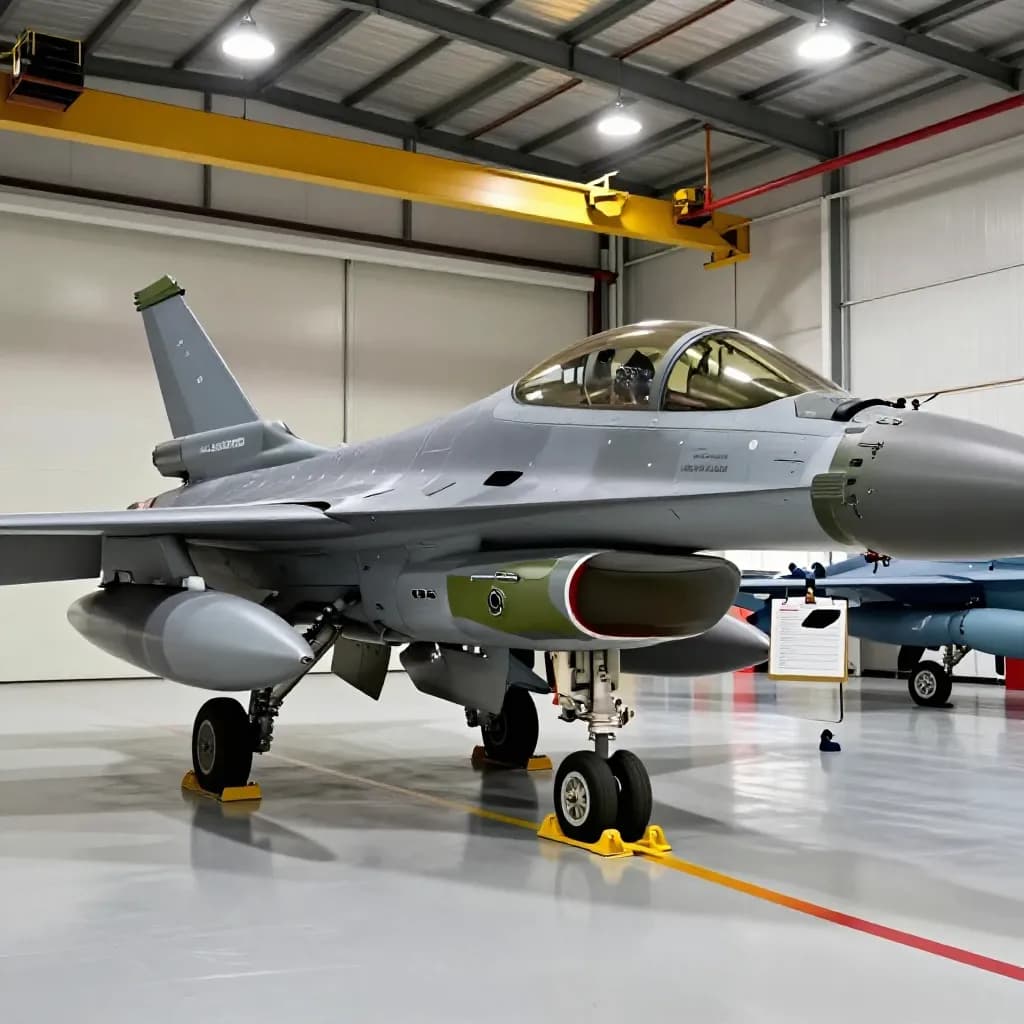
The aerospace coating environment differs fundamentally from terrestrial applications in several ways. At cruising altitude (30,000-40,000 feet), aircraft skin temperatures can drop to -55°C, while ground operations in desert environments can expose the same surfaces to +70°C or higher. This temperature range of over 125°C creates enormous thermal stress on coatings, demanding exceptional flexibility and adhesion across the entire temperature spectrum.
Ready to Start Your Project?
From one-off customs to 15,000-part production runs — get precise pricing in 24 hours.
On This Page
Aerospace Coating Requirements: A Unique Challenge
UV radiation intensity increases with altitude due to the thinner atmosphere, accelerating photodegradation of organic coatings. The combination of high UV exposure and extreme temperature cycling makes aerospace one of the most aggressive weathering environments for any coating system.
Weight is a critical consideration in aerospace that does not apply to most other coating applications. Every kilogram of coating on an aircraft translates directly into fuel consumption over the aircraft's service life. A typical commercial aircraft carries 200-500 kilograms of paint, and reducing this weight by even 10-20% through thinner or lighter coating systems can yield significant fuel savings over millions of flight kilometers.
Flammability requirements for aerospace coatings are among the most stringent in any industry. Coatings must meet FAA and EASA flammability standards that limit flame spread, smoke generation, and toxic gas emission. These requirements significantly constrain the range of coating chemistries that can be used in aircraft interiors and on certain exterior components.
The combination of these requirements has historically limited powder coating's penetration into aerospace compared to other industries. However, the technology has found important niches where its specific advantages — thick film build, excellent corrosion protection, zero VOC emissions, and high material efficiency — outweigh the limitations imposed by the need for oven curing and the weight of thicker films.
Military Adoption: Where Aerospace Powder Coating Began
The military was the first aerospace sector to adopt powder coating, driven by the need for durable, corrosion-resistant finishes on ground support equipment, weapons systems, and non-flight-critical aircraft components. Military adoption began in the 1970s and expanded significantly through the 1980s and 1990s as powder coating technology matured and military specifications were developed to govern its use.
The US Department of Defense recognized powder coating's potential to reduce the environmental impact and health hazards associated with solvent-based military coatings. Military painting operations, which consumed enormous quantities of solvent-based primers and topcoats, were significant sources of VOC emissions and hazardous waste. Powder coating offered a path to compliance with increasingly strict environmental regulations while maintaining or improving coating performance.
MIL-PRF-24712, the military performance specification for powder coatings, was developed to establish requirements for powder coating materials used on military equipment. This specification covers epoxy, polyester, and polyester-epoxy hybrid powder coatings for various military applications, defining requirements for adhesion, flexibility, impact resistance, salt spray resistance, humidity resistance, and chemical resistance.
Military ground vehicles — including trucks, armored personnel carriers, trailers, and support equipment — were among the first military applications to convert from liquid to powder coating. The thick, tough films provided by powder coating offered superior protection against the stone impact, abrasion, and corrosion that military vehicles encounter in field operations. The elimination of solvent handling also simplified coating operations in forward maintenance facilities.
Weapons systems components, ammunition containers, and ordnance handling equipment were specified with powder coatings that provided both corrosion protection and specific functional properties such as electrical insulation, chemical resistance, or low infrared signature. The military's willingness to invest in qualification testing and specification development helped establish the technical foundation for broader aerospace powder coating adoption.
Military aircraft components — including landing gear parts, engine accessories, avionics enclosures, and ground handling equipment — gradually transitioned to powder coating as military specifications were expanded to cover these applications. The qualification process for military aerospace coatings is rigorous and time-consuming, but once qualified, powder coating systems have demonstrated excellent performance in military service.
Commercial Aviation Applications
Powder coating's penetration into commercial aviation has been more gradual than its military adoption, reflecting the commercial aviation industry's conservative approach to material changes and the specific technical challenges of coating large aircraft structures. However, powder coating has established important positions in several commercial aviation application areas.
Aircraft interior components represent the largest commercial aviation market for powder coating. Seat frames, overhead bin structures, galley equipment, lavatory components, and cabin dividers are commonly powder coated with formulations that meet FAA flammability requirements (FAR 25.853). The durability of powder coating — its resistance to scratching, staining, and cleaning chemicals — is particularly valuable in the high-traffic aircraft cabin environment where components must maintain their appearance through years of intensive use.
Cargo handling equipment, including cargo containers (unit load devices or ULDs), cargo loading systems, and baggage handling equipment, is widely powder coated for corrosion protection and durability. These components operate in harsh environments — exposed to weather, impact, and chemical contamination — where powder coating's thick, tough films provide superior protection compared to liquid paint.
Aircraft engine components that operate outside the hot section — including fan cases, accessory gearbox housings, and external engine nacelle components — use powder coatings for corrosion protection and thermal management. Specialized high-temperature powder coatings based on silicone-modified polyester or phenolic resins can withstand the elevated temperatures encountered in the engine environment.
Ground support equipment (GSE) — including aircraft tugs, baggage carts, fuel trucks, de-icing vehicles, and maintenance platforms — is extensively powder coated. The outdoor operating environment of airports, combined with exposure to jet fuel, hydraulic fluid, de-icing chemicals, and mechanical abuse, demands durable coatings that powder technology delivers effectively.
Airport infrastructure — terminal buildings, jet bridges, signage, seating, and architectural metalwork — represents another significant application area where powder-coated aluminum and steel are specified for their combination of durability, aesthetics, and low maintenance requirements.
Weight Savings and Performance Trade-offs
The weight implications of powder coating in aerospace applications require careful analysis. Powder coating's typical film thickness of 60-120 microns is significantly greater than the 25-50 micron films achievable with liquid aerospace coatings, and this additional thickness translates directly into additional weight. For weight-critical flight structures, this difference can be significant.
A typical commercial aircraft has approximately 3,000-4,000 square meters of painted exterior surface area. At a liquid paint system weight of approximately 0.15-0.25 kg/m², the total coating weight is 450-1,000 kg. Replacing this with a powder coating system at 0.30-0.50 kg/m² would approximately double the coating weight — an unacceptable penalty for exterior aircraft surfaces where every kilogram matters.
This weight penalty is the primary reason why powder coating has not been adopted for aircraft exterior surfaces, where liquid chromate primer and polyurethane topcoat systems remain the standard. The aerospace industry's ongoing efforts to develop chrome-free liquid primer alternatives reflect the continued dominance of liquid coatings for this application.
However, for non-weight-critical components — interior fittings, ground support equipment, cargo containers, and structural components where the coating weight is a negligible fraction of the total component weight — the weight penalty of powder coating is insignificant compared to its performance and environmental advantages.
Recent developments in ultra-thin film powder coating technology are beginning to address the weight issue. Powder coatings with median particle sizes of 20-25 microns can achieve smooth, uniform films at 30-50 microns — approaching the thickness range of liquid aerospace coatings. While these thin-film powders are not yet qualified for primary aircraft structures, they represent a potential pathway to broader aerospace adoption.
The weight analysis must also consider the lifecycle perspective. Powder coatings' superior durability may allow longer intervals between repainting, reducing the cumulative weight of coating material applied over the aircraft's service life. And the elimination of solvent-based coating operations reduces the weight of solvents, thinners, and cleaning agents that must be transported and stored at maintenance facilities.
For space applications, where weight penalties are even more severe than in aviation, powder coating is limited to ground support equipment and launch infrastructure. However, the thermal and radiation protection properties of certain powder coating formulations have attracted interest for potential use on non-weight-critical spacecraft components.
MIL-Spec Evolution and Qualification
The development of military and aerospace specifications for powder coatings has been a gradual process, reflecting the conservative nature of aerospace qualification and the need to build a comprehensive performance database before approving new materials for critical applications.
MIL-PRF-24712 remains the primary US military specification for powder coatings, covering Type I (epoxy), Type II (polyester-epoxy hybrid), Type III (polyester-TGIC), and Type IV (polyester-urethane) formulations. The specification defines requirements for physical properties (adhesion, flexibility, impact resistance, hardness), chemical resistance (salt spray, humidity, solvent immersion), and environmental durability (weathering, UV resistance for exterior types).
The qualification process for military powder coatings involves extensive testing against the specification requirements, typically requiring 6-18 months of testing and evaluation. Qualified products are listed on the Qualified Products List (QPL), which identifies specific powder coating products that have been tested and approved for use under the specification. Only QPL-listed products may be used on military contracts that reference the specification.
AMS (Aerospace Material Specifications) published by SAE International provide additional specifications for powder coatings used in aerospace applications. AMS specifications tend to be more application-specific than military specifications, addressing particular performance requirements for specific component types or operating environments.
The transition from hexavalent chromium-based coating systems to chrome-free alternatives has been a major driver of specification evolution in aerospace. Traditional aerospace primer systems rely on strontium chromate or zinc chromate pigments for corrosion inhibition, but the toxicity and carcinogenicity of hexavalent chromium compounds have led to regulatory pressure to eliminate their use. Powder coating, with its chrome-free inhibitive pigment options and inherently thick barrier films, is well-positioned to benefit from this transition.
The European Union's REACH regulation has been particularly influential in driving chrome-free coating development for aerospace. European aircraft manufacturers and their supply chains are actively qualifying chrome-free powder coating systems for components that previously required chromate-containing liquid primers. This regulatory pressure is creating new opportunities for powder coating in aerospace applications that were previously the exclusive domain of liquid chromate systems.
Industry working groups, including those organized by the Powder Coating Institute (PCI) and the National Defense Industrial Association (NDIA), continue to develop and refine specifications for aerospace powder coatings, expanding the range of qualified applications and ensuring that specifications keep pace with advancing technology.
Space and Defense Technology Applications
Beyond conventional aircraft applications, powder coating has found specialized roles in space and advanced defense technology programs where its unique properties address specific technical requirements.
Satellite ground station equipment, including antenna structures, equipment shelters, and cable management systems, is commonly powder coated for long-term outdoor durability. These installations, often located in remote or harsh environments, require coatings that can withstand decades of exposure with minimal maintenance. Powder coating's proven weathering resistance and low maintenance requirements make it ideal for these applications.
Military radar and communications equipment uses powder coatings that provide both environmental protection and specific electromagnetic properties. Radar-absorbing powder coatings, formulated with specialized fillers that attenuate electromagnetic radiation, are used on certain military platforms to reduce radar cross-section. Conversely, radar-transparent powder coatings are used on radome structures and antenna covers where electromagnetic transmission must not be impeded.
Missile and munitions components use powder coatings for corrosion protection during storage, which may extend for decades in military arsenals. The coatings must maintain their protective properties through long-term storage in varying climatic conditions, from arctic cold storage to tropical humidity. Epoxy powder coatings, with their excellent chemical resistance and adhesion, are widely used for these applications.
Launch facility infrastructure — including launch pads, service towers, flame deflectors, and support structures — is subjected to extreme conditions including rocket exhaust, acoustic vibration, and corrosive propellant residues. While the most extreme exposure zones require specialized refractory coatings, the surrounding infrastructure benefits from powder coating's durability and corrosion resistance.
Unmanned aerial vehicles (UAVs or drones), which have proliferated in both military and commercial applications, present interesting opportunities for powder coating. The smaller size and lower operating altitudes of many UAVs reduce the weight sensitivity compared to manned aircraft, while the need for durable, low-maintenance finishes in field operations favors powder coating. Military UAV components including airframe structures, sensor housings, and ground control equipment are increasingly specified with powder coatings.
The defense industry's investment in directed energy weapons, hypersonic vehicles, and advanced materials is creating new requirements for coatings with extreme thermal resistance, electromagnetic properties, and environmental durability. While these cutting-edge applications are currently served primarily by specialized liquid and ceramic coatings, powder coating technology is being evaluated for supporting roles where its manufacturing efficiency and environmental advantages are valued.
The Future of Aerospace Powder Coating
The aerospace powder coating market is poised for growth driven by environmental regulation, chrome-free transition requirements, and advancing powder coating technology. Several developments are likely to expand powder coating's role in aerospace over the coming decades.
The elimination of hexavalent chromium from aerospace coatings, driven by REACH and similar regulations, is creating the most significant near-term opportunity for powder coating in aerospace. As chrome-containing liquid primers are phased out, powder coating systems with chrome-free inhibitive pigments offer a proven alternative that provides excellent corrosion protection without the health and environmental risks of chromium compounds.
Advances in thin-film powder coating technology may eventually make powder competitive for aircraft exterior applications. If powder coatings can consistently achieve 30-40 micron films with the smoothness and appearance quality required for aircraft exteriors, the weight penalty compared to liquid systems would be reduced to acceptable levels. Combined with the environmental and efficiency advantages of powder, this could open the largest remaining aerospace coating market to powder technology.
Additive manufacturing (3D printing) of aerospace components is creating new coating requirements. Many 3D-printed metal parts have rough surface finishes that benefit from the thick, leveling films that powder coating provides. As additive manufacturing becomes more prevalent in aerospace production, the demand for powder coating of 3D-printed components is expected to grow.
Sustainability pressures on the aerospace industry are intensifying. Airlines and aircraft manufacturers are setting ambitious carbon reduction targets that encompass manufacturing operations as well as flight operations. Converting from solvent-based liquid coatings to zero-VOC powder coatings is one of the most impactful steps that aerospace manufacturers and MRO (maintenance, repair, and overhaul) facilities can take to reduce their environmental footprint.
The development of bio-based and recycled-content powder coatings could further strengthen the sustainability case for aerospace powder coating. As the aerospace industry moves toward circular economy principles, coating materials derived from renewable resources or recycled feedstocks will become increasingly attractive.
The next generation of aircraft — including urban air mobility vehicles, electric aircraft, and hydrogen-powered planes — will present new coating challenges and opportunities. These novel aircraft types may have different weight sensitivities, material compositions, and operating environments than conventional aircraft, potentially creating new niches where powder coating's specific advantages are particularly valuable.
Frequently Asked Questions
Why isn't powder coating used on aircraft exteriors?
The primary barrier is weight. Powder coating's typical 60-120 micron film thickness is significantly heavier than the 25-50 micron liquid paint systems used on aircraft. For a commercial aircraft with 3,000-4,000 m² of surface area, this difference adds hundreds of kilograms of weight, directly increasing fuel consumption. Ultra-thin powder technology may eventually address this limitation.
What aerospace components are powder coated?
Common applications include aircraft interior components (seat frames, overhead bins, galley equipment), cargo containers, engine accessories, ground support equipment, landing gear parts, avionics enclosures, and military vehicle components. These are typically non-weight-critical applications where powder coating's durability and corrosion resistance outweigh the weight penalty.
What is MIL-PRF-24712?
MIL-PRF-24712 is the primary US military performance specification for powder coatings, covering epoxy, polyester-epoxy hybrid, polyester-TGIC, and polyester-urethane types. It defines requirements for adhesion, flexibility, impact resistance, salt spray resistance, humidity resistance, and chemical resistance. Products must be tested and listed on the Qualified Products List (QPL).
How is the chrome-free transition affecting aerospace powder coating?
The phase-out of hexavalent chromium coatings under REACH and similar regulations is creating significant opportunities for powder coating in aerospace. Powder coatings with chrome-free inhibitive pigments offer proven corrosion protection without chromium's health risks, making them attractive replacements for traditional chromate-containing liquid primers.
What role does powder coating play in military applications?
Military applications include ground vehicles, weapons systems, ammunition containers, aircraft components, radar equipment, and UAVs. The military adopted powder coating starting in the 1970s for its durability, corrosion resistance, and reduced environmental impact. MIL-PRF-24712 governs qualification and use of powder coatings on military equipment.
Ready to Start Your Project?
From one-off customs to 15,000-part production runs — get precise pricing in 24 hours.