Hydrogen embrittlement (HE) is a metallurgical phenomenon in which atomic hydrogen diffuses into steel and causes a dramatic reduction in ductility and load-bearing capacity, potentially leading to sudden, catastrophic brittle fracture at stress levels well below the steel's normal yield strength. For powder coating operations that process high-strength steel components — fasteners, springs, aerospace parts, automotive safety components, and structural hardware — hydrogen embrittlement represents a serious safety risk that must be understood, prevented, and verified.
Technical
Hydrogen Embrittlement in Powder Coating: High-Strength Steel Risks, Prevention, and Testing
Sundial Powder Coating·April 22, 2026·13 min
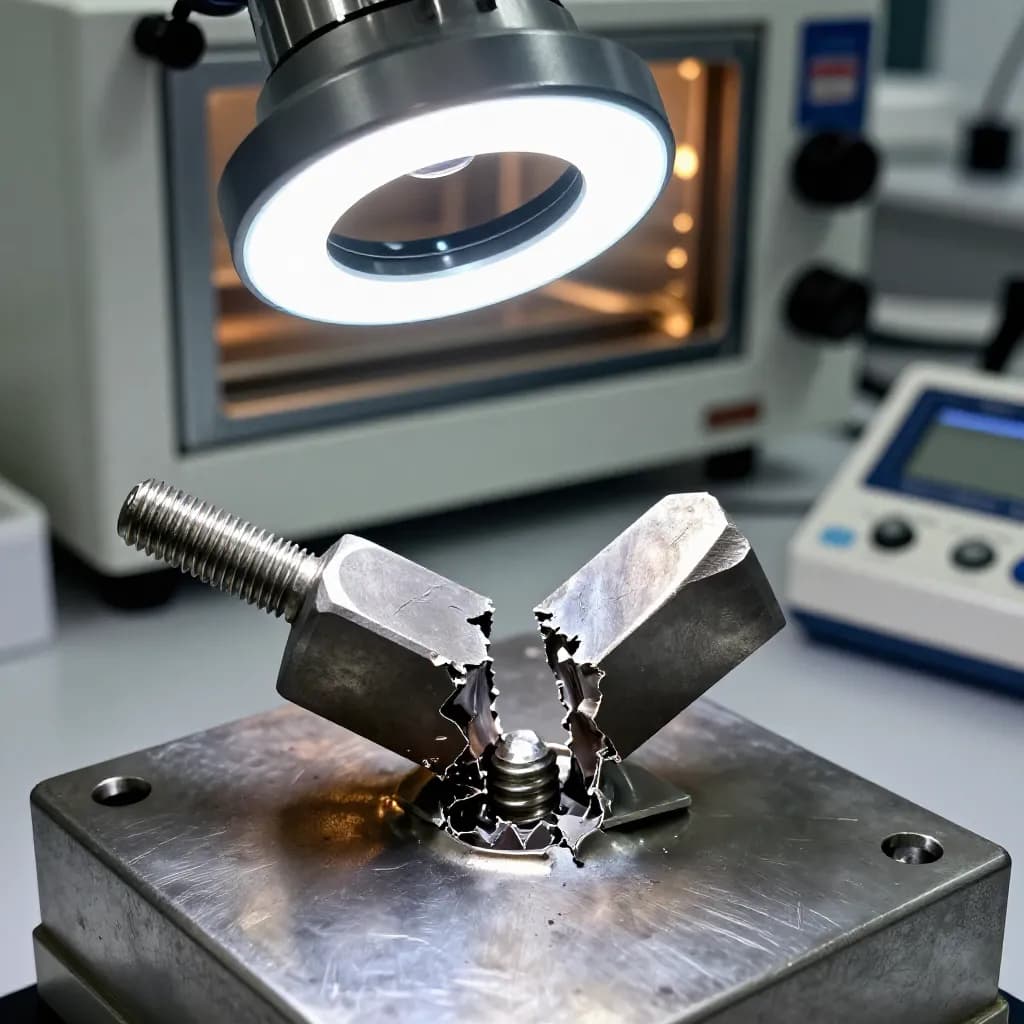
The mechanism of hydrogen embrittlement involves the absorption of atomic hydrogen into the steel's crystal lattice during processes that generate hydrogen at the steel surface. Acid pickling, electroplating, cathodic cleaning, and even corrosion reactions can introduce hydrogen into steel. Once inside the lattice, hydrogen atoms migrate to areas of high stress concentration — grain boundaries, inclusions, crack tips, and dislocation pile-ups — where they weaken the interatomic bonds and promote crack initiation and propagation under applied or residual stress.
Ready to Start Your Project?
From one-off customs to 15,000-part production runs — get precise pricing in 24 hours.
On This Page
What Is Hydrogen Embrittlement and Why Powder Coaters Must Understand It
The susceptibility of steel to hydrogen embrittlement increases dramatically with tensile strength. Steels with ultimate tensile strength below approximately 1,000 MPa (approximately 31 HRC hardness) are generally considered resistant to HE under normal conditions. Steels above 1,000 MPa become increasingly susceptible, and steels above 1,400 MPa (approximately 44 HRC) are highly susceptible and require rigorous hydrogen management throughout all processing steps, including coating.
Powder coating operations encounter hydrogen embrittlement risk primarily through two mechanisms: hydrogen introduction during pretreatment (acid pickling or cathodic cleaning) and the thermal effects of the curing process on hydrogen already present in the steel. Understanding both mechanisms is essential for developing effective prevention strategies.
Hydrogen Sources in the Powder Coating Process
Several steps in the powder coating process can introduce hydrogen into steel or affect the behavior of hydrogen already present in the material.
Acid pickling — immersion in hydrochloric acid, sulfuric acid, or phosphoric acid solutions to remove rust, scale, and surface oxides — is the most significant hydrogen source in coating pretreatment. The acid dissolution of iron generates atomic hydrogen at the steel surface as a byproduct of the electrochemical corrosion reaction. A portion of this hydrogen is absorbed into the steel rather than evolving as gas bubbles. The amount of hydrogen absorbed depends on the acid type and concentration, immersion time, temperature, and the presence of pickling inhibitors. Longer pickling times, higher acid concentrations, and higher temperatures increase hydrogen absorption.
Cathodic cleaning — using the steel part as the cathode in an electrolytic cleaning bath — generates hydrogen at the steel surface through the electrolysis of water. This process can introduce substantial amounts of hydrogen, particularly at high current densities and long treatment times. Cathodic cleaning is sometimes used as a pretreatment step for heavily contaminated or scaled steel parts.
Electroplating processes that precede powder coating — such as zinc plating, cadmium plating, or chromium plating — are major hydrogen sources because the plating process involves sustained cathodic polarization of the steel substrate. Plated high-strength steel parts are among the highest-risk items for hydrogen embrittlement and require mandatory baking treatment after plating.
Phosphating — the conversion coating process commonly used as a pretreatment for steel before powder coating — generates relatively little hydrogen compared to acid pickling, but it is not zero. Iron phosphate and zinc phosphate processes both involve mild acid attack on the steel surface, and some hydrogen absorption occurs. For high-strength steel parts, the hydrogen contribution from phosphating should be considered in the overall hydrogen management strategy.
Abrasive blasting, by contrast, does not introduce hydrogen and is the preferred surface preparation method for high-strength steel components. Blast cleaning removes surface contaminants and creates surface profile without any electrochemical hydrogen generation, making it inherently safe from an HE perspective.
Baking Temperature Effects: Relief and Risk
The curing temperatures used in powder coating — typically 160-200°C for 10-30 minutes — have a dual relationship with hydrogen embrittlement. On one hand, elevated temperature accelerates the diffusion of hydrogen out of steel, providing an opportunity for hydrogen relief (baking out). On the other hand, if the baking temperature and time are insufficient to remove all absorbed hydrogen, the remaining hydrogen can redistribute within the steel during cooling and concentrate at stress points, potentially increasing embrittlement risk.
Hydrogen baking (embrittlement relief baking) is a deliberate heat treatment performed after hydrogen-generating processes to drive absorbed hydrogen out of the steel before it can cause damage. The standard baking treatment specified in most aerospace and automotive standards is 190-230°C for 4-24 hours, depending on the steel strength level, the hydrogen source, and the part geometry. The baking temperature must be high enough to provide adequate hydrogen diffusion rates, and the baking time must be long enough for hydrogen to diffuse from the interior of the part to the surface and escape.
The powder coating cure cycle — typically 180-200°C for 15-20 minutes — provides some hydrogen relief but is generally insufficient to serve as a complete baking treatment for heavily hydrogen-charged parts. The cure time is much shorter than the 4-24 hours specified for dedicated baking treatments, and the hydrogen may not have sufficient time to diffuse from the part interior to the surface during the brief cure cycle. For high-strength steel parts that have undergone acid pickling or electroplating, a dedicated baking treatment before powder coating is essential — the cure cycle alone cannot be relied upon for adequate hydrogen relief.
The timing of baking after hydrogen introduction is critical. Hydrogen embrittlement failures can occur within hours of hydrogen charging if the part is under sustained tensile stress. Industry standards typically require that baking begin within 1-4 hours of the hydrogen-generating process to minimize the risk of embrittlement damage before the hydrogen can be removed. Delays between pickling or plating and baking increase the risk of irreversible hydrogen damage.
For parts that will be powder coated after baking, the baking treatment must be completed before the powder is applied. Applying powder to a part that has not been adequately baked, and then relying on the cure cycle for hydrogen relief, is not an acceptable practice for high-strength steel components.
ASTM F519 and Hydrogen Embrittlement Testing
ASTM F519 — Standard Test Method for Mechanical Hydrogen Embrittlement Evaluation of Plating/Coating Processes and Service Environments — is the primary test standard for evaluating the hydrogen embrittlement risk of coating and plating processes. The test uses standardized high-strength steel test specimens that are processed through the coating operation alongside production parts, then loaded to a sustained tensile stress and monitored for failure over a defined period.
The test specimens are typically AISI 4340 steel heat-treated to 51-53 HRC (approximately 1,800-1,900 MPa tensile strength), which provides high sensitivity to hydrogen embrittlement. Several specimen geometries are defined in the standard, including notched round bars, C-rings, and bent beam specimens, each designed to concentrate stress at specific locations where hydrogen-induced cracking would initiate.
The test procedure involves processing the specimens through the complete coating process — including pretreatment, any plating operations, baking, and powder coating cure — exactly as production parts would be processed. After processing, the specimens are loaded to 75% of their notched fracture strength and held under sustained load for 200 hours (or other specified duration). If any specimen fails during the sustained load period, the process is considered to have caused hydrogen embrittlement, and corrective action is required.
ASTM F519 testing is required by many aerospace specifications (AMS 2759/9, BAC 5748), military specifications (MIL-STD-870), and automotive standards for high-strength steel components. The test provides a direct, practical assessment of whether a specific coating process — with its particular pretreatment chemistry, baking parameters, and cure schedule — introduces unacceptable hydrogen embrittlement risk.
The test is typically performed as part of the initial process qualification and repeated periodically (annually or semi-annually) to verify ongoing process control. Any changes to the pretreatment chemistry, baking parameters, or cure schedule require requalification testing to confirm that the modified process does not introduce hydrogen embrittlement risk.
Other test methods for hydrogen embrittlement assessment include the slow strain rate test (ASTM G129), the incremental step loading test, and the hydrogen content measurement by thermal desorption spectroscopy (TDS). These methods provide complementary information about hydrogen susceptibility and hydrogen content but are generally used for research and development rather than routine process qualification.
Prevention Strategies for Powder Coating Operations
Preventing hydrogen embrittlement in powder coating operations requires a systematic approach that addresses hydrogen introduction, hydrogen removal, and process verification at each step of the coating process.
Minimize hydrogen introduction during pretreatment. For high-strength steel parts, avoid acid pickling whenever possible. Abrasive blasting is the preferred surface preparation method because it introduces no hydrogen. If acid pickling is necessary (for example, to remove heavy scale that cannot be removed by blasting), use the mildest acid concentration and shortest immersion time that achieves adequate cleaning, and add pickling inhibitors that reduce hydrogen absorption. Alkaline cleaning is preferred over acid cleaning for degreasing high-strength steel parts.
Implement mandatory baking after hydrogen-generating processes. Any high-strength steel part (above 31 HRC or 1,000 MPa tensile strength) that has undergone acid pickling, cathodic cleaning, or electroplating must be baked at 190-230°C for a minimum of 4 hours (longer for higher-strength steels and thicker sections) within 1-4 hours of the hydrogen-generating process. The baking must be completed before powder coating application.
Establish clear material identification and segregation procedures. High-strength steel parts must be identified and segregated from lower-strength parts that do not require hydrogen embrittlement precautions. Material certifications, hardness testing, and clear labeling ensure that high-strength parts are routed through the appropriate process path with the required baking and testing steps.
Train personnel on hydrogen embrittlement risks and prevention. All staff involved in pretreatment, coating, and quality control of high-strength steel parts must understand the hydrogen embrittlement mechanism, the process steps that introduce hydrogen, the baking requirements, and the consequences of inadequate hydrogen management. Regular training refreshers and process audits help maintain awareness and compliance.
Maintain documentation and traceability. Records of pretreatment parameters, baking time and temperature, and ASTM F519 test results must be maintained for each batch of high-strength steel parts. This documentation provides evidence of compliance with hydrogen embrittlement prevention requirements and enables root cause investigation if failures occur.
Industry Standards and Specification Requirements
Multiple industry standards and specifications address hydrogen embrittlement prevention in coating operations, and powder coating applicators processing high-strength steel must be familiar with the requirements applicable to their specific markets.
Aerospace standards are the most stringent. AMS 2759/9 (Hydrogen Embrittlement Relief Baking of Steel Parts) specifies baking requirements based on steel strength level, with baking times ranging from 4 hours for steels at 31-39 HRC to 24 hours for steels above 50 HRC. The standard requires baking within 4 hours of the hydrogen-generating process and mandates ASTM F519 testing for process qualification.
Automotive standards address hydrogen embrittlement for safety-critical fasteners and components. ISO 4042 (Fasteners — Electroplated Coatings) and ISO 15330 (Fasteners — Preloading Test for the Detection of Hydrogen Embrittlement) define requirements for plated fasteners that may subsequently be powder coated. The automotive industry's increasing use of advanced high-strength steels (AHSS) in vehicle structures has heightened awareness of hydrogen embrittlement risks in automotive coating operations.
ASTM F2328 (Standard Test Method for Determining Decarburization and Carburization in Hardened and Tempered Threaded Steel Bolts, Screws, Studs, and Nuts) and ASTM F606 (Standard Test Methods for Determining the Mechanical Properties of Externally and Internally Threaded Fasteners) provide additional testing requirements for fasteners that complement the hydrogen embrittlement-specific tests.
Military specifications, including MIL-STD-870 (Cadmium Plating, Low Embrittlement, Electro-Deposition) and MIL-STD-1500 (Cadmium-Titanium Plating, Low Embrittlement, Electro-Deposition), define hydrogen embrittlement prevention requirements for military hardware that may be powder coated after plating.
For powder coating applicators, the key requirement across all these standards is the same: identify high-strength steel parts, minimize hydrogen introduction during pretreatment, perform mandatory baking after any hydrogen-generating process, and verify the effectiveness of the prevention measures through ASTM F519 or equivalent testing.
Case Studies: Hydrogen Embrittlement Failures and Lessons Learned
Hydrogen embrittlement failures in coated high-strength steel components provide valuable lessons for powder coating operations. While specific proprietary case details cannot be disclosed, the general patterns of failure and the lessons they teach are widely documented in the metallurgical and coatings literature.
Fastener failures are the most commonly reported hydrogen embrittlement incidents in coating operations. High-strength bolts (Grade 10.9 and 12.9, corresponding to approximately 33-39 HRC) that have been acid-pickled during pretreatment and not adequately baked before coating can fail under sustained tensile load — sometimes days or weeks after installation. The failure mode is characteristically brittle, with intergranular fracture surfaces that show no evidence of the ductile deformation expected from a properly performing steel at the applied stress level.
The common thread in these failures is a breakdown in the process control system — either the parts were not identified as high-strength steel requiring special handling, the baking step was omitted or performed with inadequate time or temperature, or the delay between pickling and baking exceeded the allowable limit. In many cases, the failure could have been prevented by substituting abrasive blasting for acid pickling, eliminating the hydrogen source entirely.
Spring failures represent another category of hydrogen embrittlement incidents. Springs are typically made from high-strength steel (40-55 HRC) and are under sustained tensile stress in service, making them highly susceptible to hydrogen embrittlement. Springs that are acid-cleaned or electroplated before powder coating require rigorous baking treatment and ASTM F519 verification.
The lessons from these failures are consistent: hydrogen embrittlement prevention requires systematic process control, not ad hoc measures. Every high-strength steel part must be identified, every hydrogen-generating process step must be followed by appropriate baking, and the effectiveness of the prevention measures must be verified through testing. The consequences of failure — sudden, catastrophic fracture of safety-critical components — make hydrogen embrittlement prevention one of the most important quality and safety responsibilities in powder coating operations that process high-strength steel.
Frequently Asked Questions
At what hardness level does steel become susceptible to hydrogen embrittlement?
Steels above approximately 31 HRC (1,000 MPa tensile strength) become susceptible to hydrogen embrittlement, with susceptibility increasing dramatically with strength. Steels above 39 HRC are highly susceptible, and steels above 50 HRC require the most rigorous hydrogen management. Below 31 HRC, hydrogen embrittlement is generally not a concern under normal conditions.
Does the powder coating cure cycle provide adequate hydrogen relief?
Generally no. The typical cure cycle (180-200°C for 15-20 minutes) provides some hydrogen relief but is much shorter than the 4-24 hours required for dedicated baking treatments. For high-strength steel parts that have undergone acid pickling or electroplating, a separate baking treatment before powder coating is essential.
How quickly must baking occur after acid pickling?
Industry standards typically require baking to begin within 1-4 hours of the hydrogen-generating process. Delays increase the risk of irreversible hydrogen damage because hydrogen migrates to stress concentration points and can initiate cracking before it can be removed by baking.
What is the best way to avoid hydrogen embrittlement in powder coating?
The most effective prevention is to avoid hydrogen-generating processes entirely by using abrasive blasting instead of acid pickling for surface preparation. When acid processes cannot be avoided, minimize exposure time, use inhibited acids, perform mandatory baking within 1-4 hours, and verify effectiveness through ASTM F519 testing.
What is ASTM F519 testing?
ASTM F519 is the standard test for evaluating hydrogen embrittlement risk of coating processes. High-strength steel test specimens are processed through the coating operation, then loaded to 75% of their fracture strength and held for 200 hours. Any specimen failure indicates the process causes unacceptable hydrogen embrittlement and requires corrective action.
Ready to Start Your Project?
From one-off customs to 15,000-part production runs — get precise pricing in 24 hours.