Gel time is the measure of how quickly a powder coating crosslinks during the curing process, and it is one of the most important quality control parameters in powder coating manufacturing and application. Defined as the time from when the powder reaches a specified temperature until the molten coating transitions from a liquid to a gelled (semi-solid) state, gel time directly determines the flow window available for leveling and the minimum cure schedule required for full crosslink development.
Technical
Powder Coating Gel Time and Reactivity: Measurement, Impact on Cure, and Troubleshooting
Sundial Powder Coating·April 22, 2026·13 min
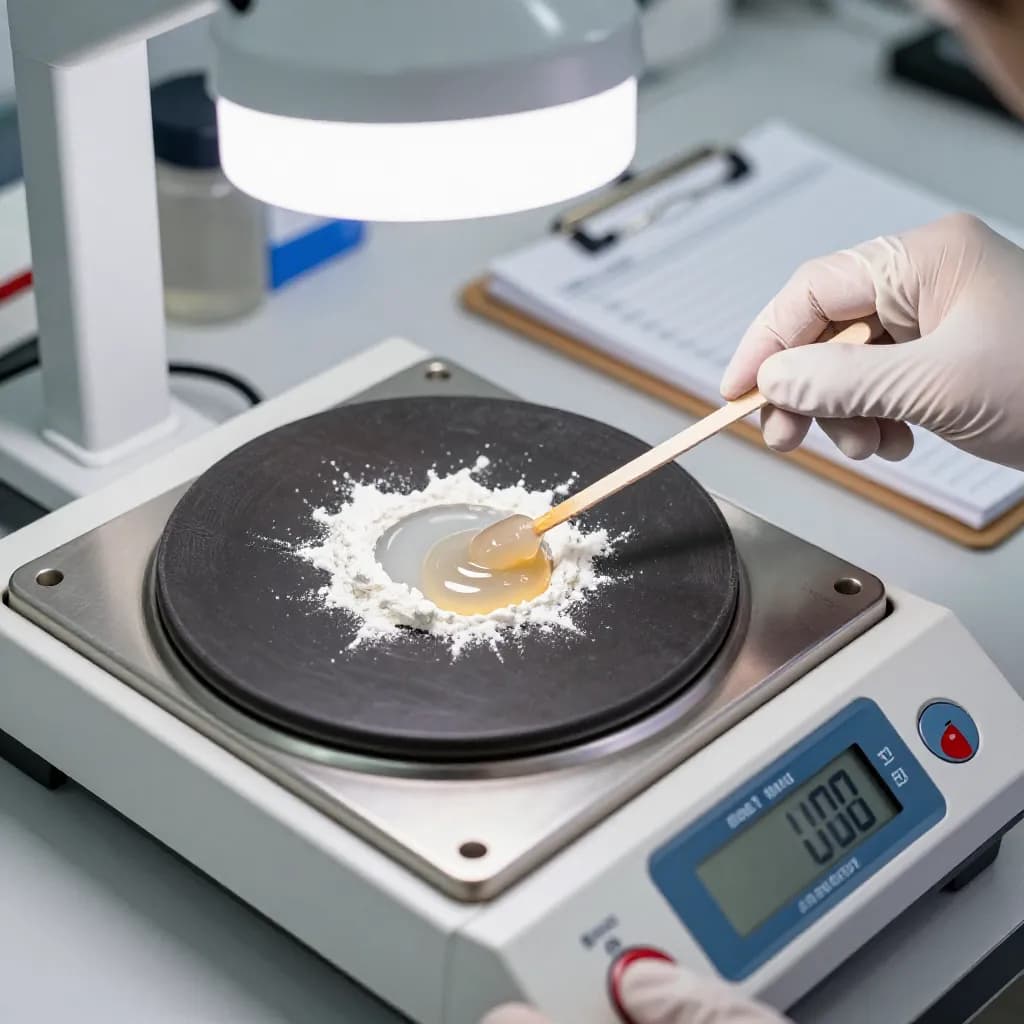
The gel point represents a fundamental change in the physical state of the coating. Before gelation, the molten coating is a viscous liquid that can flow, level, and rearrange under the influence of surface tension and gravity. At the gel point, the crosslinking reaction has progressed to the point where a continuous three-dimensional polymer network spans the entire film, and the coating can no longer flow. After gelation, further crosslinking continues to increase the density and rigidity of the network, but the surface profile is essentially locked in at the gel point.
Ready to Start Your Project?
From one-off customs to 15,000-part production runs — get precise pricing in 24 hours.
On This Page
Gel Time: The Critical Cure Parameter
This means that all flow and leveling must occur before gelation. Any surface irregularities — orange peel texture, particle boundaries, craters, or other defects — that have not been eliminated by the time the coating gels will be permanently frozen into the cured film. The gel time therefore sets an upper limit on the surface quality achievable with a given powder formulation under specific cure conditions.
Gel time is not a fixed property of a powder formulation — it varies with temperature. At higher temperatures, the crosslinking reaction proceeds faster, and gel time is shorter. At lower temperatures, the reaction is slower, and gel time is longer. This temperature dependence means that gel time must always be reported at a specified temperature, and that changes in oven temperature directly affect the flow window and surface quality of the cured coating.
Hot Plate Gel Time Measurement Method
The hot plate method is the most widely used technique for measuring gel time in powder coating production and quality control. The method is simple, rapid, and requires minimal equipment — a temperature-controlled hot plate, a timer, a spatula or wooden stick, and a small quantity of powder. Despite its simplicity, the hot plate method provides practical, reproducible gel time data that correlates well with actual cure behavior in production ovens.
The standard procedure involves heating the hot plate to a specified temperature — typically 180°C, 200°C, or the recommended cure temperature for the specific product. A small quantity of powder (approximately 0.5-1.0 g) is placed on the hot plate surface and immediately begins to melt. The operator uses a pointed wooden stick or metal spatula to continuously stir and probe the melting powder, observing the transition from a free-flowing melt to a stringy, gelled mass. The gel time is recorded as the elapsed time from when the powder is placed on the hot plate until the material can no longer be drawn into strings and instead breaks cleanly when probed.
The gel time endpoint is somewhat subjective, which is the primary limitation of the hot plate method. Different operators may identify the gel point slightly differently, leading to inter-operator variability of ±5-10%. To minimize this variability, operators should be trained using reference samples with known gel times, and the same operator should perform gel time measurements within a production batch for consistency.
Typical gel time values for commercial powder coatings at 200°C range from 60-300 seconds, depending on the chemistry and intended application. Fast-cure formulations for high-speed production lines may have gel times of 30-60 seconds at 200°C, while slow-cure formulations designed for maximum flow and leveling may have gel times of 200-400 seconds. Standard architectural polyester coatings typically fall in the 100-200 second range at 200°C.
The hot plate method can also be used to assess the melt flow behavior of the powder before gelation. Observing how quickly the powder melts, how fluid the melt becomes, and how it wets the hot plate surface provides qualitative information about the flow and leveling potential of the formulation.
DSC Analysis of Cure Reactivity
Differential scanning calorimetry (DSC) provides a more precise and objective measurement of powder coating reactivity than the hot plate method. In a DSC cure analysis, a small powder sample is heated at a controlled rate (typically 10°C/min) while the heat flow is measured. The crosslinking reaction appears as an exothermic peak — a release of heat — that provides detailed information about the onset temperature, peak temperature, and total energy of the cure reaction.
The onset temperature of the cure exotherm indicates the temperature at which crosslinking begins to occur at a measurable rate. For most polyester powder coatings, the cure onset is in the range of 140-170°C. The peak temperature — typically 180-220°C — represents the temperature of maximum reaction rate. The total enthalpy (area under the exothermic peak, measured in J/g) represents the total energy released by the crosslinking reaction and is proportional to the number of crosslinks formed.
DSC provides several advantages over the hot plate method for reactivity characterization. It is objective and instrument-based, eliminating operator subjectivity. It provides quantitative data (onset temperature, peak temperature, enthalpy) that can be statistically analyzed for batch-to-batch consistency. It can detect subtle changes in reactivity that may not be apparent in hot plate testing. And it can be used to assess the degree of cure of finished coatings by comparing the residual exotherm of a cured sample with the total exotherm of the uncured powder.
Isothermal DSC — where the sample is rapidly heated to a fixed temperature and held while heat flow is measured over time — provides a direct measurement of the cure kinetics at a specific temperature. The time to the exothermic peak in an isothermal DSC experiment correlates with the gel time measured by the hot plate method at the same temperature, providing a bridge between the two measurement approaches.
For production quality control, DSC is typically used as a reference method to calibrate and validate hot plate measurements, and for incoming raw material testing of resins and crosslinkers. The hot plate method remains the primary shop-floor tool due to its speed and simplicity, but DSC provides the definitive characterization when discrepancies arise or when precise reactivity data is needed for formulation development.
Impact of Gel Time on Flow, Leveling, and Surface Quality
The relationship between gel time and surface quality is one of the most important practical considerations in powder coating technology. Longer gel times provide more time for the molten coating to flow and level before crosslinking locks in the surface profile, generally producing smoother surfaces with less orange peel texture. Shorter gel times limit the flow window, potentially resulting in rougher surfaces but enabling faster cure cycles and higher production throughput.
The flow window is not simply equal to the gel time. It is the interval between the point where the coating has melted and reached sufficiently low viscosity for effective leveling and the gel point where flow ceases. A powder with a gel time of 150 seconds at 200°C might have an effective flow window of only 60-90 seconds, because the first 30-60 seconds are consumed by melting and viscosity reduction, and the last 30-60 seconds before gelation see rapidly increasing viscosity that limits further leveling.
Oven temperature profile significantly modulates the effective flow window. A rapid temperature ramp brings the coating to its minimum viscosity quickly, maximizing the time available for leveling before gelation. A slow ramp extends the melting phase and may allow the crosslinking reaction to begin before the coating reaches its minimum viscosity, effectively shortening the flow window. Infrared boost zones at the oven entrance can accelerate initial heating without affecting the overall cure schedule, providing a practical way to extend the effective flow window.
For applications requiring premium surface quality — automotive, appliance, and high-end architectural finishes — formulators typically target longer gel times (150-300 seconds at 200°C) combined with low melt viscosity resins and effective flow additives. For industrial applications where surface quality is less critical than production speed, shorter gel times (60-120 seconds at 200°C) enable faster cure cycles and higher throughput. The gel time specification for a given product should be established based on the surface quality requirements of the intended application and the oven capabilities of the target production environment.
Factors Affecting Gel Time in Production
Gel time is influenced by multiple factors in the powder coating manufacturing and application process, and understanding these factors is essential for maintaining consistent cure behavior and coating quality.
Extrusion temperature during powder manufacturing is the most significant production variable affecting gel time. The extrusion process subjects the powder formulation to elevated temperatures (typically 80-110°C) and high shear forces that can initiate partial crosslinking — a phenomenon known as advancement. Higher extrusion temperatures or longer residence times in the extruder advance the cure reaction further, reducing the remaining gel time of the finished powder. Excessive advancement during extrusion can produce powder with unacceptably short gel time, poor flow, and rough surface quality.
Raw material variability — particularly in resin and crosslinker reactivity — directly affects gel time. Batch-to-batch variations in resin acid value, crosslinker purity, and catalyst activity can shift gel time by 10-20% or more. Incoming material testing and gel time verification of each production batch are essential for detecting and compensating for raw material variability.
Powder age and storage conditions can also affect gel time. Powder stored at elevated temperatures undergoes slow advancement of the cure reaction, gradually reducing gel time over the storage period. This aging effect is more pronounced at higher storage temperatures and for more reactive formulations. Powder that has been stored for extended periods (6-12 months) should be retested for gel time before use, particularly if storage conditions were not well controlled.
Moisture absorption by the powder can influence gel time for certain chemistries. HAA-cured polyester systems are particularly sensitive to moisture, which can catalyze the condensation reaction and reduce gel time. Powder that has absorbed moisture during storage in humid conditions may exhibit shorter gel time and different flow behavior than freshly manufactured material.
Catalyst level in the formulation provides a direct lever for gel time adjustment. Many powder coating formulations include cure catalysts — typically tertiary amines, imidazoles, or metal salts — that accelerate the crosslinking reaction. Increasing catalyst level shortens gel time, while decreasing it extends gel time. However, catalyst adjustments must be made carefully because they affect not only gel time but also storage stability, flow behavior, and final film properties.
Troubleshooting Gel Time and Reactivity Problems
Gel time deviations from specification are among the most common quality issues in powder coating production, and they manifest as a range of coating defects that can be traced back to reactivity problems.
Short gel time (faster than specification) typically results from excessive extrusion advancement, elevated storage temperatures, moisture contamination, or raw material variability (higher-than-normal resin acid value or crosslinker reactivity). The symptoms of short gel time include poor flow and leveling (rough, orange-peel surface), reduced gloss, and potentially incomplete wetting of the substrate. In severe cases, the powder may gel before achieving adequate flow, producing a textured surface that resembles a structured or wrinkle finish rather than the intended smooth finish.
To troubleshoot short gel time, first verify the gel time of the powder using the hot plate method at the standard test temperature. If gel time is confirmed short, check extrusion records for temperature excursions, verify raw material lot numbers and incoming test data, and assess storage conditions (temperature, duration). If the powder is marginally short on gel time, increasing oven temperature ramp rate can partially compensate by bringing the coating to minimum viscosity faster, but this is a process workaround rather than a root cause solution.
Long gel time (slower than specification) results from under-catalyzed formulations, low crosslinker loading, or raw material variability (lower-than-normal resin acid value or crosslinker reactivity). Symptoms include excessive flow and sagging on vertical surfaces, edge pull-back on horizontal surfaces, and potentially undercure if the standard cure schedule does not provide sufficient time for complete crosslinking at the longer gel time.
Inconsistent gel time between batches is often the most problematic scenario because it prevents the applicator from establishing stable process parameters. Batch-to-batch gel time variation exceeding ±15% of the target value should trigger investigation of raw material consistency, extrusion process control, and storage conditions. Implementing statistical process control (SPC) for gel time measurement — tracking gel time values on control charts with defined action limits — enables early detection of trends before they result in out-of-specification product.
Advanced Reactivity Characterization Techniques
Beyond the standard hot plate and DSC methods, several advanced analytical techniques provide deeper insight into powder coating reactivity and cure behavior for formulation development and troubleshooting complex cure-related problems.
Dynamic mechanical analysis (DMA) of the curing process — sometimes called cure DMA or rheological DMA — measures the development of storage modulus and loss modulus as the powder melts and crosslinks. The gel point can be precisely identified as the crossover point where storage modulus equals loss modulus (G' = G"), providing an objective, instrument-based gel time measurement. Cure DMA also reveals the rate of modulus development after gelation, which indicates how quickly the coating develops its final mechanical properties.
Rheometry using parallel plate or cone-and-plate geometry provides detailed melt viscosity profiles during the cure cycle. The minimum melt viscosity, the temperature at which it occurs, and the rate of viscosity increase after the minimum all provide information about the flow and leveling potential of the formulation. Comparing viscosity profiles of different formulations or production batches enables quantitative assessment of flow behavior differences that may not be apparent from gel time measurements alone.
Fourier transform infrared spectroscopy (FTIR) can monitor the consumption of reactive functional groups during cure, providing direct chemical evidence of crosslinking progress. For epoxy-acid systems, the disappearance of the epoxide absorption band at 910 cm⁻¹ tracks the cure reaction. For HAA systems, the consumption of carboxyl groups can be monitored. FTIR cure monitoring is particularly valuable for verifying that the intended crosslinking chemistry is occurring and for detecting side reactions or competing reactions that may affect final film properties.
Real-time dielectric analysis (DEA) measures the dielectric properties of the coating during cure, which change as the polymer transitions from a mobile liquid to a rigid crosslinked network. DEA sensors can be embedded in production ovens to provide continuous, real-time monitoring of cure progress on actual production parts — a capability that is not possible with laboratory-based techniques. This technology is used in advanced automotive and aerospace coating operations where cure verification on every part is required for quality assurance.
Frequently Asked Questions
What is a normal gel time for powder coatings?
Typical gel times at 200°C range from 60-300 seconds depending on chemistry and application. Standard architectural polyester coatings are typically 100-200 seconds. Fast-cure industrial products may be 30-60 seconds, while premium appearance products designed for maximum flow may be 200-400 seconds.
How does gel time affect surface quality?
Longer gel times provide more time for the molten coating to flow and level before crosslinking locks in the surface profile, producing smoother surfaces with less orange peel. Shorter gel times limit the flow window, potentially resulting in rougher surfaces but enabling faster production throughput.
Why does gel time change during powder storage?
Powder stored at elevated temperatures undergoes slow advancement of the cure reaction, gradually reducing gel time. This aging effect is more pronounced at higher temperatures and for more reactive formulations. Moisture absorption can also reduce gel time in HAA-cured systems by catalyzing the condensation reaction.
What causes short gel time in production?
Common causes include excessive extrusion temperature causing advancement, elevated storage temperatures, moisture contamination, and raw material variability. Symptoms include poor flow and leveling, rough surface texture, and reduced gloss. Verify gel time by hot plate testing and check extrusion records and storage conditions.
How is DSC used to measure powder coating reactivity?
DSC heats a powder sample at a controlled rate and measures the exothermic heat released during crosslinking. The cure onset temperature, peak temperature, and total enthalpy provide quantitative reactivity data. Isothermal DSC at a fixed temperature provides gel time data that correlates with hot plate measurements.
Ready to Start Your Project?
From one-off customs to 15,000-part production runs — get precise pricing in 24 hours.