CNC machined parts represent a unique challenge in powder coating because they combine the need for corrosion protection and aesthetic finishing with the requirement to maintain the precise dimensional tolerances that the machining process was designed to achieve. A powder coating that adds 60-100 microns to a surface can easily exceed the tolerance band on a precision-machined feature, rendering the part non-functional.
Industrial
Powder Coating for CNC Machined Parts: Precision Tolerances and Critical Surface Masking
Sundial Powder Coating·April 23, 2026·11 min
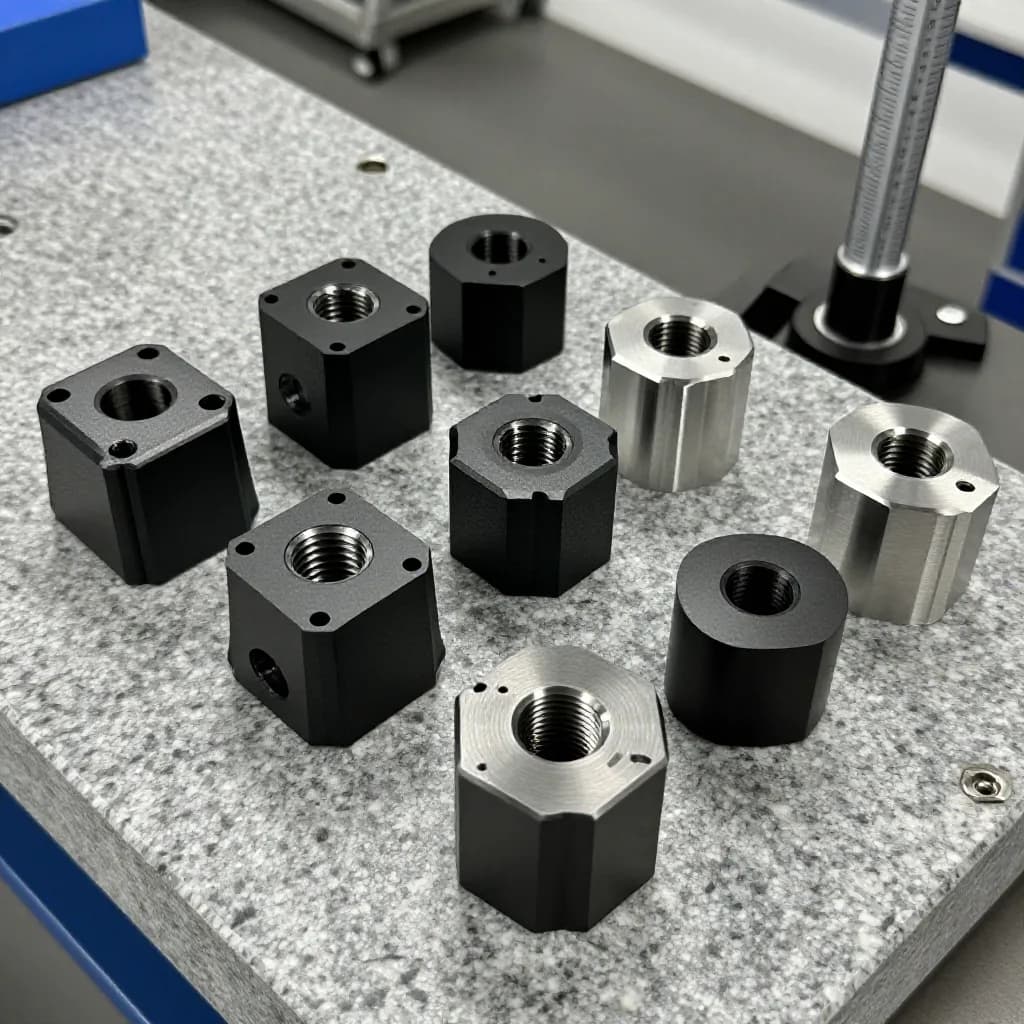
The range of CNC machined parts that require powder coating is vast: hydraulic manifolds, pneumatic valve bodies, instrument housings, medical device enclosures, optical mounting plates, aerospace brackets, and countless other components where machined precision and surface protection must coexist. In many cases, some surfaces require coating for corrosion protection or appearance while adjacent surfaces must remain bare to maintain dimensional accuracy for assembly, sealing, or bearing function.
Ready to Start Your Project?
From one-off customs to 15,000-part production runs — get precise pricing in 24 hours.
On This Page
The Intersection of Precision Machining and Powder Coating
The solution lies in strategic masking — protecting critical machined surfaces from powder deposition while ensuring that all corrosion-prone areas receive adequate coating coverage. This requires close collaboration between the design engineer, the machinist, and the coating applicator to identify which surfaces need coating, which must remain bare, and what tolerances apply to each.
This article provides a comprehensive guide to powder coating CNC machined parts, covering coolant and contamination removal, masking strategies for critical surfaces, dimensional control of coated features, and quality verification methods that ensure both coating performance and dimensional compliance.
Coolant and Contamination Removal from Machined Surfaces
CNC machining operations use cutting fluids — water-soluble coolants, neat cutting oils, semi-synthetic fluids, or minimum quantity lubrication (MQL) mists — to cool the cutting zone, lubricate the tool-workpiece interface, and flush chips from the cutting area. These fluids are essential for machining quality but are the primary source of contamination that must be removed before powder coating.
Water-soluble coolants are the most common cutting fluids in modern CNC operations. These emulsions of oil in water provide good cooling and lubrication at moderate cost, but they leave residues on machined surfaces that are particularly problematic for powder coating. The residues include emulsifiers, biocides, corrosion inhibitors, and dissolved metal fines that can cause adhesion failures, fisheye defects, and discoloration in the cured coating.
Neat cutting oils (straight oils without water) leave a heavier but more uniform contamination layer. These oils are easier to remove with alkaline cleaners than water-soluble coolant residues, but they can penetrate into surface features such as cross-drilled holes, tapped threads, and blind bores where they are difficult to reach with spray cleaning.
The cleaning process for machined parts must be thorough enough to remove all cutting fluid residues from every surface, including internal passages and blind holes. Multi-stage alkaline spray cleaning at 55-70°C is the standard approach, with the number of stages and dwell times adjusted for the contamination level. Ultrasonic cleaning in alkaline solution is particularly effective for parts with complex internal geometries, as the cavitation action penetrates into blind holes and narrow passages that spray cleaning cannot reach.
Chip removal is a prerequisite for cleaning. Machining chips trapped in internal passages, threaded holes, or between mating surfaces will not be removed by chemical cleaning and can cause coating defects or assembly problems. Compressed air blowoff, vacuum cleaning, and manual inspection are used to verify chip removal before the part enters the cleaning process.
For parts machined with MQL (minimum quantity lubrication), the contamination level is much lower than with flood coolant, but the lubricant residue — typically a vegetable-based or synthetic ester oil — can be more tenacious because it is applied in a thin, concentrated film rather than a dilute emulsion. Alkaline cleaning with surfactants specifically formulated for ester-based lubricants ensures complete removal.
Masking Strategies for Critical Machined Surfaces
Masking is the most labor-intensive and quality-critical step in powder coating CNC machined parts. The masking plan must identify every surface that requires protection from powder deposition, select the appropriate masking method for each feature, and ensure that masking can be applied and removed efficiently without damaging the machined surface.
Threaded holes are among the most common features requiring masking on machined parts. Silicone rubber plugs in standard thread sizes (from M3 to M48 and UNC/UNF equivalents) are the most widely used masking solution. The plug is inserted into the threaded hole before powder application and removed after curing. The plug must seal tightly enough to prevent powder infiltration into the threads while being easily removable without damaging the coating on adjacent surfaces.
Bore and shaft surfaces that serve as bearing seats, seal grooves, or press-fit interfaces require masking to maintain their machined dimensions. Expandable silicone plugs, custom-turned metal plugs, or high-temperature masking tape are used depending on the bore diameter, depth, and tolerance requirements. For precision bores with tolerances of ±0.025 mm or tighter, even a thin film of powder that migrates past the mask edge is unacceptable.
Flat mating surfaces — where the machined part bolts to another component with a gasket or O-ring seal — must be masked to maintain flatness and surface finish. Adhesive-backed high-temperature masking tape (polyester or polyimide film rated to 200°C+) provides a thin, conformable mask for flat surfaces. For production volumes, custom die-cut mask shapes that match the mating surface geometry reduce application time and improve consistency.
Dowel pin holes, locating features, and precision bores used for assembly alignment require masking to maintain their positional accuracy and dimensional tolerance. Even a 50-micron coating on a dowel pin hole changes the effective diameter by 100 microns (coating on both sides), which can prevent assembly or compromise alignment accuracy.
The masking plan should be documented on the engineering drawing or in a separate masking instruction sheet that identifies each masked feature, the masking method, and the acceptance criteria for coating encroachment. Photographs or 3D model views showing masked areas help ensure consistent masking across production runs and between different operators.
Dimensional Control: Accounting for Coating Thickness
For machined parts where coated surfaces must meet dimensional specifications, the coating thickness must be accounted for in the machining dimensions. This requires coordination between the design engineer, the machinist, and the coating applicator to ensure that the finished (coated) part meets all dimensional requirements.
The fundamental approach is to machine the part undersize by the expected coating thickness on each coated surface. For a shaft that must be 25.00 mm ±0.05 mm after coating, and the expected coating thickness is 75 microns per side, the machined diameter should be 24.85 mm (25.00 - 2 × 0.075). The tolerance on the machined dimension must account for both machining variation and coating thickness variation.
Coating thickness variation is the key uncertainty in this calculation. Standard powder coating processes produce film thicknesses with a standard deviation of 10-20 microns, meaning that the actual thickness on any given surface may vary by ±20-40 microns from the target. For precision applications, this variation must be added to the machining tolerance budget.
For the tightest tolerance requirements, the coating process can be controlled to reduce thickness variation. Dedicated spray programs optimized for specific part geometries, consistent part orientation on the conveyor, and tight control of powder flow rate and gun-to-part distance can reduce thickness standard deviation to 5-10 microns. In-line thickness measurement with feedback control to the spray system provides the tightest control, though this level of automation is typically justified only for high-volume precision applications.
Post-coating machining is an alternative approach for features where coating thickness variation cannot be adequately controlled. The part is machined to near-final dimensions, powder coated, and then the critical features are finish-machined through the coating to achieve final dimensions. This approach guarantees dimensional accuracy but requires additional machining operations and creates bare metal surfaces at the machined features that may need local touch-up coating or alternative corrosion protection.
For features where the coating serves a functional purpose — such as electrical insulation or wear resistance — the minimum coating thickness must be maintained while staying within the dimensional tolerance. This creates a dual specification: minimum thickness for function and maximum thickness for dimension. The coating process must be capable of consistently producing films within this window.
Application Techniques for Machined Part Geometries
CNC machined parts often feature complex three-dimensional geometries with deep pockets, internal channels, stepped bores, and intersecting features that challenge uniform powder deposition. Application techniques must be adapted to achieve consistent coverage on these complex shapes.
Deep pockets and cavities in machined parts create Faraday cage effects that limit electrostatic powder penetration. For pockets with depth-to-width ratios greater than 1:1, standard corona-charging guns may not achieve adequate coverage on the pocket floor and walls. Tribo-charging guns provide better penetration into recessed features, and reducing gun voltage to 20-40 kV on corona guns allows the powder cloud to penetrate further before being deflected by the Faraday cage effect.
Internal channels and through-holes that require coating present particular challenges. For straight-through holes larger than 10 mm diameter, powder can be applied using lance-type guns inserted into the bore. For smaller holes or blind bores, fluidized bed coating of the preheated part may be the only method that achieves reliable internal coverage.
Stepped features — where a machined surface transitions between different diameters or depths — tend to accumulate excessive powder at the step transition due to electrostatic edge effects. The powder builds up at the sharp internal corner of the step, potentially exceeding the maximum thickness specification. Reducing gun voltage and increasing gun-to-part distance at step transitions helps control buildup, though some thickness variation at steps is inherent to the electrostatic process.
Part orientation during coating significantly affects coverage uniformity. Machined parts should be oriented so that the most critical surfaces face the spray guns directly, with less critical surfaces relying on wrap-around deposition. For parts with critical surfaces on multiple faces, multi-pass application with part rotation between passes ensures complete coverage.
For low-volume or prototype machined parts, manual spray application by a skilled operator provides the flexibility to adjust gun angle, distance, and dwell time for each feature of the part. For production volumes, robotic application with programmed paths optimized for the specific part geometry provides consistent results across large production runs.
The grounding of machined parts is critical for electrostatic powder deposition. Machined surfaces are typically clean and conductive, providing good ground contact through the hanging fixture. However, if the part has been conversion coated (phosphated), the conversion coating layer may increase electrical resistance at the fixture contact point. Ensuring bare metal contact at the hanging point — by masking the contact area during pretreatment or by using sharp-pointed hooks that penetrate the conversion coating — maintains the ground path needed for efficient powder deposition.
Industry-Specific Applications and Requirements
Different industries impose specific requirements on powder-coated machined parts that go beyond general corrosion protection and appearance. Understanding these industry-specific demands is essential for coating applicators serving diverse markets.
Hydraulic and pneumatic components — manifolds, valve bodies, cylinder housings — require coatings that resist hydraulic fluids, compressed air moisture, and the pressure cycling inherent in fluid power systems. Epoxy powder coatings provide excellent resistance to mineral-based hydraulic oils and synthetic fluids. Masking requirements are extensive, as these components have numerous ported connections, seal grooves, and precision bores that must remain uncoated.
Medical device enclosures and housings must meet biocompatibility requirements when the device contacts patients or operators. Powder coatings for medical applications are tested per ISO 10993 (Biological evaluation of medical devices) for cytotoxicity, sensitization, and irritation. The coating must also withstand repeated cleaning and disinfection with hospital-grade chemicals including quaternary ammonium compounds, hydrogen peroxide, and alcohol-based sanitizers.
Aerospace machined components require coatings that meet stringent weight, temperature, and chemical resistance specifications. Aerospace powder coating specifications (such as AMS 2644 for fluorescent penetrant inspection compatibility) define requirements that differ from commercial and industrial standards. Traceability requirements mandate that every coated aerospace part can be traced to specific powder batches, pretreatment chemicals, and process parameters.
Electronics enclosures and instrument housings require coatings that provide EMI shielding compatibility (as discussed in the heat sinks article), environmental sealing, and aesthetic quality for customer-facing products. The coating must be compatible with gaskets, adhesives, and potting compounds used to seal the enclosure, and masked areas for electrical grounding and connector interfaces must be precisely defined.
Food processing equipment components require FDA-compliant coatings meeting 21 CFR 175.300 for incidental food contact. The coating must resist the aggressive cleaning chemicals used in food processing (caustic soda, nitric acid, chlorinated cleaners) and withstand steam sterilization cycles without degradation.
Quality Verification and Documentation
Quality verification for powder-coated machined parts must confirm both coating performance and dimensional compliance — a dual requirement that distinguishes machined part coating from general industrial powder coating.
Dimensional verification of coated features uses the same measurement methods as machined part inspection — coordinate measuring machines (CMM), micrometers, bore gauges, and thread gauges — but measurements are taken on the coated surface rather than the bare metal. The coated dimensions must fall within the specified tolerance range, which accounts for both the machined dimension and the coating thickness.
For critical dimensions, both the machined (pre-coating) and finished (post-coating) dimensions are recorded, allowing the actual coating thickness on each feature to be calculated by difference. This data provides process feedback for optimizing machining offsets and coating parameters to center the finished dimensions within the tolerance band.
Coating thickness measurement on machined parts uses standard magnetic or eddy-current gauges on flat and cylindrical surfaces. For complex geometries where gauge access is limited, ultrasonic thickness measurement or cross-sectional microscopy provides thickness data on features that cannot be measured with contact gauges.
Masking verification confirms that all masked surfaces are free of coating material after mask removal. Visual inspection under adequate lighting identifies any coating encroachment on masked surfaces. For precision features, dimensional measurement of masked surfaces verifies that no coating has migrated past the mask edge. Any coating on masked surfaces must be carefully removed — typically by scraping with a plastic tool to avoid damaging the machined surface — before the part can be accepted.
Documentation for powder-coated machined parts typically includes a coating certificate recording the powder type and batch, pretreatment process, cure parameters (time and temperature), film thickness measurements, adhesion test results, and dimensional inspection results. For aerospace, medical, and other regulated industries, this documentation is retained as part of the part's permanent quality record and must be traceable to specific production lots.
First-article inspection for new machined part coating programs includes comprehensive dimensional verification, coating performance testing (adhesion, thickness, chemical resistance), and process capability analysis to demonstrate that the coating process can consistently produce parts within all specified tolerances.
Frequently Asked Questions
How much does powder coating add to machined part dimensions?
Standard powder coating adds 60-100 microns per surface, meaning a shaft diameter increases by 120-200 microns total. For precision parts, machining dimensions are adjusted to account for coating thickness, or critical surfaces are masked to remain uncoated. Coating thickness variation of ±20-40 microns must be included in the tolerance budget.
How are threaded holes protected during powder coating?
Silicone rubber plugs in standard thread sizes are the most common masking solution. The plug seals the thread from powder infiltration during application and is removed after curing. For production volumes, custom masking fixtures with integrated plugs for all threaded features reduce masking time and improve consistency.
How is CNC coolant removed before powder coating?
Multi-stage alkaline spray cleaning at 55-70°C removes water-soluble coolants and cutting oils. Ultrasonic cleaning is particularly effective for parts with internal passages and blind holes. Chip removal by compressed air or vacuum must precede chemical cleaning. MQL residues may require surfactants specifically formulated for ester-based lubricants.
Can powder coating be machined after application?
Yes. Post-coating machining is used when coating thickness variation cannot meet dimensional tolerances. The part is coated, then critical features are finish-machined through the coating. This guarantees dimensional accuracy but creates bare metal surfaces that may need local touch-up or alternative corrosion protection.
What industries require powder-coated machined parts?
Major industries include hydraulic and pneumatic equipment, medical devices (requiring ISO 10993 biocompatibility), aerospace (AMS specifications), electronics enclosures (EMI shielding compatibility), and food processing equipment (FDA 21 CFR 175.300 compliance). Each industry imposes specific coating performance and documentation requirements.
Ready to Start Your Project?
From one-off customs to 15,000-part production runs — get precise pricing in 24 hours.