Air compressor tanks are pressure vessels that store compressed air at pressures typically ranging from 8 to 15 bar for industrial applications and 6 to 10 bar for portable and consumer units. The combination of internal moisture condensation, external environmental exposure, and the safety-critical nature of pressure containment makes corrosion protection a primary engineering concern. A corroded compressor tank is not merely an aesthetic problem — it is a potential safety hazard that can lead to catastrophic failure, making the external coating an important element of the tank's overall corrosion management strategy.
Industrial
Powder Coating for Air Compressor Tanks: Pressure Vessel Safety, Corrosion, and Industrial Environments
Sundial Powder Coating·April 23, 2026·11 min
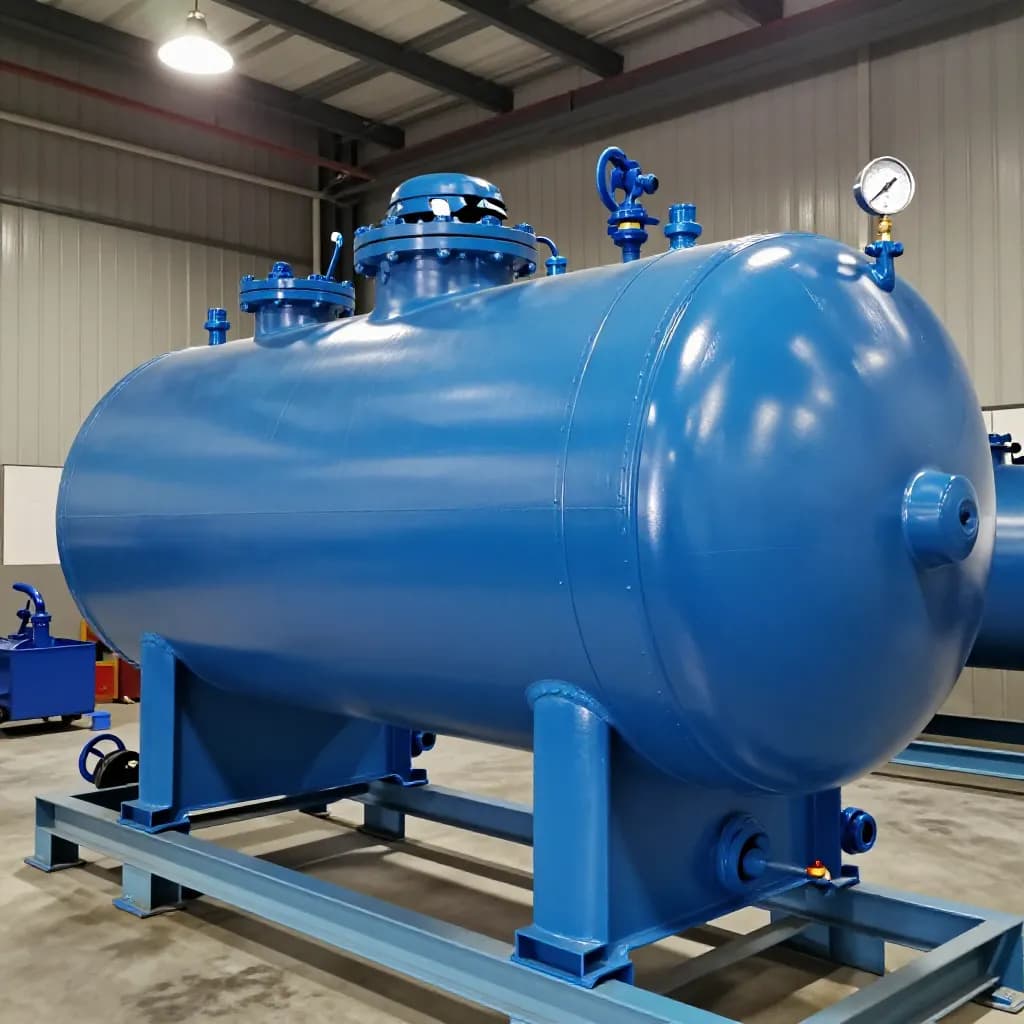
Compressed air systems inherently generate moisture. When ambient air is compressed, its moisture-carrying capacity decreases, causing water vapor to condense inside the tank. This condensate collects at the bottom of the tank and creates a persistently wet environment that accelerates internal corrosion. While internal corrosion is managed through drain valves, internal coatings, and air dryer systems, external corrosion is the responsibility of the powder coating applied to the tank's outer surface.
Ready to Start Your Project?
From one-off customs to 15,000-part production runs — get precise pricing in 24 hours.
On This Page
Why Air Compressor Tanks Need Superior Corrosion Protection
External corrosion threats vary dramatically by installation environment. A compressor in a climate-controlled factory faces minimal corrosion challenge, while a unit installed in an outdoor enclosure, a coastal facility, or a humid tropical environment faces aggressive corrosion conditions. The powder coating specification must be matched to the intended service environment to provide adequate protection throughout the tank's design life, which is typically 10-20 years for industrial compressors.
Powder coating has become the standard external finish for air compressor tanks because it provides a thick, uniform, pinhole-free barrier that outperforms liquid paint in corrosion resistance, chemical resistance, and mechanical durability. The electrostatic application process ensures complete coverage of the tank's cylindrical geometry, and the thermoset cure produces a dense film that resists moisture permeation more effectively than air-dried liquid coatings.
Pressure Vessel Safety and Coating Integrity
Air compressor tanks are classified as pressure vessels and are subject to design, manufacturing, and inspection standards that vary by jurisdiction. In North America, ASME Boiler and Pressure Vessel Code Section VIII governs pressure vessel design and construction. In Europe, the Pressure Equipment Directive (PED) 2014/68/EU applies. These standards focus on structural integrity, but the external coating plays a supporting role in maintaining that integrity by preventing corrosion-induced wall thinning.
Wall thinning from external corrosion reduces the pressure-containing capability of the tank. A tank designed with a specific wall thickness to contain its rated pressure has a defined corrosion allowance — typically 1-2 millimeters of additional wall thickness beyond the minimum required for pressure containment. If external corrosion consumes this allowance, the tank must be taken out of service. The powder coating's role is to prevent or minimize external corrosion, preserving the corrosion allowance and extending the tank's safe service life.
Coating integrity at weld seams is particularly important for pressure vessel safety. Longitudinal and circumferential weld seams are the highest-stress areas of the tank and are also the most susceptible to corrosion due to the metallurgical changes in the heat-affected zone. The powder coating must achieve full coverage and adhesion over weld beads, which requires proper weld preparation — grinding weld spatter, blending weld crowns, and ensuring smooth transitions between the weld and parent metal.
Inspection access is a practical consideration for coated pressure vessels. Periodic inspection of the tank's external surface for corrosion is required by most pressure vessel codes, and the coating must not obscure signs of substrate degradation. Light-colored coatings make rust staining and blistering more visible than dark colors, supporting inspection effectiveness. Some operators specify a light gray or white base coat specifically to facilitate visual inspection of the tank surface.
The coating must not interfere with pressure relief devices, drain valves, gauge connections, or any other fittings that penetrate the tank shell. These areas are masked during coating to maintain proper sealing surfaces and thread engagement. The transition zone between coated and uncoated surfaces at fitting locations should be sealed with appropriate thread sealant or gasket compounds during assembly.
Humidity and Condensation Challenges
Air compressor installations frequently operate in high-humidity environments — outdoor installations, tropical climates, food processing plants, car washes, and underground mining operations all expose compressor tanks to persistent moisture that challenges coating adhesion and accelerates corrosion at any coating defect.
Condensation on the external tank surface is a common occurrence in humid environments, particularly when the compressed air inside the tank is cooler than the ambient dew point. This happens most frequently during compressor shutdown periods when the tank cools and moisture from the surrounding air condenses on the cold metal surface. The condensate can pool at the bottom of horizontal tanks and at support saddle contact points, creating localized corrosion cells that attack the coating from the outside.
The powder coating specification for humid environments should emphasize moisture barrier properties and adhesion retention under wet conditions. Epoxy powder coatings provide the best moisture barrier performance due to their dense crosslink structure and low moisture permeability, but their poor UV resistance limits them to indoor or shaded installations. For outdoor compressor tanks in humid climates, a dual-coat system — epoxy primer for moisture barrier plus polyester topcoat for UV resistance — provides the best combination of properties.
Pretreatment quality is especially critical for compressor tanks in humid environments. The conversion coating must provide a robust adhesion foundation that resists undermining by moisture at the coating-substrate interface. Zinc phosphate pretreatment on steel tanks provides superior moisture resistance compared to iron phosphate, with the crystalline zinc phosphate layer acting as a secondary moisture barrier beneath the powder coating. For tanks destined for severe humidity exposure, a minimum of 1000 hours salt spray resistance per ASTM B117 should be specified.
Support saddle and mounting bracket contact points are vulnerable areas where moisture can become trapped between the tank surface and the support structure. These areas should receive extra coating attention — either increased film build or supplementary corrosion protection such as zinc-rich primer — and the support design should allow drainage and air circulation to prevent moisture accumulation.
Industrial Environment Coating Specifications
Air compressors operate across a wide range of industrial environments, each presenting specific coating challenges. The coating specification should be tailored to the installation environment rather than applying a generic industrial specification that may be inadequate for aggressive conditions or unnecessarily conservative for benign environments.
Factory and workshop installations represent the baseline environment. Indoor, climate-controlled spaces with moderate humidity and minimal chemical exposure require standard polyester powder coating at 60-80 microns over iron phosphate pretreatment. This specification provides adequate corrosion protection for 10-15 years of indoor service with minimal maintenance. The primary threats in this environment are mechanical damage from shop activity and occasional cleaning chemical contact.
Outdoor installations face UV radiation, rain, temperature cycling, and potentially salt spray in coastal areas. The coating specification should upgrade to super-durable polyester at 70-90 microns over zinc phosphate pretreatment, with a minimum of 750 hours salt spray resistance. UV-stable pigments and HALS additives ensure color and gloss retention for 5-7 years of outdoor exposure. For coastal installations within 5 kilometers of saltwater, the specification should increase to 1000 hours salt spray resistance and consider a dual-coat epoxy-polyester system.
Chemical processing environments expose compressor tanks to airborne chemical vapors, acid mists, and alkaline cleaning solutions. The specific chemicals present determine the coating selection — epoxy coatings for acid and solvent resistance, polyester for UV and weathering resistance, or specialized formulations for specific chemical exposures. Chemical resistance testing with the actual chemicals present in the installation environment is essential for reliable specification.
Food and beverage processing installations require coatings that meet food-contact safety standards even though the compressor tank itself does not contact food. Regulatory requirements and customer expectations in food processing demand coatings that are free of heavy metals, do not support microbial growth, and can withstand the aggressive cleaning and sanitization protocols used in food facilities. Smooth, non-porous powder coatings in light colors that show contamination are preferred for food processing compressor installations.
Mining and heavy industrial environments present the most aggressive coating challenge, combining high humidity, chemical exposure, abrasive dust, and heavy mechanical abuse. Compressor tanks in these environments should specify maximum corrosion protection — zinc phosphate pretreatment, epoxy primer, and polyester topcoat at a total system thickness of 120-180 microns, with 1500 hours or more salt spray resistance.
Tank Geometry and Application Considerations
Air compressor tanks have cylindrical geometries that present specific powder coating application challenges different from flat panel or complex fabrication work. The curved surfaces, welded end caps, and multiple fitting penetrations require adapted application technique to achieve uniform coverage and specified film builds.
Horizontal cylindrical tanks — the most common configuration — are typically coated while rotating on a horizontal axis. The rotation ensures uniform powder deposition around the circumference and prevents gravity-induced thickness variation that would occur on a stationary horizontal cylinder. Rotation speed should be slow enough to allow electrostatic attraction to deposit powder uniformly — typically 2-5 revolutions per minute — but fast enough to prevent excessive buildup on the bottom surface.
Vertical tanks present different challenges. The upper dome receives adequate powder from overhead guns, but the lower sections and the bottom dome may be difficult to reach, particularly on tall tanks. Manual application with extended-reach guns or the use of bottom-mounted reciprocating guns ensures coverage on lower tank surfaces. The bottom dome is particularly important to coat thoroughly because it is the area most likely to accumulate external condensation and contact standing water.
Weld seam coverage requires attention on all tank configurations. Circumferential weld seams between the cylindrical shell and the end caps create raised features that can cause powder to thin at the weld toe — the transition between the weld bead and the parent metal. This thinning creates a corrosion-vulnerable zone at the highest-stress location on the tank. Proper weld preparation — grinding the weld crown to a smooth profile and blending the weld toes — combined with manual touch-up application at weld seams ensures adequate coverage.
Fitting bosses, drain connections, and nameplate areas create masking requirements that must be carefully managed. Over-masking leaves unprotected areas around fittings, while under-masking allows powder to contaminate sealing surfaces and threads. Custom masking plugs sized to each fitting type provide consistent, repeatable masking that protects critical surfaces while allowing maximum coating coverage on the surrounding tank surface.
The tank's support saddles or mounting feet are typically welded to the tank before coating, and the coating must cover the saddle-to-tank weld joint completely. The crevice between the saddle and the tank surface is a natural moisture trap and corrosion initiation site — thorough powder penetration into this crevice is essential for long-term protection.
Color, Marking, and Identification Requirements
Air compressor tanks use color and marking to communicate safety information, identify the contained medium, and maintain brand identity. The powder coating must support all of these communication functions with durable, accurate colors and clear marking surfaces.
Pressure vessel color coding varies by jurisdiction and industry. In many industrial settings, compressed air systems are identified by specific pipe and vessel colors — often blue or light blue per ISO 5765 or ANSI/ASME A13.1 for compressed air identification. However, compressor tank colors are more commonly determined by the manufacturer's brand identity than by medium identification codes, with the compressed air identification applied to the piping system rather than the tank itself.
Safety markings on compressor tanks include the pressure rating, maximum allowable working pressure, manufacturer identification, serial number, and inspection dates. These markings must remain legible throughout the tank's service life and are typically applied as engraved nameplates, stamped markings, or durable adhesive labels on the coated surface. The powder coating provides a smooth, uniform background that supports clear marking legibility. Light-colored coatings provide better contrast for dark-printed labels and nameplates than dark coatings.
Warning labels for high-pressure hazards, hot surface warnings, and electrical hazard indicators must be positioned on the coated surface and must remain adhered and legible for the life of the equipment. The powder coating surface must be compatible with the adhesive systems used on safety labels — some powder coating formulations with high silicone content or very low surface energy can cause label adhesion problems. If silicone-modified coatings are used for other performance reasons, the label application areas should be lightly abraded or treated with adhesion promoter before label application.
Brand colors for major compressor manufacturers — Atlas Copco's blue-green, Ingersoll Rand's gray, Kaeser's yellow, and Sullair's green — are carefully controlled specifications that must be consistent across global production facilities. Powder coating color standards are maintained through spectrophotometric measurement and physical reference panels, with batch-to-batch verification ensuring that compressors manufactured in different facilities are visually identical.
Maintenance, Inspection, and Recoating
Air compressor tanks require periodic inspection as part of pressure vessel safety compliance, and the powder coating condition should be evaluated during these inspections. A proactive coating maintenance program extends the tank's service life and prevents corrosion from compromising the pressure vessel's structural integrity.
Visual inspection of the coating should be performed at least annually, with more frequent inspection in aggressive environments. Key areas to examine include weld seams, support saddle contact zones, the bottom of horizontal tanks where moisture accumulates, and areas around fittings and connections where mechanical damage is most likely. Any coating damage that exposes bare metal should be documented and repaired within the maintenance cycle.
Coating thickness measurement using magnetic thickness gauges provides quantitative data on coating condition. Baseline thickness measurements taken at commissioning establish reference values for comparison during subsequent inspections. Significant thickness reduction — more than 20 percent below the original measurement — may indicate coating erosion or degradation that warrants further investigation.
Touch-up repair of localized coating damage can be performed in the field using two-component epoxy or polyester repair coatings applied by brush or aerosol. The damaged area should be cleaned to bare metal, feathered at the edges of the surrounding intact coating, and primed if the repair coating requires it. While field touch-up does not match the performance of the original factory-applied powder coating, it restores the corrosion barrier and prevents damage progression between major maintenance intervals.
Complete recoating of a compressor tank is a significant undertaking that requires taking the unit out of service, depressurizing and isolating the tank, removing all fittings and accessories, stripping the old coating, repairing any substrate corrosion, and reapplying the full pretreatment and powder coating system. This operation is typically performed at 15-25 year intervals depending on the severity of the service environment and the quality of the original coating and ongoing maintenance.
For compressor fleet operators managing multiple units, tracking coating condition data across the fleet enables predictive maintenance planning. Units in similar environments with similar coating specifications should degrade at similar rates, and outliers — units degrading faster than expected — may indicate installation-specific problems such as chemical exposure, moisture trapping, or inadequate drainage that should be corrected to protect the remaining fleet.
Frequently Asked Questions
Is powder coating safe for pressure vessel tanks?
Yes. Powder coating is the standard external finish for air compressor pressure vessels. The coating protects against external corrosion that could cause wall thinning, preserving the tank's pressure-containing capability. The coating must not interfere with pressure relief devices, drain valves, or inspection access points, which are masked during application.
What causes corrosion on air compressor tanks?
External corrosion results from moisture condensation on the tank surface, humidity exposure, chemical contact, and salt spray in coastal environments. Internal corrosion is caused by moisture condensing from compressed air inside the tank. The powder coating addresses external corrosion, while internal protection relies on drain valves, air dryers, and sometimes internal coatings.
How long does powder coating last on a compressor tank?
With proper pretreatment and appropriate coating selection, powder coating on indoor compressor tanks typically lasts 10-15 years. Outdoor installations in moderate climates achieve 7-12 years. Aggressive environments — coastal, tropical, or chemical processing — may require recoating at 5-8 year intervals. Regular inspection and touch-up of damage extends overall coating life.
What powder coating is best for outdoor compressor tanks?
Super-durable polyester at 70-90 microns over zinc phosphate pretreatment is recommended for outdoor installations. For coastal or high-humidity environments, a dual-coat system with epoxy primer and polyester topcoat at 120-180 microns total provides maximum corrosion and UV protection. Minimum 750-1000 hours salt spray resistance should be specified.
Can you inspect a compressor tank through the powder coating?
Visual inspection for external corrosion is possible through the coating — rust staining, blistering, and coating lifting are visible indicators of substrate corrosion. Light-colored coatings make these signs more visible. Ultrasonic wall thickness measurement can be performed through the coating to check for wall thinning without removing the finish.
Ready to Start Your Project?
From one-off customs to 15,000-part production runs — get precise pricing in 24 hours.