Chemical pretreatment is the foundation of powder coating adhesion and corrosion resistance. No matter how well the powder is applied and cured, the coating will fail prematurely if the substrate surface is not properly cleaned, conditioned, and converted before coating. Chemical pretreatment accomplishes three essential functions: removing contaminants (oils, greases, oxides, and surface soils), creating a conversion coating that provides a chemical bond between the metal substrate and the powder coating, and establishing a surface chemistry that maximizes coating adhesion and corrosion resistance.
Technical
Powder Coating Chemical Pretreatment Stages: 3-Stage, 5-Stage, and 7-Stage Systems Explained
Sundial Powder Coating·April 23, 2026·14 min
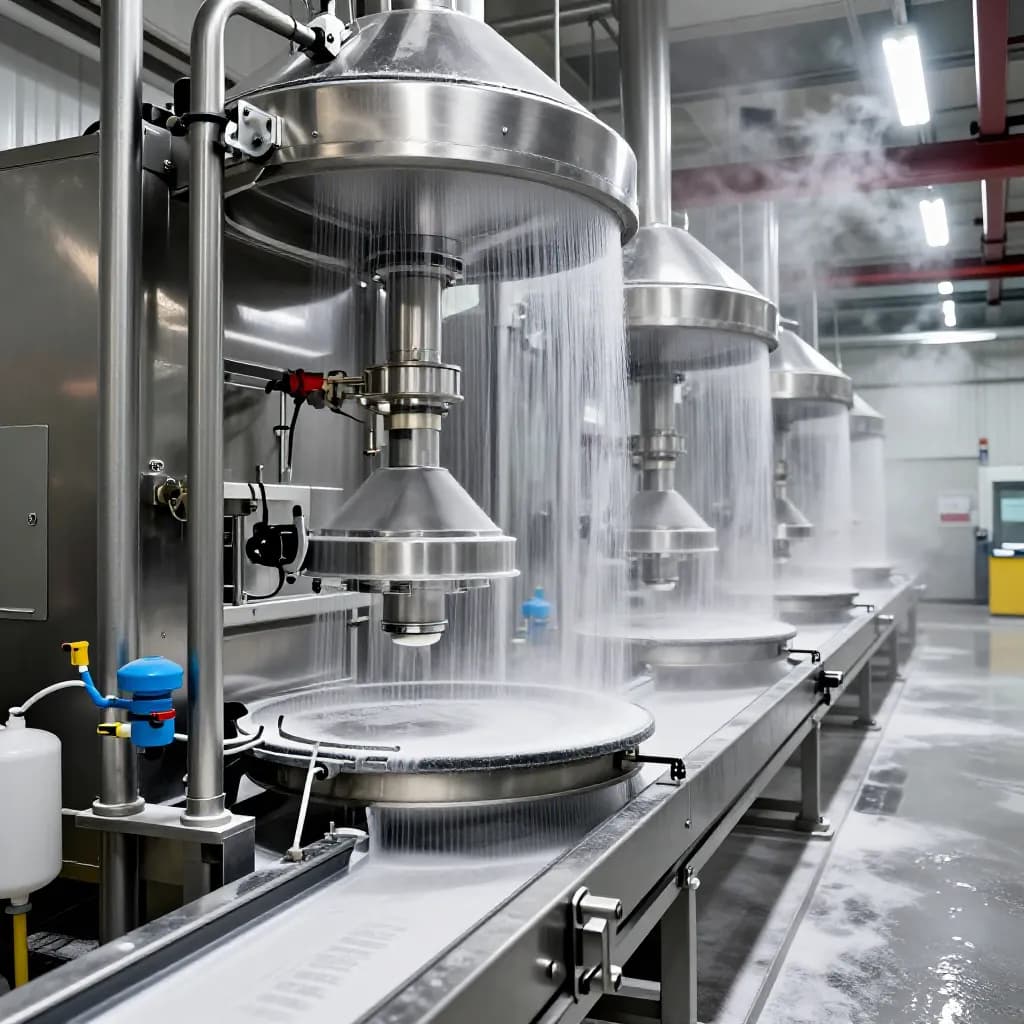
Pretreatment systems are classified by the number of stages — the individual chemical and rinse steps through which parts pass sequentially. The most common configurations are 3-stage, 5-stage, and 7-stage systems, with each additional stage providing incrementally better cleaning, rinsing, and conversion coating quality. The choice of system depends on the performance requirements of the finished product, the substrate material, the types of contaminants present, and the applicable quality standards.
Ready to Start Your Project?
From one-off customs to 15,000-part production runs — get precise pricing in 24 hours.
On This Page
Why Multi-Stage Chemical Pretreatment Matters
For general industrial applications where moderate corrosion resistance is acceptable, a 3-stage system may be sufficient. For automotive, architectural, and appliance applications where long-term durability is critical, 5-stage or 7-stage systems are standard. The investment in additional stages pays for itself through reduced warranty claims, longer product life, and compliance with customer specifications and industry standards such as AAMA 2605, GSB Master, and automotive OEM pretreatment requirements.
3-Stage Pretreatment: Clean, Coat, and Rinse
The 3-stage pretreatment system is the simplest and most economical configuration, consisting of an alkaline cleaner stage, a conversion coating stage, and a fresh water rinse stage. This system is suitable for lightly soiled parts in general industrial applications where moderate adhesion and corrosion resistance are acceptable.
Stage 1 — Alkaline Cleaning: Parts enter an alkaline cleaner bath (pH 9–12) that removes oils, greases, shop soils, and light surface oxides. The cleaner contains surfactants that emulsify oils, builders that sequester hard water minerals, and mild alkaline agents that saponify fatty soils. Bath temperature is typically 50–65°C, with spray or immersion contact times of 60–120 seconds. The cleaner concentration is maintained by titration testing (typically 3–6 points on a standard titration scale) and replenished with chemical additions based on the test results.
Stage 2 — Conversion Coating: The cleaned parts pass through a conversion coating stage, most commonly iron phosphate for steel substrates. The iron phosphate solution (pH 4.0–5.5, temperature 35–55°C) reacts with the steel surface to form a thin, amorphous iron phosphate layer (coating weight 0.3–1.0 g/m²) that provides a chemical bond for the powder coating and mild corrosion inhibition. Stage 3 — Fresh Water Rinse: A final rinse with fresh water removes residual chemicals from the part surface. In a 3-stage system, this rinse uses municipal water, which may leave mineral deposits on the surface. The absence of a dedicated rinse between cleaning and conversion coating means that cleaner dragout contaminates the conversion coating bath, requiring more frequent chemical adjustment and bath maintenance.
5-Stage Pretreatment: Enhanced Cleaning and Rinsing
The 5-stage system adds two rinse stages to the 3-stage configuration, significantly improving cleaning effectiveness, conversion coating quality, and final surface cleanliness. The five stages are: alkaline clean, rinse, conversion coating, rinse, and final seal or DI rinse.
Stage 1 — Alkaline Cleaning: Identical in function to the 3-stage cleaner, but the subsequent rinse stage allows more aggressive cleaning chemistry to be used without concern about dragout contaminating the conversion coating bath. Cleaner concentration and temperature can be optimized for maximum soil removal.
Stage 2 — Rinse: A fresh water rinse removes alkaline cleaner residue from the part surface before the conversion coating stage. This rinse prevents cleaner dragout from raising the pH of the conversion coating bath (which would reduce its reactivity) and removes emulsified oils that would interfere with conversion coating formation. The rinse water is typically municipal water, with overflow to drain controlled by conductivity or timer.
Stage 3 — Conversion Coating: Iron phosphate, zinc phosphate, or zirconium-based conversion coating, applied under optimized conditions without interference from cleaner dragout. The dedicated rinse in Stage 2 allows the conversion coating bath to maintain tighter chemical control, producing more consistent coating weight and crystal structure.
Stage 4 — Rinse: Removes residual conversion coating chemicals and loose reaction byproducts from the part surface. This rinse prevents chemical carryover to the final stage and ensures that only the firmly bonded conversion coating remains on the surface.
Stage 5 — Final Seal/DI Rinse: The final stage applies either a chromate or non-chrome seal rinse that enhances the corrosion resistance of the conversion coating, or a deionized water rinse that removes all remaining dissolved solids from the surface. For modern systems, a non-chrome seal rinse containing zirconium, silane, or organic polymer provides corrosion enhancement without the environmental concerns of hexavalent chromium.
7-Stage Pretreatment: Maximum Performance
The 7-stage system represents the highest level of chemical pretreatment for powder coating, adding a pre-clean stage and an additional rinse to the 5-stage configuration. This system is specified for automotive, aerospace, architectural, and other demanding applications where maximum adhesion, corrosion resistance, and long-term durability are required.
Stage 1 — Pre-Clean (Alkaline Soak or Spray): A preliminary cleaning stage that removes heavy soils, stamping lubricants, and protective oils that would overwhelm the main cleaner. This stage extends the life of the main cleaner bath by removing the bulk of contamination before parts enter the primary cleaning stage. The pre-clean may use a different chemistry than the main cleaner — for example, a high-alkalinity soak cleaner for heavy oils followed by a milder spray cleaner for final surface preparation.
Stage 2 — Alkaline Clean: The primary cleaning stage, operating under optimized conditions with reduced soil loading thanks to the pre-clean stage. This stage achieves the final level of surface cleanliness required for conversion coating.
Stage 3 — Rinse: Removes cleaner residue. May use municipal or recycled water.
Stage 4 — Conversion Coating: Iron phosphate, zinc phosphate, or zirconium-based coating applied under tightly controlled conditions.
Stage 5 — Rinse: Removes conversion coating residue and reaction byproducts.
Stage 6 — Rinse (DI or RO Water): A high-purity rinse using deionized or reverse osmosis water to remove all dissolved solids from the surface. Conductivity is maintained below 20 µS/cm.
Stage 7 — Non-Chrome Seal Rinse: A final seal rinse that deposits a thin passivation layer over the conversion coating, enhancing corrosion resistance by 2–5 times compared to an unsealed conversion coating. Modern seal rinses use zirconium, titanium, or organosilane chemistry to achieve this enhancement without hexavalent chromium.
Process Control and Chemical Testing
Maintaining consistent pretreatment quality requires regular chemical testing and process control at each stage. The critical parameters vary by stage but include concentration, pH, temperature, conductivity, and specific chemical indicators that verify the bath is operating within specification.
Alkaline cleaner testing includes total alkalinity titration (measuring the active cleaning chemical concentration), free alkalinity titration (measuring the available cleaning capacity), pH measurement, and temperature verification. Testing frequency is typically every 4–8 hours during production, with chemical additions made based on the titration results. Oil contamination in the cleaner bath is monitored by measuring the oil split — the point at which emulsified oils separate from the cleaner solution — and the bath is dumped and recharged when oil loading exceeds the cleaner's capacity.
Conversion coating testing includes total acid titration (measuring the overall chemical concentration), free acid titration (measuring the reactive acid available for coating formation), accelerator concentration (for zinc phosphate systems), pH, temperature, and coating weight measurement on test panels. Coating weight is the most direct measure of conversion coating quality and is determined by dissolving the coating from a test panel in chromic acid solution and weighing the panel before and after (per ASTM B680 or equivalent). Target coating weights are 0.3–1.0 g/m² for iron phosphate and 1.5–4.0 g/m² for zinc phosphate. Rinse water quality is monitored by conductivity measurement, with targets specific to each rinse stage. The final rinse conductivity is the most critical measurement and should be continuously monitored with an inline conductivity meter and alarm.
Equipment Configurations: Spray vs. Immersion
Chemical pretreatment systems are configured as either spray washers or immersion systems, each with distinct advantages for different production scenarios. Spray washers use nozzles to direct chemical solutions onto the part surfaces as they pass through enclosed tunnel stages on a conveyor. Immersion systems submerge parts in tanks of chemical solution, either by lowering them on hoists or by passing them through on a conveyor.
Spray washers are the most common configuration for high-volume, conveyor-based powder coating lines. They provide consistent chemical contact across all part surfaces, efficient use of floor space (the tunnel footprint is compact), and easy integration with overhead or floor conveyors. Spray pressure (typically 10–20 psi at the nozzle) provides mechanical cleaning action that supplements the chemical cleaning, improving soil removal on heavily contaminated parts. Nozzle selection, spacing, and orientation must be designed to ensure complete coverage of all part surfaces, including recesses and internal cavities.
Immersion systems provide longer chemical contact times (typically 3–10 minutes vs. 30–120 seconds for spray) and better penetration into complex geometries, blind holes, and internal cavities. They are preferred for parts with complex shapes that spray nozzles cannot reach effectively, and for conversion coating chemistries (particularly zinc phosphate) that require longer reaction times to develop adequate crystal structure. Immersion systems require more floor space than spray tunnels and use larger volumes of chemical solution, but they provide superior pretreatment quality on complex parts. Some systems combine spray and immersion stages — for example, spray cleaning followed by immersion conversion coating — to leverage the advantages of both approaches.
Selecting the Right System for Your Application
Choosing between 3-stage, 5-stage, and 7-stage pretreatment requires evaluating the performance requirements, substrate materials, contamination levels, and applicable quality standards for the specific application. The decision framework considers several key factors.
Performance requirements are the primary driver. If the powder-coated product must pass 500–1,000 hours of salt spray testing per ASTM B117, a 5-stage or 7-stage system with zinc phosphate or zirconium conversion coating is typically required. For products requiring only 250–500 hours of salt spray resistance, a 5-stage system with iron phosphate may be sufficient. For non-critical indoor applications requiring minimal corrosion resistance, a 3-stage system can be adequate.
Substrate material affects the conversion coating chemistry selection. Steel substrates work well with iron phosphate, zinc phosphate, or zirconium chemistries. Aluminum requires specialized chemistries — chromate conversion (being phased out), non-chrome conversion (zirconium or titanium based), or chromium phosphate. Multi-metal operations that process both steel and aluminum on the same line require conversion coating chemistries that are effective on both substrates — zirconium-based systems are the leading choice for multi-metal compatibility.
Contamination levels determine whether a pre-clean stage is necessary. Parts with heavy stamping oils, drawing compounds, or rust-preventive coatings benefit from a 7-stage system with a dedicated pre-clean. Parts with light machine oil or minimal contamination can be adequately cleaned in a 5-stage system. Environmental and regulatory considerations also influence the choice — zinc phosphate systems generate more sludge and require more complex wastewater treatment than iron phosphate or zirconium systems, which may favor the newer chemistries in regions with strict discharge regulations.
Frequently Asked Questions
What is the difference between 3-stage and 5-stage pretreatment?
A 3-stage system has clean, conversion coat, and rinse. A 5-stage system adds a rinse between cleaning and conversion coating (preventing cross-contamination) and a final seal or DI rinse. The 5-stage system produces significantly better adhesion and corrosion resistance due to cleaner conversion coating conditions and better final surface quality.
When is a 7-stage pretreatment system necessary?
A 7-stage system is specified for demanding applications requiring maximum corrosion resistance — automotive, aerospace, and architectural products that must pass 500–1,000+ hours of salt spray testing. The additional pre-clean and high-purity rinse stages provide the cleanest possible surface for conversion coating and sealing.
How do you test conversion coating quality?
Conversion coating quality is measured by coating weight — dissolving the coating from a test panel in chromic acid and weighing before and after per ASTM B680. Target weights are 0.3–1.0 g/m² for iron phosphate and 1.5–4.0 g/m² for zinc phosphate. Bath chemistry is monitored by total acid and free acid titrations.
Is spray or immersion pretreatment better?
Spray washers are better for high-volume production with simple part geometries — they are compact and provide mechanical cleaning action. Immersion systems are better for complex parts with blind holes and internal cavities that spray cannot reach. Many systems combine both approaches for optimal results.
How often should pretreatment chemicals be tested?
Chemical testing should be performed every 4–8 hours during production for cleaner and conversion coating baths. Rinse water conductivity should be monitored continuously with inline meters. Coating weight on test panels should be checked at least once per shift. More frequent testing is required during high-production periods or when processing heavily contaminated parts.
Ready to Start Your Project?
From one-off customs to 15,000-part production runs — get precise pricing in 24 hours.