Pretreatment is the unsung hero of military coating performance. While topcoats and primers receive most of the attention in military coating specifications, the pretreatment layer — the chemical or mechanical preparation applied directly to the bare metal substrate — is arguably the most critical factor in determining the long-term durability and corrosion resistance of the entire coating system. A perfectly applied CARC topcoat over an excellent epoxy primer will fail prematurely if the pretreatment is inadequate, while a properly pretreated surface provides the foundation for decades of reliable coating performance.
Technical
Military Coating Pretreatment: MIL-DTL-5541 and Conversion Coating Standards
Sundial Powder Coating·April 20, 2026·12 min
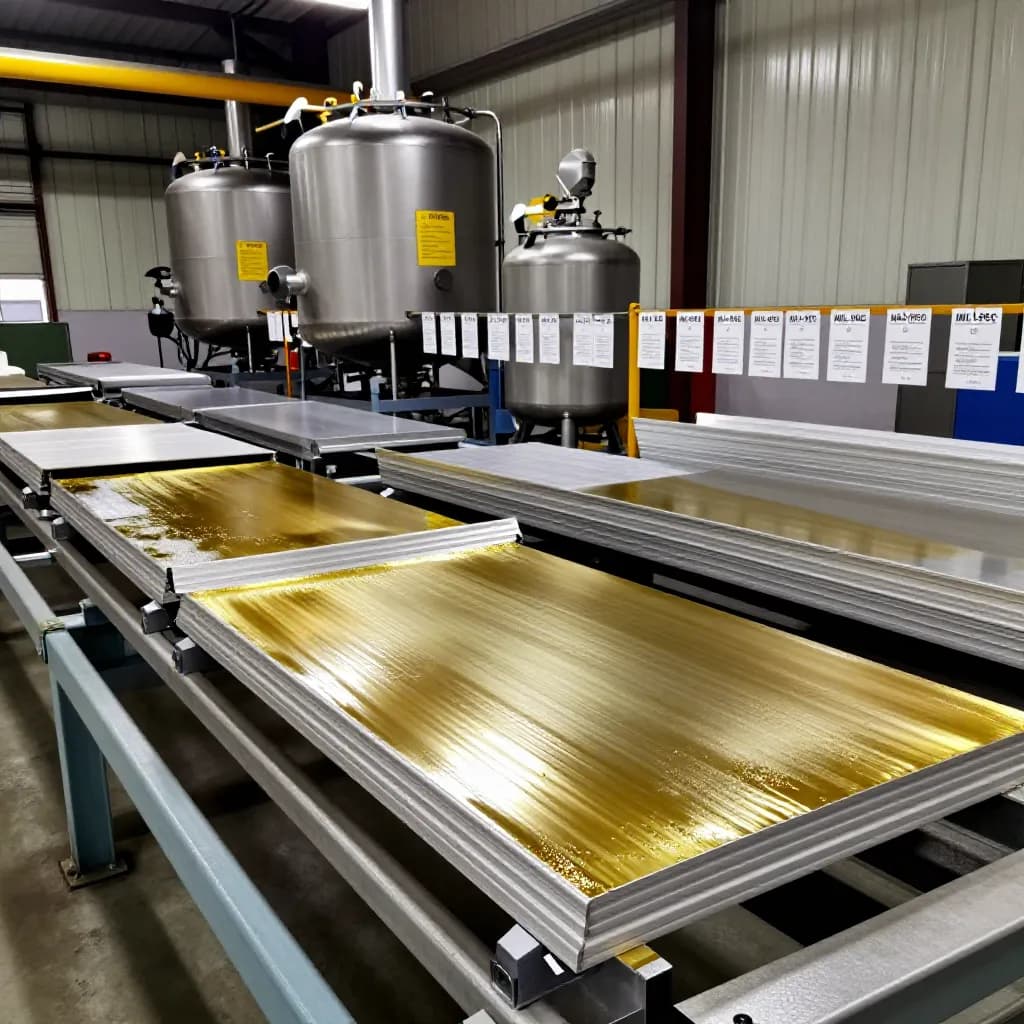
Military equipment operates in environments that aggressively attack coating systems: saltwater spray in coastal and naval operations, sand and dust abrasion in desert environments, temperature cycling from arctic cold to tropical heat, exposure to fuels, hydraulic fluids, and decontamination chemicals, and mechanical impact from field operations. The pretreatment layer must maintain the bond between the metal substrate and the primer under all of these conditions. If the pretreatment fails, the entire coating system delaminates from the substrate, exposing bare metal to corrosion and requiring costly stripping and recoating.
Ready to Start Your Project?
From one-off customs to 15,000-part production runs — get precise pricing in 24 hours.
On This Page
Why Pretreatment Is Critical for Military Coatings
The importance of pretreatment is reflected in the extensive military specification framework governing surface preparation. Multiple MIL-SPECs define pretreatment requirements for different substrates and applications, and the overarching CARC application specification MIL-DTL-53072 devotes significant attention to surface preparation procedures. Military coating inspectors are trained to verify pretreatment quality before allowing primer application, recognizing that no amount of subsequent coating can compensate for inadequate surface preparation.
MIL-DTL-5541: Chromate Conversion Coating for Aluminum
MIL-DTL-5541, "Chemical Conversion Coatings on Aluminum and Aluminum Alloys," is one of the most widely referenced pretreatment specifications in military and aerospace applications. This specification covers chromate conversion coatings — thin chemical films formed on aluminum surfaces by immersion in or application of solutions containing hexavalent chromium compounds. The resulting conversion coating provides excellent corrosion protection, promotes adhesion of subsequent primer and topcoat layers, and can provide electrical conductivity for grounding purposes.
MIL-DTL-5541 defines two primary classes of conversion coating. Class 1A coatings are thicker films (typically golden to brown in color) that provide maximum corrosion protection and paint adhesion. Class 1A is the standard choice for aluminum surfaces that will be painted, as the thicker film provides the best foundation for primer adhesion. Class 3 coatings are thinner films (typically clear to light iridescent) that provide corrosion protection while maintaining low electrical contact resistance. Class 3 is used on surfaces that require electrical grounding or conductivity, such as EMI/RFI shielding surfaces and electrical bonding areas.
The most well-known products qualified under MIL-DTL-5541 are Henkel's Alodine 1200S and MacDermid Enthone's Iridite 14-2. These products have been the workhorses of aluminum pretreatment in military and aerospace applications for decades. The application process involves cleaning the aluminum surface with an alkaline cleaner, deoxidizing with an acid etch to remove the natural oxide layer, and then immersing in or applying the chromate conversion solution. The conversion coating forms within 1-5 minutes and is then rinsed and dried. The resulting film is typically 0.1-0.5 microns thick and provides both standalone corrosion protection and an ideal surface for primer adhesion.
Chrome-Free Alternatives for Military Applications
The use of hexavalent chromium in pretreatment processes has come under increasing regulatory pressure due to its classification as a known human carcinogen. The European Union's REACH regulation has placed hexavalent chromium on the Authorization List, requiring specific authorization for continued use. The US Department of Defense has invested heavily in developing and qualifying chrome-free alternatives through programs managed by the Strategic Environmental Research and Development Program (SERDP) and the Environmental Security Technology Certification Program (ESTCP).
The most successful chrome-free alternative for aluminum pretreatment is the Trivalent Chromium Process (TCP), which uses trivalent chromium (Cr3+) instead of hexavalent chromium (Cr6+). Trivalent chromium is significantly less toxic than hexavalent chromium and is not classified as a carcinogen. TCP conversion coatings are covered under MIL-DTL-81706, which was established specifically for non-hexavalent chromium conversion coatings. Products like Henkel's Alodine 5900 and Chemeon's TCP-HF have been qualified under this specification and are approved for use on military aircraft and equipment.
TCP coatings produce a clear to slightly blue iridescent film on aluminum that provides corrosion protection and paint adhesion comparable to traditional chromate conversion coatings in many applications. However, the transition from hexavalent chromium to TCP has not been without challenges. Some studies have shown that TCP coatings may provide slightly less corrosion protection than Class 1A chromate coatings in the most demanding applications, and the process window for TCP application can be narrower than for traditional chromate processes. Ongoing research continues to optimize TCP formulations and explore other chrome-free technologies including zirconium-based, titanium-based, and rare earth-based conversion coatings for military applications.
Pretreatment for Steel Military Equipment
Steel is the primary structural material for most military ground vehicles, trailers, shelters, and support equipment, and its pretreatment requirements differ significantly from aluminum. The most common pretreatment for steel military equipment is zinc phosphate conversion coating per MIL-DTL-16232, "Phosphate Coating, Heavy, Manganese or Zinc Base." Zinc phosphate creates a crystalline coating on the steel surface that provides corrosion protection and significantly improves the adhesion of subsequent primer coats. The zinc phosphate crystal structure creates a mechanical interlocking effect with the primer, resulting in adhesion that is far superior to primer applied directly to bare steel.
The zinc phosphate process involves multiple stages: alkaline cleaning to remove oils and greases, water rinsing, acid pickling or surface conditioning to prepare the steel surface, zinc phosphate immersion or spray application, water rinsing, and often a final chromic acid or non-chrome seal rinse to improve corrosion protection. The resulting coating is typically 5-25 microns thick and appears as a medium to dark grey crystalline layer. For military applications, the coating weight and crystal structure must meet the requirements of MIL-DTL-16232, and quality is verified through coating weight measurement and visual inspection.
Iron phosphate is a lighter-weight alternative to zinc phosphate that is sometimes used for less demanding military applications or as a pretreatment for powder coating. Iron phosphate coatings are thinner (typically 0.5-1.5 microns) and provide less corrosion protection than zinc phosphate, but they are simpler to apply and generate less waste. For the most demanding military applications, abrasive blasting to SSPC-SP10 (near-white blast) or SSPC-SP5 (white metal blast) standards provides the highest level of surface cleanliness and profile, and is often specified for critical structural components, immersion service, and high-performance coating systems.
Field-Level Pretreatment and Touch-Up
Military equipment requires coating maintenance and repair throughout its service life, and much of this work must be performed in field conditions far from the controlled environment of a coating facility. Technical Manual TM 43-0139, "Painting Instructions for Field Use," provides detailed procedures for field-level coating maintenance of US Army equipment, including surface preparation methods appropriate for field conditions where abrasive blasting and chemical pretreatment may not be available.
Field-level surface preparation typically relies on hand and power tool methods defined by SSPC standards. SSPC-SP2 (Hand Tool Cleaning) involves the use of wire brushes, scrapers, chisels, and sandpaper to remove loose rust, loose paint, and other surface contaminants. SSPC-SP3 (Power Tool Cleaning) uses power wire brushes, grinders, sanders, and needle guns to achieve a more thorough cleaning than hand tools alone. SSPC-SP11 (Power Tool Cleaning to Bare Metal) represents the highest level of surface preparation achievable with power tools, producing a surface comparable to a light abrasive blast. The choice of method depends on the extent of coating damage, the accessibility of the area, and the available equipment.
After field surface preparation, a brush-applied or spray-applied primer is used to protect the prepared surface before topcoat application. MIL-DTL-53022 epoxy primer is available in both spray and brush grades for field use, and MIL-DTL-53039 single-component CARC topcoat is specifically designed for field touch-up applications where the two-component CARC system is impractical. For aluminum surfaces in the field, pre-packaged conversion coating wipes and solutions are available that provide a basic level of pretreatment without the full immersion process. While field-level pretreatment and coating cannot match the performance of depot-level work, proper execution of field maintenance procedures significantly extends the service life of military coating systems between major repainting cycles.
Quality Verification and Inspection
Quality verification of pretreatment and coating application is a critical element of military coating operations, governed by the inspection requirements defined in MIL-DTL-53072 and related specifications. Military coating inspectors verify compliance at every stage of the coating process, from incoming material verification through surface preparation, pretreatment, primer application, and topcoat application. This rigorous inspection regime ensures that the coating system will perform as intended throughout its service life.
Surface preparation inspection includes visual assessment of cleanliness per SSPC-VIS standards (photographic references showing acceptable surface conditions), measurement of surface profile using replica tape or profilometer, verification of surface cleanliness using water break tests or solvent wipe tests, and measurement of ambient conditions (temperature, humidity, dew point) to ensure they are within specification limits. Pretreatment inspection includes coating weight measurement for phosphate coatings, visual assessment of conversion coating color and uniformity, and adhesion testing of the pretreatment layer.
Coating thickness is measured at each stage using magnetic or eddy current thickness gauges per ASTM D7091 or SSPC-PA2. Each coat must fall within the specified thickness range — too thin provides inadequate protection, while too thick can lead to cracking, poor adhesion, or excessive weight. Adhesion testing per ASTM D3359 (cross-cut tape test) or ASTM D4541 (pull-off test) verifies the bond between coating layers and between the coating system and the substrate. Visual inspection checks for defects including runs, sags, orange peel, pinholes, dry spray, and contamination. All inspection results are documented on quality assurance forms that become part of the equipment's permanent maintenance record.
Frequently Asked Questions
What is Alodine and why is it used on military equipment?
Alodine is a brand name (by Henkel) for chromate conversion coating solutions used to pretreat aluminum surfaces. When applied to aluminum per MIL-DTL-5541, Alodine creates a thin chemical film that provides corrosion protection and promotes adhesion of primer and paint. It is widely used on military aircraft, vehicles, and equipment with aluminum components because it significantly improves coating system durability.
Is hexavalent chromium being banned in military applications?
Hexavalent chromium is not yet banned in US military applications, but its use is being progressively restricted. The EU REACH regulation requires authorization for hexavalent chromium use, affecting NATO allies. The US DoD is actively qualifying chrome-free alternatives like TCP (Trivalent Chromium Process) under MIL-DTL-81706 and investing in research through SERDP and ESTCP programs to develop replacement technologies.
Can I skip pretreatment and just apply primer directly to bare metal?
While primer can be applied directly to properly cleaned bare metal, skipping pretreatment significantly reduces coating system durability and corrosion resistance. Pretreatment conversion coatings create a chemical bond with the metal substrate and provide a surface that primers adhere to far better than bare metal alone. For military applications, pretreatment is required by specification and should never be omitted.
What surface preparation is needed for field touch-up of military equipment?
Field touch-up per TM 43-0139 typically requires hand or power tool cleaning (SSPC-SP2 or SP3) to remove loose rust and paint, followed by feathering the edges of sound surrounding paint. The prepared area is then primed with brush-grade MIL-DTL-53022 epoxy primer and topcoated with MIL-DTL-53039 single-component CARC. While not as durable as depot-level work, proper field touch-up prevents corrosion progression between major repainting cycles.
Ready to Start Your Project?
From one-off customs to 15,000-part production runs — get precise pricing in 24 hours.