Military coating operations face a unique tension between two imperatives: the absolute requirement for coating performance in life-threatening operational environments, and the growing obligation to minimize environmental and health impacts of coating materials and processes. Military coatings must protect equipment and personnel in the most extreme conditions imaginable — from chemical warfare agent exposure to arctic cold to desert heat — and any compromise in coating performance can have direct consequences for mission success and personnel safety. At the same time, military installations are subject to the same environmental regulations as civilian facilities, and the Department of Defense has committed to being a responsible environmental steward.
Technical
Environmental Regulations for Military Coatings: VOC, Chromium, and PFAS
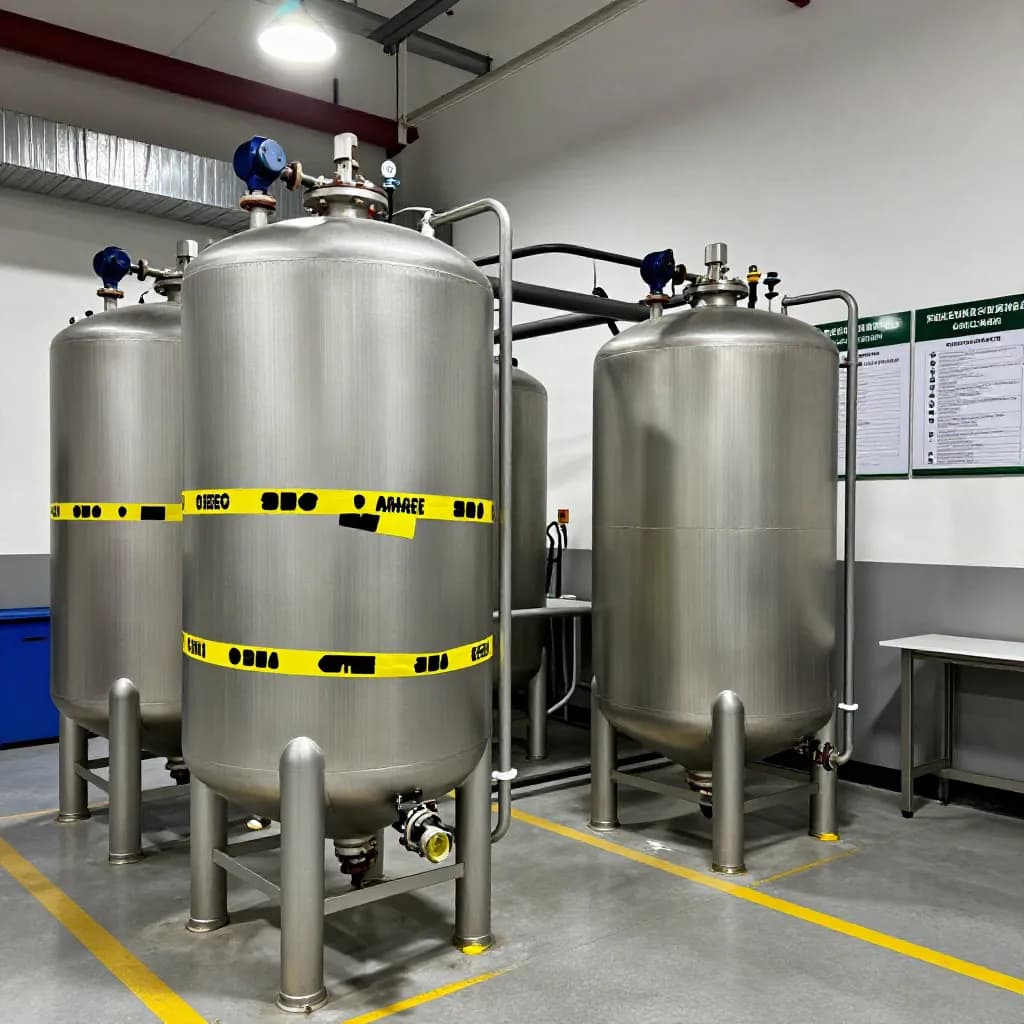
The scale of military coating operations makes their environmental impact significant. The US Department of Defense is one of the largest consumers of coatings in the world, applying millions of gallons of paint annually across hundreds of maintenance facilities, depots, shipyards, and field operations. Traditional military coating systems — particularly solvent-based CARC and chromate-containing primers — generate substantial quantities of volatile organic compounds, hazardous air pollutants, and hazardous waste. The environmental compliance costs for military coating facilities run into hundreds of millions of dollars annually, including air pollution control equipment, hazardous waste disposal, worker health monitoring, and regulatory reporting.
Ready to Start Your Project?
From one-off customs to 15,000-part production runs — get precise pricing in 24 hours.
On This Page
The Environmental Challenge in Military Coatings
The challenge is compounded by the long qualification and adoption cycles inherent in military systems. Changing a coating specification requires extensive testing to verify that the new material meets all performance requirements, followed by fleet-wide implementation that can take years. This means that military coating technology often lags behind commercial coating innovation by a decade or more, even when environmentally superior alternatives are available. Bridging this gap while maintaining coating performance is the central challenge of military coating environmental compliance.
VOC Reduction in Military Coatings
Volatile organic compound emissions from military coating operations have been a primary environmental concern since the Clean Air Act established VOC emission limits in the 1970s. Traditional solvent-based CARC topcoat per MIL-DTL-64159 contains approximately 340 g/L of VOCs, and the epoxy primers used in the CARC system add additional solvent emissions. At high-volume military coating facilities such as Army depots and Marine Corps maintenance centers, the aggregate VOC emissions from coating operations can be substantial, requiring expensive thermal oxidizers or carbon adsorption systems to meet air quality permit limits.
The military has pursued several strategies to reduce VOC emissions from coating operations. Waterborne CARC formulations have been developed that reduce VOC content to approximately 150-250 g/L while maintaining chemical agent resistance and camouflage performance. These waterborne systems use water as the primary carrier instead of organic solvents, though they still contain some co-solvents to aid film formation and application properties. Waterborne CARC has been qualified and is in use at several military facilities, though adoption has been gradual due to differences in application characteristics and sensitivity to temperature and humidity during application.
The most significant VOC reduction strategy is the adoption of powder coatings under MIL-PRF-32348. Powder coatings contain virtually zero VOCs, eliminating solvent emissions entirely. For military facilities that transition from liquid CARC to powder CARC, the reduction in VOC emissions is essentially 100% for the coated components. This can eliminate the need for air pollution control equipment, reduce environmental permit complexity, and significantly lower operating costs. The US Army has identified powder coating adoption as a key element of its environmental compliance strategy for coating operations, and several depot-level facilities have installed powder coating lines for tactical equipment components.
Hexavalent Chromium Phase-Out
Hexavalent chromium (Cr6+) is one of the most problematic substances in military coating operations. Used extensively in chromate conversion coatings (MIL-DTL-5541), chromate-containing primers (MIL-PRF-23377), and chromate sealers, hexavalent chromium provides unmatched corrosion protection for aluminum and steel substrates. However, it is classified as a known human carcinogen by the International Agency for Research on Cancer (IARC) and the US National Toxicology Program, and exposure can cause lung cancer, nasal septum perforation, skin ulceration, and allergic dermatitis.
The European Union's REACH regulation has placed hexavalent chromium compounds on the Authorization List (Annex XIV), meaning that their use requires specific authorization that must be renewed periodically. This has significant implications for NATO allies and for US defense contractors with European operations. The US Occupational Safety and Health Administration (OSHA) has established a permissible exposure limit (PEL) of 5 micrograms per cubic meter for hexavalent chromium, requiring extensive engineering controls, personal protective equipment, and medical surveillance for workers in chromate coating operations.
The DoD Strategic Environmental Research and Development Program (SERDP) and the Environmental Security Technology Certification Program (ESTCP) have invested over $100 million in developing hexavalent chromium alternatives for military applications. The most successful alternative to date is the Trivalent Chromium Process (TCP) for aluminum pretreatment, qualified under MIL-DTL-81706. For primers, chrome-free formulations under MIL-PRF-85582 are being qualified, though the transition from chromate primers on safety-critical aircraft structures is proceeding cautiously. The phase-out timeline varies by application — non-critical applications are transitioning first, while safety-critical aerospace applications will be among the last to eliminate hexavalent chromium.
PFAS Concerns in Military Coatings
Per- and polyfluoroalkyl substances (PFAS) have emerged as a significant environmental concern for military operations, with potential implications for military coating formulations. PFAS are a large family of synthetic fluorinated chemicals valued for their exceptional resistance to heat, water, oil, and chemical attack. In military applications, PFAS compounds have been used most prominently in aqueous film-forming foam (AFFF) firefighting agents, but they are also found in some coating formulations, surface treatments, and processing aids where their unique properties provide performance advantages.
The environmental concern with PFAS stems from their extreme persistence in the environment — they do not break down through natural processes, earning them the nickname "forever chemicals." PFAS contamination of groundwater at military installations, primarily from AFFF use at fire training areas, has become a major environmental liability for the Department of Defense. The EPA has established health advisory levels for certain PFAS compounds in drinking water, and several states have enacted even stricter standards. The total cost of PFAS remediation at military installations is estimated in the billions of dollars.
For the coatings industry, the PFAS concern is primarily focused on fluoropolymer-containing formulations and processing aids. Some high-performance coatings use fluoropolymer resins or additives to achieve exceptional chemical resistance, low surface energy, or non-stick properties. While these coating applications represent a small fraction of total PFAS use compared to AFFF, the regulatory trend toward broader PFAS restrictions could affect the availability of certain coating raw materials. The military coatings community is monitoring PFAS regulatory developments closely and evaluating whether any current military coating specifications include materials that could be affected by future PFAS restrictions.
Powder Coating as a Green Military Solution
Powder coating technology addresses multiple environmental concerns simultaneously, making it the most comprehensive green coating solution available for military applications. The zero-VOC characteristic eliminates volatile organic compound emissions entirely, removing the need for air pollution control equipment and simplifying environmental permitting. The absence of solvents also eliminates hazardous air pollutant (HAP) emissions, including the isocyanate exposure concerns associated with two-component polyurethane CARC topcoats. Workers in powder coating operations require standard dust protection rather than the supplied-air respirators and full chemical protective equipment needed for liquid CARC application.
Beyond air emissions, powder coating reduces waste generation across the coating process. Overspray powder is collected and recycled, achieving material utilization rates of 95-98% compared to 50-65% for liquid spray operations. This dramatically reduces the volume of coating waste requiring disposal. Powder coating operations generate no solvent-contaminated waste (spent solvent, contaminated rags, expired mixed material), which are significant hazardous waste streams in liquid coating operations. The reduction in hazardous waste generation translates directly to lower disposal costs, reduced regulatory reporting burden, and decreased environmental liability.
Powder CARC topcoats qualified under MIL-PRF-32348 do not contain hexavalent chromium in the topcoat formulation, addressing another major environmental concern. While the primer and pretreatment layers may still involve chromate materials depending on the substrate and specification requirements, the elimination of chromium from the topcoat reduces overall hexavalent chromium usage and worker exposure. As chrome-free primer and pretreatment technologies mature, the combination of powder CARC topcoat with chrome-free primer and TCP pretreatment will create a fully green military coating system that eliminates VOCs, HAPs, and hexavalent chromium from the entire coating process.
The Future of Sustainable Military Coatings
The future of sustainable military coatings is being shaped by advances in materials science, regulatory pressure, and a growing recognition within the defense establishment that environmental performance and military performance are not mutually exclusive. Bio-based resins derived from renewable feedstocks such as plant oils, lignin, and agricultural waste are being investigated as replacements for petroleum-based coating resins. While bio-based coatings are still in the early stages of development for military applications, several promising formulations have demonstrated performance approaching that of conventional materials in laboratory testing.
Chrome-free primer technology continues to advance, with multiple formulation approaches showing promise for replacing hexavalent chromium in corrosion-protective primers. Magnesium-rich primers, rare earth-based inhibitors, lithium-based systems, and organic corrosion inhibitors are all being evaluated through SERDP and ESTCP programs. The goal is to develop chrome-free primers that provide equivalent corrosion protection to chromate primers across the full range of military substrates and environments, enabling complete elimination of hexavalent chromium from military coating operations.
Reduced-toxicity formulations are being developed across the military coating spectrum. Low-isocyanate and isocyanate-free polyurethane technologies could eliminate the respiratory hazards associated with two-component CARC application. Non-toxic anti-fouling coatings for naval vessels could eliminate biocide discharge into marine environments. Low-temperature cure powder coatings could expand the range of military components suitable for powder coating, further reducing the reliance on solvent-based systems. The convergence of these technologies points toward a future where military coatings achieve their demanding performance requirements while minimizing environmental impact throughout their lifecycle — from raw material sourcing through application, service life, and eventual removal and disposal.
Frequently Asked Questions
What VOC limits apply to military coating operations?
Military coating facilities must comply with federal EPA regulations, state air quality regulations, and local permit conditions. VOC limits vary by location and facility size, but military coating operations are generally subject to the same Clean Air Act requirements as commercial facilities. Many military installations in non-attainment areas face particularly stringent VOC limits that have driven adoption of low-VOC and zero-VOC coating technologies.
Is hexavalent chromium still used in military coatings?
Yes, hexavalent chromium is still used in military coatings, particularly in chromate conversion coatings (MIL-DTL-5541) and chromate-containing primers (MIL-PRF-23377) for aluminum substrates. However, the DoD is actively qualifying chrome-free alternatives and transitioning away from hexavalent chromium. The phase-out is proceeding application by application, with non-critical applications transitioning first.
How does powder coating help military facilities meet environmental regulations?
Powder coating eliminates VOC and HAP emissions (addressing Clean Air Act requirements), reduces hazardous waste generation (addressing RCRA requirements), eliminates isocyanate exposure (addressing OSHA requirements), and reduces hexavalent chromium usage when used as a topcoat replacement. These benefits can significantly simplify environmental permitting and reduce compliance costs for military coating facilities.
Are PFAS found in military coatings?
Some military coating formulations may contain PFAS compounds, particularly fluoropolymer-based coatings used for chemical resistance or non-stick properties. However, the primary military PFAS concern is aqueous film-forming foam (AFFF) rather than coatings. The military coatings community is monitoring PFAS regulatory developments and evaluating potential impacts on coating specifications and formulations.
Ready to Start Your Project?
From one-off customs to 15,000-part production runs — get precise pricing in 24 hours.