Military aerospace coatings operate in some of the most extreme environments encountered by any engineered material. A military aircraft coating system must perform reliably across a temperature range from -60°C at high altitude to over 1000°C in engine hot sections, withstand supersonic airflow and rain erosion at speeds exceeding Mach 2, resist exposure to hydraulic fluids (Skydrol and MIL-PRF-83282), jet fuel (JP-8), lubricating oils, de-icing fluids, and cleaning solvents, and maintain its properties through thousands of pressurization cycles and millions of fatigue cycles over a service life that may span decades.
Technical
Aerospace and Gas Turbine Coatings: Protecting Military Aircraft and Engines
Sundial Powder Coating·April 20, 2026·12 min
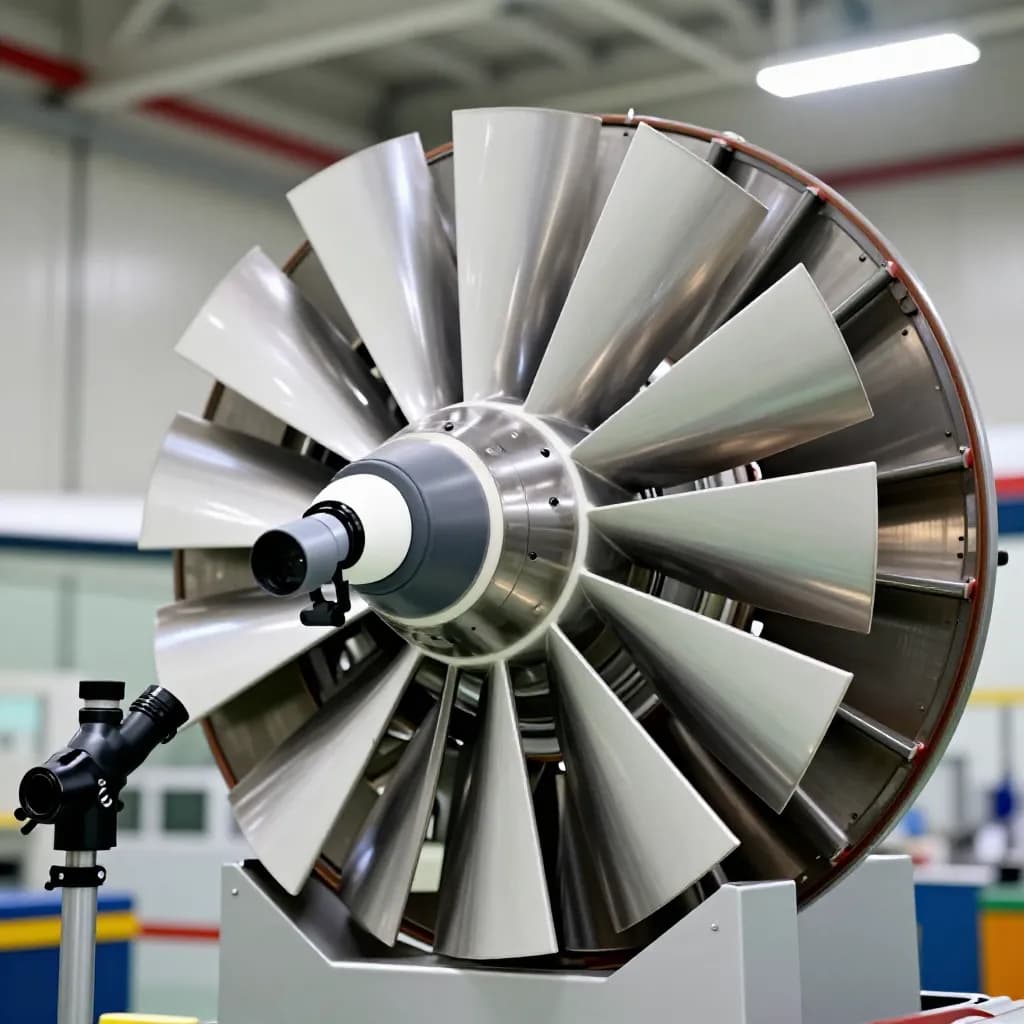
The performance requirements for aerospace coatings are correspondingly stringent. Exterior coatings must maintain color and gloss stability under intense UV radiation at altitude, where the thinner atmosphere provides less UV filtering than at sea level. Flexibility is critical because aircraft skins flex significantly during flight — wing surfaces can deflect several feet during maneuvers, and fuselage skins expand and contract with pressurization cycles. The coating must accommodate this movement without cracking or delaminating. Weight is always a concern in aerospace applications, and coating systems must achieve the required performance at minimum film thickness and weight.
Ready to Start Your Project?
From one-off customs to 15,000-part production runs — get precise pricing in 24 hours.
On This Page
The Extreme Demands of Aerospace Coatings
The diversity of coating requirements on a single military aircraft is remarkable. The exterior requires UV-stable, flexible, chemical-resistant topcoats. The engine requires thermal barrier coatings capable of withstanding temperatures above 1000°C. The fuel tanks require coatings resistant to jet fuel immersion. The landing gear requires coatings that resist hydraulic fluid, brake dust, and mechanical impact. The cockpit and interior require fire-resistant, low-smoke, low-toxicity coatings. Each of these applications is governed by specific military specifications and requires specialized coating formulations.
Exterior Aircraft Coatings: MIL-PRF-85285
MIL-PRF-85285, "Coating: Polyurethane, Aircraft and Support Equipment," is the primary specification for exterior topcoats on US military aircraft. This specification defines requirements for two-component aliphatic polyurethane coatings that provide chemical agent resistance, UV stability, flexibility, and durability in the demanding aerospace environment. MIL-PRF-85285 coatings are used on virtually all US military fixed-wing aircraft and rotorcraft, from fighters and bombers to transport aircraft and helicopters.
The specification defines multiple types of coatings for different applications. Type I is a standard two-component polyurethane for general exterior use. Type II is a chemical agent resistant version that provides CARC-equivalent protection for aircraft that may operate in chemically contaminated environments. The coatings must meet requirements for flexibility (no cracking when bent over a 1/8-inch mandrel), adhesion (minimum 200 psi pull-off strength), fluid resistance (no softening, blistering, or loss of adhesion after 168-hour immersion in JP-8 fuel, hydraulic fluid, and lubricating oil), and accelerated weathering (minimal color change and gloss loss after 2,000 hours of xenon arc exposure).
Application of MIL-PRF-85285 coatings requires careful control of environmental conditions and application parameters. The two-component system has a pot life of 4-8 hours depending on temperature, and the coating must be applied within this window. Film thickness is typically 1.5-2.5 mils dry, applied in two coats over a qualified primer system. The coating achieves initial hardness within 24 hours but continues to develop full chemical resistance over 7-14 days. For aircraft that require rapid return to service, forced-cure schedules using elevated temperatures can accelerate the curing process, though care must be taken not to exceed temperature limits for aircraft structural materials and systems.
Thermal Barrier Coatings for Turbine Engines
Thermal barrier coatings (TBCs) represent one of the most critical and technically sophisticated coating applications in military aerospace. Applied to turbine blades, vanes, combustion liners, and other hot-section components of gas turbine engines, TBCs provide thermal insulation that allows these components to operate at gas temperatures significantly higher than the melting point of the underlying metal alloys. This capability directly translates to higher engine efficiency, greater thrust, and improved fuel economy — performance parameters that are critical for military aircraft.
The standard TBC system consists of two layers: a metallic bond coat and a ceramic top coat. The bond coat, typically an MCrAlY alloy (where M is nickel, cobalt, or a combination), is applied to the superalloy substrate by plasma spray or electron beam physical vapor deposition (EB-PVD). This bond coat provides oxidation protection for the substrate and creates a thermally grown oxide (TGO) layer that anchors the ceramic top coat. The ceramic top coat is most commonly yttria-stabilized zirconia (YSZ), typically containing 6-8 weight percent yttria, which provides the thermal insulation. YSZ is chosen for its exceptionally low thermal conductivity, high melting point, and relatively good resistance to thermal cycling.
The temperature drop across a TBC system can be 100-300°C, depending on coating thickness and operating conditions. This temperature reduction allows turbine inlet temperatures to be increased by a corresponding amount without exceeding the temperature limits of the blade alloy, or alternatively, allows the same operating temperature to be achieved with reduced cooling air requirements, improving engine efficiency. Modern military turbine engines like the Pratt & Whitney F135 (powering the F-35) and the General Electric F110 (powering F-16 variants) rely heavily on TBC technology to achieve their performance targets. The durability of TBCs under thermal cycling, foreign object damage, and erosion from ingested particles remains an active area of research and development.
Corrosion Protection for Aircraft Structures
Corrosion protection of aircraft structures is a critical function of the aerospace coating system, as corrosion can compromise structural integrity and flight safety. The primary corrosion protection for aluminum aircraft structures is provided by chromate-containing epoxy primers, with MIL-PRF-23377 being the most widely used specification. These primers contain strontium chromate or barium chromate pigments that provide active corrosion inhibition — when moisture penetrates to the primer layer, the chromate ions dissolve and migrate to damaged areas, forming a protective oxide layer that arrests corrosion progression.
MIL-PRF-23377 primers are applied at 0.6-0.9 mils dry film thickness over pretreated aluminum surfaces (typically chromate or TCP conversion coated per MIL-DTL-5541 or MIL-DTL-81706). The primer provides both barrier protection and active corrosion inhibition, and serves as the adhesion layer between the pretreatment and the topcoat. For areas subject to fuel or water immersion, specialized sealants and fuel tank coatings provide additional protection. Polysulfide and polythioether sealants per MIL-PRF-81733 are used extensively at joints, fasteners, and faying surfaces to prevent moisture intrusion into the aircraft structure.
The aerospace industry is actively working to replace hexavalent chromium-containing primers with chrome-free alternatives, driven by the same environmental and health concerns affecting other military coating applications. Chrome-free primer candidates include formulations based on magnesium-rich pigments, rare earth compounds, lithium-based inhibitors, and organic corrosion inhibitors. Several chrome-free primers have been qualified under MIL-PRF-85582 (non-chromate epoxy primer), though the transition from chromate primers is proceeding cautiously due to the safety-critical nature of aircraft corrosion protection. Extensive testing and fleet evaluation are required before chrome-free primers can fully replace chromate systems on primary aircraft structures.
Interior Aircraft Coatings
Interior coatings for military aircraft must meet stringent fire safety requirements in addition to providing corrosion protection and a functional finish. The Federal Aviation Regulations (FAR) and Joint Aviation Requirements (JAR) establish flammability, smoke density, and heat release requirements for materials used in aircraft interiors, and military aircraft must meet equivalent or more stringent standards. Interior coatings must be self-extinguishing, produce minimal smoke when exposed to flame, and generate low levels of toxic combustion products including carbon monoxide, hydrogen cyanide, and hydrogen fluoride.
The fire performance requirements for aircraft interior coatings are tested using standardized methods including vertical burn testing per FAR 25.853 (which measures flame propagation rate and drip extinguishment), smoke density testing per ASTM E662 (which measures the optical density of smoke generated by the burning material), and heat release testing per FAR 25.853(d) using the Ohio State University rate of heat release apparatus. Coatings that fail any of these tests cannot be used in aircraft interior applications, regardless of their other performance characteristics.
Beyond fire safety, interior aircraft coatings must resist the chemicals commonly encountered in aircraft interiors including hydraulic fluid, cleaning solvents, fuel vapors, and human perspiration. Cargo compartment coatings must withstand mechanical abrasion from cargo handling and tie-down equipment. Cockpit and instrument panel coatings must provide appropriate gloss levels to minimize glare and reflections that could interfere with pilot vision, particularly during night operations when cockpit lighting is reduced. The combination of fire safety, chemical resistance, mechanical durability, and optical performance requirements makes interior aircraft coating formulation a specialized discipline within the broader aerospace coatings field.
Emerging Aerospace Coating Technologies
The aerospace coating industry is actively developing next-generation technologies that promise to improve performance, reduce maintenance, and address environmental concerns. Self-healing coatings represent one of the most exciting research areas — these coatings contain microcapsules or vascular networks filled with healing agents that are released when the coating is damaged, automatically repairing scratches and cracks before corrosion can initiate. Several self-healing coating concepts have been demonstrated in laboratory settings, and early-stage field trials are underway on military aircraft components.
Ice-phobic coatings are another area of intense development activity. Ice accumulation on aircraft surfaces degrades aerodynamic performance, increases weight, and can damage engines if ingested. Current ice protection systems rely on heated surfaces, pneumatic boots, or chemical de-icing fluids, all of which add weight, complexity, and energy consumption. Ice-phobic coatings aim to prevent ice adhesion or reduce it to the point where aerodynamic forces alone can remove ice accumulation. Approaches include superhydrophobic surfaces with nano-scale texture, low-surface-energy fluoropolymer coatings, and surfaces with controlled interfacial properties that weaken the ice-surface bond.
Erosion-resistant coatings for leading edges and engine inlet components address the damage caused by rain, sand, dust, and other airborne particles at high speed. Conventional polyurethane topcoats erode relatively quickly on leading edges, requiring frequent repair. Advanced erosion-resistant coatings based on polyurethane elastomers, ceramic-polymer composites, and nanocomposite materials are being developed to extend the service life of these critical surfaces. For military aircraft operating in desert environments where sand erosion is particularly severe, these coatings could significantly reduce maintenance burden and improve aircraft availability.
Frequently Asked Questions
What paint is used on military aircraft?
US military aircraft exteriors are typically coated with two-component aliphatic polyurethane topcoat per MIL-PRF-85285 over epoxy primer per MIL-PRF-23377. The topcoat provides UV stability, chemical resistance, and flexibility, while the chromate-containing primer provides corrosion protection. Aircraft that may operate in chemically contaminated environments use CARC-equivalent Type II coatings.
How hot do thermal barrier coatings get in a jet engine?
Thermal barrier coatings in modern military turbine engines are exposed to gas temperatures of 1200-1500°C or higher. The TBC system reduces the temperature at the metal surface by 100-300°C, allowing the superalloy blade to operate within its temperature limits. Without TBCs, modern turbine engines could not achieve their current performance levels.
Why are chromate primers still used on military aircraft?
Chromate primers (MIL-PRF-23377) provide unmatched active corrosion inhibition for aluminum aircraft structures. The chromate ions migrate to damaged areas and form protective oxide layers, providing self-healing corrosion protection that no chrome-free alternative has fully replicated. Given the safety-critical nature of aircraft structures, the transition to chrome-free primers is proceeding cautiously with extensive testing.
Can powder coating be used on aircraft?
Powder coating has limited application on aircraft due to the curing temperatures required (typically 350-400°F) which can affect heat-treated aluminum alloys and composite structures. However, powder coating is used on some aircraft components, ground support equipment, and engine accessories where the substrate can tolerate curing temperatures. Research into lower-temperature cure powder coatings may expand aerospace applications in the future.
Ready to Start Your Project?
From one-off customs to 15,000-part production runs — get precise pricing in 24 hours.