Powder coating has become the dominant finishing technology for architectural aluminum across the globe. From curtain walls and window frames to cladding panels and entrance systems, architects and specifiers consistently choose powder coating over liquid paint for its combination of performance, sustainability, and design flexibility. The technology now accounts for the vast majority of aluminum finishing in commercial and residential construction.
Architecture
Why Powder Coating Is the Best Finish for Architectural Projects
Sundial Powder Coating·April 20, 2026·10 min
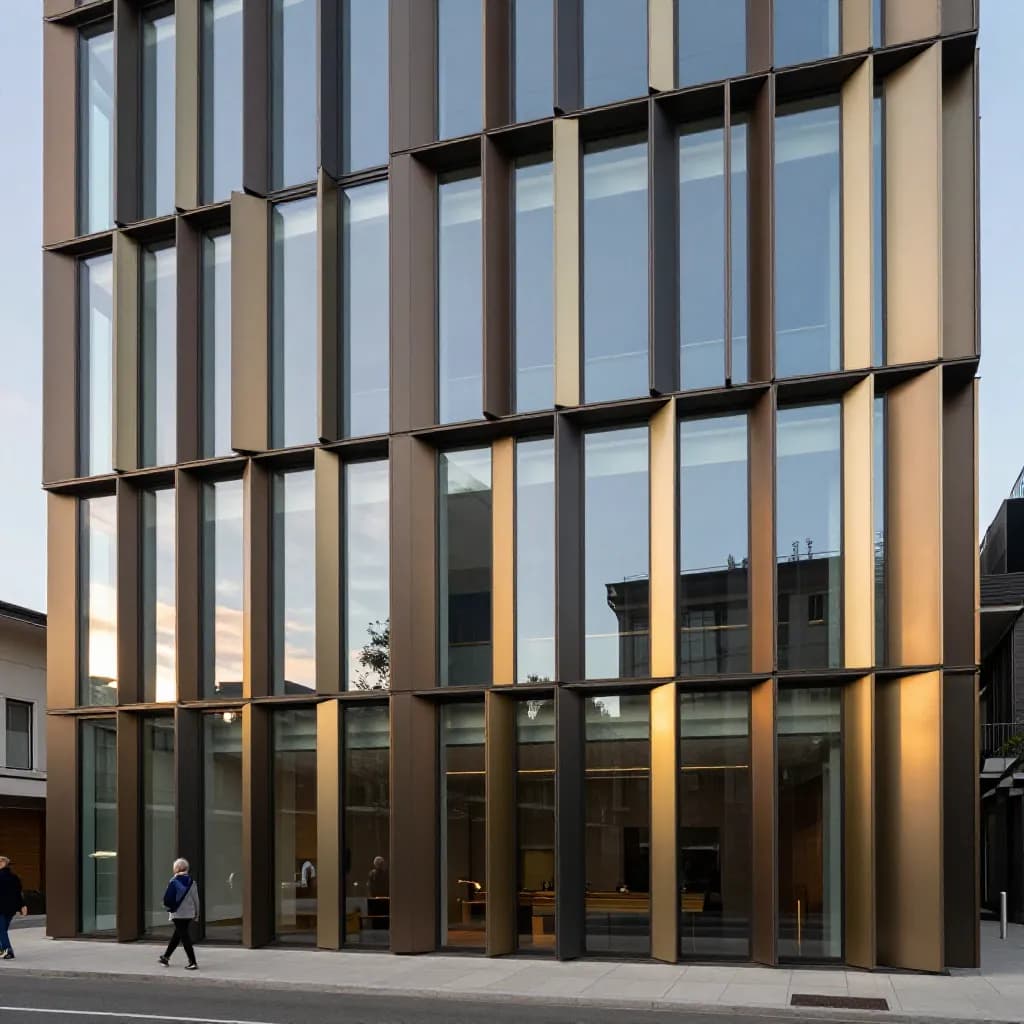
The reasons for this dominance are both practical and regulatory. Powder coating delivers a thicker, more uniform film in a single application, eliminates volatile organic compound emissions, and achieves material efficiency rates that liquid paint simply cannot match. As building regulations tighten around fire safety, environmental impact, and lifecycle performance, powder coating aligns naturally with the direction of modern construction standards.
Ready to Start Your Project?
From one-off customs to 15,000-part production runs — get precise pricing in 24 hours.
On This Page
Powder Coating Dominates Architectural Aluminum Finishing
This article examines the key advantages that make powder coating the best finish for architectural projects, comparing it directly against liquid paint across the metrics that matter most to architects, specifiers, and building owners.
Superior Durability and Film Thickness
One of the most significant advantages of powder coating over liquid paint is film thickness. Powder coatings are typically applied at 60-120 microns in a single coat, compared to just 25-50 microns for most liquid paint systems. This substantially thicker film provides a more robust barrier against UV radiation, moisture ingress, chemical exposure, and mechanical damage such as scratching and abrasion.
The difference in film build has direct consequences for long-term performance. A powder-coated aluminum facade will typically maintain its appearance and protective properties for 20-25 years, while a liquid-painted equivalent may begin showing signs of degradation — chalking, fading, cracking, or peeling — within 8-12 years. This performance gap means that powder-coated buildings require fewer maintenance interventions and coating renewals over their service life.
The single-coat application process also contributes to consistency. Because powder coating achieves its full film build in one pass through the spray booth and curing oven, there is less opportunity for inter-coat adhesion failures, solvent entrapment, or inconsistent layering that can plague multi-coat liquid systems.
Fire Safety: Non-Combustible Performance on Aluminum
Fire safety is an increasingly critical consideration in architectural specification, and powder coating offers a decisive advantage over liquid paint. When applied to aluminum substrates, powder-coated systems achieve A1 or A2 Euroclass fire ratings, classifying them as non-combustible. This is because the thin organic powder film on a non-combustible aluminum substrate contributes negligible fuel load to a fire scenario.
Liquid paint systems present a fundamentally different risk profile. Solvent-based liquid paints contain flammable organic solvents that pose fire and explosion hazards during storage, transport, and application. Even after curing, some liquid paint systems on composite or combustible substrates can contribute to fire spread, a concern that has received intense scrutiny following high-profile facade fires.
For architects designing buildings that must comply with stringent fire regulations, specifying powder-coated aluminum provides a straightforward path to compliance. There is no need for complex fire engineering assessments or additional fire-retardant treatments — the inherent non-combustibility of the aluminum-plus-powder system meets the most demanding classification requirements.
Environmental Benefits: Zero VOC and High Efficiency
Powder coating is one of the most environmentally responsible finishing technologies available to the construction industry. Because powder coatings are applied as a dry powder with no solvents, they produce zero volatile organic compound emissions during application and curing. This eliminates a major source of air pollution associated with liquid painting operations and removes the need for solvent abatement equipment.
Material efficiency further strengthens the environmental case. Powder coating systems routinely achieve 95-98% material utilization because overspray powder is collected, reclaimed, and reused. Liquid paint operations, by contrast, typically achieve only 30-70% transfer efficiency, with the remainder lost as waste requiring disposal. This difference translates directly into lower raw material consumption and reduced waste generation.
These environmental credentials are increasingly important for projects targeting green building certifications such as LEED, BREEAM, or DGNB. Specifying powder-coated aluminum contributes to credits for low-emitting materials, waste reduction, and responsible resource use. The absence of hazardous solvents also simplifies compliance with occupational health regulations and eliminates the need for fire-rated solvent storage facilities.
Color and Design Freedom
Modern powder coating technology offers architects virtually unlimited design possibilities. The full RAL Classic color range is available as standard, along with RAL Design, NCS, and custom color matching to any reference sample. Beyond solid colors, powder coatings are available in metallic, textured, matte, satin, high-gloss, and structured finishes that can replicate the appearance of anodized aluminum, natural stone, or weathered metal.
Sublimation transfer technology has expanded the design palette even further, enabling realistic wood-grain finishes on aluminum profiles. These wood-effect powder coatings allow architects to achieve the warm aesthetic of timber with the durability and fire performance of aluminum — a combination that is particularly valuable for facades, cladding, and fenestration in both residential and commercial projects.
Multi-color and dual-finish applications are also achievable, allowing different colors on interior and exterior faces of window and door profiles. This flexibility means architects can coordinate exterior facade colors with interior design schemes without compromising on coating performance or specification compliance.
Quality Standards: Qualicoat, GSB, and AAMA
The architectural powder coating industry is supported by rigorous, internationally recognized quality certification systems. Qualicoat, the leading European quality label for powder-coated aluminum, sets demanding requirements for pretreatment, coating application, film thickness, adhesion, hardness, and accelerated weathering resistance. Qualicoat Seaside certification adds additional requirements for coastal and marine environments.
GSB International is another major European quality mark, with its GSB Master certification representing the highest tier of performance for architectural coatings. In North America, AAMA (American Architectural Manufacturers Association) specifications — particularly AAMA 2603, 2604, and 2605 — define performance tiers for architectural coatings, with AAMA 2605 requiring 10 years of South Florida weathering exposure for the most demanding applications.
These certification systems provide architects and specifiers with confidence that powder-coated aluminum will perform as expected over its intended service life. By specifying coatings from certified applicators using approved powder formulations, project teams can rely on independently verified performance data rather than manufacturer claims alone.
Maintenance Advantage and Lifecycle Performance
The lifecycle performance of powder-coated aluminum is one of its strongest selling points for building owners and facility managers. With an expected service life of 20-25 years before recoating is required, powder-coated facades and fenestration systems dramatically reduce the frequency and cost of maintenance compared to liquid-painted alternatives, which typically require recoating every 8-12 years.
Routine maintenance for powder-coated surfaces is straightforward — periodic cleaning with mild detergent and water is generally sufficient to maintain appearance and performance. The hard, dense film resists dirt accumulation, graffiti adhesion, and biological growth more effectively than thinner liquid paint films, further reducing cleaning frequency and cost.
When the full lifecycle is considered — including initial coating cost, maintenance intervals, recoating frequency, and end-of-life recyclability of the aluminum substrate — powder coating consistently delivers the lowest total cost of ownership among architectural finishing options. This economic advantage, combined with superior environmental and fire safety performance, explains why powder coating has become the default specification for architectural aluminum worldwide.
Frequently Asked Questions
How thick is powder coating compared to liquid paint on buildings?
Powder coating is typically applied at 60-120 microns in a single coat, while liquid paint systems achieve only 25-50 microns. This significantly thicker film provides better protection against UV, moisture, and mechanical damage, contributing to the longer service life of powder-coated architectural aluminum.
Is powder coating fire-safe for building facades?
Yes. Powder-coated aluminum achieves A1 or A2 Euroclass fire ratings, classifying it as non-combustible. The thin organic powder film on a non-combustible aluminum substrate contributes negligible fuel load, making it one of the safest facade finishing options available.
How long does powder coating last on architectural aluminum?
Powder coating on architectural aluminum typically lasts 20-25 years before recoating is needed, compared to 8-12 years for liquid paint. This extended service life is supported by the thicker film build, superior UV resistance of modern polyester formulations, and rigorous quality standards such as Qualicoat and AAMA 2605.
Does powder coating emit VOCs?
No. Powder coatings contain no solvents and produce zero volatile organic compound emissions during application and curing. This makes powder coating the most environmentally friendly finishing technology for architectural aluminum and contributes to green building certification credits.
What quality standards apply to architectural powder coating?
The main quality standards are Qualicoat and GSB International in Europe, and AAMA 2603, 2604, and 2605 in North America. These certifications set requirements for pretreatment, film thickness, adhesion, hardness, and weathering resistance, ensuring consistent long-term performance on architectural projects.
Ready to Start Your Project?
From one-off customs to 15,000-part production runs — get precise pricing in 24 hours.