The skylines of the world's great cities are shaped, in part, by powder coating technology. From the shimmering curtain walls of commercial towers to the boldly colored panels of cultural institutions, powder-coated aluminum has become one of the defining materials of contemporary architecture. Its combination of design freedom, durability, and sustainability has made it the finish of choice for architects seeking to create buildings that are both visually striking and built to last.
Architecture
Famous Buildings with Powder-Coated Facades: Iconic Architecture Around the World
Sundial Powder Coating·April 23, 2026·11 min
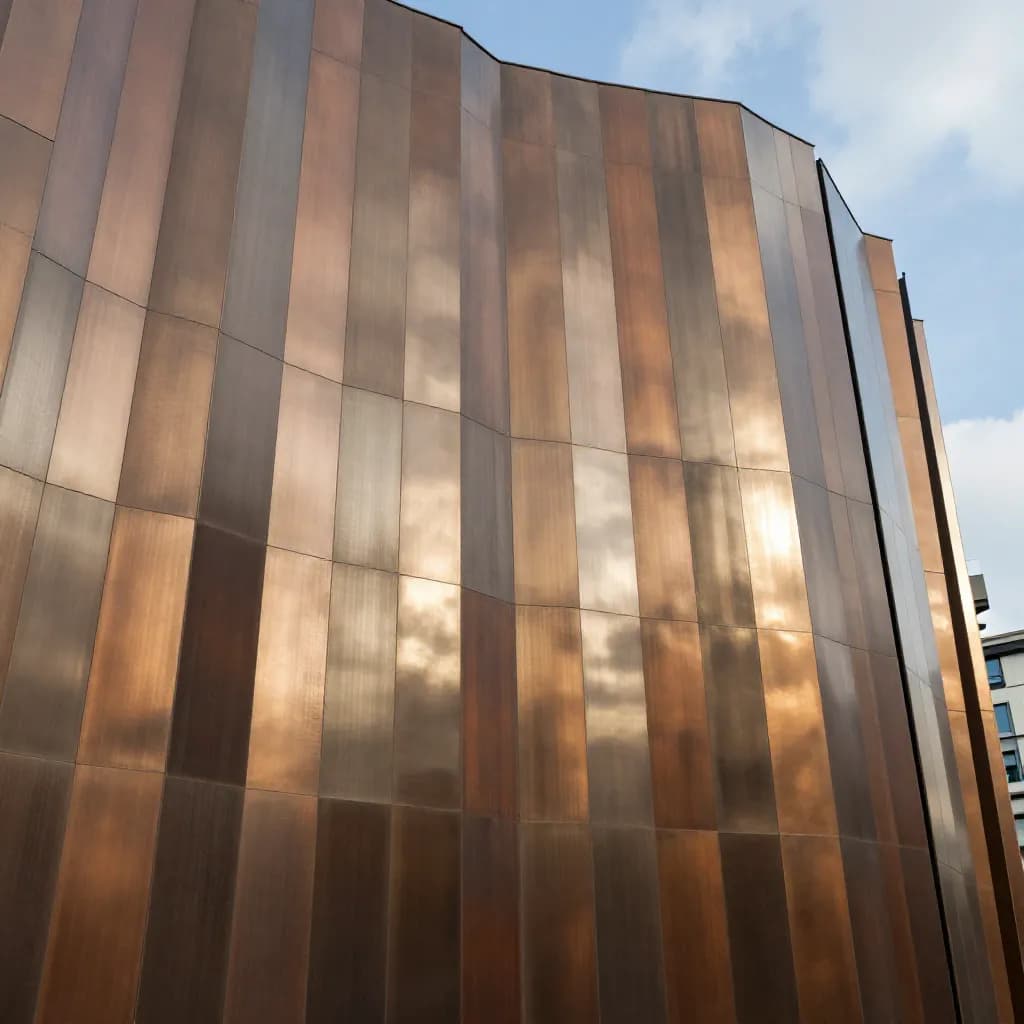
The relationship between powder coating and architecture deepened significantly from the 1980s onward, as advances in polyester resin chemistry, color technology, and quality certification systems gave architects confidence that powder-coated finishes could meet the demanding performance requirements of building facades. The establishment of Qualicoat in 1986 and the evolution of AAMA specifications provided the quality framework that enabled powder coating to displace anodizing and liquid paint as the dominant finish for architectural aluminum.
Ready to Start Your Project?
From one-off customs to 15,000-part production runs — get precise pricing in 24 hours.
On This Page
Powder Coating's Role in Defining Modern Architecture
Today, powder-coated aluminum is specified for some of the world's most prestigious and technically demanding building projects. The technology's ability to deliver virtually any color, texture, or effect — from subtle metallic sheens to vivid primary colors, from smooth high-gloss to deeply textured matte — gives architects a palette of possibilities that few other materials can match.
The buildings featured in this article represent a cross-section of architectural styles, climates, and design philosophies, united by their use of powder-coated aluminum as a primary facade material. Each project tells a story about the intersection of design ambition, material science, and the practical realities of building in diverse environments around the world.
These projects also demonstrate the evolution of powder coating technology itself — from the relatively simple solid-color finishes of early architectural applications to the sophisticated metallic, textured, and wood-effect finishes that characterize contemporary facade design.
European Landmarks: Where Architectural Powder Coating Began
Europe, as the birthplace of architectural powder coating quality certification, is home to many of the earliest and most influential examples of powder-coated building facades. The continent's strong tradition of aluminum facade engineering, combined with the rigorous Qualicoat and GSB quality systems, created an environment where powder coating could demonstrate its capabilities on high-profile projects.
The Elbphilharmonie in Hamburg, Germany, completed in 2017, features a dramatic glass and aluminum facade that has become one of the most recognizable buildings in Europe. The building's aluminum facade elements, finished with specially formulated powder coatings, were designed to complement the crystalline glass structure while withstanding the harsh maritime climate of Hamburg's harbor. The specification required Qualicoat Class 2 performance to ensure long-term color stability and corrosion resistance in the salt-laden coastal air.
The Fondation Louis Vuitton in Paris, designed by Frank Gehry and completed in 2014, showcases powder-coated aluminum panels that form the building's distinctive sail-like structures. The complex curved geometry of the panels demanded precise color matching across thousands of individually shaped pieces — a challenge that powder coating's consistency and repeatability were well-suited to meet.
In London, the renovation of Battersea Power Station incorporated extensive powder-coated aluminum cladding and fenestration systems. The project required colors and finishes that respected the building's industrial heritage while meeting contemporary performance standards. Custom powder coating colors were developed to complement the existing brickwork, with Qualicoat-certified application ensuring decades of maintenance-free performance.
The Scandinavian countries have been particularly innovative in their use of powder-coated aluminum, with projects such as the Oslo Opera House and the Harpa Concert Hall in Reykjavik demonstrating how powder-coated finishes can be integrated with glass and other materials to create facades of extraordinary visual complexity. The extreme Nordic climate — with its combination of UV exposure during long summer days, salt air, and freeze-thaw cycling — provides a demanding test of coating durability.
Middle Eastern Megaprojects: Performance in Extreme Climates
The Middle East's building boom has produced some of the most demanding applications for powder-coated aluminum facades. The region's extreme climate — with temperatures exceeding 50°C, intense UV radiation, salt-laden coastal air, and frequent sandstorms — pushes coating technology to its limits and has driven significant advances in super-durable and hyper-durable powder coating formulations.
The Burj Khalifa in Dubai, the world's tallest building at 828 meters, features extensive powder-coated aluminum cladding and fenestration systems. The facade specification required coatings capable of withstanding the extreme UV exposure at altitude, the temperature differentials between the building's base and summit, and the abrasive effects of wind-driven sand. The project used super-durable polyester powder coatings meeting AAMA 2605 performance requirements, with custom metallic finishes that give the tower its distinctive shimmering appearance.
The Museum of the Future in Dubai, with its striking torus-shaped design and Arabic calligraphy facade, incorporates powder-coated aluminum elements that required exceptional precision in color and finish consistency. The building's complex geometry meant that facade panels were viewed from every conceivable angle, demanding uniform appearance regardless of viewing direction — a requirement that powder coating's consistent film build and color control were well-positioned to meet.
In Saudi Arabia, the NEOM megaproject and the developments associated with Vision 2030 are generating enormous demand for high-performance powder-coated aluminum. The Red Sea coastal developments, in particular, require coatings that can withstand the combination of extreme heat, high humidity, salt exposure, and intense UV radiation that characterizes the region. These projects are driving the development of next-generation powder coating formulations with enhanced UV stability and corrosion resistance.
The King Abdulaziz Center for World Culture in Dhahran, Saudi Arabia, features a dramatic facade of interlocking stainless steel tubes, but the building's extensive aluminum fenestration and interior cladding systems rely on powder-coated finishes specified for the region's aggressive climate. The project demonstrated that powder coating could deliver both the aesthetic vision of the architects and the long-term performance demanded by the environment.
Asian Architectural Innovation
Asia's rapid urbanization and architectural ambition have made the region one of the largest and most dynamic markets for architectural powder coating. From the supertall towers of China to the cultural institutions of Japan and the tropical high-rises of Southeast Asia, powder-coated aluminum facades are defining the built environment across the continent.
The Beijing Daxing International Airport, designed by Zaha Hadid Architects and completed in 2019, is one of the largest airport terminals in the world. Its sweeping, organic-form roof and facade incorporate thousands of powder-coated aluminum panels in custom colors that transition from warm gold tones at the center to cool silver at the perimeter. The scale of the project — over 700,000 square meters of terminal space — required extraordinary consistency in powder coating color and finish across production runs spanning months.
In Japan, the Nezu Museum in Tokyo, designed by Kengo Kuma, uses powder-coated aluminum louvers to create a facade that filters light and connects the building to its garden setting. The dark bronze powder coating finish was specified to evoke the patina of traditional Japanese metalwork while providing the durability and maintenance-free performance that modern building owners expect.
Singapore's Marina Bay Sands, the Jewel Changi Airport, and numerous residential and commercial towers throughout the city-state feature powder-coated aluminum facades designed to perform in the tropical climate's combination of high UV, high humidity, and salt air. Singapore's Building and Construction Authority has established performance requirements for facade coatings that effectively mandate the use of high-performance powder coating systems for aluminum cladding.
Vietnam, Thailand, and Indonesia are emerging as significant markets for architectural powder coating as their construction industries mature and building performance standards rise. The tropical climate of Southeast Asia presents unique challenges — persistent high humidity, intense UV radiation, and biological growth — that require powder coatings with excellent hydrolytic stability, UV resistance, and anti-fungal properties.
North American Architectural Milestones
North America's architectural powder coating market has grown significantly over the past two decades, driven by the adoption of AAMA performance specifications and increasing architect awareness of powder coating's advantages over liquid paint and anodizing. Several landmark projects have demonstrated the technology's capabilities and raised its profile among the architectural community.
The Salesforce Tower in San Francisco, completed in 2018 as the tallest building in the city, features a powder-coated aluminum curtain wall system that was specified to meet AAMA 2605 — the most demanding North American performance standard for architectural coatings. The tower's location in a coastal urban environment required coatings with excellent salt spray resistance, UV stability, and resistance to the acidic pollutants present in urban atmospheres.
The National Museum of African American History and Culture in Washington, D.C., designed by David Adjaye and completed in 2016, features a distinctive bronze-colored corona of aluminum panels that was one of the most technically challenging powder coating projects in North American architectural history. The three-tiered corona required custom metallic powder coatings that replicated the appearance of ornamental ironwork from historic African American communities, with each panel precisely matched for color and metallic effect.
Apple Park in Cupertino, California — Apple's ring-shaped headquarters designed by Foster + Partners — incorporates extensive powder-coated aluminum elements in its facade and interior systems. The project's exacting quality standards required powder coating finishes with exceptional consistency, smoothness, and color accuracy across the enormous scale of the building.
In Canada, projects such as the National Arts Centre renovation in Ottawa and numerous residential tower developments in Toronto and Vancouver have showcased powder-coated aluminum facades designed for the country's extreme temperature range — from -30°C winter lows to +35°C summer highs. This temperature cycling demands coatings with excellent flexibility and adhesion to prevent cracking and delamination during thermal expansion and contraction.
The growing adoption of mass timber construction in North America is creating new opportunities for powder-coated aluminum as architects use metal cladding and trim to protect and complement exposed wood structures. These hybrid timber-and-aluminum buildings often specify wood-effect powder coatings that harmonize the metal elements with the natural wood aesthetic.
Specification Stories: How Architects Choose Powder Coating
Behind every powder-coated building facade is a specification story — the process by which architects, facade consultants, and coating specialists collaborate to select the right coating system for the project's aesthetic vision, performance requirements, and environmental conditions. Understanding this specification process reveals why powder coating is chosen over alternatives and how coating technology influences architectural design.
The specification process typically begins with the architect's design intent — the desired color, texture, gloss level, and visual effect for the facade. Powder coating manufacturers work with architects to develop custom colors and finishes, often producing multiple sample panels for evaluation under different lighting conditions and at different viewing angles. For large projects, mock-up panels are installed on the building site to assess appearance in the actual environmental context.
Performance specification follows aesthetic selection. The facade consultant or coating specialist determines the appropriate performance tier based on the building's location, orientation, and expected service life. In Europe, this typically means specifying Qualicoat Class 1 (standard durability), Class 2 (enhanced durability), or Class 3 (highest durability) certification. In North America, AAMA 2603 (basic), 2604 (high performance), or 2605 (superior performance) specifications define the performance requirements.
The choice between these performance tiers involves balancing durability requirements against the design palette. Higher performance tiers may restrict the available color range because some pigments cannot meet the stringent weathering requirements. For example, certain bright organic pigment colors that are available in Qualicoat Class 1 may not be achievable in Class 2 or 3 because the pigments lack sufficient lightfastness for the extended weathering exposure required.
Sustainability considerations are increasingly influencing specification decisions. Architects pursuing LEED, BREEAM, or other green building certifications value powder coating's zero-VOC profile, high material efficiency, and the recyclability of the aluminum substrate. Environmental Product Declarations (EPDs) for powder coating systems provide the quantified environmental impact data that green building rating systems require.
The specification process also addresses practical considerations such as minimum order quantities for custom colors, lead times for powder production and panel coating, quality control procedures for color consistency across production batches, and provisions for future touch-up or replacement panels that must match the original coating.
The Future of Powder-Coated Architecture
The role of powder coating in architecture is expanding as new technologies, design trends, and sustainability imperatives create opportunities for innovation. Several developments are likely to shape the future of powder-coated building facades over the coming decades.
Digital printing on powder-coated surfaces is an emerging technology that could revolutionize facade design. By combining the durability of powder coating with the design freedom of digital printing, architects could create facades with photographic images, complex patterns, or site-specific artwork that is permanently integrated into the coating system. Early commercial applications of this technology are already appearing in Europe and Asia.
Self-cleaning powder coatings incorporating photocatalytic titanium dioxide or hydrophilic surface treatments are being developed for architectural applications. These coatings use sunlight and rain to break down and wash away organic dirt, reducing the frequency and cost of facade cleaning. In urban environments where building facades accumulate pollution-related soiling, self-cleaning coatings could significantly reduce maintenance requirements.
Thermochromic and electrochromic powder coatings that change color in response to temperature or electrical stimulation are in the research phase. While not yet commercially available for architectural applications, these responsive coatings could enable dynamic facades that adapt their appearance to environmental conditions — darkening in bright sunlight to reduce solar heat gain, or changing color to reflect seasonal or programmatic changes.
The integration of powder-coated aluminum with building-integrated photovoltaics (BIPV) is creating facades that generate electricity while providing weather protection and aesthetic appeal. Powder-coated aluminum frames and mounting systems for BIPV panels must meet demanding requirements for electrical insulation, thermal management, and long-term durability.
As the construction industry moves toward net-zero carbon buildings, the embodied carbon of facade materials is receiving increasing scrutiny. Powder coating's low energy consumption, zero solvent emissions, and high material efficiency give it a favorable carbon footprint compared to alternative finishing technologies. The development of bio-based powder coatings and the use of recycled aluminum substrates could further reduce the embodied carbon of powder-coated facade systems.
The buildings of the future will demand more from their facades — more performance, more sustainability, more design flexibility, and more intelligence. Powder coating technology, with its proven track record and ongoing innovation, is well-positioned to meet these demands and continue shaping the architecture of the twenty-first century.
Frequently Asked Questions
Why do architects choose powder coating for building facades?
Architects choose powder coating for its combination of design freedom (virtually unlimited colors and effects), superior durability (20-25+ year service life), zero VOC emissions supporting green building certification, excellent fire safety performance on aluminum, and lower lifecycle maintenance compared to liquid paint or anodizing.
What performance standards apply to architectural powder coating?
In Europe, Qualicoat Classes 1-3 and GSB certifications define performance tiers. In North America, AAMA 2603 (basic), 2604 (high performance), and 2605 (superior, requiring 10 years South Florida exposure) are the primary specifications. These standards set requirements for weathering resistance, color retention, adhesion, and corrosion protection.
Can powder coating withstand extreme desert climates?
Yes. Super-durable and hyper-durable polyester powder coatings are specifically formulated for extreme UV, heat, and sand abrasion. Projects like the Burj Khalifa in Dubai demonstrate that properly specified powder coatings meeting AAMA 2605 or Qualicoat Class 2/3 can perform in the world's most demanding climates.
How are custom colors developed for architectural projects?
Powder coating manufacturers work with architects to develop custom colors through spectrophotometric matching, sample panel production, and on-site mock-up evaluation. Multiple iterations may be needed to achieve the desired appearance under different lighting conditions. Large projects require strict batch-to-batch color consistency controls throughout production.
What is the future of powder coating in architecture?
Emerging trends include digital printing on powder-coated surfaces, self-cleaning coatings with photocatalytic properties, integration with building-integrated photovoltaics (BIPV), bio-based formulations for reduced embodied carbon, and potentially responsive coatings that change appearance based on environmental conditions.
Ready to Start Your Project?
From one-off customs to 15,000-part production runs — get precise pricing in 24 hours.