Aluminum is the most commonly powder coated metal in the architectural sector and one of the most straightforward substrates to coat successfully. Its lightweight nature, natural corrosion resistance, excellent extrudability, and compatibility with powder coating make it the material of choice for window frames, curtain walls, cladding panels, doors, louvers, and a vast range of architectural components.
Technical
What Metals Can Be Powder Coated? A Complete Substrate Guide
Sundial Powder Coating·April 20, 2026·10 min
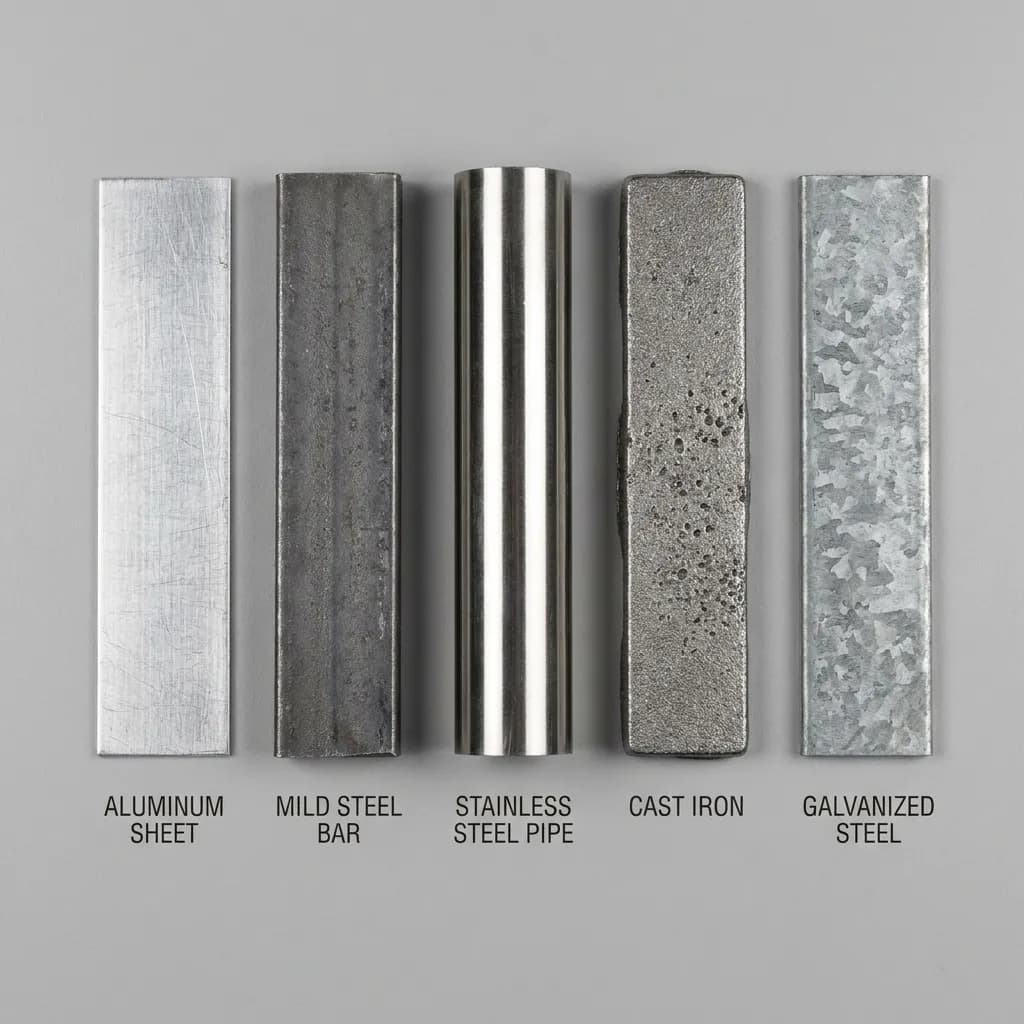
Aluminum accepts powder coating readily, but proper pretreatment is essential for long-term adhesion and corrosion protection. The standard pretreatment process involves degreasing to remove oils and contaminants, followed by an acid or alkaline etch to create surface roughness, and then application of a conversion coating. Chrome-free conversion coatings based on titanium or zirconium chemistry have largely replaced traditional hexavalent chromium processes due to environmental and health regulations. These modern pretreatments provide excellent adhesion promotion and corrosion resistance while meeting the requirements of quality standards such as Qualicoat and GSB.
Ready to Start Your Project?
From one-off customs to 15,000-part production runs — get precise pricing in 24 hours.
On This Page
Aluminum: The Architectural Standard
One consideration with aluminum is alloy selection. Different aluminum alloys can produce slightly different coating appearances, particularly with metallic or textured finishes, due to variations in surface chemistry and roughness after pretreatment. For projects requiring consistent appearance across multiple components, specifying a single alloy series (such as 6063 for extrusions) and ensuring all components are pretreated and coated in the same batch helps achieve uniformity.
Mild Steel: The Industrial Backbone
Mild steel (low-carbon steel) is the most widely powder coated metal in industrial applications. From automotive components and agricultural equipment to shelving, enclosures, and structural steelwork, mild steel's strength, availability, and low cost make it ubiquitous in manufacturing. Powder coating provides the corrosion protection that bare steel critically needs, transforming a rust-prone material into a durable, attractive finished product.
Pretreatment for mild steel is more demanding than for aluminum because steel is highly susceptible to corrosion. The standard industrial pretreatment involves degreasing, followed by iron phosphate or zinc phosphate conversion coating. Iron phosphate is simpler and less expensive, suitable for indoor applications and mild environments. Zinc phosphate provides significantly better corrosion protection and is specified for exterior applications, automotive components, and any environment where salt spray, humidity, or chemical exposure is expected.
For maximum corrosion protection on steel, a dual-coat system is often specified: an epoxy primer applied first for adhesion and barrier protection, followed by a polyester topcoat for UV resistance and decorative appearance. This primer-plus-topcoat approach is standard for architectural steel, outdoor furniture, and any application requiring long-term exterior durability. The combined system can achieve salt spray resistance of 1,000+ hours, meeting the requirements of ISO 12944 corrosivity categories up to C4 and C5.
Stainless Steel: Specialty Applications
Stainless steel is less commonly powder coated than aluminum or mild steel because its inherent corrosion resistance often eliminates the need for a protective coating. However, there are applications where powder coating stainless steel makes sense — primarily for decorative purposes, color coding, or to provide additional protection in extremely aggressive environments such as marine, chemical processing, or food and beverage facilities.
The main challenge with powder coating stainless steel is adhesion. The chromium oxide passive layer that gives stainless steel its corrosion resistance also makes it difficult for coatings to bond to the surface. Standard pretreatment processes used for mild steel or aluminum are often insufficient. Successful powder coating of stainless steel typically requires aggressive mechanical preparation such as grit blasting with aluminum oxide media to create adequate surface roughness, followed by a suitable conversion coating or adhesion-promoting primer.
Different stainless steel grades present different challenges. Austenitic grades (304, 316) are the most commonly coated and respond well to grit blasting followed by powder application. Ferritic and martensitic grades may require adjusted pretreatment parameters. For all stainless steel grades, thorough testing of adhesion — including cross-cut adhesion tests and boiling water immersion tests — should be performed during the qualification process to ensure the coating system will perform reliably in service.
Galvanized Steel: Managing Outgassing
Galvanized steel — steel coated with a protective zinc layer through hot-dip galvanizing or electrogalvanizing — is widely used in construction, infrastructure, and outdoor applications. Powder coating galvanized steel can provide both the corrosion protection of the zinc layer and the aesthetic appeal and additional barrier protection of the powder coating. However, galvanized steel presents a unique challenge: outgassing.
Outgassing occurs because the zinc coating contains trapped moisture and gases that are released when the part is heated during the powder coating cure cycle. As these gases escape through the curing powder film, they create pinholes, craters, and bubbles that compromise both the appearance and protective performance of the coating. This is the single most common cause of powder coating failures on galvanized substrates and must be addressed through proper process control.
The standard solution is to pre-bake (degas) the galvanized parts before powder application. Heating the parts to a temperature at or above the powder cure temperature — typically 200-220°C — for 15-30 minutes drives off trapped gases before the powder is applied. After cooling, the parts are pretreated with a suitable conversion coating (sweep blasting followed by a zinc-compatible conversion coating is common), powder coated, and cured normally. Some powder coating formulations are specifically designed for galvanized substrates and are more tolerant of minor outgassing. Specifying these products and working with an applicator experienced in coating galvanized steel significantly improves results.
Cast Iron and Cast Aluminum: Porosity Challenges
Cast metals — including cast iron, cast aluminum, and zinc die castings — are widely used in automotive, industrial, and decorative applications. These substrates can be successfully powder coated, but their inherent porosity presents challenges similar to outgassing on galvanized steel. During casting, gases become trapped in the metal matrix, and the surface contains microscopic pores that can release air and moisture during the heat cure cycle.
For cast iron, the pretreatment process typically involves shot blasting to remove casting scale and create surface roughness, followed by a phosphate conversion coating. Pre-baking at cure temperature is strongly recommended to drive off trapped gases and moisture before powder application. Cast iron's thermal mass also means it heats and cools more slowly than sheet metal, so oven dwell times may need to be extended to ensure the part reaches full cure temperature throughout.
Cast aluminum presents similar porosity challenges, compounded by the fact that aluminum castings often contain release agents and other contaminants from the casting process that must be thoroughly removed before coating. Alkaline cleaning followed by acid etching and conversion coating is the standard pretreatment sequence. For high-quality decorative finishes on cast aluminum — such as outdoor light fixtures, furniture components, and architectural hardware — a pre-bake cycle followed by an epoxy primer and polyester topcoat provides the most reliable results, filling minor surface porosity and creating a smooth, defect-free finish.
Non-Metal Substrates: MDF, Plastics, and Emerging Technologies
While powder coating has traditionally been limited to electrically conductive metal substrates — because the electrostatic application process requires the part to be grounded — advances in technology are expanding the range of materials that can be powder coated. Medium-density fiberboard (MDF) is the most commercially significant non-metal substrate currently being powder coated, with applications in furniture, kitchen cabinets, shelving, and interior architectural panels.
Powder coating MDF requires specialized low-temperature cure formulations that cure at 120-150°C to avoid damaging the wood fiber substrate. The MDF surface is made conductive through moisture conditioning or application of a conductive primer, allowing the electrostatically charged powder to adhere. The resulting finish is harder, more durable, and more environmentally friendly than traditional liquid lacquer finishes on MDF, with zero VOC emissions and excellent edge coverage.
Plastics and composites represent the next frontier for powder coating technology. Some thermally stable plastics such as glass-filled nylon and certain thermoset composites can withstand the temperatures required for low-cure powder coatings. Research into UV-cured powder coatings — which cure at near-ambient temperatures using ultraviolet light — promises to further expand the substrate range to include heat-sensitive plastics, pre-assembled components, and even paper-based materials. While these technologies are still emerging, they signal a future where powder coating's environmental and performance advantages can be applied to an ever-wider range of products.
Frequently Asked Questions
Can you powder coat any metal?
Most metals can be powder coated, including aluminum, steel, stainless steel, galvanized steel, cast iron, cast aluminum, brass, copper, and zinc die castings. The key requirement is that the metal must be able to withstand the curing temperature (typically 160-200°C) and must be properly pretreated for adhesion. Each metal type has specific pretreatment requirements.
Why does powder coating on galvanized steel sometimes bubble?
Bubbling on galvanized steel is caused by outgassing — trapped moisture and gases in the zinc layer escape during the heat cure cycle, creating pinholes and bubbles in the coating. The solution is to pre-bake the galvanized parts at cure temperature for 15-30 minutes before applying the powder coating to drive off these gases.
Can wood or MDF be powder coated?
Yes, MDF can be powder coated using specialized low-temperature cure formulations that cure at 120-150°C. The MDF surface is made conductive through moisture conditioning or a conductive primer. Solid wood is more challenging due to moisture content and dimensional instability, but MDF powder coating is commercially established for furniture and cabinetry.
Is aluminum or steel easier to powder coat?
Aluminum is generally easier to powder coat because it is naturally corrosion-resistant and requires less aggressive pretreatment. Steel requires more robust pretreatment (zinc phosphate) and often a primer coat for adequate corrosion protection. However, both metals are routinely powder coated with excellent results when proper processes are followed.
Do you need to remove old paint before powder coating?
Yes, all existing coatings, paint, rust, and surface contaminants must be completely removed before powder coating. This is typically done through chemical stripping, media blasting, or burn-off ovens. Applying powder coating over old paint will result in poor adhesion, uneven finish, and premature coating failure.
Ready to Start Your Project?
From one-off customs to 15,000-part production runs — get precise pricing in 24 hours.