Qualicoat is an international quality label for powder-coated and liquid-painted aluminum used in architecture. Established in 1986 and headquartered in Zurich, Switzerland, Qualicoat sets comprehensive quality requirements for the entire coating process — from pretreatment and powder selection to application, curing, and quality control. The certification provides architects, specifiers, and building owners with confidence that powder-coated aluminum products will perform reliably over their intended service life.
Technical
What Is Qualicoat Certification? The European Quality Mark for Powder Coating
Sundial Powder Coating·April 23, 2026·12 min
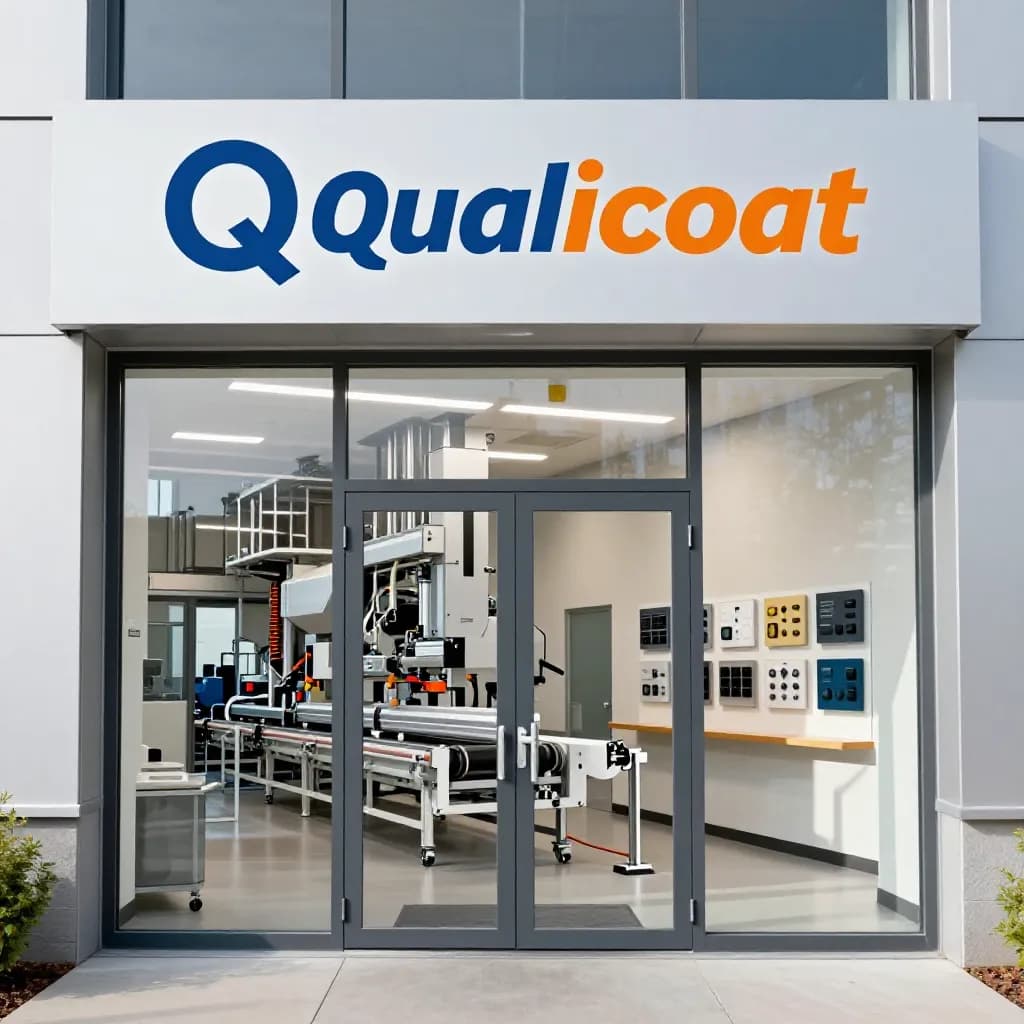
Qualicoat certification is not a product certification — it is a process and system certification. It certifies that a coating applicator's entire operation meets Qualicoat's requirements, including equipment capability, process control, raw material selection, quality testing, and staff competence. Only applicators who have been audited and approved by Qualicoat-authorized inspection bodies can use the Qualicoat quality label on their products.
Ready to Start Your Project?
From one-off customs to 15,000-part production runs — get precise pricing in 24 hours.
On This Page
What Qualicoat Certification Is
The Qualicoat system is built on a foundation of regular, unannounced inspections. Licensed applicators are inspected at least twice per year by independent inspectors who verify compliance with all Qualicoat requirements. These inspections include process audits, product testing, and review of quality records. Non-compliance can result in suspension or withdrawal of the license.
Qualicoat certification is recognized and specified worldwide, though its strongest presence is in Europe, the Middle East, and Asia-Pacific. It is the most widely referenced quality standard for architectural powder coating and is routinely included in building specifications for commercial, institutional, and high-end residential projects.
Qualicoat Quality Classes Explained
Qualicoat defines three quality classes that correspond to different levels of coating durability, allowing specifiers to match the coating performance to the project's requirements and environmental exposure.
Class 1 is the standard quality level, suitable for most architectural applications in moderate environments. Class 1 coatings use standard polyester powder with TGIC or HAA crosslinkers, applied at a minimum film thickness of 60 microns. The coating must pass accelerated weathering tests demonstrating adequate gloss retention and color stability for normal architectural service. Class 1 is appropriate for buildings in urban and suburban environments without extreme UV exposure or aggressive atmospheric conditions.
Class 2 requires super durable polyester powder coatings that demonstrate significantly enhanced weathering resistance compared to Class 1. The accelerated weathering requirements are approximately twice as demanding as Class 1, and the coatings must also pass extended natural weathering exposure in Florida. Class 2 is specified for buildings in high-UV environments, coastal locations, and projects where extended maintenance-free service life is required. The super durable polyester formulations used for Class 2 contain modified resin systems that resist UV degradation more effectively than standard polyester.
Class 3 requires fluoropolymer powder coatings — either PVDF or FEVE chemistry — that provide the highest level of weathering resistance. Class 3 coatings must demonstrate exceptional gloss retention and color stability through the most demanding accelerated and natural weathering tests. Class 3 is specified for landmark buildings, high-rise facades, and projects with design lives of 30 years or more where the coating must maintain its appearance throughout the building's service life.
The class system provides a clear, simple framework for specifiers to communicate their durability requirements. By specifying the Qualicoat class, the architect ensures that the coating system — including powder chemistry, pretreatment, and application process — meets a defined performance standard.
Pretreatment Requirements
Qualicoat places significant emphasis on pretreatment quality, recognizing that the long-term performance of the coating system depends critically on the preparation of the aluminum substrate. The specification defines detailed requirements for each stage of the pretreatment process.
The standard Qualicoat pretreatment sequence for aluminum includes degreasing, rinsing, acid or alkaline etching to remove the natural oxide layer, rinsing, conversion coating application, rinsing, and final deionized water rinse. Each stage has specified parameters for chemical concentration, temperature, contact time, and rinse water quality.
Conversion coating is a critical step. Qualicoat approves specific conversion coating chemistries that have been tested and validated for use in the Qualicoat system. These include chromate-based treatments (being phased out due to environmental regulations), chrome-free alternatives based on titanium/zirconium chemistry, and other approved systems. Each approved conversion coating has been demonstrated to provide adequate adhesion and corrosion resistance when used with Qualicoat-approved powders.
The etch depth — the amount of aluminum removed during the etching stage — is specified and monitored. Qualicoat requires a minimum etch weight of 2 grams per square meter for standard pretreatment, ensuring that the natural oxide layer and any surface contamination are completely removed. Insufficient etching leaves contaminants that compromise adhesion, while excessive etching wastes material and can damage the surface.
Qualicoat Seaside is an enhanced pretreatment specification for aluminum products installed in coastal and marine environments. Seaside certification requires additional pretreatment steps, including an anodic oxide layer or enhanced conversion coating, that provide superior corrosion resistance in salt-laden atmospheres. The Seaside specification also requires a two-coat system with an approved primer.
Pretreatment quality is verified during Qualicoat inspections through testing of pretreated panels for etch weight, conversion coating weight, and adhesion. Process parameters are reviewed against the approved process specification, and any deviations are flagged for corrective action.
Powder and Application Requirements
Qualicoat maintains a list of approved powder coatings that have been tested and certified to meet the performance requirements of each quality class. Only powders from this approved list may be used by Qualicoat-licensed applicators. This ensures that the powder chemistry, formulation, and performance have been independently verified before the powder enters production use.
Powder manufacturers submit their products for Qualicoat approval testing, which includes accelerated weathering, mechanical testing, chemical resistance, and natural outdoor exposure. Products that meet the requirements for a specific class are added to the approved list and can be used by any licensed applicator for that class. The approved powder list is publicly available and regularly updated.
Film thickness requirements are clearly defined. Class 1 and Class 2 require a minimum of 60 microns average film thickness with no individual reading below 80 percent of the specified minimum. Class 3 PVDF systems require a minimum primer thickness plus topcoat thickness as specified by the powder manufacturer. These thickness requirements ensure adequate barrier protection and aesthetic performance.
Cure verification is required for every production batch. Qualicoat specifies that cure level must be verified using differential scanning calorimetry (DSC) or solvent resistance testing. Under-cured coatings have reduced performance and are not acceptable under the Qualicoat system.
Application equipment must be maintained in good condition and calibrated regularly. Spray guns, powder feed systems, and curing ovens must operate within their specified parameters. Qualicoat inspectors verify equipment condition and calibration records during their audits.
Color and gloss must be measured and recorded for each production batch using calibrated instruments. Qualicoat specifies tolerances for color deviation (Delta E) and gloss variation that ensure consistency between batches and across different production runs.
Testing and Inspection Requirements
The Qualicoat system requires extensive testing at multiple levels: powder manufacturer testing for product approval, applicator testing for production quality control, and independent inspector testing during audits.
Accelerated weathering testing is the cornerstone of Qualicoat's durability assessment. Powder products are tested in xenon arc weathering chambers that simulate the effects of sunlight, heat, and moisture. Class 1 powders must retain specified gloss and color after 1000 hours of exposure. Class 2 powders must meet more demanding requirements after extended exposure. Class 3 fluoropolymer powders must demonstrate the highest retention levels.
Natural weathering exposure in Florida supplements accelerated testing for Class 2 and Class 3 products. Test panels are mounted on outdoor exposure racks in South Florida and evaluated periodically for gloss retention, color change, chalking, and film integrity. This real-world exposure data validates the accelerated test results and provides confidence in long-term performance predictions.
Mechanical testing includes adhesion (cross-cut test per ISO 2409), hardness (pencil hardness or Buchholz indentation), impact resistance (direct and reverse impact), and flexibility (bend testing). These tests verify that the cured coating has adequate mechanical properties for handling, installation, and service.
Corrosion resistance testing includes the Machu test (acetic acid salt spray) and the Kesternich test (sulfur dioxide exposure), which evaluate the coating system's resistance to specific corrosive environments. The Machu test is particularly relevant for architectural applications because it simulates the acidic conditions created by industrial pollution.
Boiling water resistance testing evaluates the adhesion and blister resistance of the coating system after immersion in boiling water. This test stresses the pretreatment and coating adhesion and is a sensitive indicator of pretreatment quality.
Production quality control testing by the applicator includes daily film thickness measurement, gloss measurement, adhesion testing, and cure verification. Results are recorded and available for review during Qualicoat inspections.
How to Specify Qualicoat in Building Projects
Specifying Qualicoat certification in building projects requires clear, unambiguous language in the project specification that communicates the required quality class, any additional requirements such as Seaside certification, and the verification method.
A typical Qualicoat specification clause might read: All powder-coated aluminum shall be finished by a Qualicoat-licensed applicator using Qualicoat-approved powder coatings. The coating system shall meet Qualicoat Class 2 requirements. The applicator shall provide a Qualicoat license certificate and test reports demonstrating compliance.
For coastal or marine projects, adding the Seaside requirement: The coating system shall meet Qualicoat Seaside requirements, including enhanced pretreatment and two-coat application with an approved primer.
Specifiers should verify that the proposed applicator holds a current Qualicoat license by checking the Qualicoat website, which maintains a searchable database of licensed applicators worldwide. The license should be current and should cover the specific quality class required by the project.
Requesting the applicator's most recent Qualicoat inspection report provides additional assurance of compliance. These reports document the inspector's findings, including any non-conformances and corrective actions. A clean inspection report indicates a well-managed coating operation.
Color specification should reference the Qualicoat color tolerance requirements and specify the color standard (RAL, NCS, or custom reference) with acceptable Delta E limits. For large projects with multiple delivery batches, specifying batch-to-batch color consistency requirements prevents visible color variation on the finished building.
For projects outside Europe where Qualicoat may be less familiar, the specification should explain what Qualicoat certification means and why it is required. Including a brief description of the certification system helps contractors and suppliers understand the quality expectations and source appropriate products and services.
Qualicoat vs. Other Quality Standards
Qualicoat is one of several quality certification systems for architectural powder coating, and understanding how it relates to other standards helps specifiers make informed choices.
GSB International is the other major European quality mark for coated aluminum. GSB and Qualicoat have similar objectives and comparable testing requirements, though they differ in some specific test methods and classification systems. GSB uses Standard, Master, and Premium tiers that roughly correspond to Qualicoat Classes 1, 2, and 3. Both systems are widely accepted in Europe, and many applicators hold both certifications.
AAMA specifications (2603, 2604, 2605) are the North American equivalents. AAMA 2603 corresponds roughly to Qualicoat Class 1, AAMA 2604 to Class 2, and AAMA 2605 to Class 3. The testing methodologies differ — AAMA relies heavily on natural Florida exposure testing, while Qualicoat uses a combination of accelerated and natural exposure. Both approaches provide reliable performance assessment.
ISO 9001 quality management certification is sometimes confused with coating quality certification, but they are fundamentally different. ISO 9001 certifies that an organization has a quality management system in place, but it does not specify the technical requirements for the coating process or product. A Qualicoat license provides both system and technical certification.
For international projects, specifiers may reference multiple standards to ensure that bidders from different regions can demonstrate equivalent quality. A specification might state: Coating shall meet Qualicoat Class 2, GSB Master, or AAMA 2604 requirements, allowing applicators certified under any of these equivalent systems to bid.
The trend in the industry is toward harmonization of quality standards, with the major certification bodies working to align their requirements and testing methods. This benefits specifiers by simplifying cross-referencing and ensures that certified products from different regions provide comparable performance.
Frequently Asked Questions
What is Qualicoat certification?
Qualicoat is an international quality label for powder-coated aluminum in architecture. It certifies that a coating applicator's entire process — pretreatment, powder selection, application, curing, and quality control — meets defined performance standards verified through regular independent inspections.
What are the Qualicoat quality classes?
Class 1 uses standard polyester for moderate environments. Class 2 uses super durable polyester for enhanced weathering resistance. Class 3 uses fluoropolymer coatings (PVDF or FEVE) for maximum durability. Each class has progressively more demanding weathering and performance requirements.
What is Qualicoat Seaside?
Qualicoat Seaside is an enhanced specification for aluminum in coastal and marine environments. It requires additional pretreatment steps, including anodic oxide or enhanced conversion coating, and a two-coat system with an approved primer for superior corrosion resistance in salt-laden atmospheres.
How do I verify a Qualicoat license?
The Qualicoat website maintains a searchable database of licensed applicators worldwide. You can verify that an applicator holds a current license and check which quality classes they are certified for. Request the applicator's most recent inspection report for additional assurance.
How does Qualicoat compare to AAMA specifications?
Qualicoat Class 1 roughly corresponds to AAMA 2603, Class 2 to AAMA 2604, and Class 3 to AAMA 2605. Testing methodologies differ but both provide reliable performance assessment. For international projects, specifying equivalent standards from both systems allows broader bidding.
Ready to Start Your Project?
From one-off customs to 15,000-part production runs — get precise pricing in 24 hours.