Powder coating is a dry finishing process that has become one of the most popular methods for protecting and beautifying metal surfaces worldwide. Unlike conventional liquid paint, which relies on solvents to keep the coating in a liquid state during application, powder coating uses finely ground particles of pigment and resin that are electrostatically charged and sprayed onto a surface. The coated part is then placed in a curing oven where the powder melts, flows, and chemically cross-links to form a hard, durable, and uniform finish.
Technical
What Is Powder Coating? The Complete Beginner's Guide
Sundial Powder Coating·April 20, 2026·10 min
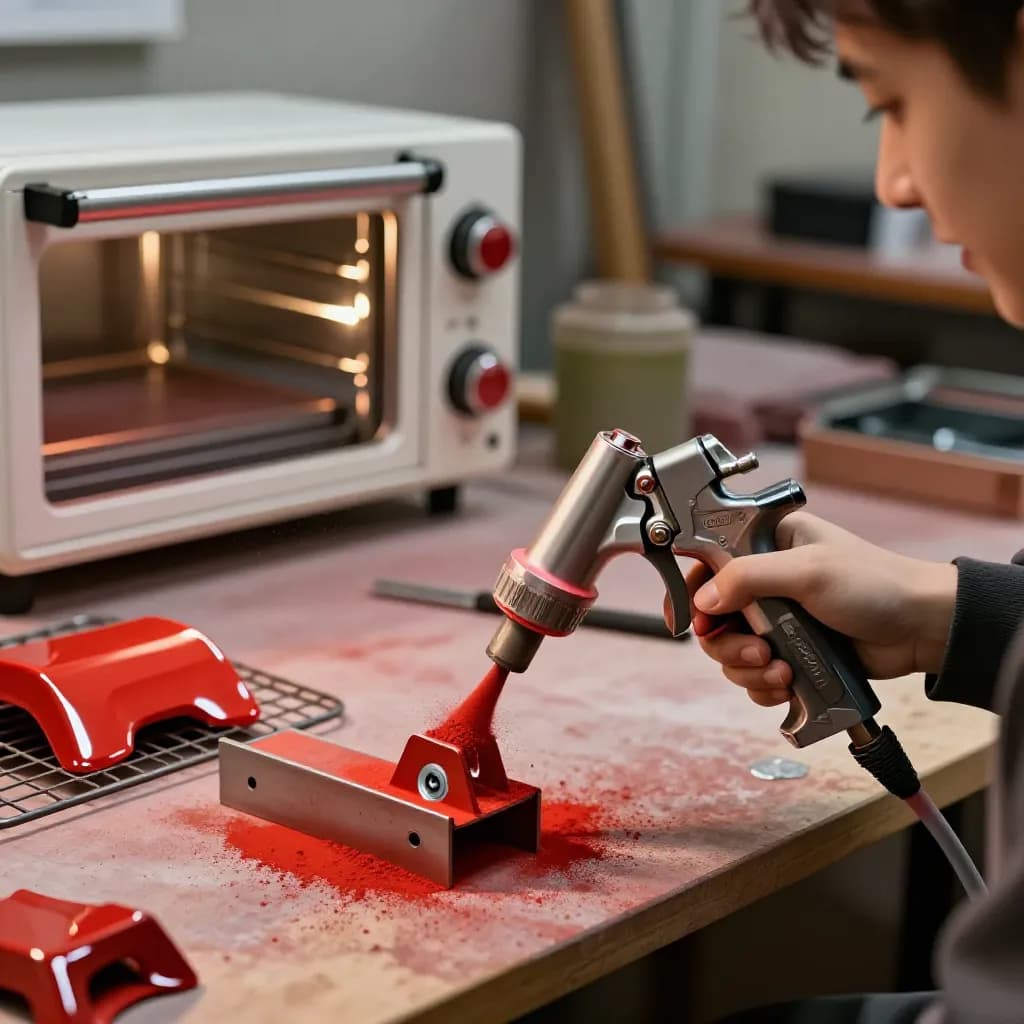
The technology was first developed in the 1940s and 1950s, with early applications using a fluidized bed dipping method. The introduction of electrostatic spray application in the 1960s revolutionized the process, making it practical for a wide range of industrial and architectural applications. Today, powder coating accounts for over 15% of the total industrial finishing market and continues to grow as manufacturers and specifiers seek more durable, cost-effective, and environmentally responsible coating solutions.
Ready to Start Your Project?
From one-off customs to 15,000-part production runs — get precise pricing in 24 hours.
On This Page
What Is Powder Coating?
One of the most significant advantages of powder coating is its near-zero emission of volatile organic compounds (VOCs). Because there are no solvents in the formulation, the application process releases virtually no harmful chemicals into the atmosphere. This makes powder coating one of the most environmentally friendly finishing technologies available, aligning with increasingly stringent environmental regulations and green building standards around the world.
How the Powder Coating Process Works
The powder coating process consists of three main stages: surface preparation, powder application, and curing. Each stage is critical to achieving a high-quality, long-lasting finish.
Surface preparation is arguably the most important step. The substrate must be thoroughly cleaned to remove all oils, grease, dirt, mill scale, rust, and other contaminants that could interfere with adhesion. For metal substrates, this typically involves a multi-stage pretreatment process that may include alkaline cleaning, acid etching or pickling, and the application of a conversion coating such as iron phosphate, zinc phosphate, or chromate-free alternatives like zirconium-based treatments. Proper pretreatment not only ensures excellent adhesion but also significantly enhances corrosion resistance.
During the application stage, the powder is loaded into a spray gun that imparts an electrostatic charge to the particles as they exit the nozzle. The charged powder particles are attracted to the electrically grounded workpiece, creating a uniform layer of powder on the surface. The electrostatic attraction holds the powder in place until the part enters the curing oven. In the oven, the powder is heated to temperatures typically between 160 and 200 degrees Celsius, causing the particles to melt, flow together, and undergo a chemical cross-linking reaction that produces a tough, continuous film. Curing times generally range from 10 to 20 minutes at the target temperature, depending on the specific powder formulation and the mass of the substrate.
Types of Powder Coating
Powder coatings are broadly divided into two categories based on their chemistry: thermoset and thermoplastic. Thermoset powders undergo an irreversible chemical cross-linking reaction during curing, creating a finish that will not remelt when reheated. Thermoplastic powders, on the other hand, simply melt and flow during curing without cross-linking, meaning they can be remelted. Thermoset powders dominate the market due to their superior hardness, chemical resistance, and heat resistance.
Within the thermoset category, several resin chemistries are available to suit different performance requirements. Polyester powder coatings are the most widely used, offering excellent UV resistance, color retention, and weatherability, making them the standard choice for architectural and exterior applications. Epoxy powder coatings provide outstanding chemical resistance, adhesion, and corrosion protection but have poor UV resistance, limiting them to interior or primer applications. Hybrid (polyester-epoxy) powder coatings combine properties of both chemistries, offering good chemical resistance and better UV performance than pure epoxies, making them popular for indoor furniture, shelving, and appliances.
Polyurethane powder coatings deliver exceptional smoothness, chemical resistance, and thin-film performance, often used for automotive and high-end decorative applications. Fluoropolymer powder coatings, based on PVDF (polyvinylidene fluoride) or FEVE chemistry, offer the ultimate in weathering performance and are specified for premium architectural projects where decades of color and gloss retention are required. Each chemistry has its optimal application range, and selecting the right one depends on the end-use environment, performance specifications, and budget.
What Can Be Powder Coated?
Powder coating is most commonly applied to metal substrates because metals are electrically conductive, which is essential for the electrostatic application process. Aluminum, steel, stainless steel, galvanized steel, and cast iron are all routinely powder coated. Aluminum is particularly popular in architectural applications such as window frames, curtain walls, and facade panels, while steel is common in industrial equipment, automotive parts, and structural components.
However, advances in powder coating technology have expanded the range of substrates that can be coated. Medium-density fiberboard (MDF) can now be powder coated using specialized processes that involve preheating the substrate or using infrared curing to avoid the high oven temperatures that would damage the wood fibers. Some engineered plastics and composites can also be powder coated using low-temperature cure formulations that cure at temperatures as low as 120 to 140 degrees Celsius.
Glass and ceramics can be powder coated for decorative applications, and even certain heat-resistant plastics have been successfully coated. For non-conductive substrates, a conductive primer or pretreatment may be applied first to enable electrostatic attraction, or alternative application methods such as fluidized bed dipping can be used. Despite these advances, metals remain the primary substrates for powder coating, and the vast majority of powder coating lines worldwide are designed for metal finishing.
Advantages Over Traditional Paint
Powder coating offers numerous advantages over traditional liquid paint that have driven its adoption across industries. The most significant environmental advantage is the near-complete elimination of VOC emissions. Liquid paints typically contain 30 to 60 percent solvents by weight, all of which evaporate during application and drying, releasing harmful chemicals into the atmosphere. Powder coatings contain no solvents, making them compliant with the strictest environmental regulations without the need for expensive solvent recovery or abatement equipment.
From a performance standpoint, powder coatings generally deliver superior durability compared to liquid paints. A single coat of powder coating typically provides 60 to 120 microns of film thickness, equivalent to two or three coats of liquid paint. The resulting finish is harder, more scratch-resistant, more flexible, and more resistant to chipping, fading, and wear. Powder coatings also offer excellent chemical resistance and can withstand exposure to fuels, solvents, cleaning agents, and other harsh substances that would damage conventional paint.
Powder coating is also more efficient in terms of material usage. Overspray powder that does not adhere to the workpiece can be collected and recycled back into the application system, achieving material utilization rates of 95 to 98 percent. In contrast, liquid paint overspray is typically lost as waste. This efficiency translates to lower material costs per square meter of coated surface. Additionally, powder coating requires no mixing, thinning, or pot-life management, simplifying the application process and reducing the risk of operator error.
Common Applications
Powder coating is used across a remarkably wide range of industries and applications. In architecture, it is the preferred finish for aluminum window frames, door systems, curtain walls, facade cladding panels, louvers, railings, and structural glazing components. Architectural powder coatings are specified to meet rigorous quality standards such as Qualicoat, GSB, and AAMA, which ensure long-term color stability, gloss retention, and corrosion resistance in exterior environments.
The automotive industry uses powder coating extensively for wheels, bumpers, engine components, chassis parts, and underbody protection. The combination of excellent corrosion resistance, stone chip resistance, and consistent finish quality makes powder coating ideal for automotive applications. In the furniture and fixtures sector, powder coating is the standard finish for office furniture, shelving systems, retail displays, lighting fixtures, and playground equipment, where durability and a wide range of color and texture options are valued.
Industrial applications include agricultural equipment, construction machinery, electrical enclosures, pipeline components, and general metal fabrication. The appliance industry relies on powder coating for refrigerators, washing machines, dryers, and other household appliances where a durable, attractive finish is essential. Sporting goods, bicycle frames, garden tools, and decorative ironwork are also commonly powder coated. As the technology continues to advance with lower cure temperatures, thinner films, and expanded substrate compatibility, the range of applications for powder coating continues to grow.
Frequently Asked Questions
Is powder coating better than paint?
Powder coating generally outperforms traditional liquid paint in terms of durability, scratch resistance, corrosion protection, and environmental impact. It produces a thicker, more uniform finish in a single coat, contains no solvents or VOCs, and achieves material utilization rates of 95-98%. However, liquid paint may be preferred for very thin films, touch-up work, or substrates that cannot withstand the heat curing process.
How much does powder coating cost?
The cost of powder coating varies depending on the size and complexity of the part, the type of powder used, surface preparation requirements, and the volume of parts being coated. For small to medium parts, costs typically range from a few dollars to $50 or more per piece. For architectural projects, costs are usually calculated per square meter. While the per-unit cost may be higher than basic liquid paint, the superior durability and lower maintenance requirements often make powder coating more cost-effective over the product's lifetime.
Can powder coating be done at home?
Yes, DIY powder coating is possible with a home powder coating kit that includes a small electrostatic spray gun and a curing oven. Many hobbyists use converted kitchen ovens or purpose-built curing ovens for small parts like automotive components, bicycle frames, and decorative items. However, achieving professional-quality results requires proper surface preparation, consistent powder application, and accurate temperature control during curing.
What colors are available in powder coating?
Powder coating is available in virtually any color, including the full RAL Classic range of over 200 standardized colors, as well as custom color matches. Beyond solid colors, powder coatings come in a wide variety of finishes including matte, satin, semi-gloss, high gloss, metallic, pearlescent, textured, and special effects like wood grain and stone. Major manufacturers offer thousands of standard colors and finishes.
How thick is a powder coating finish?
A standard single coat of powder coating typically ranges from 60 to 120 microns (2.4 to 4.7 mils) in thickness, which is significantly thicker than a single coat of liquid paint (typically 15-25 microns). For architectural applications, specifications like Qualicoat require minimum film thicknesses of 60 microns for standard coatings. Some applications may use thinner or thicker films depending on performance requirements and the specific powder formulation.
Ready to Start Your Project?
From one-off customs to 15,000-part production runs — get precise pricing in 24 hours.