Back ionization is a powder coating defect caused by excessive electrical charge buildup in the deposited powder layer on a grounded workpiece. As charged powder particles accumulate on the part surface during electrostatic spray application, the growing powder layer acts as an insulator, trapping electrical charge. When the charge density in the powder layer exceeds a critical threshold, the trapped charge creates localized electrical breakdowns — tiny sparks within the powder layer — that disrupt the smooth, uniform deposit and create visible defects in the cured coating.
Technical
What Is Back Ionization in Powder Coating? Causes and Solutions
Sundial Powder Coating·April 23, 2026·11 min
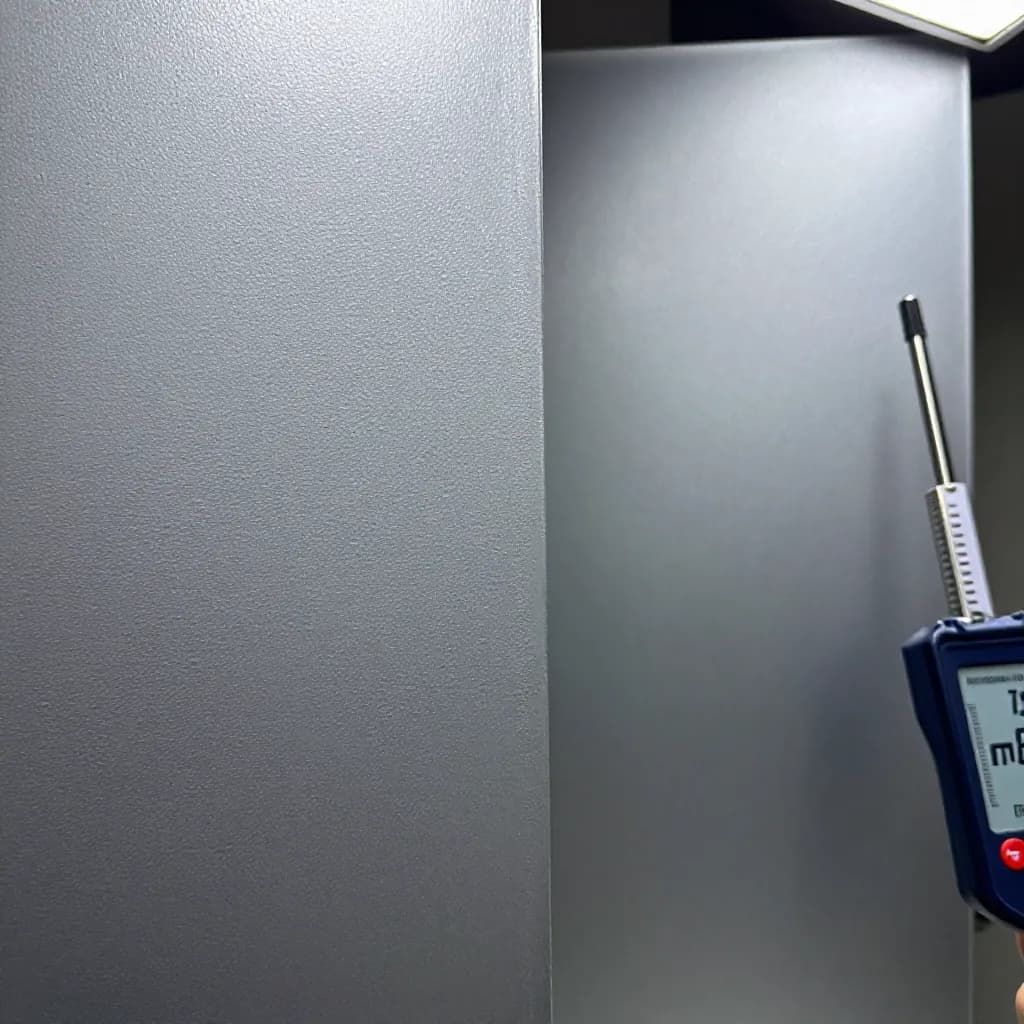
The defects caused by back ionization are distinctive. The coating surface develops a rough, textured appearance often described as starring, cratering, or a lunar surface pattern. Small craters or pits appear where the electrical discharges disrupted the powder layer, and the overall surface texture is significantly rougher than a properly applied coating. In severe cases, the coating may have a mottled or uneven appearance with visible variations in thickness and texture.
Ready to Start Your Project?
From one-off customs to 15,000-part production runs — get precise pricing in 24 hours.
On This Page
What Back Ionization Is
Back ionization is fundamentally a problem of excessive charge. It occurs most commonly when corona charging guns are operated at high voltage, when film thickness exceeds approximately 100-125 microns, when multiple coats are applied without intermediate curing, or when environmental conditions such as low humidity increase the charge retention of the powder layer.
Understanding the physics of back ionization is essential for preventing it, because the solutions all involve managing the electrical charge in the powder layer to keep it below the critical breakdown threshold.
The Physics of Charge Buildup and Breakdown
To understand back ionization, it helps to visualize what happens at the microscopic level as charged powder accumulates on a grounded part. Each powder particle arriving at the surface carries a negative charge imparted by the corona gun's high-voltage electrode. As particles deposit and build up the powder layer, the charge on each particle is trapped because the powder is an electrical insulator — it cannot conduct the charge away to the grounded substrate quickly enough.
As the powder layer grows thicker, the total trapped charge increases. This creates an electric field within the powder layer that opposes the incoming charged particles. At moderate charge levels, this opposing field simply reduces the deposition rate — a self-limiting effect that naturally slows powder buildup as the film gets thicker. This is actually a useful characteristic that helps prevent excessive film thickness in normal operation.
However, when the charge density exceeds the dielectric strength of the powder layer — typically at film thicknesses above 100-125 microns with standard corona settings — the trapped charge causes electrical breakdown. Small ionization channels form through the powder layer, creating paths for charge to discharge to the grounded substrate. These discharges physically disrupt the powder layer, blowing small craters in the surface and creating the characteristic back ionization defect pattern.
The free ions generated by the corona electrode compound the problem. In addition to charging the powder particles, the corona discharge produces a stream of free negative ions that travel to the grounded part and deposit on the powder layer surface. These free ions add to the charge buildup without depositing any powder, accelerating the onset of back ionization. This is why back ionization is primarily a corona charging problem — triboelectric guns do not produce free ions.
The critical charge density at which breakdown occurs depends on the powder's dielectric properties, the particle size distribution, the packing density of the deposited layer, and environmental factors such as humidity. Finer powders pack more densely and trap charge more effectively, making them more susceptible to back ionization than coarser powders.
Recognizing Back Ionization Defects
Identifying back ionization defects correctly is important because the corrective actions differ from those for other common defects such as orange peel, outgassing, or contamination. Misdiagnosis leads to ineffective corrective actions and continued quality problems.
The classic back ionization pattern is a rough, cratered surface texture that appears uniformly across areas of thick powder deposit. The craters are typically small — 0.5 to 2 millimeters in diameter — and densely packed, giving the surface a sandpaper-like or lunar appearance. The texture is distinctly different from orange peel, which produces rounded, smooth undulations rather than sharp craters.
Back ionization defects are most severe in areas where the powder layer is thickest. On a part with varying geometry, the flat surfaces facing the spray guns will typically show the worst defects because they receive the most powder. Recessed areas and edges, which receive less powder, may appear smooth and defect-free. This thickness-dependent pattern is a strong diagnostic indicator of back ionization.
The defects are visible in the uncured powder layer before the part enters the oven. Experienced operators can spot back ionization by examining the powder deposit under raking light — the disrupted surface appears rough and uneven compared to a smooth, undisturbed deposit. Catching back ionization at this stage allows the part to be blown off and recoated with corrected parameters, avoiding the waste of curing a defective coating.
After curing, back ionization defects are permanent. The craters and rough texture are locked into the cross-linked coating and cannot be smoothed by additional heat or flow. The only remedy for cured back ionization is stripping and recoating.
Back ionization can be confused with outgassing, but the two defects have different characteristics. Outgassing craters typically have raised rims and may expose bare substrate at their centers, while back ionization craters are shallower and more uniformly distributed. Outgassing is substrate-dependent (worse on castings and galvanized steel), while back ionization is thickness-dependent (worse on thick films regardless of substrate).
Voltage Control: The Primary Solution
Reducing the electrostatic voltage is the most direct and effective solution for back ionization. Lower voltage produces fewer free ions, reduces the charge imparted to each powder particle, and slows the rate of charge accumulation in the deposited layer. This keeps the charge density below the critical breakdown threshold, preventing back ionization even at moderate film thicknesses.
Modern corona guns with adjustable voltage and current controls allow operators to optimize the electrostatic parameters for each application. For initial coating on bare metal, higher voltages of 70-100 kilovolts provide fast deposition and good wrap-around. As the film builds, reducing voltage to 40-60 kilovolts prevents charge buildup from reaching the back ionization threshold.
Some advanced gun controllers offer automatic voltage ramping, where the voltage is progressively reduced as the gun detects increasing film thickness or charge buildup on the part. This automatic adjustment maintains optimal deposition rate while preventing back ionization, without requiring manual intervention by the operator.
Current limiting is another effective control strategy. By limiting the maximum current output of the corona gun, the total charge delivered to the part per unit time is reduced. This slows the rate of charge accumulation and extends the film thickness at which back ionization occurs. Many modern controllers allow independent adjustment of voltage and current for fine-tuned charge management.
For second coats or touch-up applications where powder is being applied over an existing cured or uncured layer, voltage should be reduced significantly — typically to 30-50 kilovolts — because the existing layer already contains trapped charge. Applying a second coat at full voltage almost guarantees back ionization.
The trade-off of reduced voltage is slower deposition rate and reduced wrap-around on complex geometries. Operators must balance the need for back ionization prevention against the need for adequate coverage and production speed.
Additional Solutions and Prevention Strategies
Beyond voltage control, several additional strategies help prevent back ionization and manage the challenges of thick film applications.
Triboelectric guns eliminate back ionization entirely because they do not produce free ions. The charge on triboelectrically charged particles is lower than corona-charged particles, and the absence of free ion bombardment prevents the excessive charge buildup that causes breakdown. For applications that consistently require thick films or multiple coats, switching to triboelectric application may be the most effective solution.
Gun-to-part distance affects charge accumulation. Increasing the distance from the standard 200-250 millimeters to 300-350 millimeters reduces the concentration of charged particles and free ions reaching the part surface, slowing charge buildup. This is a simple adjustment that can be made without changing gun settings.
Powder flow rate reduction decreases the rate at which charged material arrives at the part surface, giving trapped charge more time to dissipate through the powder layer to the grounded substrate. Lower flow rates also produce thinner initial deposits that are less susceptible to charge buildup.
Intermediate curing between coats is the definitive solution for multi-coat applications. Curing the first coat before applying the second converts the powder layer from an insulator to a more conductive cross-linked film, allowing charge from the second coat to dissipate more readily. This approach adds an extra oven cycle but eliminates back ionization in the second coat.
Humidity management can help in some situations. Higher humidity in the spray booth increases the surface conductivity of the powder layer, allowing trapped charge to dissipate more quickly. However, excessive humidity can cause other problems such as powder clumping and reduced triboelectric charging, so this approach requires careful balance.
Powder formulation can influence back ionization susceptibility. Some powder manufacturers offer formulations with conductive additives or modified particle surface properties that reduce charge retention and increase the film thickness at which back ionization occurs. Consulting with the powder supplier about back ionization-resistant formulations is worthwhile for operations that regularly encounter this problem.
Thick Film Applications: Managing the Challenge
Applications requiring film thicknesses above 100 microns present inherent back ionization challenges with corona application. These applications include protective coatings for harsh environments, functional coatings for electrical insulation, and decorative coatings where thick films are specified for enhanced durability.
For single-coat thick film applications, the most effective approach combines reduced voltage (40-60 kilovolts), increased gun-to-part distance (300-350 millimeters), and moderate powder flow rates. This combination slows the deposition rate and reduces charge accumulation, allowing thicker films to be built without triggering back ionization. Film thicknesses of 125-150 microns are achievable with careful parameter optimization.
For applications requiring films above 150 microns in a single coat, triboelectric application is strongly preferred. Tribo guns can build films of 200 microns or more without back ionization because they do not produce free ions. The trade-off is slower deposition rate and limited powder chemistry compatibility, but for thick film applications, these limitations are usually acceptable.
Two-coat systems with intermediate curing provide the most reliable path to very thick films with corona application. A first coat of 60-80 microns is applied and cured, followed by a second coat of 60-80 microns. The cured first coat provides a more conductive base that reduces charge buildup in the second coat, and the total system thickness of 120-160 microns is achieved without back ionization in either coat.
Fluidized bed coating is the preferred method for applications requiring extremely thick films above 200 microns. The fluidized bed process does not involve electrostatic charging, so back ionization is not a factor. Parts are preheated and dipped into the powder bed, building thickness through thermal fusion rather than electrostatic deposition.
Process validation for thick film applications should include test panels coated at the target thickness and examined for back ionization defects before production begins. This validation confirms that the chosen parameters achieve the required thickness without quality problems.
Equipment and Technology Advances
Modern powder coating equipment incorporates several technologies specifically designed to prevent back ionization and improve coating quality on challenging applications.
Smart gun controllers with automatic current limiting represent the most significant advance. These controllers monitor the electrical current flowing between the gun and the grounded part in real time. As the powder layer builds and charge accumulates, the current increases. The controller automatically reduces voltage or current when it detects conditions approaching the back ionization threshold, preventing defects without operator intervention.
Supercorona and controlled-ion-emission gun designs reduce the production of free ions while maintaining adequate particle charging. These guns use modified electrode geometries or pulsed charging to deliver charge more efficiently to the powder particles and less to the surrounding air. The result is better coating quality at higher film thicknesses compared to conventional corona guns.
Dual-voltage systems allow different gun settings for different zones of the part. Guns aimed at flat surfaces that accumulate thick films operate at lower voltage, while guns aimed at edges and recesses that need more aggressive deposition operate at higher voltage. This zone-based approach optimizes coverage and quality simultaneously.
In-line film thickness monitoring provides real-time feedback on powder deposit thickness, allowing automatic adjustment of gun parameters to maintain target thickness without exceeding the back ionization threshold. These systems use non-contact sensors that measure the powder layer thickness before curing.
Robotic gun positioning systems can dynamically adjust gun-to-part distance based on part geometry, maintaining optimal distance for each surface area. This prevents the excessive charge concentration that occurs when guns are too close to flat surfaces while ensuring adequate coverage on recessed areas.
These technology advances have significantly expanded the practical film thickness range for corona application, but understanding the fundamental physics of back ionization remains essential for troubleshooting and optimizing any powder coating operation.
Frequently Asked Questions
What causes back ionization in powder coating?
Back ionization is caused by excessive electrical charge buildup in the deposited powder layer. When charge density exceeds the powder's dielectric strength, electrical breakdowns occur within the layer, creating craters and rough texture. It is most common with high corona voltage and thick films above 100-125 microns.
How do you prevent back ionization?
The primary solution is reducing corona gun voltage to 40-60 kilovolts for thick films. Additional strategies include increasing gun-to-part distance, reducing powder flow rate, using current-limiting gun controllers, switching to triboelectric guns, or applying multiple thin coats with intermediate curing.
What does back ionization look like?
Back ionization produces a rough, cratered surface texture resembling sandpaper or a lunar surface. Small craters 0.5-2 mm in diameter are densely packed across areas of thick powder deposit. The defects are worst on flat surfaces facing the guns and less severe in recessed areas.
Why don't triboelectric guns cause back ionization?
Triboelectric guns charge powder through friction rather than a high-voltage electrode, so they do not produce free ions. Without free ion bombardment, charge accumulation in the powder layer is much slower, allowing thicker films to be built without reaching the breakdown threshold.
At what film thickness does back ionization occur?
Back ionization typically begins at film thicknesses above 100-125 microns with standard corona settings. The exact threshold depends on voltage, powder chemistry, particle size, and humidity. Reducing voltage and current can extend this threshold to 125-150 microns or more.
Ready to Start Your Project?
From one-off customs to 15,000-part production runs — get precise pricing in 24 hours.