Polyurethane powder coating is a thermoset finishing system based on hydroxyl-functional polyester resin cross-linked with a blocked isocyanate hardener. During curing, the blocking agent is released and the isocyanate reacts with the polyester's hydroxyl groups to form urethane linkages — the same chemistry that gives liquid polyurethane coatings their renowned flexibility, chemical resistance, and smooth finish quality. The result is a powder coating that combines the environmental advantages of solvent-free application with the performance characteristics traditionally associated with liquid polyurethane finishes.
Technical
What Is Polyurethane Powder Coating? Flexibility and Chemical Resistance
Sundial Powder Coating·April 23, 2026·11 min
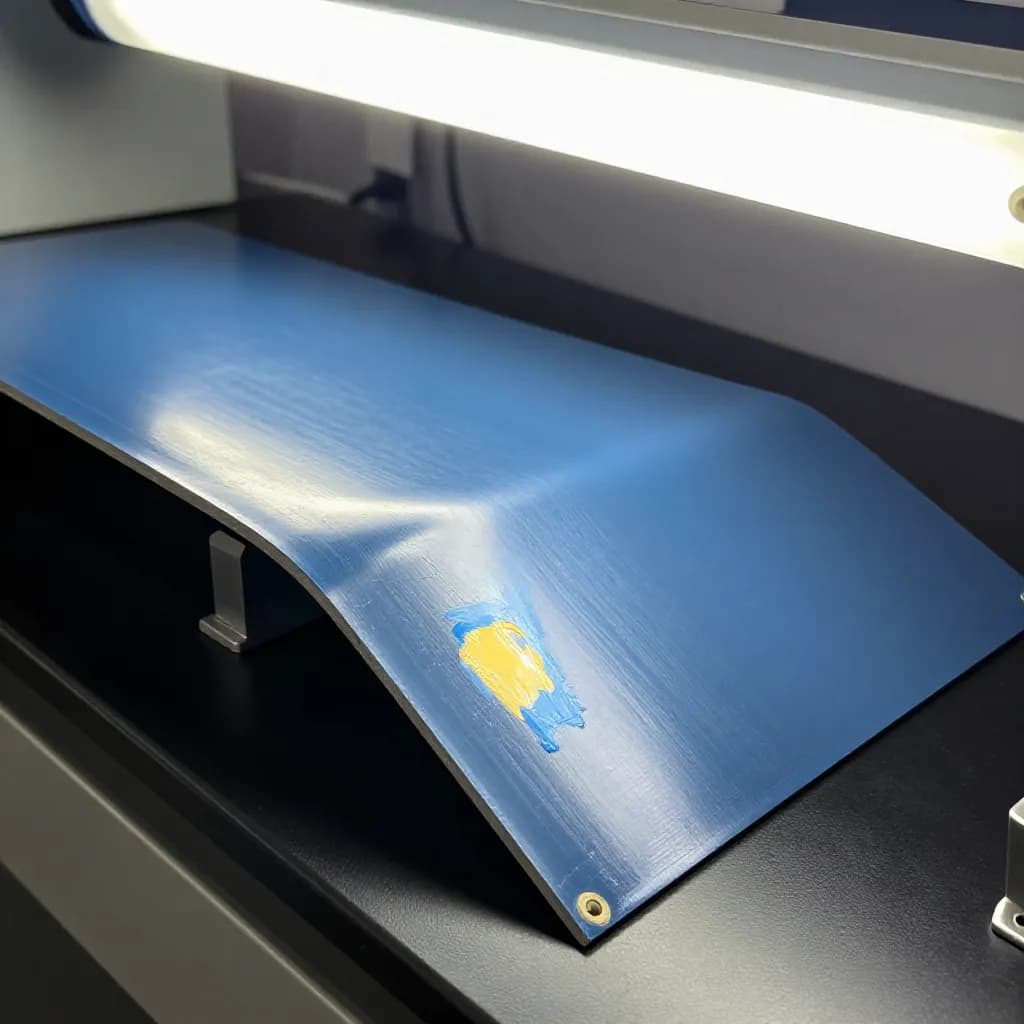
Polyurethane powder coatings occupy a specialized position in the powder coating market, offering properties that standard polyester, epoxy, and hybrid chemistries cannot match. Their defining characteristics are exceptional flexibility, outstanding chemical resistance, superior flow and leveling for ultra-smooth finishes, and excellent outdoor durability. These properties make polyurethane the chemistry of choice for demanding applications in automotive, wood finishing, and high-performance industrial markets.
Ready to Start Your Project?
From one-off customs to 15,000-part production runs — get precise pricing in 24 hours.
On This Page
What Polyurethane Powder Coating Is
The blocked isocyanate crosslinker is what distinguishes polyurethane powder from standard polyester powder. While both use polyester resin as the base polymer, the urethane cross-links formed during curing create a more flexible and chemically resistant network than the ester cross-links in TGIC or HAA polyester systems. This difference in cross-link chemistry is responsible for polyurethane's superior performance in applications requiring flexibility and chemical resistance.
Polyurethane powder coatings represent a smaller market share than polyester or hybrid chemistries but serve applications where their unique properties provide clear advantages that justify their specification.
Flexibility: The Polyurethane Advantage
Flexibility is the property that most clearly distinguishes polyurethane powder coatings from other thermoset chemistries. The urethane cross-links in the cured film are inherently more flexible than the ester cross-links in standard polyester or the ether cross-links in epoxy coatings. This molecular-level flexibility translates into a coating that can withstand bending, forming, and impact without cracking or delaminating.
In standardized flexibility testing, polyurethane powder coatings typically pass T-bend or even 0T-bend tests on thin aluminum panels, meaning the coating can be bent back on itself without cracking. Standard polyester coatings typically pass 2T-3T bend tests, and epoxy coatings may crack at 3T-4T. This superior flexibility makes polyurethane the preferred choice for parts that undergo post-coating forming operations or experience significant flexing in service.
Impact resistance is closely related to flexibility, and polyurethane coatings excel here as well. Direct impact resistance typically exceeds 160 inch-pounds, with some formulations exceeding 200 inch-pounds. This toughness protects against denting, chipping, and cracking from mechanical impacts that would damage less flexible coatings.
The flexibility advantage extends to low-temperature performance. Polyurethane coatings maintain their flexibility at temperatures well below freezing, resisting the embrittlement that can cause standard polyester and epoxy coatings to crack under impact or bending stress in cold conditions. This makes polyurethane suitable for outdoor equipment and vehicles operating in cold climates.
For applications involving coil-coated metal that will be formed into complex shapes after coating, polyurethane's flexibility is essential. The coating must survive the bending, stamping, and roll-forming operations without cracking, and polyurethane's superior elongation and bend performance make it the natural choice for these demanding applications.
Chemical Resistance and Outdoor Durability
Polyurethane powder coatings provide chemical resistance that exceeds standard polyester and approaches the performance of pure epoxy, while maintaining full outdoor UV resistance. This combination of chemical resistance and weathering performance is unique among powder coating chemistries and is one of polyurethane's key differentiators.
The urethane cross-links resist hydrolysis more effectively than the ester cross-links in standard polyester coatings, providing better resistance to moisture, humidity, and water immersion. This improved moisture resistance contributes to superior corrosion protection and better performance in humid or wet environments.
Resistance to automotive fluids — gasoline, diesel, brake fluid, antifreeze, and windshield washer fluid — is excellent, making polyurethane the preferred chemistry for automotive exterior and under-hood components that may contact these substances. The coating also resists road chemicals including deicing salts, calcium chloride, and magnesium chloride.
Outdoor weathering performance is comparable to standard polyester, with good UV resistance and color stability. Polyurethane coatings are suitable for exterior applications and meet the requirements of standard architectural specifications. While they do not match the extreme weathering performance of fluoropolymer coatings, they provide reliable outdoor durability for most applications.
Stain resistance is another practical advantage. The dense, smooth surface of polyurethane coatings resists staining from common substances including markers, graffiti, food, and beverages. This property is valuable for products in public spaces, commercial environments, and food service applications where the coating must be easily cleaned.
The combination of flexibility, chemical resistance, and outdoor durability makes polyurethane a versatile chemistry that bridges the gap between the chemical resistance of epoxy and the weathering performance of polyester.
Automotive Applications
The automotive industry is one of the most important markets for polyurethane powder coatings, where the chemistry's flexibility, chemical resistance, and smooth finish quality align perfectly with the demanding requirements of vehicle components.
Automotive wheels are a high-profile application for polyurethane powder coatings. Wheels must withstand road chemicals, brake dust, stone impacts, and UV exposure while maintaining an attractive appearance. Polyurethane's combination of chemical resistance, impact toughness, and outdoor durability makes it well-suited to this demanding application. The chemistry's excellent flow and leveling properties produce the smooth, high-quality finish that consumers expect on visible wheel surfaces.
Exterior trim components, including mirror housings, door handles, roof rails, and bumper accents, use polyurethane coatings for their flexibility and chip resistance. These components are subject to stone impacts, car wash abrasion, and chemical exposure from road treatments and cleaning products. Polyurethane's toughness and chemical resistance provide long-term protection and appearance retention.
Under-hood and underbody components benefit from polyurethane's chemical resistance to automotive fluids and its flexibility under thermal cycling. Engine brackets, suspension components, and structural members experience significant temperature variations and mechanical stress, and polyurethane coatings maintain their integrity through these demanding conditions.
The automotive aftermarket — custom wheels, performance parts, and restoration components — uses polyurethane powder coatings for their premium finish quality and durability. The smooth, defect-free surface achievable with polyurethane chemistry meets the high aesthetic standards of automotive enthusiasts.
Automotive clear coats in powder form use polyurethane chemistry for their combination of clarity, gloss, and durability. These clear coats are applied over metallic or colored base coats to provide depth, protection, and a high-quality appearance.
Wood Finishing with Polyurethane Powder
Polyurethane powder coating has emerged as an important technology for finishing wood and wood-based substrates, particularly medium-density fiberboard (MDF). The chemistry's low-temperature cure capability, excellent flow and leveling, and smooth finish quality make it well-suited to the unique requirements of wood finishing.
Wood substrates cannot withstand the 180-200 degree Celsius cure temperatures used for standard metal powder coating. Polyurethane powder coatings formulated for wood finishing cure at 120-140 degrees Celsius, low enough to avoid damaging the wood substrate while still achieving full cross-linking and performance. Some formulations use UV-cure technology, where the powder is melted with infrared heat and then cross-linked with ultraviolet light, further reducing the thermal exposure of the substrate.
MDF is the most common wood substrate for powder coating because its dense, uniform surface provides a good foundation for the coating. The smooth surface of MDF, combined with polyurethane's excellent flow and leveling, produces finishes that rival or exceed the quality of liquid lacquer and paint systems traditionally used in furniture manufacturing.
The environmental advantages of powder coating are particularly significant in the wood finishing industry, which has traditionally relied heavily on solvent-based lacquers and paints. Switching to polyurethane powder coating eliminates VOC emissions, reduces waste, and improves worker safety by removing solvent exposure hazards.
Applications for powder-coated MDF include kitchen cabinet doors and drawer fronts, bathroom vanities, office furniture panels, retail display fixtures, and interior architectural panels. The coating provides a durable, scratch-resistant surface that withstands the daily wear and cleaning that these products encounter.
The growth of powder coating on wood substrates represents one of the most significant market expansion opportunities for the powder coating industry, and polyurethane chemistry is at the forefront of this development.
Finish Quality and Surface Smoothness
Polyurethane powder coatings are recognized for producing some of the smoothest, most defect-free finishes achievable with powder coating technology. The chemistry's excellent melt flow and leveling characteristics allow the coating to flow out during curing, minimizing orange peel texture and producing a surface quality that approaches liquid paint.
The blocked isocyanate crosslinker in polyurethane systems has a delayed reaction profile. During the early stages of curing, the blocking agent must first be released before cross-linking can begin. This delay provides an extended flow period during which the molten powder can level and smooth before the cross-linking reaction locks the film in place. Standard polyester and hybrid systems begin cross-linking earlier in the cure cycle, limiting the time available for flow and leveling.
This extended flow window is the key to polyurethane's superior surface smoothness. It allows the coating to self-level over substrate imperfections, eliminate air entrapment, and produce a uniform, smooth surface. For applications where surface quality is critical — automotive components, premium furniture, and high-end consumer products — this characteristic is a significant advantage.
High-gloss finishes are particularly impressive with polyurethane chemistry. Gloss levels above 90 GU at 60 degrees are readily achievable, with a depth and clarity that distinguish polyurethane finishes from standard polyester. The smooth surface also enhances the appearance of metallic and special-effect finishes by providing a uniform base for light reflection.
The flip side of polyurethane's excellent flow is that the blocking agent released during curing must be properly managed. The released blocking agent, typically caprolactam or methyl ethyl ketoxime, is a volatile organic compound that must be captured by the oven exhaust system. While the total VOC emission is much lower than liquid paint, it is not zero, which is a consideration for facilities with strict emission limits.
Processing Considerations and Comparison
Polyurethane powder coatings require some specific processing considerations that differ from standard polyester and hybrid systems. Understanding these requirements ensures optimal results and avoids common pitfalls.
Cure temperature and time must be carefully controlled. The blocking agent release and subsequent cross-linking reaction are temperature-dependent, and insufficient cure results in poor chemical resistance and mechanical properties. Typical cure schedules are 15-20 minutes at 180-190 degrees Celsius metal temperature for standard formulations, though low-temperature grades for wood finishing cure at 120-140 degrees Celsius.
Oven exhaust management is important because the blocking agent released during curing can condense on oven surfaces and drip onto coated parts, causing defects. Adequate oven ventilation and regular cleaning of oven interiors prevent this problem. Some modern polyurethane formulations use non-volatile or internally captured blocking agents that minimize this issue.
Storage stability requires attention because polyurethane powders can be more sensitive to heat and humidity during storage than standard polyester. Storage below 25 degrees Celsius in dry conditions is essential, and shelf life may be shorter than for polyester powders. Consult the powder manufacturer's storage recommendations for specific products.
Compared to standard polyester, polyurethane offers superior flexibility, chemical resistance, and surface smoothness but requires more careful process control and oven management. Compared to epoxy, polyurethane provides outdoor UV resistance and better flexibility but does not match epoxy's chemical resistance against strong acids and alkalis.
The decision to specify polyurethane over standard polyester is typically driven by specific performance requirements — flexibility for formed parts, chemical resistance for automotive or industrial applications, or surface smoothness for premium decorative finishes. When these properties are not critical, standard polyester provides excellent performance with simpler processing.
Frequently Asked Questions
What makes polyurethane powder coating different from polyester?
Polyurethane uses a blocked isocyanate crosslinker that creates urethane linkages, providing superior flexibility, chemical resistance, and surface smoothness compared to standard polyester. Polyester uses TGIC or HAA crosslinkers that produce ester linkages with good but less flexible performance.
Can polyurethane powder coating be used on wood?
Yes. Low-temperature cure polyurethane formulations cure at 120-140 degrees Celsius, making them suitable for MDF and other wood-based substrates. The chemistry's excellent flow and leveling produce smooth finishes that rival liquid lacquer, and the process eliminates VOC emissions.
Why is polyurethane powder coating used for automotive wheels?
Polyurethane provides the combination of chemical resistance to brake dust and road chemicals, impact toughness against stone chips, UV durability for outdoor exposure, and smooth finish quality that automotive wheels demand. Its flexibility also resists cracking from curb impacts.
Does polyurethane powder coating emit VOCs?
The blocking agent released during curing is a small amount of VOC that must be captured by the oven exhaust system. Total emissions are much lower than liquid polyurethane paint but not zero. Modern formulations with non-volatile blocking agents are reducing this emission further.
How flexible is polyurethane powder coating?
Polyurethane powder coatings typically pass T-bend or 0T-bend flexibility tests, meaning they can be bent back on themselves without cracking. This is significantly more flexible than standard polyester (2T-3T) or epoxy (3T-4T), making polyurethane ideal for formed and flexible parts.
Ready to Start Your Project?
From one-off customs to 15,000-part production runs — get precise pricing in 24 hours.