Polyester powder coating is a thermoset finishing system based on polyester resin that accounts for the largest share of the global powder coating market. Its dominance stems from an exceptional balance of properties: excellent UV resistance for outdoor durability, good mechanical performance, broad color and finish availability, and compatibility with virtually all standard application equipment. Polyester is the default choice for any application requiring exterior weather resistance.
Technical
What Is Polyester Powder Coating? The Most Common Powder Type
Sundial Powder Coating·April 23, 2026·11 min
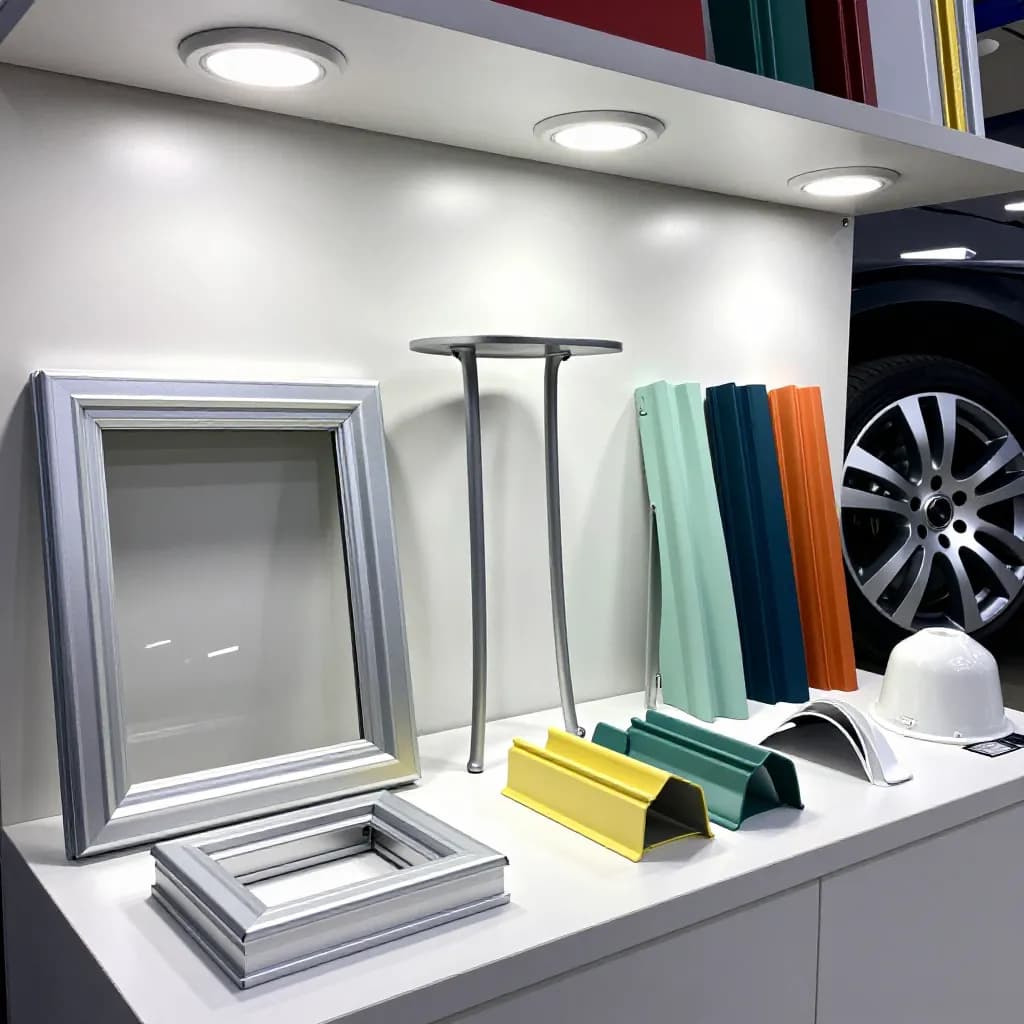
The chemistry of polyester powder coatings involves a polyester resin — a polymer formed from the reaction of dicarboxylic acids with polyols — combined with a crosslinker that creates the thermoset network during curing. The two primary crosslinker types are TGIC (triglycidyl isocyanurate) and HAA (hydroxyalkylamide, commonly known by the trade name Primid). Both produce fully cross-linked coatings with excellent performance, though they differ in regulatory status and some processing characteristics.
Ready to Start Your Project?
From one-off customs to 15,000-part production runs — get precise pricing in 24 hours.
On This Page
What Polyester Powder Coating Is
When cured at typical temperatures of 180-200 degrees Celsius, polyester powder coatings form a hard, durable film with excellent adhesion to properly prepared metal substrates. Film thickness is typically 60-80 microns for standard applications, though architectural specifications may require 60-120 microns depending on the quality standard being followed.
Polyester powder coatings are available in an enormous range of colors, gloss levels, and textures. From high-gloss smooth finishes to deep matte textures, from standard RAL colors to custom metallic and special effects, polyester chemistry supports the broadest design palette of any powder coating type.
Why Polyester Dominates the Powder Coating Market
Polyester's market dominance is not accidental — it reflects the chemistry's ability to deliver the properties most commonly needed across the widest range of applications. The single most important factor is UV resistance. Polyester resins are inherently resistant to degradation by ultraviolet radiation, maintaining their color, gloss, and mechanical integrity through years of outdoor exposure. This makes polyester the only standard powder chemistry suitable for exterior applications without additional UV-protective measures.
Compare this to epoxy powder coatings, which chalk and discolor rapidly when exposed to sunlight, or hybrid coatings that offer only moderate UV resistance. For any product that will spend its life outdoors — from architectural aluminum to garden furniture, from agricultural equipment to highway guardrails — polyester is the natural choice.
Versatility reinforces polyester's position. The chemistry works well across all standard application methods, including corona and triboelectric electrostatic spray. It cures reliably in convection and infrared ovens, tolerates reasonable variations in process parameters, and produces consistent results across different equipment configurations. This ease of processing makes polyester the preferred choice for job shops that handle diverse work.
The supply chain for polyester powder coatings is the most developed in the industry. Every major powder manufacturer offers extensive polyester product lines, and raw material availability is robust. This means specifiers can source polyester coatings from multiple suppliers, ensuring competitive supply and reducing single-source risk.
Mechanical properties round out the picture. Polyester coatings offer good hardness, flexibility, and impact resistance — not the absolute best in any single category, but a well-balanced combination that meets the requirements of most applications without compromise.
TGIC vs. HAA Crosslinkers
The choice between TGIC and HAA crosslinker systems is one of the most important decisions in polyester powder coating specification. Both produce high-quality coatings, but they differ in regulatory status, processing characteristics, and some performance attributes.
TGIC (triglycidyl isocyanurate) has been the traditional crosslinker for polyester powder coatings since the technology's early development. TGIC-crosslinked polyesters offer excellent overbake resistance, meaning the coating maintains its appearance and properties even if cured at slightly higher temperatures or longer times than specified. This forgiveness makes TGIC systems popular in production environments where oven conditions may vary.
However, TGIC is classified as a mutagen under European CLP regulations, requiring specific handling precautions and hazard labeling. This classification has driven a significant shift toward TGIC-free alternatives in Europe, where HAA-crosslinked systems now dominate the market. In other regions, TGIC remains widely used where regulations permit.
HAA (hydroxyalkylamide) crosslinkers, marketed under trade names such as Primid, provide a TGIC-free alternative with no mutagenicity classification. HAA systems produce coatings with comparable weathering performance and mechanical properties to TGIC systems. They release water as a byproduct during curing, which can occasionally cause pinholes in thick films if oven conditions are not properly managed.
HAA-crosslinked polyesters are slightly more sensitive to overbake than TGIC systems, with a narrower processing window before yellowing or gloss change occurs. This requires tighter oven control but is easily managed with modern curing equipment.
For most applications, the performance difference between TGIC and HAA systems is negligible. The choice is typically driven by regional regulations, customer preferences, and the applicator's experience with each system.
UV Resistance and Outdoor Performance
The UV resistance of polyester powder coatings is the property that most clearly differentiates them from other powder chemistries. When exposed to sunlight, the polyester resin backbone resists photodegradation far more effectively than epoxy or hybrid resins, maintaining color stability and gloss retention over years of outdoor exposure.
Standard polyester powder coatings are rated for outdoor use and will maintain acceptable appearance for 5-10 years in moderate climates. For more demanding applications, super durable polyester formulations use modified resin systems that extend outdoor performance to 15-20 years or more, meeting the requirements of architectural specifications such as Qualicoat Class 2 and AAMA 2604.
Weathering performance is typically evaluated through accelerated testing using xenon arc or fluorescent UV weathering chambers, as well as natural outdoor exposure at test sites in Florida, Arizona, or other locations with high UV intensity. Key metrics include gloss retention, color change (measured as Delta E), and chalking resistance.
A standard polyester coating might retain 50 percent of its original gloss after 1000 hours of accelerated weathering, while a super durable polyester retains 50 percent gloss after 2000-3000 hours. In natural Florida exposure, standard polyesters maintain acceptable appearance for 3-5 years, while super durable grades perform well for 7-10 years or more.
For the most demanding architectural applications requiring 20-30 year performance, fluoropolymer powder coatings (PVDF or FEVE) are specified instead of polyester. However, for the vast majority of outdoor applications, standard or super durable polyester provides excellent performance at a more accessible specification level.
Architectural Applications
Architectural aluminum finishing is one of the largest and most demanding markets for polyester powder coatings. Window frames, door systems, curtain walls, cladding panels, louvers, and balustrade systems are routinely finished with polyester powder coatings that must meet stringent quality standards for appearance, durability, and consistency.
The architectural market is governed by quality certification systems that set minimum performance requirements for powder coatings. In Europe, Qualicoat certification defines three classes: Class 1 for standard polyester coatings suitable for moderate environments, Class 2 for super durable polyesters with enhanced weathering resistance, and Class 3 for fluoropolymer coatings with the highest durability. GSB International offers a parallel certification system with Standard, Master, and Premium tiers.
In North America, AAMA specifications define performance tiers. AAMA 2603 covers standard polyester coatings for general architectural use. AAMA 2604 requires enhanced weathering performance equivalent to super durable polyester. AAMA 2605 demands the highest performance level, typically requiring fluoropolymer chemistry.
Color consistency is critical in architectural applications. Large building projects may require thousands of coated profiles that must match precisely in color and gloss. Powder manufacturers maintain tight batch-to-batch consistency, and applicators use spectrophotometric measurement to verify color conformance against approved standards.
The design flexibility of polyester powder coatings supports architectural creativity. Metallic finishes, anodic-look effects, textured surfaces, and wood-grain sublimation transfers are all achievable with polyester chemistry, giving architects a broad palette of options for building envelope design.
General-Purpose and Industrial Applications
Beyond architecture, polyester powder coatings serve an enormous range of general-purpose and industrial applications. The automotive aftermarket uses polyester for wheels, bumpers, roof racks, and accessories that must withstand road chemicals, UV exposure, and mechanical abuse. The combination of outdoor durability and impact resistance makes polyester ideal for these demanding applications.
Outdoor furniture and recreational equipment rely on polyester coatings for weather resistance and color retention. Garden furniture, playground equipment, park benches, bicycle racks, and outdoor lighting fixtures all benefit from polyester's ability to maintain appearance through seasons of sun, rain, and temperature cycling.
Agricultural and construction equipment manufacturers specify polyester for exterior components that face prolonged outdoor exposure. Tractor bodies, implement frames, construction barriers, and signage structures all use polyester coatings for their combination of durability and UV resistance.
The appliance industry uses polyester for exterior panels and components on products such as air conditioning units, heat pumps, and outdoor electrical enclosures that are exposed to weather. Interior appliance components more commonly use hybrid or epoxy coatings, but any component with outdoor exposure benefits from polyester's UV stability.
General industrial applications include shelving, racking, tool cabinets, and storage systems that may be used in both indoor and outdoor environments. Specifying polyester for these products ensures that the coating will perform regardless of where the product ends up, eliminating the risk of premature degradation if an indoor-rated coating is inadvertently used outdoors.
The breadth of polyester's application base reflects its fundamental versatility — a single chemistry that delivers reliable performance across the widest range of conditions and requirements.
Processing and Application Considerations
Polyester powder coatings are among the easiest powder chemistries to process, which contributes to their popularity with applicators. Standard cure schedules of 10-15 minutes at 180-200 degrees Celsius (metal temperature) are compatible with most production line configurations. Low-temperature cure polyester grades are available that cure at 150-160 degrees Celsius, enabling coating of heat-sensitive substrates and reducing energy consumption.
Application by both corona and triboelectric electrostatic spray is straightforward. Polyester powders charge well in both gun types, with particularly good triboelectric charging characteristics that make them the preferred chemistry for tribo applications. Film thickness control is predictable, and the powders flow and level well during curing to produce smooth, uniform finishes.
Storage stability is good, with most polyester powders maintaining their properties for 12 months or more when stored in cool, dry conditions below 25 degrees Celsius. Exposure to heat or humidity during storage can cause the powder to clump or partially react, degrading application properties and finish quality.
Reclamation and reuse of overspray is efficient with polyester powders. The reclaimed powder can be blended back into virgin powder at ratios of 20-30 percent without significant impact on finish quality. Higher reclaim ratios may affect flow, gloss, or color consistency and should be validated through testing.
Pretreatment requirements for polyester coatings follow standard industry practices. Iron phosphate, zinc phosphate, or zirconium-based conversion coatings all provide good adhesion promotion. The choice of pretreatment depends on the substrate, the performance requirements, and the applicator's existing process capabilities.
Quality control for polyester coatings includes measurement of film thickness, gloss, color, adhesion (cross-cut or pull-off testing), impact resistance, and cure level (typically assessed by solvent rub testing or differential scanning calorimetry).
Frequently Asked Questions
Why is polyester the most common powder coating?
Polyester offers the best balance of UV resistance, mechanical properties, color variety, and processing ease. It is the only standard powder chemistry suitable for outdoor use without additional UV protection, making it the default choice for the widest range of applications.
What is the difference between TGIC and HAA polyester powder coating?
TGIC and HAA are different crosslinker systems. TGIC offers wider processing tolerance but is classified as a mutagen in Europe. HAA is TGIC-free with no mutagenicity concerns but requires tighter oven control. Performance of the finished coating is comparable for both systems.
How long does polyester powder coating last outdoors?
Standard polyester lasts 5-10 years outdoors with acceptable appearance. Super durable polyester extends this to 15-20 years and meets architectural standards like Qualicoat Class 2 and AAMA 2604. For 20-30 year performance, fluoropolymer coatings are specified.
Can polyester powder coating be used indoors?
Yes. Polyester works well for both indoor and outdoor applications. While its UV resistance is unnecessary indoors, its mechanical properties, color range, and processing ease make it a practical choice for indoor products. Hybrid or epoxy coatings may be more economical for purely indoor use.
What temperature does polyester powder coating cure at?
Standard polyester powder coatings cure at 180-200 degrees Celsius metal temperature for 10-15 minutes. Low-temperature cure grades are available that cure at 150-160 degrees Celsius, reducing energy consumption and enabling coating of heat-sensitive substrates.
Ready to Start Your Project?
From one-off customs to 15,000-part production runs — get precise pricing in 24 hours.