Hybrid powder coating is a thermoset finishing system that blends epoxy and polyester resins in a single formulation, combining properties of both chemistries to create a versatile coating optimized for indoor decorative and general-purpose applications. The term hybrid refers to this dual-resin composition, which typically contains 50-70 percent polyester resin and 30-50 percent epoxy resin, though ratios vary by manufacturer and intended application.
Technical
What Is Hybrid Powder Coating? Epoxy-Polyester Blends Explained
Sundial Powder Coating·April 23, 2026·10 min
In a hybrid system, the polyester and epoxy resins cross-link with each other during curing, forming an interpenetrating thermoset network. The epoxy component contributes chemical resistance, adhesion, and hardness, while the polyester component provides flexibility, overbake resistance, and improved UV tolerance compared to pure epoxy. The result is a coating that outperforms pure epoxy in flexibility and overbake tolerance while offering better chemical resistance and hardness than pure polyester.
Ready to Start Your Project?
From one-off customs to 15,000-part production runs — get precise pricing in 24 hours.
On This Page
What Hybrid Powder Coating Is
Hybrid powder coatings are the second most widely used powder coating chemistry after polyester, with their primary market being indoor applications where UV resistance is not required but a balance of decorative quality and functional performance is needed. They are the standard choice for indoor furniture, appliances, shelving, electrical enclosures, and a wide range of general industrial products.
The hybrid chemistry fills the gap between pure epoxy and pure polyester, offering a practical compromise that meets the needs of the majority of indoor coating applications without the limitations of either parent chemistry.
How Epoxy-Polyester Blends Work
The chemistry of hybrid powder coatings involves a co-reaction between the epoxy and polyester resin components. The carboxyl groups on the polyester resin react with the epoxide groups on the epoxy resin during curing, forming ester linkages that tie the two polymer networks together. This co-curing mechanism produces a single, integrated coating rather than a simple physical mixture of two separate polymers.
The ratio of epoxy to polyester in the blend determines the coating's property balance. Higher epoxy content shifts the properties toward better chemical resistance and hardness but reduced flexibility and overbake tolerance. Higher polyester content improves flexibility, flow, and resistance to yellowing during overbake but reduces chemical resistance. The 50/50 to 70/30 polyester-to-epoxy ratios used in most commercial hybrids represent the optimal balance for general-purpose indoor applications.
Curing conditions for hybrid powder coatings are similar to those for pure polyester and epoxy systems, typically 180-200 degrees Celsius metal temperature for 10-15 minutes. The co-reaction between the two resins proceeds efficiently at these temperatures, producing a fully cross-linked film with good mechanical and chemical properties.
One of the practical advantages of hybrid chemistry is its forgiving processing behavior. Hybrids generally have a wider cure window than pure epoxy, meaning they tolerate moderate variations in oven temperature and dwell time without significant changes in appearance or performance. This processing latitude makes hybrids popular with applicators who handle diverse part sizes and shapes on the same coating line.
The flow and leveling characteristics of hybrid powders are typically excellent, producing smooth, uniform finishes with good gloss consistency. This makes them well-suited to decorative applications where surface quality is a priority.
Indoor Decorative Applications
The indoor decorative market is the primary domain of hybrid powder coatings. Their combination of smooth finish quality, good mechanical properties, and broad color availability makes them the default choice for products that will spend their entire service life indoors.
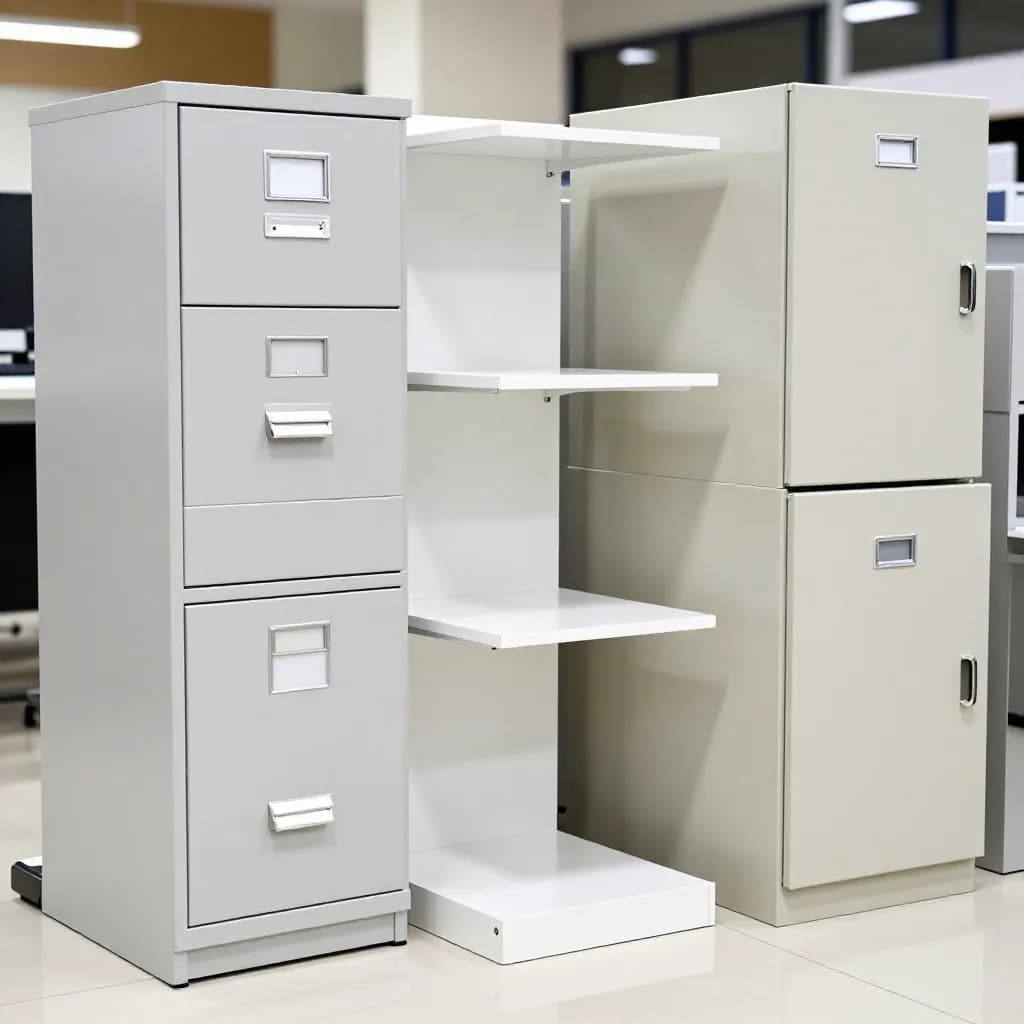
Office and commercial furniture represents one of the largest application segments. Desks, chairs, filing cabinets, shelving systems, and partition frames are routinely coated with hybrid powder for its scratch resistance, chemical resistance to cleaning agents, and attractive appearance. The coating must withstand daily contact, occasional impacts, and regular cleaning without showing wear.
Appliance finishing is another major market. Refrigerator interiors, washing machine drums, microwave cavities, and small appliance housings use hybrid coatings for their combination of chemical resistance, food safety compliance, and decorative quality. The coating must resist household chemicals, food acids, and moisture while maintaining its appearance over the product's service life.
Retail fixtures and display systems — including gondola shelving, checkout counters, and product display racks — use hybrid coatings for their durability in high-traffic commercial environments. The coating must resist scratching from merchandise handling and maintain its appearance through years of commercial use.
Lighting fixtures, both residential and commercial, are commonly finished with hybrid powder coatings. The coating provides an attractive decorative finish while resisting the heat generated by light sources. Hybrid coatings' good heat resistance — typically stable to 150 degrees Celsius — makes them suitable for fixtures that operate at elevated temperatures.
Interior architectural metalwork, including stair railings, elevator interiors, and decorative panels, uses hybrid coatings when the installation is entirely indoors and maximum chemical resistance is not required.
Properties and Performance Characteristics
Hybrid powder coatings deliver a balanced set of properties that make them suitable for a wide range of indoor applications. Understanding these properties helps specifiers determine when hybrid is the right choice and when a different chemistry might be more appropriate.
Hardness is typically in the range of 2H-3H pencil hardness, providing good scratch and mar resistance for furniture and appliance applications. This is comparable to pure epoxy and slightly harder than most polyester coatings, reflecting the contribution of the epoxy component to surface hardness.
Flexibility is good, with hybrid coatings typically passing a T-bend or 2T-bend test on thin aluminum panels. This flexibility is superior to pure epoxy, which tends to be more brittle, and is contributed by the polyester component. The improved flexibility reduces the risk of cracking during part forming or under impact.
Impact resistance typically exceeds 80 inch-pounds in direct impact testing, providing adequate protection against the bumps and knocks that indoor products encounter in normal use. While not as impact-resistant as nylon or some polyester coatings, hybrid impact resistance is sufficient for most indoor applications.
Chemical resistance is moderate — better than pure polyester but not as strong as pure epoxy. Hybrid coatings resist common household and office chemicals including cleaning agents, coffee, tea, and mild solvents. They are not recommended for applications involving prolonged exposure to strong acids, alkalis, or aggressive industrial solvents.
Corrosion resistance in salt spray testing typically reaches 500-1000 hours depending on film thickness and pretreatment, adequate for indoor products that may encounter occasional moisture but are not subject to continuous wet or corrosive conditions.
Overbake resistance is one of hybrid's practical advantages. The polyester component moderates the yellowing tendency of the epoxy component, allowing hybrid coatings to tolerate moderate overbake without significant color change. This is particularly valuable for production lines that process parts of varying thermal mass.
Hybrid vs. Pure Epoxy and Pure Polyester
Understanding where hybrid fits relative to pure epoxy and pure polyester helps specifiers make informed chemistry selections. Each has clear strengths that define its optimal application range.
Compared to pure epoxy, hybrid offers better flexibility, superior overbake resistance, and reduced yellowing tendency. Hybrid coatings are less likely to crack under impact or bending stress and maintain their color more consistently across varying cure conditions. However, hybrid sacrifices some of epoxy's chemical resistance and adhesion strength. For applications requiring maximum chemical protection — such as chemical processing equipment or laboratory surfaces — pure epoxy remains the better choice.
Compared to pure polyester, hybrid offers better chemical resistance, higher hardness, and stronger adhesion to metal substrates. The epoxy component enhances the coating's barrier properties and its ability to resist cleaning chemicals and mild solvents. However, hybrid lacks polyester's UV resistance and should never be used for outdoor applications. Hybrid coatings will chalk and degrade in sunlight, though more slowly than pure epoxy due to the polyester component's moderating influence.
The decision framework is straightforward. For outdoor applications, specify polyester. For indoor applications requiring maximum chemical resistance, specify epoxy. For general-purpose indoor applications where a balance of properties is needed, specify hybrid. This simple guideline covers the vast majority of specification decisions.
There are edge cases where the choice is less clear. Indoor products that might occasionally be used outdoors — portable furniture, for example — are better served by polyester to avoid any risk of UV degradation. Indoor products exposed to aggressive chemicals — laboratory equipment, for instance — should use pure epoxy for maximum protection.
For most indoor decorative and general-purpose applications, hybrid provides the optimal combination of properties, processing ease, and finish quality.
Color, Finish, and Design Options
Hybrid powder coatings are available in an extensive range of colors, gloss levels, and surface textures that support diverse design requirements for indoor products. The full RAL Classic color range is available as standard, along with custom color matching to any reference sample.
Gloss levels range from high gloss (above 85 GU at 60 degrees) through semi-gloss, satin, and matte finishes down to ultra-matte (below 10 GU). The choice of gloss level affects both the aesthetic appearance and the practical performance of the coating — matte finishes tend to hide surface imperfections and fingerprints better than high-gloss finishes, while high-gloss finishes are easier to clean.
Textured finishes are widely available in hybrid chemistry, including fine texture, coarse texture, leather grain, and wrinkle effects. Textured finishes are popular for industrial equipment, electrical enclosures, and furniture where they provide a distinctive appearance while hiding minor substrate imperfections and reducing the visibility of fingerprints and handling marks.
Metallic effects are achievable with hybrid powders through the addition of metallic pigments such as aluminum flake, copper, or mica. Bonded metallic powders, where the metallic pigment is bonded to the surface of the powder particles, provide the most consistent metallic appearance and are preferred for high-quality decorative applications.
Special effects including hammertone, antique, and multi-tone finishes are available in hybrid chemistry for decorative applications that require distinctive visual character. These effects are created through specialized formulation techniques that produce controlled surface patterns during curing.
The broad design palette available in hybrid chemistry ensures that product designers can achieve virtually any indoor aesthetic while benefiting from the coating's balanced performance properties.
Processing Tips and Best Practices
Successful application of hybrid powder coatings follows the same general principles as other powder chemistries, with a few specific considerations that help optimize results.
Pretreatment is essential for adhesion and corrosion performance. Iron phosphate conversion coating is the most common pretreatment for hybrid-coated products, providing a good balance of adhesion promotion and corrosion resistance for indoor applications. Zinc phosphate or zirconium-based pretreatments offer enhanced performance for more demanding requirements.
Application by corona electrostatic spray is the standard method, with gun settings typically in the 60-80 kilovolt range. Hybrid powders charge well and deposit uniformly on most part geometries. For parts with Faraday cage areas, reducing voltage to 40-60 kilovolts or switching to triboelectric application can improve penetration into recesses.
Film thickness should be maintained at 60-80 microns for most decorative applications. Thinner films may not provide adequate coverage and corrosion protection, while excessively thick films can develop orange peel texture and waste material. Consistent film thickness across the part surface is more important than absolute thickness.
Cure verification is important for quality assurance. Under-cured hybrid coatings will have reduced chemical resistance, adhesion, and mechanical properties. Solvent rub testing with methyl ethyl ketone (MEK) is the most common field test for cure level — a properly cured hybrid coating should withstand 30-50 double rubs without significant softening or removal.
Storage conditions affect powder quality. Hybrid powders should be stored below 25 degrees Celsius in dry conditions. Exposure to heat or humidity can cause the powder to clump, reducing fluidization and application quality. Powder that has been stored for extended periods should be sieved before use to remove any agglomerates.
Color change procedures in the spray booth should follow the powder manufacturer's recommendations to prevent cross-contamination between colors, which can cause specking and color inconsistency in the finished coating.
Frequently Asked Questions
What is the difference between hybrid and polyester powder coating?
Hybrid blends epoxy and polyester resins for indoor use, offering better chemical resistance and hardness than pure polyester. Polyester provides UV resistance for outdoor applications. Use hybrid for indoor products and polyester for anything exposed to sunlight.
Can hybrid powder coating be used outdoors?
No. Hybrid coatings contain epoxy resin that degrades under UV exposure, causing chalking and gloss loss. While hybrids chalk more slowly than pure epoxy due to their polyester content, they are not suitable for outdoor applications where appearance must be maintained.
What is the epoxy-to-polyester ratio in hybrid powder coating?
Most commercial hybrid powder coatings contain 50-70 percent polyester and 30-50 percent epoxy resin. The exact ratio varies by manufacturer and is optimized for the intended application. Higher polyester content improves flexibility and overbake tolerance.
What are hybrid powder coatings used for?
Hybrid coatings are primarily used for indoor products including office furniture, appliances, shelving, electrical enclosures, retail fixtures, and lighting. They provide a good balance of decorative quality, chemical resistance, and mechanical durability for indoor environments.
Is hybrid powder coating food safe?
Many hybrid powder coating formulations are approved for indirect food contact and are used in appliance interiors such as refrigerators and microwave cavities. For direct food contact applications, verify that the specific formulation meets FDA or EU food contact regulations.
Ready to Start Your Project?
From one-off customs to 15,000-part production runs — get precise pricing in 24 hours.