Fusion bonded epoxy, commonly known as FBE, is a thermosetting powder coating applied to preheated steel substrates to provide long-term corrosion protection. The term fusion bonded refers to the application method: the steel is heated to a temperature that causes the epoxy powder to melt, flow, and chemically cross-link (fuse) into a continuous, tightly bonded film on contact with the hot surface. This creates an exceptionally strong bond between the coating and the substrate that resists disbondment even under aggressive corrosive conditions.
Technical
What Is Fusion Bonded Epoxy Coating? FBE for Pipelines and Rebar
Sundial Powder Coating·April 23, 2026·12 min
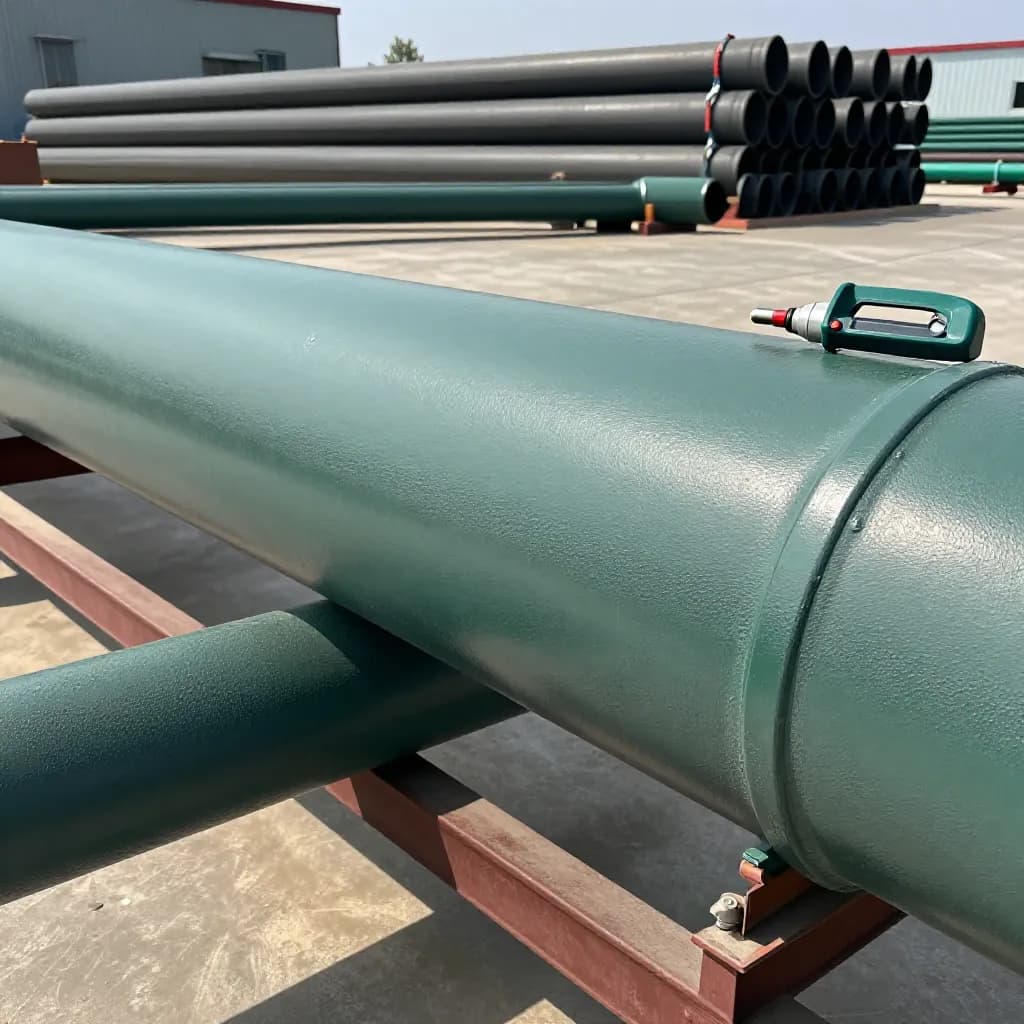
FBE is the dominant protective coating technology for buried and submerged steel pipelines, reinforcing steel (rebar) in concrete structures, and a range of other infrastructure applications where long-term corrosion protection is critical. The technology was developed in the 1960s and has accumulated decades of proven field performance in some of the most demanding environments on earth, from arctic permafrost to tropical seabeds.
Ready to Start Your Project?
From one-off customs to 15,000-part production runs — get precise pricing in 24 hours.
On This Page
What Fusion Bonded Epoxy Coating Is
The coating works by creating an impermeable barrier between the steel substrate and the surrounding corrosive environment — soil, water, concrete, or chemical solutions. The epoxy resin system provides excellent adhesion to steel, outstanding resistance to moisture permeation, and strong chemical resistance against the acids, alkalis, and salts commonly encountered in buried and submerged service.
FBE coatings are typically applied at thicknesses of 300-500 microns for pipeline applications and 175-300 microns for rebar, though specific thickness requirements vary by standard and application. The coating is applied as a single layer in a continuous, high-speed process that can coat pipe joints or rebar lengths in seconds.
The FBE Application Process
The FBE application process is a carefully controlled sequence of surface preparation, heating, powder application, and cooling. Each step is critical to achieving the adhesion, integrity, and performance that FBE coatings are known for.
Surface preparation begins with cleaning to remove oil, grease, and soluble contaminants, followed by abrasive blast cleaning to white metal or near-white metal finish, typically Sa 2.5 or Sa 3 per ISO 8501-1. The blast profile — the pattern of peaks and valleys created by the abrasive — must fall within a specified range, typically 50-100 microns, to provide mechanical anchoring for the coating. Surface preparation is the single most important factor in FBE coating performance, and inadequate preparation is the leading cause of premature coating failure.
After blasting, the steel is heated to the application temperature, typically 220-245 degrees Celsius for pipeline FBE. Heating is accomplished using induction coils for pipe, or convection ovens for rebar and fittings. The temperature must be precisely controlled — too low and the powder will not fully melt and cross-link, too high and the epoxy may over-cure, becoming brittle and losing flexibility.
The heated steel passes through a powder application station where FBE powder is applied using electrostatic spray guns or, for pipe, a combination of electrostatic spray and powder curtain application. The powder melts on contact with the hot steel, flows to form a continuous film, and begins its chemical cross-linking reaction. The gel time — the period during which the powder is liquid before it begins to solidify — is typically 5-15 seconds, during which the coating must achieve full flow and wet-out of the steel surface.
After application, the coated steel is water-quenched to stop the curing reaction at the optimal point and to cool the product for handling. The entire process from blast cleaning to finished coating takes only minutes per piece.
FBE for Pipeline Protection
Pipeline corrosion protection is the largest single application for FBE coatings. Buried steel pipelines carrying oil, gas, water, and other fluids are subject to external corrosion from soil moisture, dissolved salts, bacteria, and stray electrical currents. Without effective coating protection, pipeline corrosion can lead to leaks, environmental contamination, service interruptions, and catastrophic failures.
FBE coatings protect pipelines by providing a continuous, adherent barrier that prevents moisture and corrosive agents from reaching the steel surface. The coating works in conjunction with cathodic protection systems, which provide supplementary electrochemical protection at any coating defects or holidays. The combination of FBE coating and cathodic protection is the industry standard for pipeline corrosion management.
Single-layer FBE is the most common pipeline coating system, applied at 350-500 microns depending on the pipe diameter and the operating environment. For more demanding applications, dual-layer FBE systems apply two successive layers of epoxy to achieve greater thickness and redundancy. Three-layer polyethylene and three-layer polypropylene systems use FBE as the primer layer, followed by an adhesive and a polyolefin topcoat for maximum mechanical protection.
FBE-coated pipelines have demonstrated service lives exceeding 40 years in buried service, with many early installations still performing well after decades of operation. This track record has established FBE as the benchmark against which all other pipeline coating technologies are measured.
Field joint coating — the protection of welded joints between pipe sections — is a critical aspect of pipeline coating. FBE field joint coatings are applied on-site using portable induction heating and powder application equipment, ensuring continuous protection across the entire pipeline length.
FBE for Rebar and Concrete Reinforcement
Epoxy-coated reinforcing steel, commonly called green rebar for its characteristic color, uses FBE technology to protect rebar from corrosion in concrete structures. When chloride ions from deicing salts or marine exposure penetrate concrete and reach the rebar surface, they initiate corrosion that produces expansive rust, cracking the concrete and accelerating structural deterioration. FBE coating on rebar prevents this corrosion initiation.
The rebar coating process is similar to pipeline FBE but adapted for the continuous, high-speed production of reinforcing bar. Rebar is blast cleaned, heated by induction, coated with FBE powder using electrostatic spray, and water-quenched in a continuous line that can process bar at speeds of 15-30 meters per minute. Film thickness for rebar FBE is typically 175-300 microns.
Epoxy-coated rebar is widely specified for bridge decks, parking structures, marine structures, and any concrete application where chloride exposure is expected. In North America, ASTM A775 and ASTM A934 define the requirements for epoxy-coated reinforcing steel, including coating thickness, adhesion, flexibility, holiday detection, and damage tolerance.
The effectiveness of epoxy-coated rebar depends on coating integrity. Damage during handling, bending, and placement must be minimized through careful worksite practices, and any damage must be repaired with approved patching materials before concrete placement. Quality control during manufacturing — including continuous holiday detection using high-voltage spark testing — ensures that coated rebar leaves the production facility with minimal defects.
Decades of field experience have demonstrated that properly manufactured and handled epoxy-coated rebar significantly extends the service life of concrete structures in corrosive environments, reducing maintenance costs and extending the intervals between major rehabilitation projects.
Performance Standards and Testing
FBE coatings are manufactured and applied under rigorous quality standards that define every aspect of the coating's composition, application, and performance. These standards ensure consistent, reliable protection across millions of meters of pipeline and thousands of tons of rebar produced annually.
For pipeline FBE, the primary international standards include CSA Z245.20 in Canada, which is widely referenced globally, and ISO 21809-2, which specifies requirements for FBE coatings on buried and submerged pipelines. In North America, NACE SP0394 provides guidelines for FBE application, and API RP 5L2 covers internal FBE lining. These standards specify requirements for powder properties, surface preparation, application temperature, film thickness, cure level, adhesion, flexibility, cathodic disbondment resistance, and holiday detection.
Cathodic disbondment testing is one of the most important performance tests for pipeline FBE. This test measures the coating's resistance to loss of adhesion under the combined stress of cathodic protection current and elevated temperature. A small holiday is intentionally created in the coating, cathodic potential is applied, and the extent of coating disbondment around the holiday is measured after a defined test period. Low disbondment values indicate a coating that will maintain its integrity in service.
Flexibility testing ensures that FBE coatings can withstand the bending and handling stresses encountered during pipeline construction. Coated samples are bent around mandrels of specified diameter at low temperatures, and the coating is examined for cracking. This test is particularly important for pipelines installed by reeling or directional drilling methods that impose significant bending strain.
For rebar FBE, ASTM A775 specifies requirements for coating thickness, adhesion, flexibility, impact resistance, and continuity. Holiday detection using a high-voltage spark tester at 67.5 millijoules identifies pinholes and defects that could compromise corrosion protection.
FBE Performance in Demanding Environments
FBE coatings have proven their performance across an extraordinary range of environmental conditions. In arctic environments, FBE-coated pipelines operate at temperatures as low as minus 40 degrees Celsius, where the coating must maintain flexibility and adhesion despite extreme cold. Specialized low-temperature FBE formulations with enhanced flexibility are used for these applications.
In high-temperature service, FBE coatings on pipelines carrying hot oil or steam must resist thermal degradation and maintain adhesion at continuous operating temperatures up to 80-110 degrees Celsius, depending on the formulation. High-temperature FBE grades use modified resin systems that resist softening and loss of adhesion at elevated temperatures.
Marine and offshore environments present some of the most aggressive corrosion conditions. FBE coatings on subsea pipelines must resist seawater immersion, cathodic disbondment at elevated cathodic potentials, and mechanical damage from installation and seabed interaction. Dual-layer and three-layer systems are commonly specified for offshore pipelines to provide additional protection.
Sour service environments — pipelines carrying hydrogen sulfide — require FBE coatings with specific resistance to sulfide stress cracking and hydrogen permeation. These applications demand careful selection of FBE formulations that have been tested and qualified for sour service conditions.
In concrete structures, FBE-coated rebar performs in environments ranging from tropical marine exposure with high chloride concentrations to northern climates with heavy deicing salt application. The coating's ability to prevent chloride-initiated corrosion has been validated through decades of bridge deck and parking structure service in these demanding conditions.
The breadth of environments in which FBE coatings perform successfully reflects the fundamental robustness of the technology and the maturity of the standards and practices that govern its application.
Limitations and Complementary Technologies
While FBE is an outstanding corrosion protection technology, it has limitations that must be understood for proper specification and application. The most significant limitation is susceptibility to mechanical damage. FBE coatings, while hard and adherent, are relatively thin compared to polyethylene or polypropylene wraps and can be damaged by impact, abrasion, or rough handling during transportation and installation.
To address this limitation, three-layer coating systems were developed. These systems use FBE as the primer layer for its excellent adhesion and corrosion resistance, followed by a copolymer adhesive and a thick polyethylene or polypropylene topcoat that provides mechanical protection. Three-layer systems combine the corrosion resistance of FBE with the impact and abrasion resistance of polyolefin, making them the preferred choice for pipelines installed in rocky terrain or by trenchless methods.
UV degradation is another consideration. FBE coatings are not UV-stable and will chalk and degrade if exposed to prolonged sunlight. Coated pipe and rebar should be stored under cover or used within a reasonable timeframe after coating. For applications requiring UV resistance, FBE is used as a primer under UV-stable topcoats.
Temperature limitations must be respected. Standard FBE formulations have maximum continuous operating temperatures of 80-85 degrees Celsius. Exceeding this temperature can cause coating softening, loss of adhesion, and accelerated degradation. High-temperature FBE grades extend this limit to 110 degrees Celsius but are not suitable for all applications.
Despite these limitations, FBE remains the most widely used and trusted corrosion protection technology for buried and submerged steel infrastructure. Its proven track record, well-established standards, and compatibility with cathodic protection systems make it the foundation of modern pipeline and rebar corrosion management.
Frequently Asked Questions
What does FBE stand for in coatings?
FBE stands for Fusion Bonded Epoxy. The name refers to the application method where epoxy powder is fused (melted and chemically cross-linked) onto a preheated steel surface, creating a strong chemical and mechanical bond between the coating and the substrate.
How thick is FBE coating on pipelines?
Single-layer FBE on pipelines is typically 350-500 microns thick, depending on pipe diameter and operating environment. Dual-layer FBE systems are thicker, and three-layer systems with polyethylene or polypropylene topcoats can exceed 3 millimeters total thickness.
How long does FBE coating last on buried pipelines?
FBE-coated pipelines have demonstrated service lives exceeding 40 years in buried service. Many early installations from the 1970s and 1980s remain in good condition. Service life depends on coating quality, installation practices, cathodic protection, and environmental conditions.
Why is rebar coated with epoxy?
Epoxy-coated rebar prevents chloride-initiated corrosion in concrete structures. When deicing salts or seawater penetrate concrete and reach uncoated rebar, corrosion produces expansive rust that cracks the concrete. FBE coating blocks this process, extending structure service life.
What standards govern FBE pipeline coatings?
Key standards include CSA Z245.20 (Canada, widely used globally), ISO 21809-2 (international), NACE SP0394 (application guidelines), and API RP 5L2 (internal lining). These standards specify requirements for powder properties, surface preparation, application, testing, and quality control.
Ready to Start Your Project?
From one-off customs to 15,000-part production runs — get precise pricing in 24 hours.