Fluidized bed powder coating is an application method where preheated metal parts are dipped into a tank of aerated powder, causing the powder to melt and fuse onto the hot substrate on contact. The fluidized bed itself is a container with a porous bottom plate through which compressed air is forced, suspending the powder particles in a state that resembles a gently boiling liquid. This fluidized state allows parts to be immersed as if dipping into a liquid bath.
Guides
What Is Fluidized Bed Powder Coating? The Dip Coating Process
Sundial Powder Coating·April 23, 2026·11 min
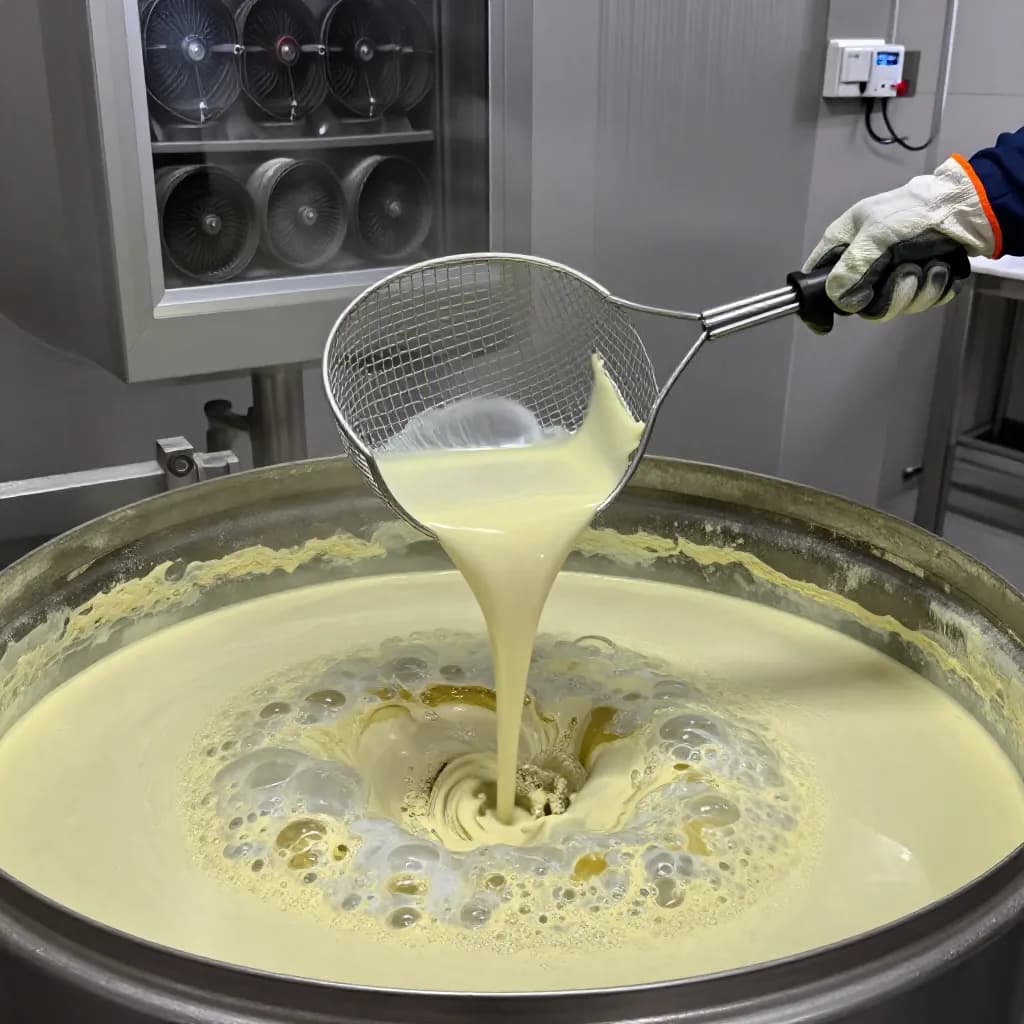
This process is fundamentally different from electrostatic spray application. Rather than relying on electrical charge to attract powder to a grounded workpiece, fluidized bed coating uses the thermal energy stored in the preheated part to melt powder on contact. The part is heated in an oven to a temperature above the powder's melting point — typically 200 to 400 degrees Celsius depending on the powder chemistry — then immediately immersed in the fluidized bed.
Ready to Start Your Project?
From one-off customs to 15,000-part production runs — get precise pricing in 24 hours.
On This Page
What Fluidized Bed Powder Coating Is
The result is a thick, continuous coating that builds rapidly as the hot metal surface melts successive layers of powder. Film thicknesses of 200 to 500 microns are standard, with some applications achieving 1000 microns or more. This makes fluidized bed coating the method of choice for functional coatings where thick films are required for corrosion protection, electrical insulation, chemical resistance, or abrasion protection.
Fluidized bed coating predates electrostatic spray application and was one of the earliest commercial powder coating methods, developed in the 1950s. While electrostatic spray has become the dominant application method for decorative and general-purpose coatings, fluidized bed retains an important role in functional coating applications.
How the Fluidized Bed Process Works Step by Step
The fluidized bed process begins with thorough surface preparation of the metal substrate. Parts are cleaned, degreased, and often grit-blasted to create a surface profile that promotes mechanical adhesion. Chemical pretreatment may also be applied depending on the substrate and the performance requirements of the finished coating.
The prepared parts are then loaded onto fixtures and placed in a preheat oven. The preheat temperature is critical and must be carefully controlled based on the powder chemistry, the part's mass and thermal capacity, and the desired film thickness. Heavier parts retain more heat and will pick up thicker coatings, while lighter parts cool quickly and produce thinner films. Typical preheat temperatures range from 200 to 400 degrees Celsius.
Once the parts reach the target temperature, they are removed from the oven and immediately immersed in the fluidized bed. The dwell time in the bed — typically 2 to 10 seconds — determines the final film thickness along with the part temperature. As the hot metal contacts the suspended powder particles, the powder melts and fuses to the surface, building up layer by layer as heat conducts from the substrate through the growing coating.
After withdrawal from the bed, parts may be returned to an oven for a post-cure cycle to ensure complete fusion and cross-linking of the coating. Some thermoplastic powders, such as nylon, require only the initial melt from the preheat and do not need a separate cure cycle. Thermoset powders may require additional heat to complete their chemical cross-linking reaction.
The entire cycle — preheat, dip, and post-cure — is relatively fast, making fluidized bed coating suitable for medium-volume production of parts that require thick, functional coatings.
Nylon and Other Powders Used in Fluidized Bed Coating
Nylon is the most widely used powder chemistry in fluidized bed coating, with nylon 11 and nylon 12 being the dominant grades. These thermoplastic polyamides produce tough, flexible coatings with excellent abrasion resistance, chemical resistance, and low friction coefficients. Nylon coatings are FDA-approved for food contact applications and are widely used in food processing equipment, dishwasher racks, medical devices, and industrial components subject to wear.
Nylon 11, derived from castor oil, offers slightly better chemical resistance and dimensional stability than nylon 12. Nylon 12 provides superior moisture resistance and is preferred for applications involving prolonged water exposure. Both grades produce coatings with excellent impact resistance that can withstand significant mechanical abuse without cracking or delaminating.
Polyethylene powders are another common choice for fluidized bed coating. Low-density and high-density polyethylene coatings provide excellent chemical resistance, particularly against acids and alkalis, and are used for chemical storage tanks, pipe fittings, and laboratory equipment. Polyethylene coatings are also used for their non-stick and low-friction properties.
Epoxy powders can be applied by fluidized bed for applications requiring thick, chemically resistant coatings with strong adhesion. Fusion bonded epoxy coatings for pipeline protection are a major application, though these are often applied using a specialized variant of the fluidized bed process.
PVC plastisol and polyester powders are also used in fluidized bed applications, though less commonly than nylon and polyethylene. The choice of powder chemistry depends on the specific performance requirements of the application, including operating temperature, chemical exposure, mechanical stress, and regulatory compliance.
Thick Coatings: Why Fluidized Bed Excels
The defining advantage of fluidized bed powder coating is its ability to produce thick, uniform coatings in a single operation. While electrostatic spray application typically achieves 60-120 microns per coat, fluidized bed routinely delivers 200-500 microns and can reach 1000 microns or more when required. This thick film capability is essential for applications where the coating must serve as a primary barrier against corrosion, chemicals, abrasion, or electrical current.
The physics of the process naturally favor thick films. As the preheated part enters the fluidized bed, the hottest metal surface melts powder rapidly, building thickness quickly. As the coating grows and insulates the surface from the remaining heat in the substrate, the deposition rate slows and eventually stops when the surface temperature drops below the powder's melting point. This self-limiting behavior produces a relatively uniform coating thickness across the part.
Controlling film thickness in fluidized bed coating is achieved primarily through three variables: preheat temperature, dwell time in the bed, and part mass. Higher preheat temperatures and longer dwell times produce thicker coatings. Heavier parts with greater thermal mass retain heat longer and accumulate more powder. Experienced operators can predict and control film thickness with reasonable precision by managing these variables.
The thick films produced by fluidized bed coating provide functional performance that thin electrostatic coatings cannot match. A 300-micron nylon coating on a dishwasher rack provides years of protection against detergent chemicals, thermal cycling, and mechanical impact from dishes and utensils. A 500-micron epoxy coating on a pipeline joint provides decades of corrosion protection in buried or submerged service. These performance requirements simply cannot be met by the 60-120 micron films typical of electrostatic spray application.
Applications of Fluidized Bed Powder Coating
Fluidized bed powder coating serves a diverse range of applications where thick, functional coatings are required. The food and beverage industry is a major user, with nylon-coated dishwasher racks, food processing equipment, conveyor components, and storage containers benefiting from the combination of FDA-approved food contact compliance, chemical resistance, and abrasion durability.
The pipeline industry uses fluidized bed and related processes to apply fusion bonded epoxy coatings to pipe joints, fittings, and valves. These thick epoxy coatings protect against soil corrosion, cathodic disbondment, and mechanical damage during handling and installation. Pipeline coatings must meet stringent standards for adhesion, flexibility, and cathodic protection compatibility.
Electrical and electronic applications rely on fluidized bed coatings for insulation. Bus bars, transformer components, motor stators, and electrical connectors are coated with epoxy or nylon to provide dielectric insulation that prevents short circuits and protects against moisture ingress. The thick, pinhole-free films achievable with fluidized bed coating are essential for reliable electrical insulation.
Medical devices and laboratory equipment use nylon and polyethylene fluidized bed coatings for their biocompatibility, chemical resistance, and smooth surface finish. Surgical instrument handles, wheelchair frames, and laboratory racks are common applications.
Automotive and industrial components subject to wear and abrasion — such as springs, clips, fasteners, and valve bodies — benefit from the tough, impact-resistant coatings that fluidized bed application provides. The thick nylon or polyethylene films absorb mechanical energy and resist chipping and cracking under repeated stress.
Fluidized Bed vs. Electrostatic Spray: When to Use Each
The choice between fluidized bed and electrostatic spray application depends on the coating's functional requirements, the desired film thickness, production volume, and part geometry. Each method has clear strengths that make it the preferred choice for specific applications.
Fluidized bed coating is the right choice when thick films above 150 microns are required, when thermoplastic powders like nylon or polyethylene are specified, when functional performance such as chemical resistance, abrasion protection, or electrical insulation is the primary objective, and when part geometry allows for complete immersion in the bed.
Electrostatic spray is preferred for decorative coatings where appearance, color accuracy, and surface smoothness are priorities. It excels at producing thin, uniform films in the 60-120 micron range, handles a wider variety of powder chemistries including polyester, hybrid, and fluoropolymer, and is better suited to high-volume production with automated conveyor systems.
Part size is a practical consideration. Fluidized bed tanks must be large enough to accommodate the parts being coated, and very large parts may require impractically large beds. Electrostatic spray has no inherent size limitation — parts of virtually any size can be coated in appropriately sized spray booths.
Production volume also influences the choice. Fluidized bed coating is well-suited to batch processing of medium volumes, while electrostatic spray is optimized for continuous, high-volume production. The capital investment for a fluidized bed system is generally lower than for a full electrostatic spray line, making it accessible for smaller operations.
Some applications use both methods in sequence. A thin electrostatic primer coat may be applied first for adhesion, followed by a thick fluidized bed topcoat for functional performance. This combination leverages the strengths of each technology.
Electrostatic Fluidized Bed: A Hybrid Approach
The electrostatic fluidized bed combines elements of both fluidized bed and electrostatic spray technologies. In this variant, charging electrodes are embedded in the fluidized bed, imparting an electrostatic charge to the suspended powder particles. A grounded part is then passed over or through the charged powder cloud, and the charged particles are attracted to the part's surface without the need for preheating.
This hybrid approach offers several advantages. It can coat parts at room temperature, eliminating the preheat step and enabling coating of heat-sensitive substrates. It produces thicker films than conventional electrostatic spray — typically 100-250 microns — while maintaining better thickness control than conventional fluidized bed dipping. The process is also well-suited to coating the underside of flat parts, such as panels and plates, that are difficult to coat uniformly with spray guns.
The electrostatic fluidized bed is used in specialized applications such as coating electrical busbars, flat panels, and continuous strip or wire products. It is particularly effective for products that pass over the bed on a conveyor, receiving a uniform coating on their lower surface as they travel above the charged powder cloud.
Limitations of the electrostatic fluidized bed include restricted part geometry — the process works best for flat or gently curved surfaces — and the need for a post-application cure cycle since the powder is not melted during application. The bed size also limits the maximum part dimensions that can be accommodated.
Despite its niche status, the electrostatic fluidized bed fills an important gap between conventional fluidized bed dipping and electrostatic spray, offering a unique combination of thick film capability and room-temperature application that neither parent technology provides alone.
Frequently Asked Questions
How thick can fluidized bed powder coating get?
Fluidized bed coating typically produces films of 200-500 microns, with some applications reaching 1000 microns or more. This is significantly thicker than electrostatic spray coating, which typically achieves 60-120 microns. The thickness is controlled by preheat temperature, dwell time, and part mass.
What is the difference between fluidized bed and electrostatic powder coating?
Fluidized bed coating dips preheated parts into aerated powder, producing thick functional coatings of 200-500+ microns. Electrostatic spray uses charged particles attracted to grounded parts, producing thinner decorative coatings of 60-120 microns. Each method suits different applications.
Why is nylon the most common powder for fluidized bed coating?
Nylon produces tough, flexible coatings with excellent abrasion resistance, chemical resistance, and FDA food contact approval. Its thermoplastic nature makes it ideal for the fluidized bed melt-on-contact process, and the thick films achievable provide outstanding functional performance.
Can you control film thickness in fluidized bed coating?
Yes. Film thickness is controlled primarily through preheat temperature, dwell time in the bed, and part thermal mass. Higher temperatures and longer dwell times produce thicker coatings. Experienced operators can achieve consistent results by carefully managing these variables.
Is fluidized bed coating suitable for decorative finishes?
Fluidized bed coating is primarily used for functional coatings where thickness and performance are priorities. For decorative finishes requiring smooth surfaces, precise color matching, and thin films, electrostatic spray application is the preferred method.
Ready to Start Your Project?
From one-off customs to 15,000-part production runs — get precise pricing in 24 hours.