Graffiti vandalism is a persistent challenge for powder coated surfaces in public spaces, commercial buildings, transit infrastructure, and urban furniture. While powder coating provides a durable and attractive finish, it is not inherently resistant to graffiti materials. Spray paint, markers, etchants, and stickers can all deface powder coated surfaces, and improper removal attempts often cause more damage than the graffiti itself.
Guides
Powder Coating Graffiti Removal: Anti-Graffiti Coatings, Removal Methods, and Protection Strategies
Sundial Powder Coating·April 23, 2026·11 min
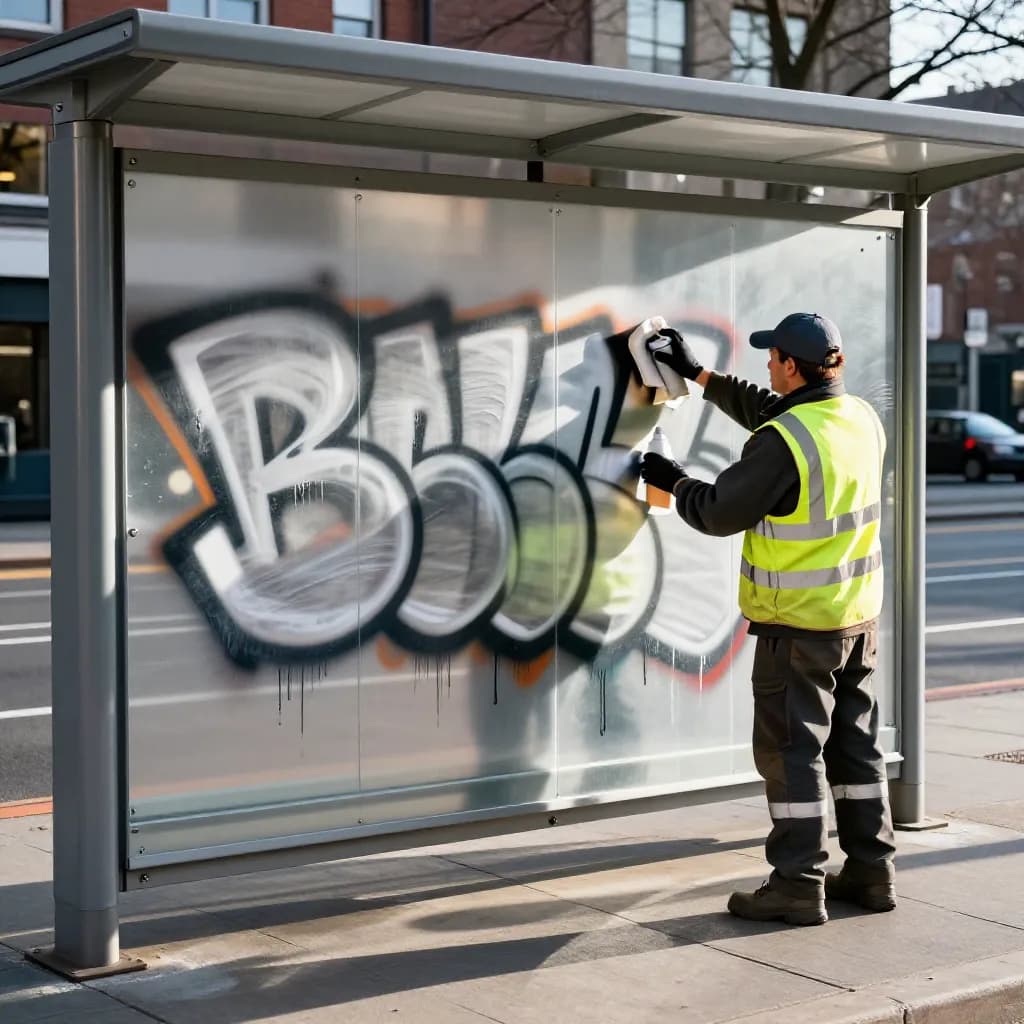
The challenge with graffiti on powder coated surfaces is that the same properties that make the coating durable also make it vulnerable to certain removal methods. Aggressive solvents that dissolve graffiti paint can also soften or dissolve the powder coating beneath. Abrasive removal methods that scrub away graffiti also scratch and dull the coating surface. The goal of effective graffiti management is to remove the graffiti completely without damaging the underlying powder coating.
Ready to Start Your Project?
From one-off customs to 15,000-part production runs — get precise pricing in 24 hours.
On This Page
The Graffiti Problem on Powder Coated Surfaces
Anti-graffiti coatings provide a proactive solution by creating a surface that either prevents graffiti from bonding or allows it to be removed easily with mild cleaning products. These coatings are available in two fundamental types: sacrificial and permanent. Each has distinct advantages and limitations that make it suitable for different applications and graffiti risk levels.
This guide covers both reactive graffiti removal from unprotected powder coated surfaces and proactive anti-graffiti protection strategies. Whether you are dealing with existing graffiti or planning protection for a new installation, understanding the options and their trade-offs enables informed decisions that protect both the appearance and integrity of the powder coating.
Safe Graffiti Removal from Unprotected Powder Coating
Removing graffiti from powder coated surfaces that do not have anti-graffiti protection requires careful product selection and technique to avoid damaging the coating. The fundamental rule is to start with the mildest effective method and escalate only as needed.
For fresh graffiti that has not fully cured, prompt action dramatically improves the chances of complete removal with mild products. Spray paint that is still tacky can often be removed with isopropyl alcohol or mineral spirits applied to a soft cloth. Work from the edges of the graffiti inward to avoid spreading it. Change cloths frequently to prevent redepositing the graffiti material on the surface.
For cured spray paint, a dedicated graffiti remover formulated for use on painted surfaces is the safest option. These products are designed to dissolve graffiti paint without attacking the underlying finish. Look for products specifically labeled as safe for powder coatings or automotive paint. Apply according to the manufacturer's instructions, typically allowing a dwell time of several minutes before wiping away.
Marker and pen graffiti can usually be removed with isopropyl alcohol for water-based markers or mineral spirits for permanent markers. Apply the solvent to a cloth rather than directly to the surface, and work patiently with multiple applications rather than trying to remove everything in one aggressive pass.
Never use acetone, MEK, paint stripper, or other aggressive solvents on powder coated surfaces. These will damage the coating, often causing more visible harm than the graffiti itself. Similarly, avoid abrasive methods such as scouring pads, wire brushes, or sandpaper, which will scratch and dull the coating surface permanently.
After removing graffiti, clean the entire area with pH-neutral detergent and water to remove any solvent residue. Inspect the surface for any damage caused by the graffiti material or the removal process. Touch up any areas where the coating has been compromised to prevent corrosion.
Sacrificial Anti-Graffiti Coatings Explained
Sacrificial anti-graffiti coatings work by creating a clear, removable barrier over the powder coating. When graffiti is applied, it bonds to the sacrificial layer rather than to the powder coating itself. The graffiti is removed by stripping away the sacrificial layer along with the graffiti, and a fresh sacrificial layer is then applied to restore protection.
The most common sacrificial anti-graffiti coatings are based on wax or biopolymer formulations. These products are applied as a thin, clear film over the cured powder coating. They are typically water-based, easy to apply by spray or roller, and dry to a clear, non-glossy finish that does not significantly alter the appearance of the underlying powder coating.
The removal process for sacrificial coatings is straightforward. A hot water pressure washer at moderate pressure, typically 1000 to 2000 psi at 60 to 80 degrees Celsius, dissolves and removes the sacrificial layer along with any graffiti on it. The hot water melts the wax-based coating, releasing the graffiti from the surface. No chemical solvents are needed, making this an environmentally friendly removal method.
After removal, the powder coating beneath is exposed and unprotected until a new sacrificial layer is applied. Reapplication should be performed as soon as practical after graffiti removal to restore protection. Each removal and reapplication cycle is independent, and the process can be repeated indefinitely without degrading the underlying powder coating.
The advantages of sacrificial coatings include low initial application cost, simple removal process, no chemical solvents required, and compatibility with virtually any powder coating color and finish. The disadvantages include the need to reapply after each graffiti removal event, the ongoing material and labor cost of reapplication, and the fact that the surface is temporarily unprotected between removal and reapplication.
Sacrificial coatings are best suited for surfaces with moderate graffiti risk where removal events are infrequent, typically a few times per year or less. For surfaces that are tagged frequently, the cumulative cost and effort of repeated removal and reapplication may make permanent anti-graffiti coatings more economical.
Permanent Anti-Graffiti Coatings Explained
Permanent anti-graffiti coatings create a non-stick surface that prevents graffiti materials from bonding effectively. Unlike sacrificial coatings, permanent coatings remain in place after graffiti removal and do not need to be reapplied. The graffiti is removed from the coating surface using mild solvents or cleaning products, leaving the anti-graffiti coating intact and ready to resist the next attack.
Permanent anti-graffiti coatings are typically based on polyurethane, fluoropolymer, or nano-ceramic chemistry. These formulations create a very low surface energy finish that graffiti paint, markers, and adhesives cannot grip effectively. The graffiti sits on the surface without penetrating or bonding, making it relatively easy to wipe away.
The removal process for graffiti on permanent anti-graffiti coatings varies by product but generally involves applying a mild solvent or proprietary cleaning solution, allowing a brief dwell time, and wiping the graffiti away with a cloth. Some products allow removal with just hot water and a pressure washer. The key advantage is that the anti-graffiti coating remains functional after removal, ready to resist subsequent graffiti without reapplication.
Permanent coatings can typically withstand 20 to 50 or more removal cycles before their anti-graffiti properties begin to diminish, depending on the product and the aggressiveness of the removal method used. Eventually, the coating may need to be refreshed or reapplied, but this interval is measured in years rather than individual graffiti events.
The advantages of permanent coatings include no reapplication after each removal, lower long-term maintenance effort for frequently tagged surfaces, and consistent protection without gaps. The disadvantages include higher initial application cost compared to sacrificial coatings, potential alteration of the surface appearance with some products adding a slight sheen or texture change, and the need for specific cleaning products recommended by the coating manufacturer.
Permanent anti-graffiti coatings are best suited for high-risk surfaces that experience frequent graffiti attacks, such as transit stations, highway sound barriers, public restrooms, and ground-level commercial facades in urban areas. The higher initial investment is justified by the reduced ongoing maintenance burden.
Choosing Between Sacrificial and Permanent Protection
The choice between sacrificial and permanent anti-graffiti coatings depends on several factors specific to each installation. There is no universally superior option; the best choice is the one that matches the graffiti risk level, maintenance capabilities, and performance requirements of the specific application.
Graffiti frequency is the primary decision factor. For surfaces that are tagged once or twice per year, sacrificial coatings are typically more practical and economical. The removal and reapplication process is simple enough to be performed by general maintenance staff, and the cumulative cost over several years remains modest. For surfaces tagged monthly or more frequently, permanent coatings become the better value because they eliminate the repeated reapplication cycle.
Maintenance capability matters. Sacrificial coating removal requires a hot water pressure washer and the ability to reapply the coating promptly. If the facility has maintenance staff with this equipment and availability, sacrificial coatings work well. If maintenance resources are limited or response time to graffiti events is slow, permanent coatings provide more consistent protection because the surface remains protected even if graffiti removal is delayed.
Appearance sensitivity influences the choice. Sacrificial coatings generally have less impact on the appearance of the underlying powder coating than permanent coatings. For architectural applications where the exact color, gloss, and texture of the powder coating must be preserved, sacrificial coatings may be preferred. Permanent coatings should be evaluated on a sample panel before full application to confirm that the appearance change is acceptable.
Environmental considerations favor sacrificial coatings in some situations. Hot water removal without chemical solvents is the most environmentally benign graffiti removal method. Permanent coatings may require proprietary chemical cleaners for graffiti removal, which must be managed according to local environmental regulations.
Some installations use a hybrid approach, applying permanent anti-graffiti coatings to the most frequently targeted surfaces and sacrificial coatings to lower-risk areas. This optimizes the investment by matching the protection level to the actual risk at each location.
Application of Anti-Graffiti Coatings Over Powder Coating
Proper application of anti-graffiti coatings over existing powder coating is essential for effective performance. Both sacrificial and permanent coatings require a clean, sound substrate and correct application technique to function as intended.
Surface preparation begins with thorough cleaning of the powder coated surface. Remove all dirt, grease, salt deposits, and other contaminants using pH-neutral detergent and water. For surfaces that have previously had graffiti removed, ensure that all graffiti residue and cleaning product residue has been completely eliminated. Any contamination on the surface will be trapped beneath the anti-graffiti coating and may interfere with its performance.
The powder coating must be in good condition before applying an anti-graffiti coating. Repair any chips, scratches, or damage with appropriate touch-up methods and allow repairs to cure fully. An anti-graffiti coating applied over damaged powder coating will not prevent corrosion at the damage sites and may actually trap moisture against the substrate.
Follow the anti-graffiti coating manufacturer's instructions precisely regarding application method, film thickness, temperature range, and cure time. Most products are applied by airless spray for large areas or by roller for smaller surfaces. Uniform coverage at the specified thickness is critical because thin spots will have reduced anti-graffiti performance.
Allow adequate cure time before the surface is exposed to weather or potential graffiti. Sacrificial coatings typically cure within hours, while permanent coatings may require 24 to 72 hours to develop full properties. Premature exposure can compromise the coating's performance and durability.
Test the anti-graffiti coating's performance after application by applying a small amount of spray paint or marker to an inconspicuous area and verifying that it can be removed cleanly using the recommended method. This confirms that the coating has been applied correctly and is functioning as expected. Document the test results along with the application date, product used, and coverage area for maintenance records.
Graffiti Prevention Beyond Coatings
Anti-graffiti coatings are one element of a comprehensive graffiti management strategy. Combining coating protection with environmental design, rapid response, and community engagement produces better results than any single measure alone.
Rapid removal is one of the most effective graffiti deterrents. Studies consistently show that graffiti that is removed within 24 to 48 hours is far less likely to recur than graffiti that remains visible for days or weeks. Prompt removal signals that the surface is monitored and maintained, discouraging repeat vandalism. Anti-graffiti coatings support rapid removal by making the process faster and easier.
Lighting deters graffiti by eliminating the concealment that vandals rely on. Well-lit surfaces are tagged far less frequently than dark, hidden areas. Motion-activated lighting is particularly effective because it draws attention to anyone approaching the surface. Consider lighting as a complement to anti-graffiti coatings for high-risk surfaces.
Landscaping and physical barriers can limit access to vulnerable surfaces. Thorny plantings, fencing, and bollards that prevent close approach to a wall or structure make it physically difficult to apply graffiti. These measures are most effective when they prevent access within arm's reach of the coated surface.
Surface texture and design can reduce graffiti appeal. Heavily textured surfaces are more difficult to tag with spray paint and markers, and the results are less visually impactful. Murals and public art on surfaces that would otherwise be blank walls reduce graffiti by eliminating the blank canvas that attracts vandals and by creating community ownership of the surface.
Surveillance cameras, both real and visible deterrent models, reduce graffiti by increasing the perceived risk of detection. Signage indicating that the area is monitored reinforces this deterrent effect. For high-value powder coated installations, the combination of surveillance, lighting, anti-graffiti coatings, and rapid removal creates a comprehensive defense that minimizes both the frequency and impact of graffiti vandalism.
Frequently Asked Questions
Can I remove graffiti from powder coating without damaging it?
Yes, with the right products and technique. Use isopropyl alcohol or mineral spirits for fresh graffiti, or a dedicated graffiti remover labeled safe for painted surfaces. Never use acetone, MEK, or paint stripper, which will damage the powder coating. Start with the mildest method and escalate only as needed.
What is the difference between sacrificial and permanent anti-graffiti coatings?
Sacrificial coatings are removed along with the graffiti and must be reapplied after each cleaning. Permanent coatings remain in place after graffiti removal and can withstand 20 to 50 or more removal cycles. Sacrificial coatings are better for low-frequency graffiti; permanent coatings are better for frequently targeted surfaces.
Do anti-graffiti coatings change the appearance of powder coating?
Sacrificial coatings generally have minimal impact on appearance, drying to a clear, non-glossy finish. Permanent coatings may add a slight sheen or texture change depending on the product. Always test on a sample panel before full application to confirm the appearance is acceptable for your application.
How long do anti-graffiti coatings last on powder coated surfaces?
Sacrificial coatings last until the next graffiti removal event, after which they must be reapplied. Permanent coatings typically last 5 to 10 years or 20 to 50 removal cycles before their properties diminish. Actual longevity depends on the product, environmental exposure, and the aggressiveness of the removal methods used.
Should I apply anti-graffiti coating to all powder coated surfaces?
No. Anti-graffiti coatings are most cost-effective on surfaces with a genuine graffiti risk, such as ground-level facades, transit infrastructure, and public furniture in urban areas. Surfaces that are not accessible to vandals or are in low-risk locations do not need anti-graffiti protection.
Ready to Start Your Project?
From one-off customs to 15,000-part production runs — get precise pricing in 24 hours.