Powder coating is a tough, resilient finish, but it is not immune to chemical damage. Using the wrong cleaning product can cause more harm than the dirt it removes, leading to gloss loss, discoloration, softening, or even complete coating failure. Understanding which products are safe and which are dangerous is essential for anyone responsible for maintaining powder coated surfaces.
Guides
Powder Coating Safe Cleaning Products: Approved Cleaners, pH Ranges, and What to Avoid
Sundial Powder Coating·April 23, 2026·11 min
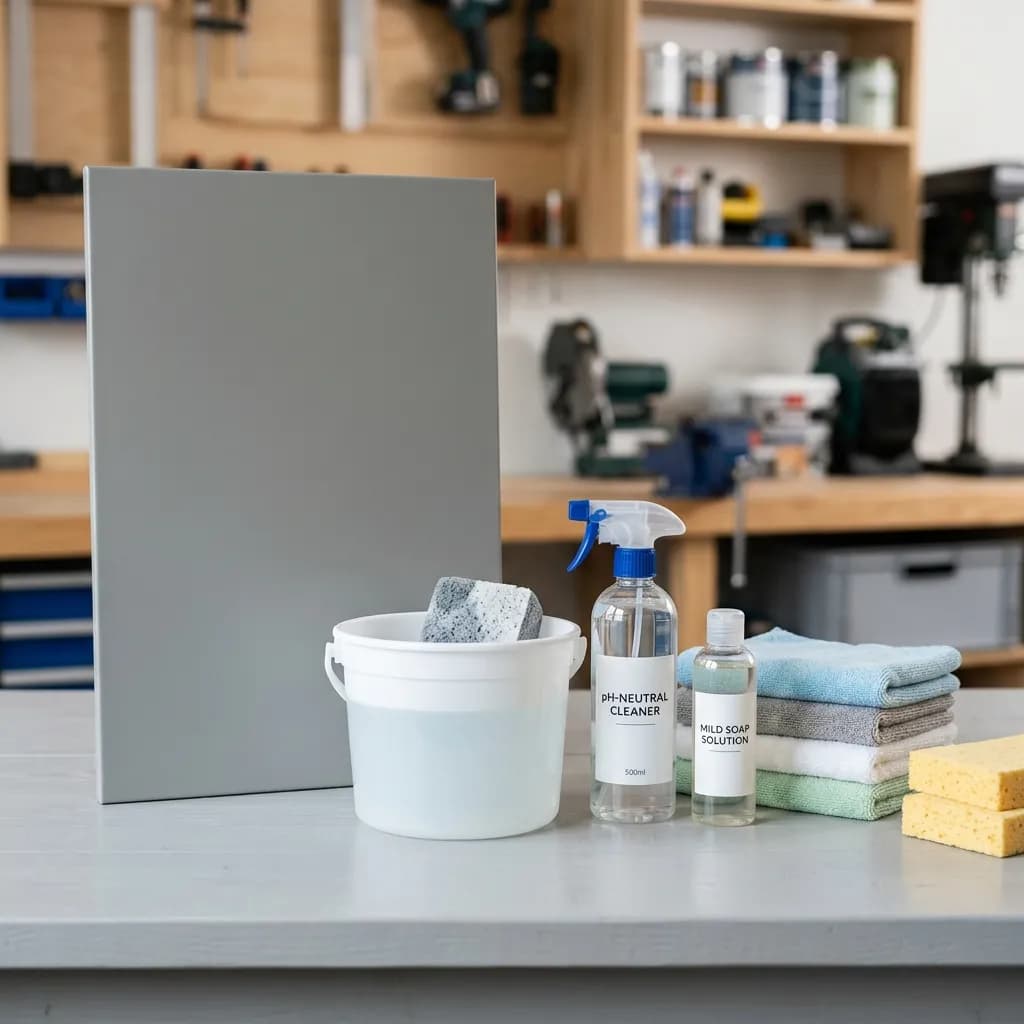
The chemistry of powder coatings determines their vulnerability to different cleaning agents. Polyester and super-durable polyester coatings, the most common types used in architectural and outdoor applications, are resistant to mild acids and alkalis but can be damaged by strong solvents and highly alkaline cleaners. Epoxy coatings have excellent chemical resistance but are sensitive to UV and certain acids. Hybrid coatings fall somewhere between the two.
Ready to Start Your Project?
From one-off customs to 15,000-part production runs — get precise pricing in 24 hours.
On This Page
Why Cleaning Product Selection Matters for Powder Coating
The consequences of using an inappropriate cleaner range from cosmetic damage to structural compromise. A cleaner that strips gloss from a facade panel creates an unsightly appearance. A solvent that softens the coating allows moisture to reach the substrate, initiating corrosion. An abrasive cleaner that scratches the surface creates thousands of tiny defects where contaminants can accumulate and degradation can begin.
This guide provides a clear framework for selecting cleaning products that effectively remove contamination without damaging the powder coating. It covers approved product types, critical pH ranges, specific products and chemicals to avoid, and testing protocols that should be followed before using any new cleaning product on a coated surface.
Approved Cleaner Categories for Powder Coated Surfaces
The safest and most effective cleaners for powder coated surfaces fall into a few well-defined categories. Starting with the mildest option and escalating only as needed is the fundamental principle of safe cleaning.
Mild pH-neutral detergents are the first choice for routine cleaning. These include standard dish soaps, car wash soaps, and purpose-formulated facade cleaning products with a pH between 6 and 8. Diluted in warm water according to manufacturer instructions, these products safely remove everyday dirt, dust, pollen, light bird droppings, and general atmospheric soiling without any risk to the coating.
Isopropyl alcohol is safe for spot cleaning of organic contaminants such as tree sap, adhesive residue, marker ink, and grease spots. Apply it to a soft cloth rather than directly to the surface, and work on small areas at a time. Isopropyl alcohol evaporates quickly and does not leave residue, making it an excellent choice for targeted cleaning tasks.
Mineral spirits, also known as white spirit, can be used for removing oil-based contaminants, tar spots, and stubborn grease deposits. Like isopropyl alcohol, it should be applied to a cloth rather than poured onto the surface. Mineral spirits are mild enough for powder coatings but should still be tested on an inconspicuous area first.
Dedicated powder coating cleaners are available from several manufacturers and are specifically formulated to be safe for thermoset powder coatings. These products are the most reliable option because they have been tested for compatibility. They are particularly recommended for large-scale commercial and architectural cleaning where consistency and safety are paramount.
Plain warm water with a soft cloth handles a surprising amount of routine cleaning. For lightly soiled surfaces, water alone may be all that is needed, especially if cleaning is performed regularly before heavy contamination builds up.
Understanding pH Ranges and Their Impact on Powder Coating
The pH scale measures how acidic or alkaline a solution is, running from 0 at the most acidic to 14 at the most alkaline, with 7 being neutral. For powder coating maintenance, pH is the single most important factor in determining whether a cleaning product is safe to use.
The safe pH range for cleaning powder coated surfaces is generally between 5 and 9. Within this range, the coating's cross-linked polymer structure is not significantly affected by the cleaning solution. Most routine cleaning products fall comfortably within this range, which is why mild detergents and car wash soaps are universally recommended.
Mildly acidic cleaners with a pH of 4 to 5 can be used cautiously for removing mineral deposits, hard water stains, and light rust staining on the coating surface. White vinegar, with a pH around 2.5, should be diluted significantly before use and rinsed thoroughly afterward. Prolonged contact with acidic solutions can etch the coating surface and reduce gloss.
Mildly alkaline cleaners with a pH of 9 to 10 are sometimes needed for heavy grease or industrial soiling. These should be used sparingly, with short contact times, and rinsed completely. Alkaline residue left on the surface can cause staining and accelerate degradation.
Strongly acidic solutions below pH 3 and strongly alkaline solutions above pH 11 should never be used on powder coated surfaces. These extremes can chemically attack the polymer matrix, causing softening, blistering, discoloration, and loss of adhesion. Common household products in these dangerous ranges include oven cleaners, drain cleaners, muriatic acid, and concentrated bleach solutions.
When in doubt about a product's pH, test it with inexpensive pH strips available from any pool supply or laboratory supplier. This simple step can prevent costly damage to coated surfaces.
Products and Chemicals to Avoid Completely
Certain products should never be used on powder coated surfaces under any circumstances. These products cause immediate or cumulative damage that cannot be reversed without stripping and recoating the affected area.
Acetone, MEK (methyl ethyl ketone), and other ketone solvents are among the most dangerous chemicals for powder coatings. These aggressive solvents can soften and dissolve thermoset powder coatings, causing the finish to become tacky, wrinkled, or completely removed. Even brief contact can cause permanent damage, and the affected area cannot be restored without recoating.
Oven cleaners and heavy-duty degreasers typically contain sodium hydroxide or potassium hydroxide at concentrations that produce pH levels above 12. These products will attack the coating aggressively, causing discoloration, softening, and blistering. The damage often appears within minutes of contact.
Concentrated bleach solutions and chlorine-based cleaners can cause yellowing and discoloration of powder coatings, particularly on white and light-colored finishes. Dilute bleach solutions below 5 percent concentration may be tolerated for brief contact, but there are safer alternatives for any cleaning task that might tempt someone to reach for bleach.
Abrasive cleaners containing silica, pumice, or other hard particles will scratch the coating surface. This includes scouring powders, abrasive cream cleaners, and any product marketed for removing tough stains through mechanical abrasion. The scratches reduce gloss, create sites for contamination accumulation, and accelerate weathering.
Ammonia-based glass cleaners, while seemingly mild, can cause hazing and gloss reduction on powder coated surfaces with repeated use. The ammonia reacts with the coating surface over time, gradually degrading the finish quality. Use pH-neutral alternatives instead.
Paint strippers and removers are obviously destructive to powder coatings and should be kept well away from any coated surface. Even overspray or drips from paint stripping operations on adjacent surfaces can damage powder coating.
Abrasive Warnings: Tools and Materials That Damage Coatings
Physical abrasion is just as damaging as chemical attack, and many common cleaning tools can scratch or wear through powder coatings. The hardness of a powder coating surface is typically in the range of 2H to 4H on the pencil hardness scale, which means it resists casual contact but can be scratched by harder materials applied with pressure.
Steel wool and stainless steel scouring pads are the most common culprits for abrasion damage. These materials are much harder than the coating surface and will leave visible scratches even with light pressure. The scratches trap dirt, reduce gloss, and create pathways for moisture to reach the substrate. Never use any metal-based cleaning pad on a powder coated surface.
Scotch-Brite style abrasive pads vary in aggressiveness. The green and brown pads used for kitchen cleaning are too abrasive for powder coatings. White non-woven pads are generally safe for light scrubbing, but even these should be used with caution and tested first. When in doubt, use a soft cloth instead.
Pressure washers above 1500 psi can erode the coating surface, particularly at edges, corners, and areas where the film thickness is thinner. The water jet can also force moisture into joints and behind the coating at damage points, accelerating hidden corrosion. If pressure washing is necessary, use the lowest effective pressure with a wide fan nozzle and maintain at least 12 inches of distance from the surface.
Dry wiping dusty or sandy surfaces drags abrasive particles across the coating, creating fine scratches that accumulate over time into visible haze. Always rinse loose debris off with water before any contact cleaning. This simple step prevents the most common form of abrasion damage to powder coated surfaces.
Razor blades and scrapers should never be used to remove deposits from powder coated surfaces. Even careful scraping will gouge the coating. Soak stubborn deposits with an appropriate solvent to soften them, then wipe away gently.
Testing Protocol Before Using Any New Product
Before using any cleaning product on a powder coated surface for the first time, a simple test protocol should be followed. This applies even to products marketed as safe for powder coatings, because coating formulations vary and what works safely on one product may not be compatible with another.
Select an inconspicuous test area that is representative of the surface to be cleaned. This might be a hidden face, an area behind hardware, or a low section that is not prominently visible. The test area should have the same coating as the rest of the surface, including the same color, gloss level, and exposure history.
Apply the cleaning product to the test area according to the manufacturer's instructions, using the same concentration, contact time, and application method you plan to use for the full cleaning. Do not dilute the product more than you would in actual use, as the test needs to represent real conditions.
After the recommended contact time, rinse the area thoroughly with clean water and allow it to dry completely. Inspect the test area for any changes in gloss, color, texture, or surface feel. Compare it directly to an adjacent uncleaned area. Run your fingertip across both areas to check for any difference in smoothness or tackiness.
Wait at least 24 hours before making a final assessment. Some chemical reactions are not immediately visible and may take time to manifest as discoloration, hazing, or surface changes. If the test area shows any adverse effects after 24 hours, do not use that product on the coated surface.
Document the test results including the product name, concentration, contact time, and outcome. This creates a reference library of tested products that simplifies future cleaning decisions and prevents repeating tests unnecessarily. Share test results with all personnel involved in cleaning and maintenance.
Cleaning Product Recommendations by Contamination Type
Different types of contamination require different cleaning approaches. Matching the right product to the specific contaminant ensures effective cleaning with minimal risk to the coating.
For general atmospheric soiling, road dust, and pollen, warm water with a few drops of pH-neutral dish soap is sufficient. Apply with a soft sponge or microfiber cloth, rinse thoroughly, and dry with a clean cloth to prevent water spotting. This handles the vast majority of routine cleaning needs.
Bird droppings should be removed as quickly as possible because they are acidic and can etch the coating surface if left in contact for extended periods. Soak the deposit with warm soapy water for several minutes to soften it, then wipe away gently. Do not scrape dried droppings, as this risks scratching the coating.
Tree sap and resin respond well to isopropyl alcohol applied to a soft cloth. Place the dampened cloth over the sap deposit for a minute to dissolve it, then wipe away. For large areas of sap contamination, mineral spirits may be more effective. Rinse the area with soapy water after solvent cleaning.
Hard water stains and mineral deposits can be removed with a diluted white vinegar solution, typically one part vinegar to ten parts water. Apply, allow brief contact of two to three minutes, then rinse thoroughly. For heavy mineral buildup, a dedicated mineral deposit remover with a pH above 4 is safer than increasing vinegar concentration.
Graffiti removal depends on the type of graffiti material and whether an anti-graffiti coating is present. For surfaces without anti-graffiti protection, isopropyl alcohol removes many marker inks, while mineral spirits address paint-based graffiti. Work gently and patiently rather than using aggressive solvents that could damage the powder coating underneath.
Industrial fallout, including iron particles, brake dust, and metallic contamination, may require a dedicated fallout remover containing iron-dissolving chemistry. These products are available from automotive detailing suppliers and are generally safe for powder coatings when used according to instructions.
Maintaining a Cleaning Product Inventory and Protocol
For commercial, institutional, and industrial facilities with significant powder coated surfaces, maintaining a controlled cleaning product inventory prevents accidental damage from unauthorized products. A formal protocol ensures that everyone involved in cleaning uses approved products and methods.
Create an approved product list that specifies the exact products authorized for use on powder coated surfaces at your facility. Include the product name, manufacturer, approved concentration range, maximum contact time, and the types of contamination each product is intended to address. Distribute this list to all cleaning personnel and post it in cleaning supply storage areas.
Stock only approved products in areas where powder coated surfaces are cleaned. Removing unapproved products from the immediate environment eliminates the risk of someone grabbing the wrong bottle. If other cleaning products must be stored nearby for use on different surfaces, clearly label them as not approved for powder coating.
Train all cleaning personnel on the correct products and methods for powder coated surfaces. Training should cover why product selection matters, how to identify powder coated surfaces, the approved product list, correct dilution ratios, and the testing protocol for any new product. Refresher training should be provided annually or whenever the approved product list changes.
Keep safety data sheets for all cleaning products on file and accessible. These documents provide critical information about chemical composition, pH, health hazards, and first aid measures. They also help identify whether a product contains any of the chemicals known to damage powder coatings.
Review and update the approved product list annually. Products are reformulated, discontinued, and replaced by manufacturers. An annual review ensures that the list remains current and that any new products are properly tested before being added to the approved inventory. Document all changes and communicate them to cleaning personnel promptly.
Frequently Asked Questions
What pH range is safe for cleaning powder coated surfaces?
The safe pH range for routine cleaning of powder coated surfaces is between 5 and 9. Products within this range will not chemically damage the coating. Strongly acidic solutions below pH 3 and strongly alkaline solutions above pH 11 should never be used, as they can cause softening, blistering, and discoloration.
Can I use a pressure washer on powder coating?
Yes, but only at low pressure below 1500 psi with a wide fan nozzle held at least 12 inches from the surface. Higher pressures can erode the coating, damage edges, and force water into joints. A garden hose with a standard nozzle is safer for routine cleaning.
Is it safe to use vinegar on powder coated surfaces?
Diluted white vinegar at roughly one part vinegar to ten parts water can be used briefly to remove mineral deposits and hard water stains. Rinse thoroughly after two to three minutes of contact. Do not use undiluted vinegar, as its low pH of around 2.5 can etch the coating surface.
Why should I avoid acetone on powder coating?
Acetone is a ketone solvent that can soften and dissolve thermoset powder coatings, causing the finish to become tacky, wrinkled, or completely removed. Even brief contact can cause permanent damage that requires stripping and recoating to repair. Use isopropyl alcohol or mineral spirits as safer alternatives.
Can I use Magic Eraser or melamine sponges on powder coating?
Melamine sponges are mildly abrasive and can reduce gloss on powder coated surfaces with repeated use. They may be acceptable for removing stubborn marks on matte or textured finishes, but should be avoided on gloss and semi-gloss coatings. Test on an inconspicuous area first and use minimal pressure.
Ready to Start Your Project?
From one-off customs to 15,000-part production runs — get precise pricing in 24 hours.