Antimicrobial powder coating is a finishing system that incorporates biocidal agents into the powder formulation to inhibit the growth and survival of bacteria, mold, mildew, and fungi on the coated surface. When microorganisms contact the coating surface, the antimicrobial agents disrupt their cellular processes, preventing reproduction and eventually killing the organisms. The result is a coated surface that actively resists microbial colonization throughout its service life.
Technical
What Is Antimicrobial Powder Coating? Silver Ion, Copper, and Healthcare Use
Sundial Powder Coating·April 23, 2026·12 min
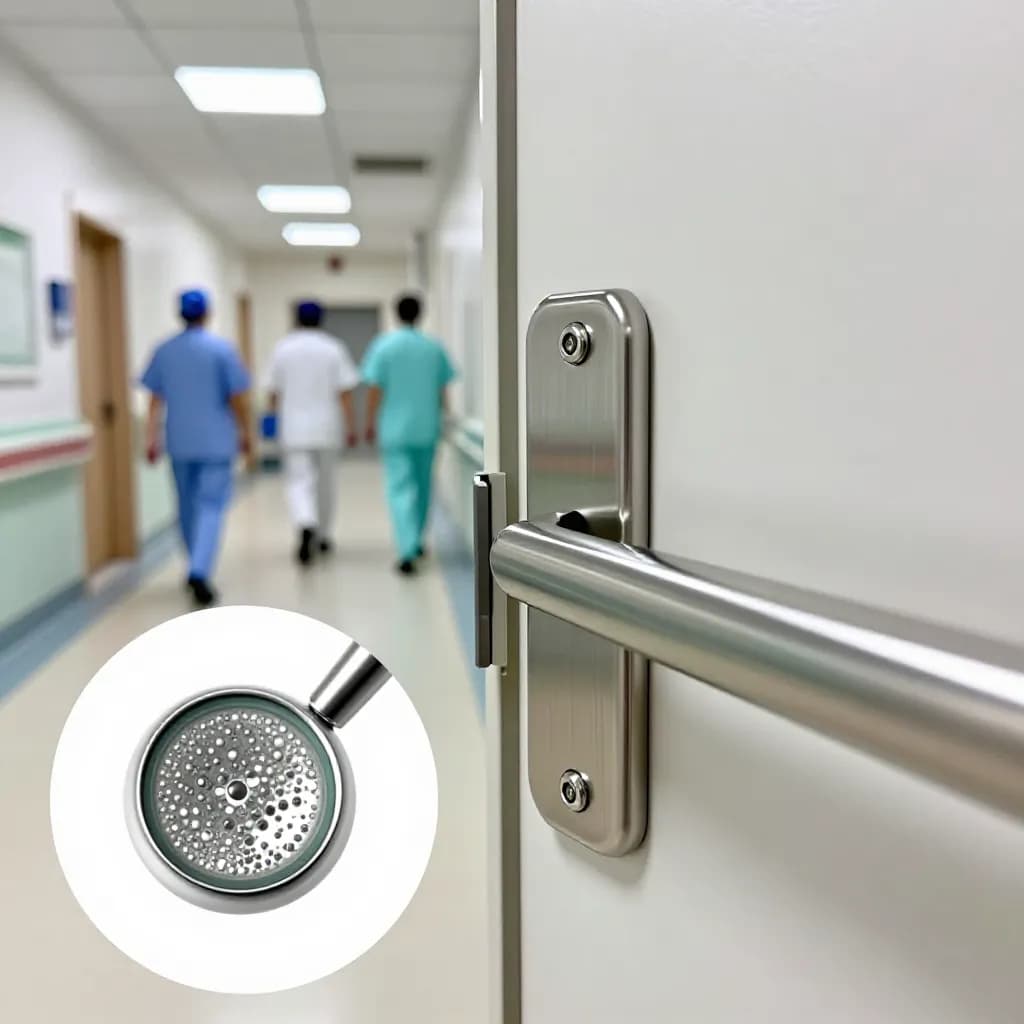
Antimicrobial powder coatings are not a replacement for regular cleaning and disinfection — they are a supplementary measure that provides continuous antimicrobial protection between cleaning cycles. The coating works around the clock, reducing microbial populations on the surface even when cleaning is not immediately possible. This continuous action is particularly valuable in environments where surfaces are frequently touched by multiple people and where microbial contamination poses health risks.
Ready to Start Your Project?
From one-off customs to 15,000-part production runs — get precise pricing in 24 hours.
On This Page
What Antimicrobial Powder Coating Is
The antimicrobial agents used in powder coatings are incorporated into the powder formulation during manufacturing, becoming an integral part of the cured coating film. Unlike surface-applied antimicrobial treatments that can wear off or be removed by cleaning, the antimicrobial agents in powder coatings are distributed throughout the film thickness and remain active for the life of the coating.
The technology has gained significant attention in healthcare, public transportation, food service, and commercial building applications, where reducing surface microbial contamination is an important component of infection prevention and hygiene management strategies.
How Silver Ion Technology Works
Silver ion technology is the most widely used antimicrobial system in powder coatings. Silver has been recognized for its antimicrobial properties for thousands of years, and modern silver ion technology harnesses this natural biocidal activity in a controlled, long-lasting form.
In antimicrobial powder coatings, silver is incorporated as silver ions (Ag+) bound within an inorganic carrier matrix, typically a ceramic, glass, or zeolite structure. This carrier matrix serves two purposes: it protects the silver ions during the high-temperature powder manufacturing and curing processes, and it controls the rate at which silver ions are released to the coating surface, ensuring sustained antimicrobial activity over the coating's service life.
When bacteria contact the coating surface, moisture from the environment or from the bacteria themselves triggers the release of silver ions from the carrier matrix. These silver ions interact with the bacterial cell in multiple ways. They bind to proteins in the cell membrane, disrupting its integrity and permeability. They interfere with the cell's respiratory enzymes, blocking energy production. They bind to DNA, preventing replication. This multi-mode attack makes it extremely difficult for bacteria to develop resistance to silver, unlike single-mode antibiotics.
The concentration of silver in antimicrobial powder coatings is carefully controlled. Enough silver must be present to provide effective antimicrobial activity, but excessive silver can affect the coating's color, gloss, and mechanical properties. Typical silver loadings are in the range of 0.5-3 percent by weight of the total powder formulation, depending on the carrier system and the required level of antimicrobial activity.
Silver ion antimicrobial coatings are effective against a broad spectrum of bacteria, including both gram-positive organisms such as Staphylococcus aureus and MRSA, and gram-negative organisms such as Escherichia coli and Pseudomonas aeruginosa. They also inhibit the growth of mold, mildew, and fungi on the coating surface.
Copper-Based Antimicrobial Technology
Copper is another metal with well-documented antimicrobial properties that is used in antimicrobial powder coatings. Copper ions (Cu2+) kill bacteria through mechanisms similar to silver — disrupting cell membranes, interfering with enzyme function, and generating reactive oxygen species that damage cellular components.
Copper-based antimicrobial powder coatings incorporate copper compounds into the powder formulation, either as copper oxide particles, copper-containing glass, or other copper-releasing matrices. The copper ions are released to the coating surface through a controlled mechanism that provides sustained antimicrobial activity.
One advantage of copper over silver is its faster kill rate against certain bacteria. Studies have shown that copper surfaces can reduce bacterial populations by 99.9 percent within two hours of contact, compared to longer timeframes for some silver-based systems. This rapid kill rate is particularly valuable in healthcare settings where fast microbial reduction is important.
Copper-based antimicrobial coatings can affect the coating's appearance, imparting a slight color shift that may be noticeable in light-colored formulations. This color effect is less significant in darker colors and can be managed through formulation optimization. Some applications deliberately use the copper color as a visual indicator of the antimicrobial property.
The EPA (Environmental Protection Agency) in the United States has registered certain copper alloys as antimicrobial materials with public health claims, recognizing their ability to continuously reduce bacterial contamination. Copper-based powder coatings that meet EPA registration requirements can make specific antimicrobial claims for public health applications.
Some antimicrobial powder coatings combine silver and copper technologies to leverage the strengths of both metals. The combination provides broad-spectrum antimicrobial activity with both rapid initial kill from copper and sustained long-term protection from silver.
Healthcare Applications
Healthcare facilities are the most critical application environment for antimicrobial powder coatings. Hospital-acquired infections affect millions of patients worldwide each year, and contaminated surfaces play a significant role in the transmission of pathogenic organisms. Antimicrobial coatings on frequently touched surfaces provide an additional layer of protection that complements standard cleaning and disinfection protocols.
High-touch surfaces in healthcare settings include door handles, push plates, handrails, bed frames, IV poles, medical carts, equipment housings, and bathroom fixtures. These surfaces are touched by multiple patients, visitors, and healthcare workers throughout the day, creating opportunities for microbial transfer. Antimicrobial powder coatings on these surfaces continuously reduce microbial populations between cleaning cycles.
The value of antimicrobial coatings in healthcare is not that they replace cleaning — they do not. Rather, they provide a safety net during the intervals between cleaning events. A door handle that is cleaned every four hours may be touched hundreds of times between cleanings. An antimicrobial coating continuously reduces the microbial load on that handle, lowering the risk of transmission during the intervals when the surface has not been recently cleaned.
Hospital furniture and equipment manufacturers increasingly offer antimicrobial powder-coated options for their products. Bed frames, overbed tables, chairs, cabinets, and mobile equipment carts are available with antimicrobial coatings that provide lifelong microbial resistance without the need for reapplication.
Operating room and procedure room equipment benefits from antimicrobial coatings as an additional barrier against contamination. Surgical light housings, equipment booms, and instrument carts in these critical environments can be coated with antimicrobial powder to supplement the rigorous cleaning protocols already in place.
Long-term care facilities, rehabilitation centers, and outpatient clinics also benefit from antimicrobial coatings on frequently touched surfaces. These environments serve vulnerable populations and have high surface contact rates, making antimicrobial coatings a practical component of infection prevention strategies.
Public Spaces and Transportation
Beyond healthcare, antimicrobial powder coatings serve a growing range of public space and transportation applications where surface hygiene is important for public health and user confidence.
Public transportation systems — buses, trains, subway cars, and stations — feature numerous high-touch surfaces including handrails, grab poles, seat frames, ticket machines, and door handles. These surfaces are touched by thousands of people daily, creating significant potential for microbial transfer. Antimicrobial coatings on these surfaces provide continuous microbial reduction that supplements regular cleaning schedules.
Airports and aviation applications include handrails, seating frames, check-in kiosks, security screening equipment, and aircraft interior components. The high passenger volumes and international travel patterns in aviation make surface hygiene particularly important for controlling the spread of infectious organisms.
Commercial buildings and offices feature antimicrobial coatings on elevator buttons, door hardware, stair railings, restroom fixtures, and shared equipment. The post-pandemic awareness of surface hygiene has increased demand for antimicrobial coatings in commercial environments where building owners want to demonstrate their commitment to occupant health.
Educational facilities — schools, universities, and childcare centers — use antimicrobial coatings on furniture, playground equipment, locker systems, and bathroom fixtures. Children are particularly susceptible to infectious diseases, and the close-contact environment of schools facilitates transmission. Antimicrobial coatings provide an additional protective measure in these settings.
Food service and retail environments use antimicrobial coatings on shelving, display fixtures, shopping cart handles, and food preparation surfaces. The combination of food contact and high public traffic makes antimicrobial protection valuable for both food safety and general hygiene.
Fitness facilities and recreational centers apply antimicrobial coatings to exercise equipment frames, locker room fixtures, and pool area furniture. The warm, moist environment of fitness facilities promotes microbial growth, making antimicrobial coatings particularly beneficial.
Testing Standards and Efficacy Claims
Antimicrobial powder coatings must be tested according to recognized standards to validate their efficacy claims. Understanding these testing standards helps specifiers evaluate antimicrobial products and make informed comparisons between different offerings.
ISO 22196 (also published as JIS Z 2801) is the most widely referenced international standard for measuring the antibacterial activity of plastic and other non-porous surfaces. The test involves inoculating the coating surface with a known concentration of bacteria, incubating for 24 hours under controlled conditions, and measuring the surviving bacterial population. Results are expressed as a log reduction — a 2-log reduction means 99 percent kill, a 3-log reduction means 99.9 percent kill.
ASTM E2180 is a North American standard for determining the antimicrobial activity of antimicrobial agents incorporated into polymeric or hydrophobic materials. This test uses an agar slurry method that maintains moisture contact with the surface throughout the test period, providing a more challenging test environment than ISO 22196.
EPA registration in the United States is required for antimicrobial products that make public health claims. The EPA registration process requires extensive efficacy testing, safety data, and environmental impact assessment. Products with EPA registration can make specific claims about their ability to reduce bacterial contamination on treated surfaces.
EU Biocidal Products Regulation (BPR) governs antimicrobial products in the European Union. Products containing biocidal active substances must be authorized under the BPR before they can be marketed with antimicrobial claims. The regulation ensures that antimicrobial products are effective and safe for their intended use.
It is important to distinguish between antimicrobial coatings that have been tested and certified under recognized standards and those that make unsubstantiated claims. Specifiers should request test reports from accredited laboratories demonstrating efficacy against specific organisms under defined test conditions.
Antimicrobial coatings do not sterilize surfaces. They reduce microbial populations over time but do not eliminate all organisms instantly. Claims should be evaluated in the context of the specific test conditions, organisms tested, and contact times reported.
Formulation, Durability, and Specification
Antimicrobial powder coatings are formulated by incorporating the antimicrobial agent into a standard powder coating base — typically polyester, hybrid, or epoxy chemistry — during the manufacturing process. The antimicrobial agent becomes an integral part of the powder formulation and is distributed throughout the cured film.
The base coating chemistry determines the coating's mechanical, chemical, and weathering properties, while the antimicrobial agent provides the biocidal function. This means antimicrobial powder coatings are available in the same range of chemistries, colors, and finishes as standard powder coatings, with the added benefit of antimicrobial activity.
Durability of the antimicrobial function is a critical consideration. Because the antimicrobial agent is distributed throughout the film thickness rather than applied only to the surface, the antimicrobial activity is maintained even as the coating surface wears. As the outer surface erodes through normal use and cleaning, fresh antimicrobial agent is exposed from within the film, maintaining efficacy throughout the coating's service life.
The antimicrobial function must survive the powder coating cure cycle, which typically involves temperatures of 180-200 degrees Celsius. The inorganic carrier matrices used for silver and copper antimicrobial agents are specifically designed to withstand these temperatures without loss of antimicrobial activity. Organic antimicrobial agents, which are less common in powder coatings, may be more sensitive to cure temperatures.
Specifying antimicrobial powder coatings requires defining both the coating performance requirements (chemistry, color, gloss, film thickness, adhesion, etc.) and the antimicrobial performance requirements (test standard, target organisms, required log reduction, and test conditions). A complete specification might read: Polyester powder coating with integrated silver ion antimicrobial technology, demonstrating minimum 2-log reduction against S. aureus and E. coli per ISO 22196 after 24 hours.
Maintenance of antimicrobial coated surfaces follows standard cleaning procedures. The antimicrobial function is not affected by normal cleaning agents and methods. However, abrasive cleaning that removes significant coating material should be avoided, as it accelerates the depletion of antimicrobial agent from the film.
Limitations and Responsible Claims
Understanding the limitations of antimicrobial powder coatings is essential for responsible specification and realistic expectations. Antimicrobial coatings are a valuable tool in hygiene management, but they are not a silver bullet that eliminates the need for other infection prevention measures.
Antimicrobial coatings do not replace cleaning. They supplement cleaning by providing continuous microbial reduction between cleaning events. Surfaces with antimicrobial coatings still require regular cleaning to remove dirt, organic matter, and microbial contamination. The antimicrobial coating works most effectively on surfaces that are regularly cleaned.
Antimicrobial coatings do not provide instant sterilization. The kill rate depends on the antimicrobial agent, the organism, the environmental conditions (temperature, humidity), and the contact time. Most antimicrobial coatings demonstrate significant microbial reduction within 2-24 hours of contact, not within seconds or minutes.
Efficacy varies by organism. Antimicrobial coatings are generally most effective against bacteria and may have limited activity against viruses, bacterial spores, and some fungi. Specifiers should verify that the coating has been tested against the specific organisms of concern for their application.
Regulatory requirements must be respected. In many jurisdictions, antimicrobial products that make public health claims must be registered or authorized by regulatory agencies. Using antimicrobial coatings without proper regulatory compliance can result in legal liability and misleading claims.
The antimicrobial function has a finite life. While the distributed antimicrobial agent provides long-lasting activity, the total amount of agent in the film is finite. Over very long service periods, the antimicrobial activity may gradually diminish as the agent is depleted. The expected duration of antimicrobial activity should be discussed with the coating manufacturer.
Responsible specification of antimicrobial coatings positions them as one component of a comprehensive hygiene strategy that includes regular cleaning, hand hygiene, ventilation, and other infection prevention measures. This honest positioning builds trust and ensures that antimicrobial coatings are used where they provide genuine value.
Frequently Asked Questions
How does antimicrobial powder coating work?
Antimicrobial agents — typically silver ions or copper — are incorporated into the powder formulation. When bacteria contact the coated surface, these agents disrupt cell membranes, block enzyme function, and prevent reproduction. The agents are distributed throughout the film, providing lifelong antimicrobial activity.
Does antimicrobial coating replace cleaning?
No. Antimicrobial coatings supplement cleaning by providing continuous microbial reduction between cleaning events. Regular cleaning is still required to remove dirt and organic matter. The coating works most effectively on surfaces that are regularly maintained.
What organisms do antimicrobial powder coatings kill?
Silver and copper-based antimicrobial coatings are effective against a broad spectrum of bacteria including S. aureus, MRSA, E. coli, and Pseudomonas. They also inhibit mold, mildew, and fungi. Efficacy against viruses varies and should be verified with specific test data.
How long does the antimicrobial function last?
Because the antimicrobial agent is distributed throughout the coating film, the function is maintained as the surface wears — fresh agent is continuously exposed. The antimicrobial activity lasts for the practical service life of the coating, though it may gradually diminish over very long periods.
What testing standards apply to antimicrobial coatings?
ISO 22196 (JIS Z 2801) is the primary international standard for antibacterial surface testing. ASTM E2180 is used in North America. EPA registration is required in the US for public health claims. EU Biocidal Products Regulation governs antimicrobial products in Europe.
Where are antimicrobial powder coatings most commonly used?
Healthcare facilities (bed frames, door handles, equipment), public transportation (handrails, grab poles), commercial buildings (elevator buttons, restroom fixtures), schools, food service environments, and fitness facilities. Any high-touch surface in public or shared spaces benefits.
Ready to Start Your Project?
From one-off customs to 15,000-part production runs — get precise pricing in 24 hours.