AAMA 2605 is the highest-performance specification for organic coatings on architectural aluminum, published by the American Architectural Manufacturers Association (now part of the Fenestration and Glazing Industry Alliance, FGIA). Formally titled Voluntary Specification, Performance Requirements and Test Procedures for Superior Performing Organic Coatings on Aluminum Extrusions and Panels, AAMA 2605 defines the most demanding performance requirements for coatings used on building facades, curtain walls, window systems, and other architectural aluminum products.
Technical
What Is AAMA 2605? The North American Architectural Coating Standard
Sundial Powder Coating·April 23, 2026·12 min
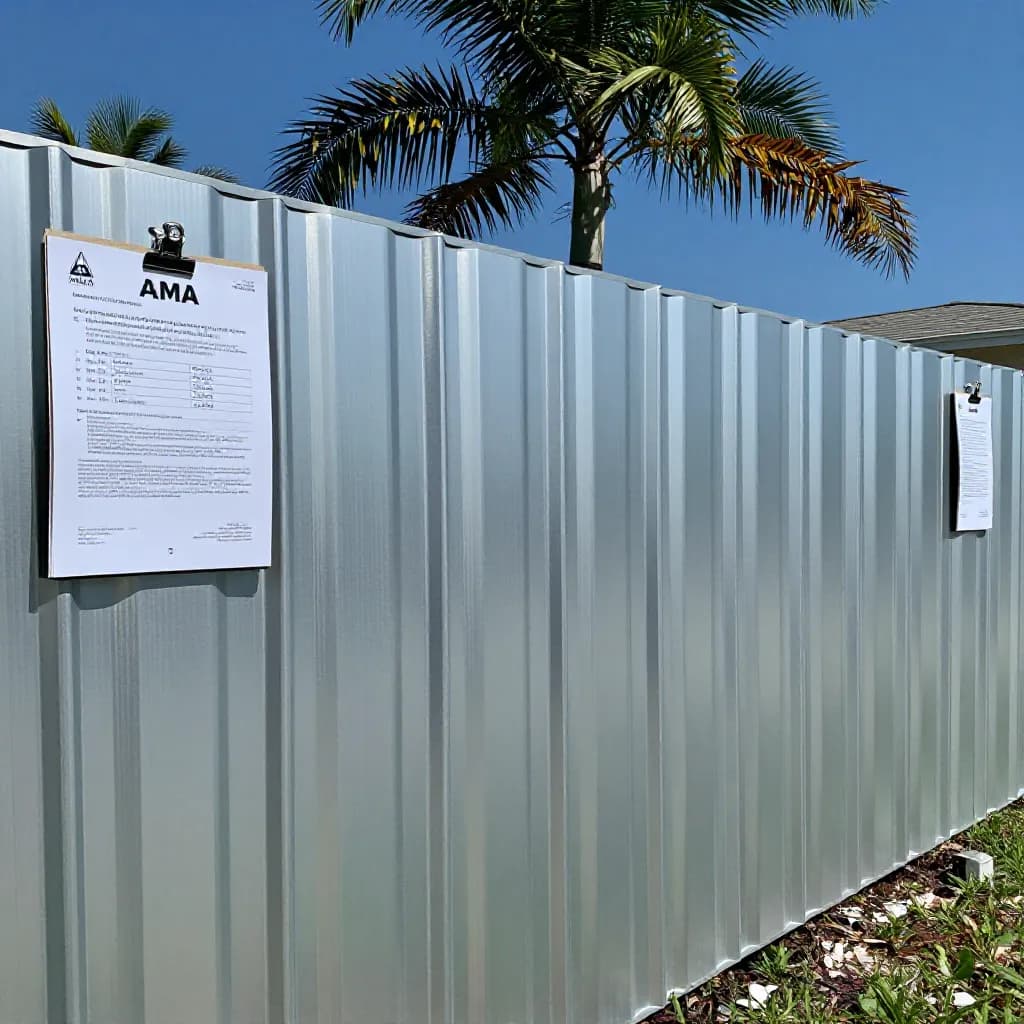
The specification is distinguished by its requirement for 10 years of actual outdoor exposure testing in South Florida, the most aggressive natural weathering environment in North America. This real-world testing requirement, combined with stringent laboratory performance criteria, ensures that coatings meeting AAMA 2605 will maintain their appearance and protective properties for decades of architectural service.
Ready to Start Your Project?
From one-off customs to 15,000-part production runs — get precise pricing in 24 hours.
On This Page
What AAMA 2605 Is
AAMA 2605 is part of a three-tier system of architectural coating specifications. AAMA 2603 defines requirements for standard coatings, AAMA 2604 for high-performance coatings, and AAMA 2605 for superior-performing coatings. Each tier has progressively more demanding performance requirements, with AAMA 2605 representing the pinnacle of architectural coating performance.
In practice, only fluoropolymer coatings — PVDF and FEVE chemistries — consistently meet AAMA 2605 requirements. The specification does not mandate a specific chemistry, but the performance requirements are so demanding that only fluoropolymer technology can reliably achieve them. This makes AAMA 2605 effectively a fluoropolymer specification, though it is written in performance terms rather than prescriptive chemistry terms.
South Florida Testing: The Gold Standard
The requirement for 10 years of South Florida outdoor exposure testing is what sets AAMA 2605 apart from all other architectural coating specifications. South Florida's combination of intense ultraviolet radiation, high humidity, salt air, frequent rain, and elevated temperatures creates one of the most aggressive natural weathering environments in the world. Coatings that survive 10 years in South Florida have demonstrated their ability to withstand the worst that nature can deliver.
Test panels are mounted on outdoor exposure racks at test sites in the Miami-Fort Lauderdale area, angled at 45 degrees facing south to maximize UV exposure. The panels are exposed continuously for 10 years, with periodic evaluations at 1, 3, 5, 7, and 10 years. At each evaluation point, the panels are measured for gloss retention, color change, chalk rating, and film erosion.
The 10-year Florida exposure requirement means that coating manufacturers must invest a decade of testing before their products can be certified to AAMA 2605. This long testing timeline ensures that only coatings with genuine long-term durability achieve certification — there are no shortcuts or accelerated alternatives that can substitute for the real-world exposure data.
The Florida exposure data accumulated over decades of testing provides an invaluable database of coating performance. This data allows coating manufacturers to correlate accelerated laboratory tests with real-world performance, improving the predictive accuracy of their product development testing. It also provides architects and building owners with confidence that AAMA 2605-certified coatings will perform as expected over the building's design life.
The geographic specificity of the Florida test site is important. South Florida's latitude (approximately 26 degrees north) provides intense UV radiation year-round, and the coastal location adds salt spray exposure. These conditions are more aggressive than most building locations, providing a safety margin that ensures coatings will perform well in less demanding environments.
Performance Requirements in Detail
AAMA 2605 specifies performance requirements across multiple categories, each designed to evaluate a specific aspect of coating durability and quality. Understanding these requirements helps specifiers appreciate what the specification demands and why it is considered the highest performance tier.
Gloss retention after 10 years of Florida exposure must be at least 50 percent of the original gloss value. This means a coating with an initial gloss of 30 GU at 60 degrees must retain at least 15 GU after a decade of outdoor exposure. This requirement ensures that the coating maintains a reasonable appearance throughout its service life rather than becoming dull and chalky.
Color change after 10 years must not exceed 5 Delta E units (CIE Lab color space). Delta E is a measure of the total color difference between the original and exposed coating, encompassing changes in lightness, hue, and saturation. A Delta E of 5 is generally considered the threshold of noticeable color change for architectural applications.
Chalk rating after 10 years must be 8 or better on the ASTM D4214 scale, where 10 represents no chalking and lower numbers indicate increasing chalk. A rating of 8 indicates very slight chalking that is barely perceptible. This requirement ensures that the coating surface remains smooth and does not develop the powdery surface that characterizes degraded coatings.
Film erosion after 10 years must not exceed 10 percent of the original film thickness. This requirement ensures that the coating maintains adequate thickness to continue providing protection and appearance throughout its service life.
Humidity resistance requires 4000 hours of exposure in a humidity cabinet at 100 percent relative humidity and 38 degrees Celsius without blistering, loss of adhesion, or other defects. This test evaluates the coating system's resistance to moisture penetration and adhesion degradation under sustained wet conditions.
Salt spray resistance requires 4000 hours of exposure per ASTM B117 with limited creepage from a scribed line. This test evaluates corrosion resistance at coating defects and is particularly relevant for coastal and marine environments.
The AAMA Three-Tier System
AAMA 2605 exists within a three-tier system that provides specifiers with options for different performance levels and project requirements. Understanding all three tiers helps specifiers select the appropriate level for each project.
AAMA 2603 is the entry-level specification for organic coatings on architectural aluminum. It requires 1 year of South Florida exposure with moderate performance retention requirements. Standard polyester powder coatings typically meet AAMA 2603 requirements. This specification is appropriate for interior applications, low-rise buildings in moderate environments, and projects where the coating will be maintained or replaced on a shorter cycle.
AAMA 2604 is the mid-tier specification requiring 5 years of South Florida exposure with enhanced performance requirements. Super durable polyester powder coatings are formulated to meet AAMA 2604. This specification is appropriate for most commercial and institutional buildings, mid-rise construction, and projects in moderate to moderately aggressive environments. AAMA 2604 provides a significant step up from 2603 in terms of proven durability.
AAMA 2605 is the top tier, requiring 10 years of Florida exposure as described above. It is specified for high-rise buildings, landmark projects, coastal and marine environments, and any application where maximum coating longevity is required. The 10-year exposure requirement and stringent performance criteria ensure that only the most durable coatings achieve this certification.
The three-tier system allows specifiers to match the coating performance to the project's needs and budget. Not every building requires AAMA 2605 performance — a low-rise office building in a temperate inland location may be well-served by AAMA 2604, while a waterfront high-rise demands AAMA 2605. The tiered approach prevents over-specification while ensuring that demanding projects receive appropriate coating performance.
Each tier also includes requirements for laboratory testing — adhesion, hardness, impact resistance, chemical resistance, and humidity resistance — that verify the coating's mechanical and chemical properties independent of weathering performance.
Coating Systems That Meet AAMA 2605
Meeting AAMA 2605 requirements demands coating chemistries with exceptional UV resistance and weathering durability. In practice, this limits the field to fluoropolymer coatings, specifically PVDF and FEVE chemistries.
PVDF (polyvinylidene fluoride) coatings in the 70/30 PVDF/acrylic formulation have been the traditional choice for AAMA 2605 compliance. These coatings have the longest track record of Florida exposure data, with some test panels exceeding 30 years of continuous exposure while still meeting performance requirements. PVDF coatings are applied as a two-coat system — primer plus topcoat — and require cure temperatures of 230-250 degrees Celsius.
FEVE (fluoroethylene vinyl ether) powder coatings are a newer alternative that also meets AAMA 2605 requirements. FEVE offers the advantage of single-coat application at standard cure temperatures (180-200 degrees Celsius), simplifying the coating process compared to PVDF. Florida exposure data for FEVE coatings, while not as extensive as PVDF, demonstrates comparable weathering performance.
Liquid PVDF coatings (Kynar 500/Hylar 5000 based) have the longest history of AAMA 2605 compliance and remain widely used, particularly for coil-coated aluminum panels. The liquid version of PVDF technology has accumulated over 50 years of field performance data on buildings worldwide.
The pretreatment system is an integral part of AAMA 2605 compliance. The specification requires that the complete coating system — pretreatment, primer (if applicable), and topcoat — be tested and certified together. A change in any component requires retesting to verify continued compliance.
Color availability for AAMA 2605-compliant coatings is broad, covering the full range of architectural colors including metallics and special effects. However, some colors — particularly bright reds, yellows, and oranges — may be more challenging to formulate for AAMA 2605 compliance because the organic pigments used in these colors can be less UV-stable than inorganic pigments.
How to Specify AAMA 2605 for Projects
Effective specification of AAMA 2605 requires clear language that communicates the performance requirement, the verification method, and any project-specific additions.
A standard AAMA 2605 specification clause for powder coating might read: All exterior aluminum surfaces shall receive an organic coating system meeting AAMA 2605 requirements. The coating shall be applied by a qualified applicator with documented experience in AAMA 2605-compliant coating systems. The coating manufacturer shall provide certification that the specific coating system has been tested and meets all AAMA 2605 performance requirements, including 10-year South Florida exposure data.
Specifying the coating chemistry is optional but common. Some specifications explicitly require 70/30 PVDF or FEVE fluoropolymer chemistry, while others reference AAMA 2605 performance requirements and allow any chemistry that meets them. Performance-based specification is generally preferred because it focuses on outcomes rather than prescriptive chemistry.
Color specification should include the color standard (RAL, custom match, or manufacturer's standard color), the acceptable color tolerance (typically Delta E less than 1.0 for production matching), and any requirements for batch-to-batch consistency on large projects.
Warranty requirements are often included alongside AAMA 2605 specification. Many coating manufacturers offer 20-year or longer warranties on AAMA 2605-compliant systems, covering film integrity, color retention, chalk resistance, and gloss retention. The warranty terms should be reviewed carefully to understand coverage limits, exclusions, and claim procedures.
For projects in particularly aggressive environments — coastal, industrial, or tropical locations — specifiers may add requirements beyond AAMA 2605, such as enhanced salt spray resistance, specific pretreatment requirements, or two-coat systems with corrosion-inhibiting primers.
Submittal requirements should include the coating manufacturer's AAMA 2605 test report, the applicator's qualifications and references, color samples for approval, and warranty documentation. Reviewing these submittals before production begins ensures that the specified performance level will be achieved.
AAMA 2605 in the Global Context
While AAMA 2605 is a North American specification, its influence extends globally. The specification is referenced in building projects worldwide, particularly in regions where North American architectural practices and standards are followed or where the project team includes North American architects and consultants.
The relationship between AAMA 2605 and European standards is important for international projects. Qualicoat Class 3 and GSB Premium are the European equivalents of AAMA 2605, all requiring fluoropolymer chemistry and demonstrating comparable performance levels. While the specific test methods and exposure requirements differ, the performance outcomes are similar.
For international projects, specifiers often reference multiple standards to allow bidders from different regions to demonstrate compliance. A specification might state: Coating system shall meet AAMA 2605, Qualicoat Class 3, or GSB Premium requirements. This approach ensures competitive bidding while maintaining the required performance level.
The Middle East, Southeast Asia, and Australia are regions where AAMA 2605 is frequently specified for high-profile architectural projects. The intense UV exposure in these regions makes high-performance coatings essential, and AAMA 2605's rigorous testing requirements provide confidence in long-term performance.
The evolution of AAMA 2605 continues as the specification is periodically updated to reflect advances in coating technology, testing methods, and industry experience. Recent updates have addressed topics such as chrome-free pretreatment compatibility, new fluoropolymer chemistries, and enhanced testing protocols. Specifiers should reference the current edition of the specification to ensure they are working with the latest requirements.
The enduring relevance of AAMA 2605 reflects the construction industry's need for reliable, independently verified coating performance data. In an era of increasingly ambitious architectural designs and longer building design lives, the assurance provided by 10 years of real-world Florida exposure testing remains unmatched by any accelerated testing alternative.
Frequently Asked Questions
What is AAMA 2605?
AAMA 2605 is the highest-performance North American specification for organic coatings on architectural aluminum. It requires 10 years of South Florida outdoor exposure testing with specific limits on gloss loss, color change, chalking, and film erosion. Only fluoropolymer coatings consistently meet its requirements.
What is the difference between AAMA 2603, 2604, and 2605?
AAMA 2603 requires 1 year of Florida exposure (standard polyester). AAMA 2604 requires 5 years (super durable polyester). AAMA 2605 requires 10 years (fluoropolymer). Each tier has progressively more demanding performance requirements for gloss retention, color stability, and corrosion resistance.
Why is South Florida testing required for AAMA 2605?
South Florida provides one of the most aggressive natural weathering environments in North America, with intense UV radiation, high humidity, salt air, and frequent rain. Coatings that survive 10 years in Florida have proven their ability to withstand extreme conditions, providing confidence for less demanding locations.
What coatings meet AAMA 2605?
Only fluoropolymer coatings — PVDF (70/30 PVDF/acrylic) and FEVE (fluoroethylene vinyl ether) — consistently meet AAMA 2605 requirements. The specification is performance-based rather than chemistry-prescriptive, but the demands are so stringent that only fluoropolymer technology can reliably achieve them.
How does AAMA 2605 compare to Qualicoat Class 3?
Both require fluoropolymer chemistry and demonstrate comparable performance levels. AAMA 2605 emphasizes 10-year natural Florida exposure, while Qualicoat Class 3 uses a combination of accelerated and natural weathering. For international projects, both standards are often referenced as equivalent alternatives.
What warranty comes with AAMA 2605 coatings?
Many coating manufacturers offer 20-year or longer warranties on AAMA 2605-compliant systems, covering film integrity, color retention, chalk resistance, and gloss retention. Warranty terms vary by manufacturer, so review coverage limits, exclusions, and claim procedures carefully.
Ready to Start Your Project?
From one-off customs to 15,000-part production runs — get precise pricing in 24 hours.