Coating operations generate VOC emissions at multiple stages of the finishing process. The most significant source is the application step itself, where solvent-based paints release organic solvents as the wet film dries and cures. Spray application methods are particularly emission-intensive because atomization creates a large surface area for rapid solvent evaporation, and overspray that lands on booth walls and filters continues to off-gas over time.
Environmental
VOC Emissions from Coating Facilities: Regulations and Reduction
Sundial Powder Coating·April 20, 2026·9 min
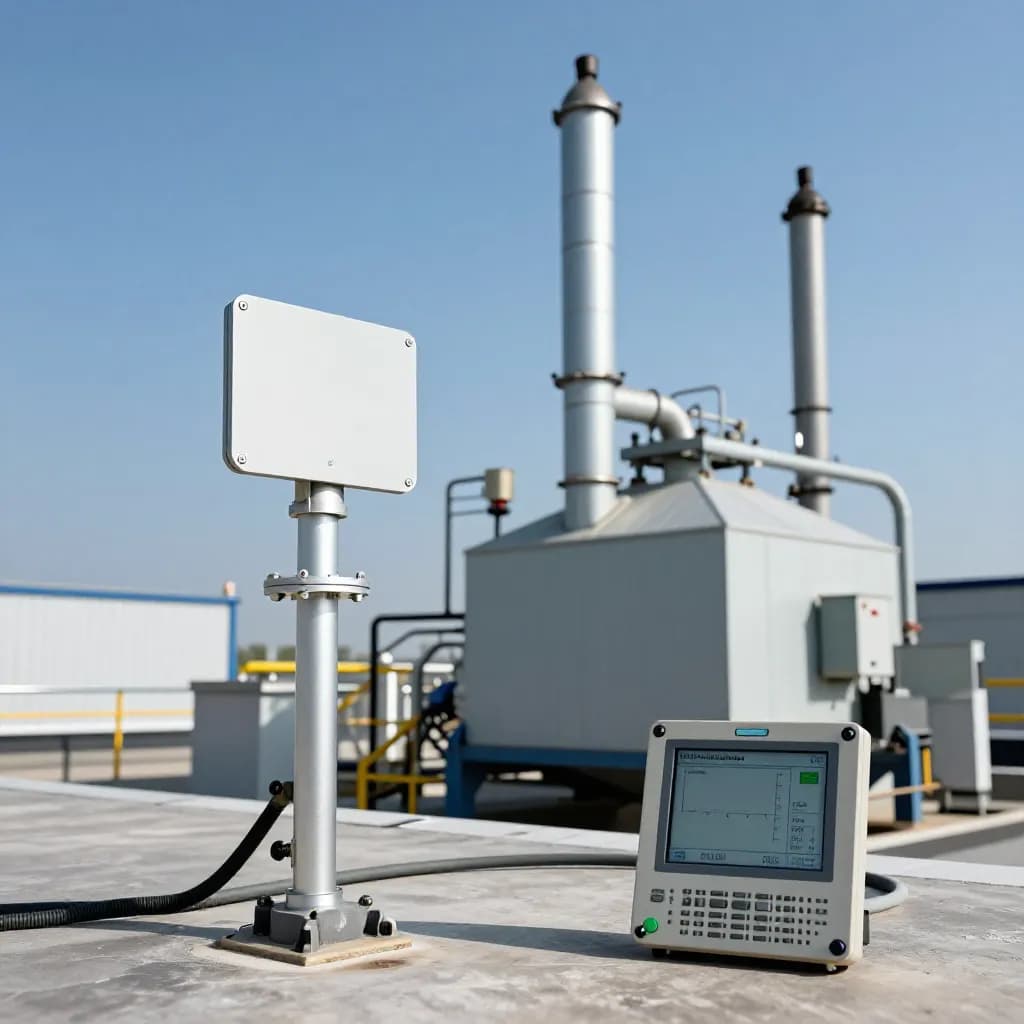
Beyond application, VOCs are released during mixing and thinning of coatings, cleaning of spray equipment with solvents, and storage of open or improperly sealed containers. Flash-off zones between coating and curing stages are another significant emission point, as solvents evaporate from the wet film before it enters the oven. Even curing ovens contribute to VOC output, as residual solvents and thermal decomposition products are driven off at elevated temperatures.
Ready to Start Your Project?
From one-off customs to 15,000-part production runs — get precise pricing in 24 hours.
On This Page
Sources of VOC in Coating Operations
The total VOC emission profile of a facility depends on the types of coatings used, application transfer efficiency, production volume, and the effectiveness of capture and control systems. A typical medium-sized liquid paint operation processing architectural aluminum can emit several tonnes of VOCs annually if uncontrolled, making emission management a critical operational and regulatory concern.
Regulatory Framework: Clean Air Act, EU IED, and National Limits
In the United States, VOC emissions from coating facilities are regulated under the Clean Air Act through a combination of federal and state requirements. The EPA establishes National Emission Standards for Hazardous Air Pollutants (NESHAP) for specific coating categories, while New Source Performance Standards (NSPS) set emission limits for new and modified facilities. States implement their own State Implementation Plans (SIPs) to meet National Ambient Air Quality Standards, often imposing stricter VOC limits than federal minimums, particularly in ozone non-attainment areas.
The European Union regulates industrial coating emissions primarily through the Industrial Emissions Directive (IED, 2010/75/EU), which requires Best Available Techniques (BAT) for emission control. BAT Reference Documents (BREFs) for surface treatment using organic solvents specify emission limit values and management practices. Individual EU member states transpose these requirements into national law, sometimes adding more stringent local provisions.
Other jurisdictions have developed their own frameworks. China's GB 37824-2019 sets emission standards for coating operations across industries, while Australia regulates through the National Pollutant Inventory and state-level Environment Protection Acts. Regardless of jurisdiction, the global trend is toward progressively tighter VOC limits, with many regions now requiring facilities to demonstrate continuous improvement in emission reduction.
Measurement and Monitoring Requirements
Regulatory compliance requires facilities to accurately measure and report their VOC emissions. Continuous Emission Monitoring Systems (CEMS) are required for larger facilities or those with abatement equipment, using flame ionization detectors (FID) or photoionization detectors (PID) to measure total organic carbon concentrations in exhaust streams in real time. These systems provide continuous data that regulators can audit and that operators use to verify abatement equipment performance.
Smaller facilities may rely on periodic stack testing using EPA reference methods such as Method 25 or Method 25A, which measure total gaseous non-methane organic emissions. Material balance approaches, where VOC emissions are calculated from the quantity and VOC content of coatings consumed minus any waste collected, are also widely accepted for facilities below certain emission thresholds.
Record-keeping is a fundamental compliance obligation. Facilities must maintain detailed logs of coating usage, VOC content of each product (from technical data sheets or EPA Method 24 testing), abatement equipment operating parameters, and any emission exceedances. Many jurisdictions require annual emission inventories to be submitted to environmental agencies, and failure to maintain adequate records can result in enforcement action even if actual emissions are within limits.
Abatement Technologies: Thermal Oxidizers, Carbon Adsorption, and Bio-Filtration
Thermal oxidizers are the most widely used end-of-pipe VOC abatement technology in coating facilities. Regenerative thermal oxidizers (RTOs) achieve destruction efficiencies of 95-99% by heating VOC-laden exhaust air to 760-870°C, breaking down organic compounds into carbon dioxide and water. RTOs use ceramic heat-exchange media to recover up to 95% of the thermal energy, making them economically viable for continuous operations with moderate to high VOC concentrations.
Carbon adsorption systems capture VOCs by passing exhaust air through beds of activated carbon, which adsorbs organic molecules onto its porous surface. Once saturated, the carbon is regenerated using steam or hot gas, and the concentrated VOC stream is either recovered as solvent or directed to a smaller thermal oxidizer for destruction. Carbon adsorption is particularly effective for facilities with lower VOC concentrations or intermittent operations where thermal oxidizers would be energy-inefficient.
Bio-filtration represents a lower-energy alternative that uses microorganisms to biologically degrade VOCs. Exhaust air passes through a bed of organic media (such as compost, wood chips, or synthetic media) colonized by bacteria that metabolize VOCs as a food source. Bio-filters work best with biodegradable solvents at lower concentrations and offer significantly lower operating costs than thermal systems, though they require larger footprints and careful moisture and pH management.
How Powder Coating Eliminates Facility VOC Emissions
Powder coating fundamentally eliminates the VOC emission challenge because the technology uses no solvents whatsoever. The coating material is a dry powder composed of resins, pigments, and additives that is applied electrostatically and cured through heat. Since there are no organic solvents to evaporate, a powder coating facility produces virtually zero VOC emissions from the application process, eliminating the need for solvent abatement equipment entirely.
The operational implications are significant. Facilities converting from liquid to powder coating can decommission thermal oxidizers, carbon adsorption units, and associated monitoring systems, removing substantial capital and operating costs. Permit requirements are dramatically simplified, as powder coating operations typically fall below VOC emission thresholds that trigger major source permitting. Air quality permits for powder coating facilities are generally straightforward, focusing on particulate matter control rather than VOC abatement.
For facilities in ozone non-attainment areas or regions with aggressive VOC reduction targets, powder coating offers a compliance pathway that goes beyond meeting limits — it eliminates the regulated pollutant from the process entirely. This provides long-term regulatory certainty, as future tightening of VOC limits has no impact on a powder coating operation. The environmental benefit extends to the surrounding community, where reduced VOC emissions contribute directly to improved local air quality.
Frequently Asked Questions
What are the main sources of VOC emissions in a coating facility?
The primary sources are solvent evaporation during coating application, flash-off between application and curing, equipment cleaning with solvents, mixing and thinning operations, and residual solvent release in curing ovens. Spray application generates the highest emissions due to the large surface area created during atomization.
What VOC emission limits apply to coating facilities?
Limits vary by jurisdiction and facility size. In the US, NESHAP and state SIP rules set category-specific limits, often expressed as pounds of VOC per gallon of coating applied. The EU IED requires BAT-based limits typically expressed as mg C/Nm³ in exhaust or total annual emissions in tonnes. Facilities should consult their local environmental agency for applicable limits.
How efficient are thermal oxidizers at destroying VOCs?
Regenerative thermal oxidizers (RTOs) typically achieve VOC destruction efficiencies of 95-99%, converting organic compounds into carbon dioxide and water at temperatures of 760-870°C. With ceramic heat recovery media, RTOs can recover up to 95% of thermal energy, reducing fuel consumption significantly.
Does powder coating produce any VOC emissions?
Powder coating produces virtually zero VOC emissions because it contains no organic solvents. The dry powder is applied electrostatically and cured with heat, eliminating solvent evaporation entirely. This removes the need for VOC abatement equipment and simplifies air quality permitting requirements.
Ready to Start Your Project?
From one-off customs to 15,000-part production runs — get precise pricing in 24 hours.