A coating is only as good as the surface beneath it. This principle is so fundamental to the coatings industry that it bears repeating at the start of every discussion about finishing quality: no matter how advanced the coating chemistry, how precise the application equipment, or how carefully controlled the cure schedule, the finished product will fail prematurely if the substrate surface is not properly prepared. Surface preparation and pretreatment are the invisible foundation upon which every successful coating system is built.
Technical
Surface Preparation and Pretreatment: The Complete Guide for Metal Coating
Sundial Powder Coating·April 20, 2026·14 min
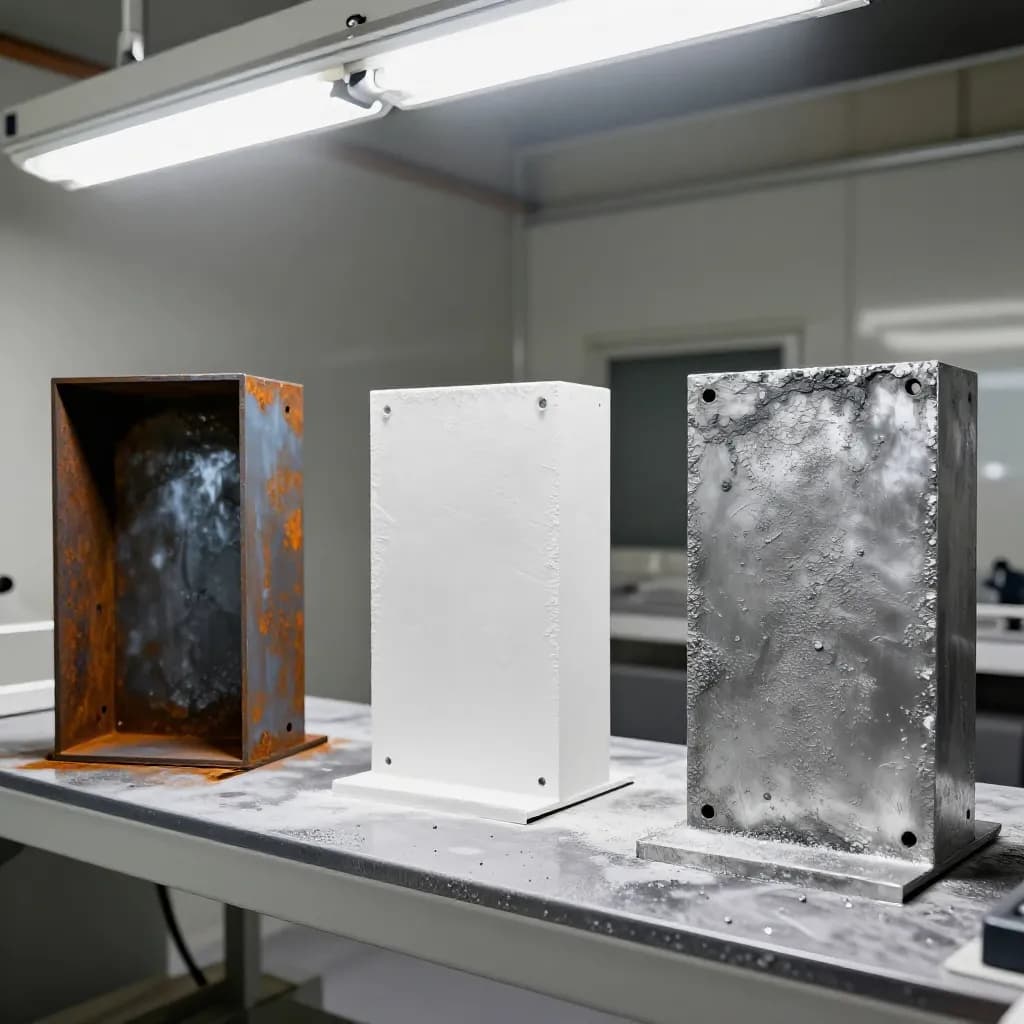
The primary objectives of surface preparation are to ensure strong adhesion between the coating and the substrate, to maximize corrosion resistance, and to promote uniform coating appearance. Contaminants such as oils, greases, mill scale, rust, oxides, and surface salts create barriers that prevent the coating from bonding directly to the metal surface. Even microscopic contamination can lead to adhesion failure, blistering, or under-film corrosion that compromises the coating's protective function and shortens its service life.
Ready to Start Your Project?
From one-off customs to 15,000-part production runs — get precise pricing in 24 hours.
On This Page
Why Surface Preparation Matters
Studies consistently show that 60-80% of all coating failures can be traced back to inadequate surface preparation. The cost of rework — stripping a failed coating, re-preparing the surface, and recoating — is typically three to five times the cost of doing the preparation correctly the first time. For architectural and industrial applications where coating longevity is measured in decades, investing in proper pretreatment is not optional — it is the single most important factor in achieving the specified service life.
Surface preparation methods fall into two broad categories: mechanical preparation, which physically removes contaminants and creates a surface profile through abrasion, and chemical pretreatment, which uses chemical reactions to clean the surface and deposit a conversion coating that enhances adhesion and corrosion resistance. Most high-performance coating systems use a combination of both approaches.
Mechanical Surface Preparation
Mechanical surface preparation uses physical abrasion to remove contaminants, corrosion products, and old coatings from the metal surface while simultaneously creating a surface profile (roughness pattern) that promotes coating adhesion. The choice of mechanical preparation method depends on the substrate material, the type and extent of contamination, the required surface profile, and the production environment.
Abrasive blasting is the most effective and widely used mechanical preparation method for steel and other ferrous metals. In abrasive blasting, particles of grit, shot, or other media are propelled at high velocity against the surface using compressed air or centrifugal wheels. Common blast media include steel grit and shot, aluminum oxide, garnet, glass bead, and various mineral abrasives. Each media type produces a different surface profile and finish. Steel grit creates an angular profile ideal for coating adhesion, while steel shot produces a peened surface with compressive stress that can improve fatigue resistance. The term sandblasting, while still commonly used, is somewhat outdated — actual silica sand is rarely used today due to the health risks associated with respirable crystalline silica dust.
Surface preparation standards define the required cleanliness level for different coating applications. In North America, the SSPC (Society for Protective Coatings) standards are most widely used. SSPC-SP 1 covers solvent cleaning to remove oils and greases. SSPC-SP 6 (Commercial Blast Cleaning) removes all rust, mill scale, and old coatings except for slight shadows or streaks. SSPC-SP 10 (Near-White Blast Cleaning) removes at least 95% of all visible contaminants. SSPC-SP 5 (White Metal Blast Cleaning) removes 100% of all visible contaminants, producing a uniformly metallic surface. Internationally, ISO 8501-1 defines equivalent grades: Sa 1 (light blast cleaning), Sa 2 (thorough blast cleaning), Sa 2½ (very thorough blast cleaning, equivalent to SSPC-SP 10), and Sa 3 (blast cleaning to visually clean steel, equivalent to SSPC-SP 5).
Other mechanical preparation methods include power tool cleaning (grinding, sanding, wire brushing) for localized surface preparation or maintenance work, and hand tool cleaning for minor touch-up applications. These methods are less effective than abrasive blasting at removing tightly adherent contaminants and producing a consistent surface profile, but they are practical for field work, repair applications, and situations where blasting is not feasible. For aluminum substrates, mechanical preparation is less common than chemical pretreatment, but light abrasive blasting or sanding may be used to remove heavy oxidation or surface defects before chemical processing.
Chemical Pretreatment for Steel
Chemical pretreatment for steel involves a series of chemical processes that clean the surface, remove oxides, and deposit a conversion coating that enhances both adhesion and corrosion resistance. The specific pretreatment chemistry depends on the performance requirements of the finished product, the coating type (powder or liquid), and environmental and regulatory considerations.
Iron phosphate conversion coating is the most common pretreatment for steel in general industrial applications. Applied through spray or immersion processes, iron phosphate reacts with the steel surface to form a thin, amorphous layer of iron phosphate crystals. This conversion coating provides a moderate improvement in adhesion and corrosion resistance compared to bare steel. Iron phosphate pretreatment is relatively simple and inexpensive to operate, making it popular for applications where the performance requirements are moderate — such as indoor furniture, appliances, and shelving. Typical coating weights range from 0.3 to 1.0 g/m², and the process can be completed in as few as three stages (clean, coat, rinse).
Zinc phosphate conversion coating provides significantly superior corrosion resistance compared to iron phosphate and is the pretreatment of choice for demanding applications including automotive bodies, heavy equipment, agricultural machinery, and architectural steel. The zinc phosphate process deposits a crystalline layer of zinc phosphate (hopeite) and zinc iron phosphate (phosphophyllite) on the steel surface, with typical coating weights of 1.5 to 4.0 g/m². This heavier, more structured conversion coating provides excellent adhesion for both powder and liquid coatings and dramatically improves salt spray resistance — often doubling or tripling the hours to failure compared to iron phosphate. The zinc phosphate process is more complex and expensive to operate, typically requiring five to seven stages and careful control of bath chemistry, temperature, and contact time.
Alkaline cleaning is a critical first step in any chemical pretreatment process. Alkaline cleaners use a combination of surfactants, builders, and emulsifiers to remove oils, greases, metalworking fluids, and other organic contaminants from the steel surface. The cleaning stage must be thorough — any residual contamination will interfere with the conversion coating process and compromise the final coating's performance. Acid pickling may also be used to remove heavy rust, mill scale, or heat treatment oxides that alkaline cleaning alone cannot address. Hydrochloric acid and sulfuric acid are the most common pickling agents for steel.
Chemical Pretreatment for Aluminum
Aluminum presents unique pretreatment challenges compared to steel. While aluminum naturally forms a thin oxide layer that provides some corrosion resistance, this native oxide is not uniform or robust enough to serve as a reliable base for high-performance coatings. Chemical pretreatment for aluminum must remove the native oxide, clean the surface, and deposit a conversion coating that provides consistent adhesion and enhanced corrosion protection.
Chromate conversion coating has been the gold standard pretreatment for aluminum for over 60 years. Using hexavalent chromium (Cr6+) chemistry, chromate conversion coatings produce a thin, amorphous layer of mixed chromium oxides on the aluminum surface that provides outstanding adhesion and corrosion resistance. The self-healing property of chromate coatings — where chromium ions migrate to damaged areas and reform the protective layer — makes them exceptionally effective at preventing under-film corrosion. However, hexavalent chromium is a known human carcinogen, and its use is increasingly restricted by environmental and health regulations worldwide.
The European Union's REACH regulation (Registration, Evaluation, Authorisation and Restriction of Chemicals) has been the primary driver of the shift away from hexavalent chromium in pretreatment. Under REACH, the use of Cr6+ compounds requires specific authorization, and the European coatings industry has been actively transitioning to chrome-free alternatives. This transition has accelerated the development and adoption of several alternative pretreatment chemistries that deliver comparable performance without the health and environmental risks of hexavalent chromium.
Chrome-free pretreatment alternatives for aluminum include zirconium-based conversion coatings, titanium-based conversion coatings, and silane-based adhesion promoters. Zirconium-based systems have emerged as the most widely adopted chrome-free alternative, depositing a thin layer of zirconium oxide on the aluminum surface that provides good adhesion and corrosion resistance. Titanium-based systems work on a similar principle. Silane-based pretreatments use organosilane chemistry to create a molecular bridge between the metal surface and the organic coating, offering excellent adhesion with very thin film builds. Many modern chrome-free pretreatment products combine multiple chemistries — for example, zirconium with silane — to optimize both adhesion and corrosion performance. Anodizing, which electrochemically grows a thick, porous aluminum oxide layer on the surface, can also serve as a pretreatment for subsequent coating, though it is more commonly used as a standalone finish.
Multi-Stage Pretreatment Systems
Industrial pretreatment for high-volume coating operations typically uses multi-stage spray wash systems that process parts through a series of chemical baths in a continuous or batch flow. These systems automate the cleaning, rinsing, conversion coating, and final rinsing steps to ensure consistent, repeatable pretreatment quality at production speeds.
A typical five-stage pretreatment system for aluminum consists of: Stage 1 — alkaline cleaning to remove oils, greases, and surface contaminants; Stage 2 — fresh water rinse to remove cleaning chemical residues; Stage 3 — acid etch or deoxidize to remove the native aluminum oxide layer and any surface smut; Stage 4 — fresh water rinse; and Stage 5 — conversion coating application (chromate, zirconium-based, or other chemistry). More demanding applications may use seven-stage systems that add additional rinse stages and a final deionized (DI) water rinse to minimize water spotting and ensure a contaminant-free surface before coating.
Process control is critical for consistent pretreatment quality. Key parameters that must be monitored and maintained include chemical concentration (measured by titration or conductivity), bath temperature, pH, contact time (determined by conveyor speed and spray zone length), spray pressure, and water quality. Deionized or reverse osmosis water is typically required for final rinse stages to prevent mineral deposits on the pretreated surface. Bath chemistry must be regularly analyzed and replenished to compensate for drag-out losses and chemical consumption.
Wastewater treatment is an important consideration for multi-stage pretreatment systems. The rinse water and spent chemical baths contain metals, phosphates, surfactants, and other regulated substances that cannot be discharged directly to municipal sewer systems. Most pretreatment operations include wastewater treatment systems that neutralize pH, precipitate dissolved metals, and remove suspended solids before discharge. The shift to chrome-free pretreatment chemistries has simplified wastewater treatment requirements by eliminating the need to handle and dispose of hexavalent chromium waste, which is classified as hazardous in most jurisdictions.
Pretreatment for Powder Coating vs. Liquid Coating
Both powder coating and liquid coating require properly pretreated surfaces for optimal adhesion and corrosion resistance. The fundamental pretreatment requirements — surface cleanliness, oxide removal, and conversion coating — are the same regardless of the coating type. However, there are some practical differences in how pretreatment interacts with each coating technology.
Powder coatings are applied as dry particles that are electrostatically charged and attracted to the grounded metal substrate. Because there is no solvent to wet the surface and promote flow, powder coatings rely entirely on the electrostatic attraction and subsequent melt-flow during curing to achieve intimate contact with the pretreated surface. This means that the surface must be completely dry before powder application — any residual moisture from the pretreatment process can cause outgassing during cure, resulting in pinholes, craters, or blistering in the finished film. Most powder coating lines include a dry-off oven after the pretreatment wash system to ensure complete moisture removal.
Liquid coatings, by contrast, contain solvents or water that wet the surface during application, which can provide somewhat better flow into surface irregularities and micro-roughness. This wetting action can make liquid coatings slightly more forgiving of minor surface preparation deficiencies. However, this should not be taken as an excuse for inadequate pretreatment — liquid coatings applied over poorly prepared surfaces will still fail prematurely through adhesion loss, blistering, or under-film corrosion.
Powder coatings typically produce thicker films than liquid coatings — 60 to 120 micrometers for a single coat compared to 25 to 50 micrometers for a typical liquid coat. This thicker film provides a greater barrier against moisture and corrosive agents, which can partially compensate for minor pretreatment variations. However, relying on film thickness to mask pretreatment deficiencies is poor practice. The most durable coating systems combine excellent pretreatment with appropriate coating thickness, regardless of whether the coating is powder or liquid.
Quality Testing and Verification
Verifying the quality of surface preparation and pretreatment is essential for ensuring that the finished coating system will meet its performance requirements. A range of standardized test methods is available to evaluate surface cleanliness, conversion coating quality, and coating adhesion.
Adhesion testing is the most direct measure of pretreatment effectiveness. The cross-cut adhesion test (ISO 2409 / ASTM D3359) involves scoring a grid pattern through the coating to the substrate and applying adhesive tape over the scored area. The tape is then pulled away, and the amount of coating removed is rated on a scale from 0 (no removal) to 5 (greater than 65% removal). The pull-off adhesion test (ISO 4624 / ASTM D4541) uses a dolly bonded to the coating surface and a calibrated pull-off device to measure the tensile force required to detach the coating from the substrate. This method provides a quantitative adhesion value in megapascals and can identify whether failure occurs at the coating-substrate interface, within the coating film, or within the conversion coating layer.
Salt spray testing (ASTM B117 / ISO 9227) is the most widely used accelerated corrosion test for evaluating the protective performance of coating systems. Test panels are scribed through the coating to expose bare metal and placed in a chamber maintained at 35°C with a continuous fog of 5% sodium chloride solution. The panels are evaluated at specified intervals for blistering, rusting, and creep from the scribe line. While salt spray testing has limitations as a predictor of real-world corrosion performance, it remains a standard requirement in virtually all coating quality specifications.
Coating thickness measurement is performed using non-destructive gauges based on magnetic induction (for coatings on ferrous substrates) or eddy current principles (for coatings on non-ferrous substrates). Accurate thickness measurement is critical because both insufficient and excessive coating thickness can compromise performance. Thin films may not provide adequate barrier protection, while excessively thick films are prone to cracking, reduced flexibility, and poor edge coverage. Surface cleanliness before pretreatment can be verified using water break tests (a continuous water film indicates a clean, contaminant-free surface), contact angle measurement, and surface energy testing.
Common Pretreatment Failures and How to Avoid Them
Understanding the most common pretreatment-related coating failures helps applicators and quality engineers identify root causes quickly and implement effective corrective actions.
Poor adhesion is the most frequent pretreatment failure and manifests as coating peeling, flaking, or lifting from the substrate. Common causes include inadequate cleaning (residual oils or contaminants preventing conversion coating formation), insufficient conversion coating weight (bath chemistry out of specification), excessive time between pretreatment and coating application (allowing the pretreated surface to re-oxidize or pick up contaminants), and incompatibility between the pretreatment chemistry and the coating system. Prevention requires rigorous process control, regular bath analysis, and minimizing the time between pretreatment and coating application — ideally less than four hours for chrome-free systems.
Blistering occurs when moisture or gases become trapped beneath the coating film and expand, creating dome-shaped defects. Pretreatment-related causes include residual moisture from inadequate drying after the wash system, entrapped rinse water in joints or recesses, and conversion coatings that are too thick or porous, allowing moisture absorption. For powder coating applications, ensuring complete dry-off before coating application is critical. Blistering can also result from outgassing of the substrate itself — cast aluminum and galvanized steel are particularly prone to this issue due to trapped gases in the metal structure.
Filiform corrosion is a distinctive thread-like corrosion pattern that develops beneath the coating film, typically originating from cut edges or coating defects. It is most common on aluminum substrates in humid environments and is strongly associated with inadequate pretreatment — particularly insufficient conversion coating coverage or the use of pretreatment chemistries that do not provide adequate protection against filiform attack. Chrome-free pretreatment systems have historically been more susceptible to filiform corrosion than chromate-based systems, but modern zirconium and multi-metal oxide chemistries have largely closed this performance gap.
Flash rust occurs when freshly cleaned or blasted steel begins to rust before the coating can be applied. This is a particular risk in humid environments and during outdoor blasting operations. Flash rust can be prevented by controlling the time between surface preparation and coating application, using rust-inhibiting rinse additives, maintaining low humidity in the coating area, and applying a temporary protective primer if extended delays are unavoidable. For multi-stage pretreatment systems, flash rust between stages is prevented by maintaining proper rinse water chemistry and minimizing dwell times between process stages.
Frequently Asked Questions
What is the most important step in surface preparation?
Cleaning is the most critical step. No conversion coating or mechanical preparation can compensate for a contaminated surface. Oils, greases, and other organic contaminants must be completely removed before any subsequent pretreatment steps. The industry adage 'clean metal coats well' reflects decades of experience confirming that thorough cleaning is the foundation of every successful coating system.
Why is the industry moving away from chromate pretreatment?
Hexavalent chromium (Cr6+), the active ingredient in traditional chromate conversion coatings, is a known human carcinogen. The European Union's REACH regulation restricts its use, and similar regulations are tightening globally. Chrome-free alternatives based on zirconium, titanium, and silane chemistries now offer comparable performance for most applications, making the transition both environmentally responsible and technically feasible.
How long can pretreated parts wait before coating?
Pretreated parts should be coated as soon as possible — ideally within four hours for chrome-free conversion coatings and within 16 hours for chromate-based systems. Extended delays allow the pretreated surface to absorb moisture, collect airborne contaminants, or degrade, all of which compromise coating adhesion and corrosion resistance. Parts should be stored in a clean, dry, climate-controlled environment if any delay is unavoidable.
Is abrasive blasting necessary before powder coating?
Not always. For aluminum substrates, chemical pretreatment (multi-stage wash with conversion coating) is the standard preparation method for powder coating. For steel, abrasive blasting may be required to remove heavy rust, mill scale, or old coatings before chemical pretreatment. Many steel powder coating operations use a combination of abrasive blasting for initial surface preparation followed by chemical pretreatment for conversion coating deposition.
What is the difference between iron phosphate and zinc phosphate pretreatment?
Iron phosphate produces a thin, amorphous conversion coating that provides moderate adhesion and corrosion resistance, suitable for indoor and light-duty applications. Zinc phosphate produces a heavier, crystalline conversion coating that delivers significantly better corrosion resistance — often two to three times the salt spray performance of iron phosphate. Zinc phosphate is specified for demanding applications including automotive, heavy equipment, and architectural steel where long-term durability is critical.
Ready to Start Your Project?
From one-off customs to 15,000-part production runs — get precise pricing in 24 hours.