Super durable powder coatings are high-performance polyester formulations engineered to deliver significantly enhanced resistance to ultraviolet radiation, weathering, and environmental degradation compared to standard polyester powder coatings. While standard polyester powders provide adequate outdoor performance for many applications, they can exhibit noticeable chalking, fading, and gloss loss within 5-10 years of exterior exposure, particularly in high-UV environments. Super durable formulations extend this performance window to 15-25 years or more, making them the coating of choice for architectural, infrastructure, and other long-life exterior applications.
Technical
Super Durable Powder Coatings Explained: UV Resistance and Architectural Performance
Sundial Powder Coating·April 22, 2026·11 min
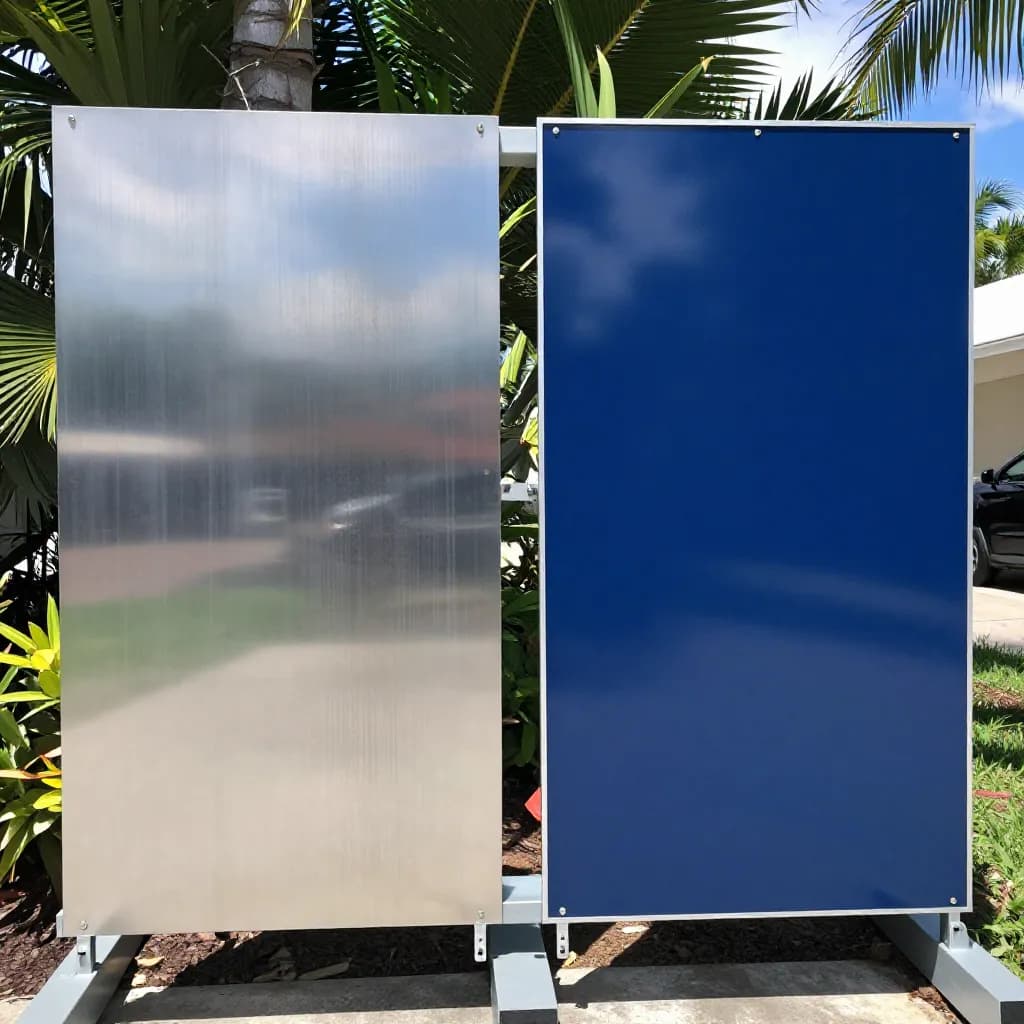
The term super durable is not a standardized classification but rather an industry designation that indicates enhanced weathering performance beyond standard polyester. The performance improvement is achieved primarily through resin chemistry — super durable polyester resins incorporate specific monomer building blocks that resist UV-induced chain scission and oxidative degradation more effectively than standard polyester resins. These chemical modifications, combined with optimized pigment selection and UV stabilizer packages, produce coatings that maintain their color, gloss, and film integrity through decades of outdoor exposure.
Ready to Start Your Project?
From one-off customs to 15,000-part production runs — get precise pricing in 24 hours.
On This Page
What Makes a Powder Coating Super Durable?
The commercial significance of super durable powder coatings is substantial. Architectural aluminum — curtain walls, window frames, cladding panels, entrance systems, and solar shading — represents the largest market for super durable formulations, where building owners and architects demand coating performance warranties of 20-25 years. Infrastructure applications including highway barriers, bridge railings, lighting columns, and utility enclosures also benefit from the extended service life that super durable coatings provide.
Resin Technology Behind Super Durability
The superior weathering resistance of super durable powder coatings originates in the molecular architecture of the polyester resin. Standard polyester resins for powder coatings are typically based on combinations of isophthalic acid, terephthalic acid, and neopentyl glycol, which provide a good balance of mechanical properties, chemical resistance, and processability. However, the ester bonds in these resins are susceptible to UV-induced hydrolysis and photo-oxidation, leading to chain scission, crosslink degradation, and ultimately chalking and erosion of the coating surface.
Super durable polyester resins modify this chemistry by incorporating monomers that enhance UV stability. Isophthalic acid content is typically increased relative to terephthalic acid, as isophthalic-rich polyesters demonstrate better hydrolytic stability. Cycloaliphatic diols and diacids — such as cyclohexanedimethanol and 1,4-cyclohexanedicarboxylic acid — introduce ring structures into the polymer backbone that are more resistant to UV-induced bond cleavage than linear aliphatic segments.
The crosslinker chemistry also contributes to super durability. Triglycidyl isocyanurate and beta-hydroxyalkylamide crosslinkers form different crosslink structures with different UV stability profiles. The choice and ratio of crosslinker, combined with the resin architecture, determines the overall network stability under UV exposure. Advanced super durable systems may also incorporate hindered amine light stabilizers and UV absorbers directly into the resin backbone through copolymerization, providing non-extractable UV protection that persists for the lifetime of the coating rather than being gradually depleted through migration or volatilization.
Florida Exposure Testing and Real-World Validation
South Florida exposure testing is the gold standard for validating the weathering performance of architectural powder coatings. The subtropical climate of South Florida — with its intense UV radiation, high humidity, salt air, and frequent rain — provides one of the most aggressive natural weathering environments on Earth. Coating panels exposed at 5-degree south-facing angles at test sites in Miami or Fort Lauderdale experience UV doses and moisture exposure that accelerate degradation relative to most other locations, making Florida exposure data a reliable predictor of long-term performance in less severe climates.
The major architectural coating quality standards reference Florida exposure testing as a key performance requirement. AAMA 2605, the highest performance tier in the North American architectural coating specification system, requires 10 years of South Florida exposure with maximum color change of 5 Delta E units, maximum chalk rating of 8 on the ASTM D4214 scale, maximum gloss retention loss of 50%, and no film erosion, cracking, peeling, or blistering. Qualicoat Class 2 and GSB Master certifications impose similar long-term weathering requirements based on Florida or equivalent exposure.
Super durable powder coatings routinely meet and exceed these requirements. Published Florida exposure data from major powder coating manufacturers demonstrates color retention within 2-3 Delta E after 10 years, gloss retention above 60%, and no significant chalking or film degradation. Some super durable formulations have accumulated 15-20 years of Florida exposure data showing continued excellent performance, providing confidence for architectural specifications requiring 25-year coating warranties.
Architectural Applications and Specification
Architectural aluminum finishing is the primary application for super durable powder coatings, encompassing the full range of building envelope components. Curtain wall mullions and transoms, window and door frames, spandrel panels, column covers, canopy structures, solar shading devices, and balustrade systems are all specified with super durable powder coatings for projects requiring long-term aesthetic and protective performance.
Specification of super durable powder coatings for architectural projects typically references one or more of the recognized quality certification systems. In North America, AAMA 2605 is the benchmark specification for high-performance architectural coatings, requiring the most stringent weathering, chemical resistance, and mechanical property standards. In Europe, Qualicoat Class 2 and Class 3 certifications, along with GSB Master and Premium quality marks, define equivalent performance tiers. These certifications provide architects and specifiers with independently verified assurance that the coating will perform as expected over the building's design life.
Color selection for super durable architectural applications requires attention to pigment stability as well as aesthetic preference. Not all pigments are equally UV-stable, and some colors — particularly bright reds, oranges, and yellows based on organic pigments — are inherently more susceptible to fading than earth tones, blues, and greens based on inorganic pigments. Super durable formulations use carefully selected pigment systems that balance color vibrancy with long-term stability, and powder manufacturers provide specific weathering data for each color to support informed specification decisions.
Accelerated Weathering and Laboratory Testing
While Florida exposure testing provides the most reliable performance validation, the 5-10 year testing duration is impractical for new product development and routine quality control. Accelerated weathering instruments — including xenon arc, fluorescent UV, and metal halide weathering chambers — compress years of outdoor exposure into weeks or months by intensifying UV radiation, moisture, and temperature cycling.
Xenon arc weathering per ASTM G155 or ISO 11341 is the most widely accepted accelerated test for architectural powder coatings because the xenon lamp spectrum closely matches natural sunlight. Test cycles typically alternate between UV exposure at elevated temperature and moisture exposure through condensation or water spray, simulating the diurnal and seasonal cycles of outdoor weathering. Correlation between accelerated xenon arc testing and Florida exposure has been established for super durable polyester powder coatings, with approximately 2,000-3,000 hours of xenon arc exposure corresponding to 5 years of South Florida exposure for color change and gloss retention metrics.
Fluorescent UV testing per ASTM G154 uses UVA-340 or UVB-313 lamps that emit concentrated UV radiation without the visible and infrared components of sunlight. These tests are useful for ranking the relative UV stability of different formulations but correlate less precisely with outdoor exposure than xenon arc testing because the spectral distribution differs from natural sunlight. QUV testing is commonly used for development screening and quality control, while xenon arc testing is preferred for specification compliance and certification purposes.
Performance Comparison: Standard vs. Super Durable
The performance gap between standard and super durable polyester powder coatings becomes apparent through systematic weathering comparison. In controlled Florida exposure studies, standard polyester powder coatings typically show color changes of 3-5 Delta E after 5 years and 8-15 Delta E after 10 years, with visible chalking developing within 5-8 years. Super durable formulations show color changes of 1-2 Delta E after 5 years and 2-5 Delta E after 10 years, with chalking remaining minimal through 15 years or more.
Gloss retention follows a similar pattern. Standard polyester coatings may lose 40-60% of their initial gloss within 5 years of Florida exposure, while super durable coatings retain 60-80% of initial gloss over the same period. The practical consequence is that standard polyester coatings on a building facade will show visible fading, chalking, and gloss reduction within the first decade, while super durable coatings maintain their as-applied appearance for two decades or more.
The performance advantage of super durable coatings is most pronounced in high-UV environments — tropical and subtropical latitudes, high-altitude locations, and south-facing surfaces that receive maximum solar exposure. In lower-UV environments — northern latitudes, shaded surfaces, and interior applications — the performance gap narrows, and standard polyester coatings may provide adequate service life. The specification decision should consider the specific exposure conditions of the project, the required service life, and the consequences of premature coating degradation.
Future Developments in Super Durable Technology
Research and development in super durable powder coating technology continues to push the boundaries of weathering performance. Next-generation super durable resins incorporate novel monomer chemistries — including bio-based building blocks derived from renewable feedstocks — that provide enhanced UV stability while reducing the carbon footprint of the resin manufacturing process. These bio-based super durable resins are approaching commercial readiness, offering the architectural market a coating that combines exceptional weathering performance with improved sustainability credentials.
Hybrid organic-inorganic coating systems represent another frontier in super durability. By incorporating inorganic nano-particles — such as nano-silica, nano-titania, or nano-ceria — into the polyester matrix, researchers have demonstrated coatings with UV absorption and radical scavenging capabilities that exceed those achievable with organic UV stabilizers alone. These nano-enhanced super durable coatings show reduced chalking and improved gloss retention in accelerated weathering tests, suggesting the potential for coating lifetimes exceeding 30 years in architectural applications.
Self-stratifying powder coating technology, where a single powder application separates into distinct functional layers during curing, could enable super durable topcoat performance combined with enhanced adhesion and corrosion protection from an integrated primer layer — all from a single coat application. This would simplify the coating process while delivering multi-layer performance, reducing application cost and energy consumption. The convergence of advanced resin chemistry, nanotechnology, and intelligent coating design is creating a new generation of super durable powder coatings that will redefine expectations for architectural coating longevity.
Frequently Asked Questions
How long do super durable powder coatings last outdoors?
Super durable powder coatings are designed to maintain acceptable appearance and protection for 15-25 years or more in exterior applications, depending on the specific exposure conditions. In high-UV environments like South Florida, published exposure data demonstrates excellent performance through 10-15 years with continued acceptable performance beyond. In less severe climates, service life can exceed 25 years.
What is the difference between AAMA 2604 and AAMA 2605?
AAMA 2604 requires 5 years of South Florida exposure testing and represents a high-performance tier suitable for most architectural applications. AAMA 2605 requires 10 years of South Florida exposure and represents the highest performance tier for the most demanding architectural projects. Super durable powder coatings can meet AAMA 2605 requirements, while standard polyester coatings typically qualify for AAMA 2604.
Are all colors available in super durable formulations?
Super durable powder coatings are available in a wide range of colors, but some bright organic pigment-based colors may have limitations in achieving the highest weathering performance. Earth tones, blues, greens, and colors based on inorganic pigments generally achieve the best long-term color stability. Powder manufacturers provide color-specific weathering data to support informed specification decisions.
Do super durable coatings cost more than standard polyester?
Yes, super durable powder coatings carry a premium over standard polyester formulations due to the more expensive resin chemistry and specialized pigment and stabilizer packages. However, the lifecycle cost is typically lower because the extended service life reduces recoating frequency. For a building with a 30-year design life, one application of super durable coating may replace two or three applications of standard polyester.
Can super durable powder coatings replace fluoropolymer coatings?
For many architectural applications, super durable polyester powder coatings provide weathering performance approaching that of fluoropolymer liquid coatings at lower cost and with better environmental credentials. However, for the most extreme exposure conditions and the longest warranty requirements, fluoropolymer coatings still offer superior performance. The gap is narrowing as super durable technology advances.
Ready to Start Your Project?
From one-off customs to 15,000-part production runs — get precise pricing in 24 hours.