A solvent-free coating is one that contains no volatile organic solvents in its formulation. Unlike conventional liquid coatings, which rely on organic solvents to dissolve resins and control viscosity during application, solvent-free systems achieve film formation through alternative mechanisms — electrostatic powder deposition and heat cure, radiation-initiated polymerization, or chemical reaction between liquid reactive components that are themselves non-volatile.
Environmental
Solvent-Free Coatings Explained: Types, Benefits, and Applications
Sundial Powder Coating·April 20, 2026·8 min
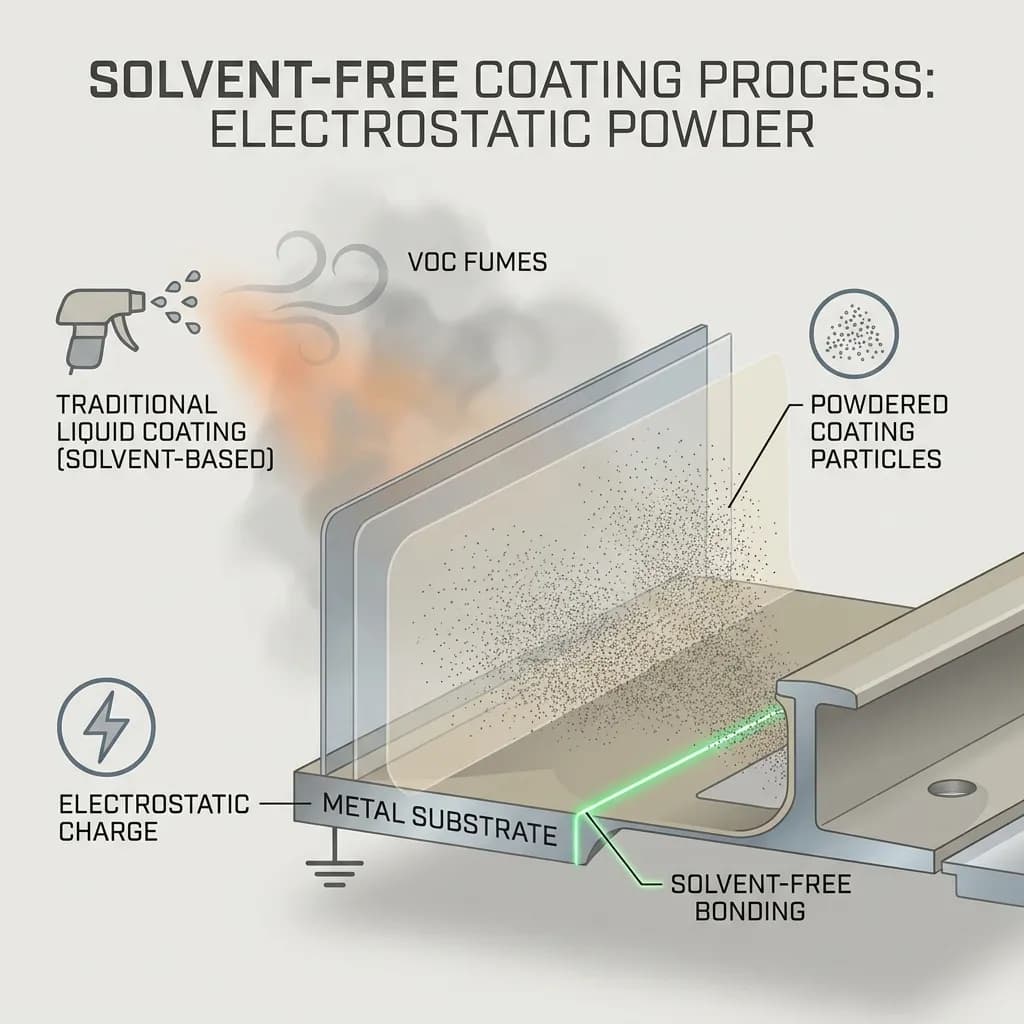
The distinction between solvent-free and low-VOC is important. Low-VOC coatings, including most waterborne paints, still contain some organic solvents (typically co-solvents and coalescents) that contribute to VOC emissions, even though the primary carrier is water. Truly solvent-free coatings contain zero organic solvents and produce virtually no VOC emissions during application or curing.
Ready to Start Your Project?
From one-off customs to 15,000-part production runs — get precise pricing in 24 hours.
On This Page
What Makes a Coating Solvent-Free?
Solvent-free does not mean chemical-free or hazard-free. These coatings still contain reactive chemicals that require appropriate handling, and some formulations may present other hazards such as dust explosion risk (powder coatings) or skin sensitization (certain reactive liquid systems). However, the elimination of organic solvents removes the most significant environmental and health hazard associated with conventional coatings.
Types of Solvent-Free Coatings
Powder coatings are the most widely used solvent-free technology for metal finishing. Applied as a dry powder using electrostatic spray equipment, they are cured in ovens at temperatures typically ranging from 150°C to 200°C. Available in thermoset chemistries including polyester, epoxy, polyester-epoxy hybrid, and polyurethane, powder coatings offer an extensive range of colors, textures, and performance levels suitable for applications from interior furniture to exterior architectural facades.
UV-cure and electron beam (EB) cure coatings use reactive monomers and oligomers that polymerize almost instantly when exposed to ultraviolet light or electron beam radiation. These systems are 100% reactive — every component becomes part of the cured film, leaving nothing to evaporate. UV-cure coatings are widely used for wood finishing, printing, and electronics, offering extremely fast line speeds and excellent surface properties.
100% solids reactive liquid coatings, such as certain epoxy and polyurea systems, consist of two liquid components that react chemically when mixed, forming a solid film without any solvent evaporation. These systems are used for heavy-duty floor coatings, tank linings, and protective coatings where thick films and chemical resistance are required. Their liquid form allows application to substrates that cannot be oven-cured.
Environmental and Health Benefits
The primary environmental benefit of solvent-free coatings is the elimination of VOC emissions. This directly reduces the facility's contribution to ground-level ozone formation and smog, improves local air quality, and simplifies environmental permitting. Facilities using exclusively solvent-free coatings may fall below VOC emission thresholds that trigger major source permitting requirements, significantly reducing regulatory burden.
Worker health benefits are equally significant. Eliminating solvent vapors from the workplace removes the risk of acute solvent exposure symptoms (headaches, dizziness, nausea) and long-term health effects including neurological damage and organ toxicity associated with chronic solvent inhalation. The need for complex ventilation systems and expensive respiratory protection equipment is reduced, and air monitoring requirements are simplified.
Solvent-free coatings also eliminate the fire and explosion risks associated with flammable solvent vapors. This reduces insurance costs, simplifies facility design (no explosion-proof electrical equipment in application areas), and removes the need for flammable liquid storage infrastructure. The overall safety profile of the workplace improves substantially when organic solvents are removed from the coating process.
Performance Comparison with Solvent-Based Systems
The historical perception that solvent-free coatings compromise on performance has been largely overturned by advances in formulation technology. Modern powder coatings deliver film properties — including hardness, flexibility, adhesion, chemical resistance, and weathering durability — that meet or exceed those of solvent-based liquid systems in most applications. Superdurable polyester powders, for example, offer exterior weathering performance validated to thousands of hours of accelerated testing, rivaling the best solvent-based systems.
UV-cure coatings offer performance advantages that solvent-based systems cannot match, including near-instant cure (seconds rather than hours), exceptional scratch and abrasion resistance, and outstanding clarity for clear coat applications. Their rapid cure enables high-speed production lines that would be impossible with conventional drying and curing processes.
There remain niche applications where solvent-based coatings retain advantages. Very thin decorative films on heat-sensitive substrates, certain specialty chemical-resistant linings, and some field-applied maintenance coatings may still favor solvent-based formulations. However, the range of applications where solvent-free alternatives match or outperform solvent-based systems continues to expand as technology advances.
Applications Where Solvent-Free Coatings Excel
Powder coatings dominate in metal finishing for architectural components, automotive parts, appliances, furniture, and general industrial products. Their combination of zero VOC emissions, high material efficiency through overspray recovery, and excellent durability makes them the default choice for high-volume metal finishing operations. The architectural sector in particular has embraced powder coating for aluminum extrusions, curtain wall panels, and steel structural elements.
UV-cure coatings excel in high-speed industrial applications including wood panel finishing, paper and packaging coatings, optical fiber coatings, and electronics conformal coatings. Their instant cure capability enables production speeds measured in meters per second, and their excellent surface properties deliver premium aesthetics and protection.
Reactive liquid systems find their niche in heavy-duty protective applications where thick films, chemical resistance, and ambient-temperature cure are required. Industrial flooring, secondary containment, pipeline coatings, and marine applications benefit from the seamless, chemical-resistant films that 100% solids epoxy and polyurea systems provide. As formulation technology continues to advance, the range of applications served by solvent-free coatings grows steadily broader.
Frequently Asked Questions
What is the difference between solvent-free and low-VOC coatings?
Solvent-free coatings contain zero organic solvents and produce virtually no VOC emissions. Low-VOC coatings, including most waterborne paints, still contain some organic co-solvents and coalescents that contribute to VOC emissions, though at much lower levels than traditional solvent-based products.
Are solvent-free coatings as durable as solvent-based coatings?
Yes, in most applications. Modern powder coatings and UV-cure systems deliver hardness, adhesion, chemical resistance, and weathering performance that meets or exceeds solvent-based alternatives. Superdurable polyester powders, for example, offer exterior durability validated to thousands of hours of accelerated weathering testing.
What types of substrates can be finished with solvent-free coatings?
Powder coatings are used primarily on metals that can withstand oven curing temperatures. UV-cure coatings work well on wood, paper, plastics, and assembled products. 100% solids reactive liquid systems can be applied to concrete, steel, and other substrates at ambient temperature, covering virtually all substrate types.
Do solvent-free coatings still require safety precautions?
Yes, though the hazard profile is different from solvent-based systems. Powder coatings require dust management to prevent inhalation and dust explosion risk. UV-cure systems require protection from UV radiation and may contain skin sensitizers. However, the elimination of flammable solvent vapors removes the most significant fire, explosion, and chronic health hazards.
Ready to Start Your Project?
From one-off customs to 15,000-part production runs — get precise pricing in 24 hours.