The Restriction of Hazardous Substances Directive (RoHS), formally Directive 2011/65/EU as amended by Directive (EU) 2015/863, restricts the use of ten hazardous substances in electrical and electronic equipment (EEE) placed on the EU market. While RoHS is primarily associated with electronics manufacturing, its scope extends to any component or material incorporated into EEE — including powder coatings applied to enclosures, chassis, heat sinks, and other metal parts used in electronic and electrical products.
Environmental
RoHS Directive Compliance for Powder Coatings in Electronics and Electrical Equipment
Sundial Powder Coating·April 22, 2026·11 min
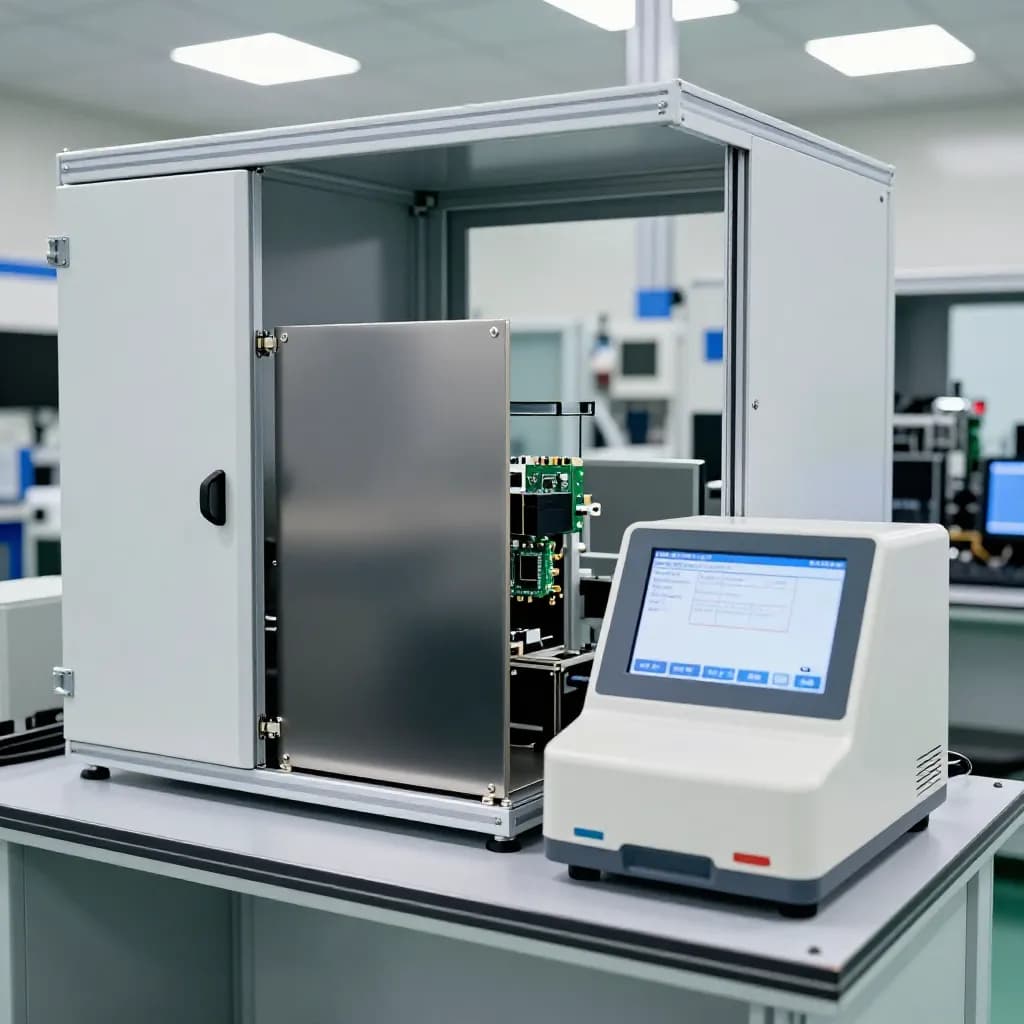
The ten restricted substances under RoHS are lead, mercury, cadmium, hexavalent chromium, polybrominated biphenyls (PBB), polybrominated diphenyl ethers (PBDE), and four phthalates: DEHP, BBP, DBP, and DIBP. Each substance has a maximum concentration value (MCV) expressed as a percentage by weight in homogeneous materials. For most substances, the MCV is 0.1% (1000 ppm), while cadmium has a stricter limit of 0.01% (100 ppm).
Ready to Start Your Project?
From one-off customs to 15,000-part production runs — get precise pricing in 24 hours.
On This Page
RoHS Directive Fundamentals for the Coatings Industry
For powder coating manufacturers and applicators, RoHS compliance means ensuring that their formulations do not contain any of these restricted substances above the specified thresholds. This is particularly relevant for coatings applied to components destined for use in computers, telecommunications equipment, lighting, medical devices, monitoring instruments, and other product categories covered by the directive. Understanding which products fall within RoHS scope and which coatings are applied to those products is the essential first step in compliance.
Restricted Substances Relevant to Powder Coatings
Among the ten RoHS-restricted substances, several have direct relevance to powder coating formulations. Lead has historically been used in powder coatings as lead chromate pigments for yellow and orange colors, as lead stabilizers in certain resin systems, and as a component of anti-corrosive primers. While the powder coating industry has largely transitioned away from lead-based formulations, legacy products and some specialty applications may still contain lead above the 0.1% threshold.
Hexavalent chromium is another substance of concern, primarily associated with chromate conversion coatings used as pretreatment before powder coating rather than the powder coating itself. However, some corrosion-resistant primer formulations have historically incorporated strontium chromate or zinc chromate, both of which contain hexavalent chromium. The distinction between the pretreatment layer and the powder coating layer is important for RoHS compliance, as each homogeneous material is assessed independently.
Cadmium, with its stricter 100 ppm limit, requires particular attention. Cadmium pigments were once valued for their bright, lightfast colors, and while their use in powder coatings has declined significantly, trace contamination from raw materials can still occur. The four phthalates added by the 2015 amendment are less commonly associated with powder coatings but may be present in certain plasticizer systems used in flexible or low-temperature cure formulations. Powder coating manufacturers must conduct thorough raw material assessments and, where necessary, analytical testing to confirm compliance with all ten restricted substances.
Scope and Product Categories Under RoHS
RoHS applies to eleven categories of electrical and electronic equipment, and powder coatings may be found on components across all of them. Category 1 covers large household appliances such as refrigerators, washing machines, and air conditioning units — all of which commonly feature powder-coated metal enclosures and panels. Category 2 includes small household appliances, Category 3 covers IT and telecommunications equipment, and Category 4 encompasses consumer electronics, each representing significant markets for powder-coated components.
Categories 5 through 7 cover lighting equipment, electrical and electronic tools, and toys — sectors where powder coating is used on housings, frames, and decorative elements. Categories 8 and 9, covering medical devices and monitoring instruments, were brought into scope by the recast directive and present particular compliance challenges due to the precision and reliability requirements of these products. Category 10 covers automatic dispensers, and Category 11 is a catch-all for other EEE not covered by the previous categories.
Powder coating applicators serving multiple industries must understand which of their customers' products fall within RoHS scope. A powder-coated steel bracket may require RoHS compliance when used in a server rack but face no such requirement when used in a building structure. This means that applicators need clear communication with their customers about the end use of coated parts and must be able to provide appropriate compliance documentation for RoHS-scope applications. Maintaining separate material tracking for RoHS and non-RoHS production runs may be necessary in mixed-use facilities.
Testing and Analytical Methods for RoHS Compliance
Demonstrating RoHS compliance requires a combination of material declarations from suppliers and, where necessary, analytical testing of finished coatings. The primary screening method is X-ray fluorescence (XRF) spectroscopy, which can rapidly detect the presence of restricted elements — lead, mercury, cadmium, chromium, and bromine — in solid samples without destructive preparation. XRF is widely used for incoming material inspection and production quality control because it provides results in seconds and requires minimal sample preparation.
However, XRF has limitations that must be understood. It detects total elemental content rather than specific chemical forms, meaning it cannot distinguish between hexavalent chromium (restricted) and trivalent chromium (not restricted). When XRF screening indicates chromium levels above the threshold, confirmatory testing using wet chemical methods such as the alkaline digestion procedure specified in IEC 62321-7-1 is required to determine the hexavalent chromium content specifically.
For organic restricted substances — PBBs, PBDEs, and phthalates — analytical methods based on gas chromatography-mass spectrometry (GC-MS) are used, as specified in IEC 62321-6 for brominated flame retardants and IEC 62321-8 for phthalates. The IEC 62321 series of standards provides the internationally recognized analytical framework for RoHS testing, and powder coating companies should ensure that any testing laboratories they use are accredited to these methods. A risk-based testing strategy, focusing analytical resources on materials with the highest probability of containing restricted substances, provides the most cost-effective approach to compliance verification.
Documentation and Technical File Requirements
RoHS compliance documentation is a critical element of market access for electrical and electronic equipment. The manufacturer of the finished EEE product is ultimately responsible for RoHS compliance and must prepare a technical file demonstrating that all materials and components meet the directive's requirements. Powder coating suppliers and applicators contribute to this technical file by providing material declarations and, where requested, test reports for their coatings.
The most widely used format for material declarations in the electronics supply chain is the IPC 1752A standard, which provides a structured template for reporting substance content in products and materials. Many major electronics manufacturers require their suppliers, including coating providers, to submit declarations in this format. The Joint Industry Guide (JIG) for Material Composition Declaration, developed by the electronics industry associations, provides additional guidance on reporting requirements and substance thresholds.
Powder coating companies should maintain a compliance file for each product that includes the full formulation with CAS numbers and concentrations of all ingredients, supplier declarations confirming RoHS compliance of raw materials, any analytical test reports conducted on raw materials or finished coatings, and records of any exemptions claimed. This documentation must be retained for at least ten years after the last unit of the product is placed on the market. Companies serving the electronics supply chain should also be prepared for customer audits of their RoHS compliance systems and should designate a responsible person for managing RoHS documentation and responding to customer inquiries.
Exemptions and Their Application to Powder Coatings
RoHS provides for exemptions where the elimination or substitution of a restricted substance is technically or scientifically impracticable, or where the negative environmental, health, or safety impacts of substitution outweigh the benefits. Exemptions are listed in Annexes III and IV of the directive and are granted for specific applications with defined expiry dates, after which they must be renewed through a formal application process.
Several exemptions are potentially relevant to powder coatings. Exemption 6(a) allows lead as an alloying element in steel containing up to 0.35% lead by weight, which may be relevant to the substrate rather than the coating. Exemption 6(b) permits lead in aluminum alloys up to 0.4%, again relevant to substrates commonly powder coated. For the coatings themselves, exemption 7(c)-I has historically permitted lead in certain electronic ceramic parts, and various exemptions exist for specific applications in medical devices and monitoring equipment.
Powder coating companies should be cautious about relying on exemptions. Exemptions are time-limited and subject to review, and the European Commission has been progressively tightening renewal criteria. A formulation strategy that depends on an exemption creates a business risk if that exemption is not renewed. The preferred approach is to develop RoHS-compliant formulations as the standard offering and maintain exemption-dependent products only where technically necessary and where the exemption status is actively monitored. When an exemption is claimed, the technical file must clearly document which exemption applies and provide justification for its use.
Global RoHS-Type Regulations Beyond the EU
The EU RoHS directive has inspired similar legislation worldwide, creating a complex web of substance restrictions that powder coating companies serving global markets must navigate. China RoHS (Management Methods for the Restriction of the Use of Hazardous Substances in Electrical and Electronic Products) restricts the same six original substances as EU RoHS and requires marking and labeling of products containing restricted substances above threshold levels. China's approach differs from the EU in its use of the Environmental Protection Use Period (EPUP) marking system.
South Korea's Act for Resource Recycling of Electrical and Electronic Equipment and Vehicles restricts the same substances as EU RoHS with similar thresholds. Japan's J-MOSS (Japanese Industrial Standard for the Marking of Specific Chemical Substances for Electrical and Electronic Equipment) takes a disclosure-based approach, requiring marking when restricted substances exceed threshold levels rather than imposing outright bans. India's E-Waste Management Rules incorporate RoHS-type substance restrictions for electronics manufactured in or imported into India.
Turkey, the UAE, the Eurasian Economic Union (Russia, Belarus, Kazakhstan, Armenia, Kyrgyzstan), and several other jurisdictions have implemented their own versions of RoHS. While these regulations share common restricted substances, they differ in scope, thresholds, exemptions, documentation requirements, and enforcement mechanisms. Powder coating companies exporting products or serving multinational electronics manufacturers should develop a compliance matrix mapping their products against the requirements of each target market, ensuring that formulations meet the most restrictive applicable standard.
Frequently Asked Questions
Does RoHS apply to powder coatings directly?
RoHS applies to powder coatings when they are used on components incorporated into electrical and electronic equipment. The coating is assessed as a homogeneous material within the product, and each of the ten restricted substances must be below its maximum concentration value. Powder coatings on non-EEE products are not subject to RoHS.
What is the cadmium limit under RoHS for powder coatings?
Cadmium has a stricter limit of 0.01% (100 ppm) by weight in homogeneous materials, compared to 0.1% (1000 ppm) for the other restricted substances. This lower threshold requires particular attention during raw material screening, as even trace contamination from pigments or fillers could cause non-compliance.
How do you test powder coatings for RoHS compliance?
Initial screening is typically done using X-ray fluorescence (XRF) spectroscopy for rapid elemental detection. Confirmatory testing uses wet chemical methods per IEC 62321 standards — including alkaline digestion for hexavalent chromium and GC-MS for organic substances like phthalates and brominated flame retardants.
Do countries outside the EU have RoHS-type regulations?
Yes. China, South Korea, Japan, India, Turkey, the UAE, and the Eurasian Economic Union all have RoHS-type regulations restricting hazardous substances in electronics. While they share common restricted substances, they differ in scope, exemptions, and documentation requirements. Companies serving global markets must comply with each applicable regulation.
How long must RoHS documentation be retained?
RoHS technical documentation must be retained for at least ten years after the last unit of the product is placed on the EU market. This includes formulation records, supplier declarations, test reports, and any exemption justifications. Similar retention periods apply under most global RoHS-type regulations.
Ready to Start Your Project?
From one-off customs to 15,000-part production runs — get precise pricing in 24 hours.