Qualicoat is the international quality label for powder and liquid coated aluminum used in architectural applications. Established in 1986 and headquartered in Zurich, Switzerland, Qualicoat sets the most comprehensive and rigorous quality standards for the coating of aluminum building components — including windows, doors, curtain walls, cladding panels, and structural elements. The Qualicoat label provides architects, specifiers, and building owners with independently verified assurance that coated aluminum products will perform reliably over their intended service life.
Technical
Qualicoat Certification Complete Guide: Classes, Testing, Seaside Approval, and Audit Process
Sundial Powder Coating·April 22, 2026·15 min
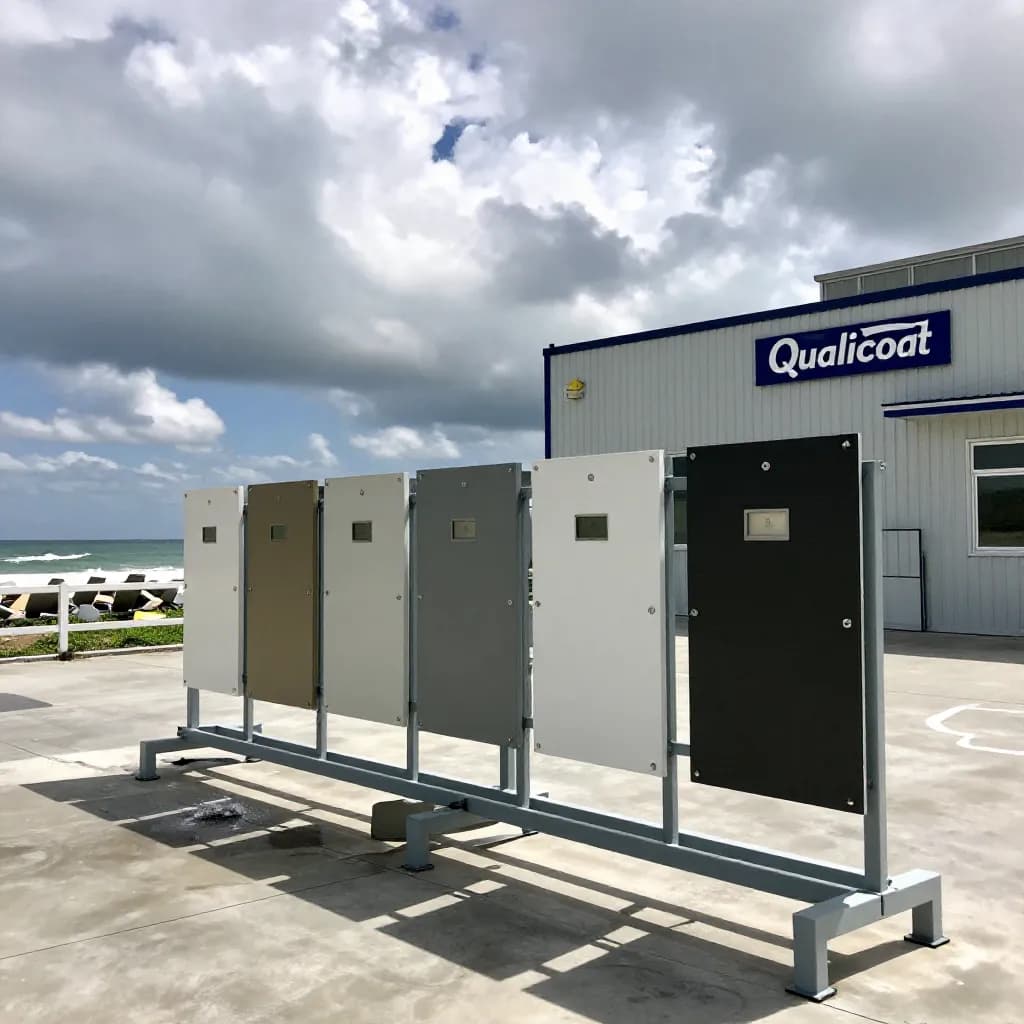
The Qualicoat system encompasses the entire coating process chain, from pretreatment chemistry and application equipment through to the finished coating properties and ongoing quality management. Unlike specifications that focus solely on the finished coating performance (such as AAMA specifications), Qualicoat also audits and certifies the coating applicator's facilities, processes, and quality control systems. This process-based approach ensures that the conditions for producing high-quality coatings are consistently maintained, not just that individual test panels meet performance criteria.
Ready to Start Your Project?
From one-off customs to 15,000-part production runs — get precise pricing in 24 hours.
On This Page
What Is Qualicoat and Why It Matters
Qualicoat certification is widely recognized and specified across Europe, the Middle East, Asia-Pacific, and increasingly in North America. Major architectural projects routinely specify Qualicoat-certified coatings as a minimum quality requirement, and many national building codes and procurement standards reference Qualicoat as the benchmark for architectural aluminum finishing quality. For coating applicators, Qualicoat certification is a competitive necessity in the architectural market — without it, access to premium architectural projects is severely limited.
The Qualicoat specifications are regularly updated to reflect advances in coating technology, changes in pretreatment chemistry (particularly the transition from chromate to chrome-free systems), and evolving performance expectations. The current edition of the Qualicoat specifications defines four performance classes — Class 1, Class 1.5, Class 2, and Class 3 — each with progressively more demanding weathering and durability requirements.
Qualicoat Performance Classes Explained
Qualicoat defines four performance classes that correspond to increasing levels of weathering durability, allowing specifiers to match the coating performance to the environmental demands of the project location and the expected service life of the building.
Class 1 is the baseline performance tier, suitable for moderate environments with limited UV exposure and mild weathering conditions. Class 1 coatings must pass 1,000 hours of accelerated weathering (xenon arc per ISO 16474-2) with color change (Delta E) not exceeding 4 units and gloss retention of at least 50% of the original value. Natural weathering validation requires 1 year of Florida exposure. Class 1 is appropriate for interior applications and exterior applications in sheltered or low-UV environments.
Class 1.5 was introduced as an intermediate tier between Class 1 and Class 2, addressing the market need for coatings with better-than-basic but not full Class 2 weathering performance. Class 1.5 requires 1,500 hours of accelerated weathering with the same Delta E and gloss retention criteria as Class 1. This class is suitable for exterior applications in moderate climates where the full performance of Class 2 is not required.
Class 2 is the standard specification for exterior architectural applications in most European markets. Class 2 coatings must pass 2,000 hours of accelerated weathering with Delta E not exceeding 4 units and gloss retention of at least 50%. Natural weathering validation requires 3 years of Florida exposure. Class 2 coatings are formulated with superdurable polyester resins and high-performance pigments to achieve the required weathering resistance. This is the most commonly specified class for building facades, windows, and curtain walls.
Class 3 represents the highest performance tier, intended for the most demanding environments and longest service life expectations. Class 3 requires 3,000 hours of accelerated weathering with Delta E not exceeding 4 units and gloss retention of at least 50%, plus 10 years of Florida natural weathering exposure. Class 3 performance typically requires fluoropolymer (FEVE) or the most advanced superdurable polyester formulations. This class is specified for landmark buildings, coastal environments, and projects requiring 30+ year coating service life.
Test Requirements and Performance Criteria
The Qualicoat test matrix encompasses a comprehensive range of physical, chemical, and weathering tests that evaluate every aspect of coating performance. These tests are performed on standardized test panels prepared by the coating applicator using their production equipment and processes, ensuring that the test results reflect actual production capability.
Film thickness requirements specify minimum and maximum values depending on the coating type. For powder coatings, the minimum average film thickness is 60 microns, with no individual measurement below 48 microns. For liquid coatings, different thickness requirements apply. Film thickness is measured using magnetic (for steel substrates) or eddy current (for aluminum substrates) gauges calibrated to traceable standards.
Adhesion testing uses the cross-cut method (ISO 2409) with a classification of 0 (best) required — meaning no detachment of the coating at the cross-cut intersections after tape pull. Adhesion is tested both in the as-received condition and after accelerated aging exposures (boiling water immersion, acetic acid salt spray) to verify that adhesion is maintained under aggressive conditions.
Hardness testing uses the pencil hardness method (ISO 15184) or the Buchholz indentation method (ISO 2815). Minimum pencil hardness of F is required for most coating types. The hardness test verifies that the coating has achieved adequate crosslink density during cure.
Impact resistance is tested using the falling weight method (ISO 6272), with minimum requirements that vary by coating class. The impact test evaluates the coating's ability to withstand mechanical damage without cracking or delamination.
Corrosion resistance is evaluated using acetic acid salt spray (AASS) testing per ISO 9227, with exposure durations of 1,000 hours for standard coatings. The test panels are scribed to expose the substrate, and the extent of corrosion creep from the scribe line is measured after exposure. Maximum allowable creep values are specified for each coating class.
Chemical resistance testing evaluates the coating's resistance to mortar (cement), household cleaning agents, and other chemicals that may contact the coating in service. Test panels are exposed to the specified chemicals for defined periods, and any color change, softening, blistering, or loss of adhesion is recorded.
Pretreatment Requirements and Chrome-Free Transition
Qualicoat places significant emphasis on pretreatment quality, recognizing that the long-term performance of any coating system depends fundamentally on the quality of the substrate preparation. The Qualicoat specifications define approved pretreatment processes and set minimum requirements for pretreatment quality that must be verified through regular testing.
The traditional pretreatment process for architectural aluminum involves alkaline cleaning (degreasing), acid or alkaline etching to remove the natural oxide layer and create surface roughness, chromate conversion coating to provide corrosion protection and adhesion promotion, and rinsing between each step. The chromate conversion coating — based on hexavalent chromium compounds — has been the gold standard for aluminum pretreatment for decades, providing excellent corrosion protection and coating adhesion.
However, the toxicity and environmental impact of hexavalent chromium have driven a global transition to chrome-free pretreatment alternatives. Qualicoat has actively supported this transition by approving chrome-free pretreatment processes that demonstrate equivalent performance to chromate systems. Approved chrome-free alternatives include titanium/zirconium-based conversion coatings, silane-based treatments, and anodic oxidation processes.
The qualification of chrome-free pretreatments under Qualicoat requires extensive testing, including accelerated corrosion testing (AASS and filiform corrosion), adhesion testing after aging, and natural weathering exposure. Chrome-free pretreatments that pass these qualification tests are listed in the Qualicoat approved products register and can be used by certified applicators.
Pretreatment bath chemistry must be monitored and controlled within specified parameters. Qualicoat requires regular analysis of bath concentrations, pH, temperature, and conductivity, with records maintained for audit review. The pretreatment coating weight (measured by gravimetric or XRF methods) must fall within specified ranges to ensure adequate but not excessive conversion coating deposition.
Rinse water quality is also specified, with maximum conductivity limits for the final rinse to ensure that residual chemicals are removed from the substrate surface before coating. Deionized water is typically required for the final rinse stage, with conductivity below 30 microsiemens per centimeter.
Qualicoat Seaside Certification
Qualicoat Seaside is a specialized certification for coating systems intended for use in coastal and marine environments — defined as locations within approximately 1 kilometer of the sea or other aggressive saline environments. Coastal environments present extreme challenges for coated aluminum due to the combination of salt spray deposition, high humidity, UV exposure, and wind-driven abrasion that accelerates coating degradation and substrate corrosion.
Seaside certification requires a multi-coat system — typically an epoxy or epoxy-polyester primer plus a polyester or fluoropolymer topcoat — to provide the enhanced corrosion protection needed for coastal service. Single-coat systems, regardless of their weathering performance class, are not eligible for Seaside certification because they do not provide the redundant barrier protection needed for aggressive saline environments.
The testing requirements for Seaside certification are significantly more demanding than standard Qualicoat classes. Acetic acid salt spray exposure is extended to 2,000 hours (compared to 1,000 hours for standard certification), and the maximum allowable corrosion creep from the scribe line is reduced. Filiform corrosion testing — a specialized test that evaluates the tendency of thread-like corrosion to propagate under the coating film in humid, saline conditions — is also required for Seaside certification.
The pretreatment requirements for Seaside certification are enhanced, with specific approved pretreatment processes that have been validated for coastal performance. Multi-stage pretreatment processes with enhanced conversion coating weights are typically required to provide the substrate protection needed for Seaside service.
Seaside certification is increasingly specified for projects in coastal cities, island locations, and regions with aggressive atmospheric conditions. The growing recognition that standard single-coat systems may not provide adequate long-term performance in these environments has driven demand for Seaside-certified coating systems, particularly for high-value architectural projects where premature coating failure would be costly and disruptive to remediate.
The Certification and Audit Process
Obtaining Qualicoat certification involves a structured process of application, initial assessment, testing, and ongoing surveillance that ensures certified applicators maintain consistent quality standards throughout their operations.
The certification process begins with an application to the relevant Qualicoat General Licensee (GL) — the national organization authorized to administer Qualicoat certification in each country. The applicant must demonstrate that their facilities, equipment, and quality management systems meet the Qualicoat requirements before an initial audit is scheduled.
The initial audit is conducted by qualified Qualicoat inspectors who assess every aspect of the coating operation. The audit covers pretreatment facilities and bath chemistry control, coating application equipment and process parameters, curing oven calibration and temperature profiling, quality control laboratory equipment and testing procedures, record-keeping and traceability systems, and staff training and competence. Any non-conformities identified during the audit must be corrected before certification is granted.
Test panels are prepared during the audit using the applicator's production equipment and processes. These panels are submitted to an approved testing laboratory for the full battery of Qualicoat performance tests. The test results must meet all specified criteria for the requested performance class(es) before certification is issued.
Once certified, applicators are subject to regular surveillance audits — typically two per year, one announced and one unannounced. Surveillance audits verify ongoing compliance with Qualicoat requirements, including pretreatment bath analysis records, coating thickness records, quality control test results, and corrective action documentation. Test panels are collected during surveillance audits and submitted for laboratory testing to verify continued performance compliance.
Non-conformities identified during surveillance audits are classified by severity and must be corrected within specified timeframes. Repeated or serious non-conformities can result in suspension or withdrawal of certification. The audit system provides ongoing assurance to specifiers and building owners that Qualicoat-certified products are produced under controlled, verified conditions.
Qualicoat vs Other Quality Standards: Positioning and Selection
Qualicoat operates alongside other quality certification systems — notably GSB International in Europe and AAMA in North America — and understanding the relationships and differences between these systems helps specifiers select the appropriate quality standard for their projects.
Qualicoat and GSB International are both European-origin quality labels for coated aluminum, and they share many common test methods and performance criteria. However, they differ in their organizational structure, market focus, and specific requirements. Qualicoat is more widely recognized in Southern and Western Europe, while GSB has stronger presence in Germany, Austria, and Northern Europe. Some coating applicators hold both Qualicoat and GSB certifications to serve the broadest possible market.
The AAMA specification system (2603, 2604, 2605) used in North America differs from Qualicoat in its approach. AAMA specifications focus on the performance of the finished coating rather than the process used to produce it — they do not audit or certify the coating applicator's facilities and quality systems. AAMA specifications also rely more heavily on natural weathering data (South Florida exposure) as the primary performance validation, while Qualicoat uses accelerated weathering as the primary test with natural weathering as validation.
For international projects, specifiers may reference multiple standards to ensure comprehensive quality coverage. A specification requiring Qualicoat Class 2 certification with AAMA 2604 performance validation, for example, combines the process assurance of Qualicoat with the natural weathering validation of AAMA. This dual-standard approach is increasingly common for major international architectural projects.
The choice between quality standards should consider the project location, the local market recognition of each standard, the availability of certified applicators, and the specific performance requirements of the application. For European projects, Qualicoat or GSB certification is typically the default requirement. For North American projects, AAMA specifications are standard. For international projects, the specifier should evaluate which standard provides the most appropriate combination of process assurance and performance validation for the specific project context.
Frequently Asked Questions
What is the difference between Qualicoat Class 1 and Class 2?
Class 1 requires 1,000 hours of accelerated weathering and 1 year of Florida exposure, suitable for moderate environments. Class 2 requires 2,000 hours of accelerated weathering and 3 years of Florida exposure, suitable for standard exterior architectural applications. Class 2 demands superdurable polyester resins and high-performance pigments.
Is Qualicoat Seaside certification required for coastal buildings?
While not legally mandated in most jurisdictions, Seaside certification is strongly recommended for buildings within 1 km of the coast. It requires a multi-coat system (primer + topcoat) and passes more demanding salt spray and filiform corrosion tests. Standard single-coat systems may not provide adequate long-term performance in aggressive coastal environments.
How often are Qualicoat-certified applicators audited?
Certified applicators undergo two surveillance audits per year — one announced and one unannounced. Audits verify ongoing compliance with pretreatment control, coating quality, testing procedures, and record-keeping. Test panels collected during audits are submitted for independent laboratory testing.
Can chrome-free pretreatments be used under Qualicoat?
Yes. Qualicoat has approved several chrome-free pretreatment alternatives including titanium/zirconium conversion coatings, silane-based treatments, and anodic oxidation. These must pass extensive qualification testing including accelerated corrosion, adhesion after aging, and natural weathering before being listed in the Qualicoat approved products register.
What minimum film thickness does Qualicoat require for powder coatings?
Qualicoat requires a minimum average film thickness of 60 microns for powder coatings, with no individual measurement below 48 microns. These requirements ensure adequate barrier protection and weathering resistance for architectural applications.
Ready to Start Your Project?
From one-off customs to 15,000-part production runs — get precise pricing in 24 hours.